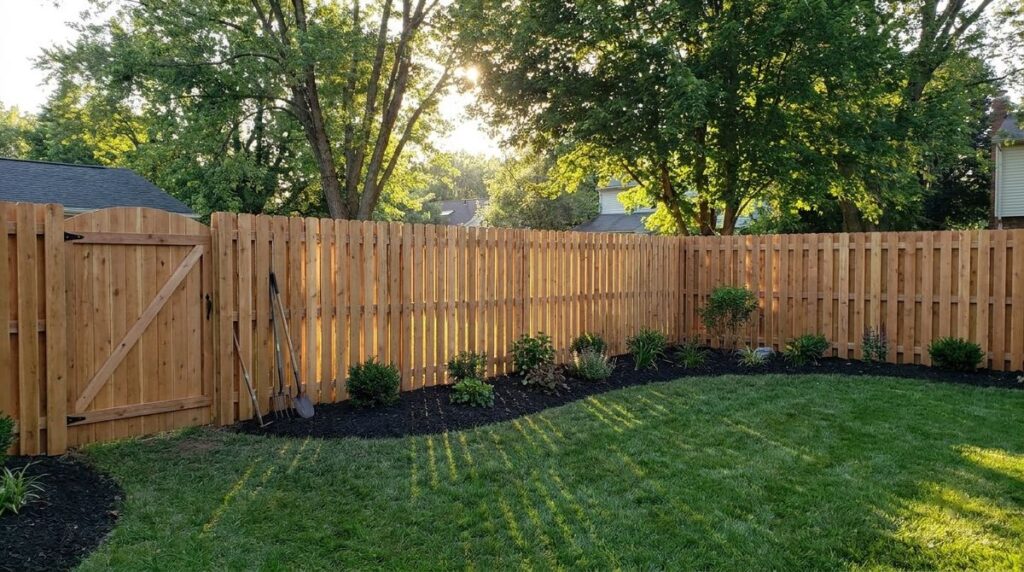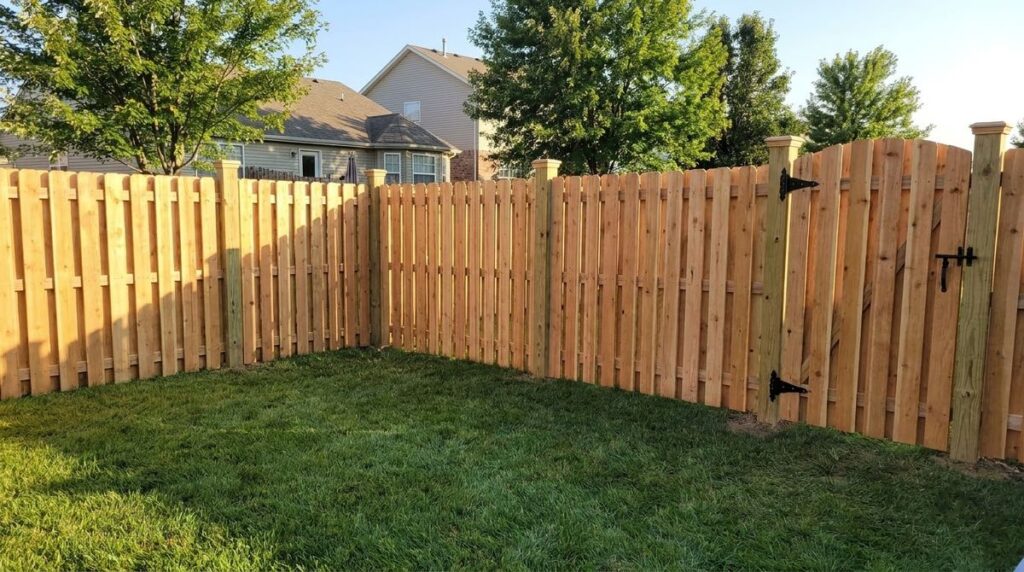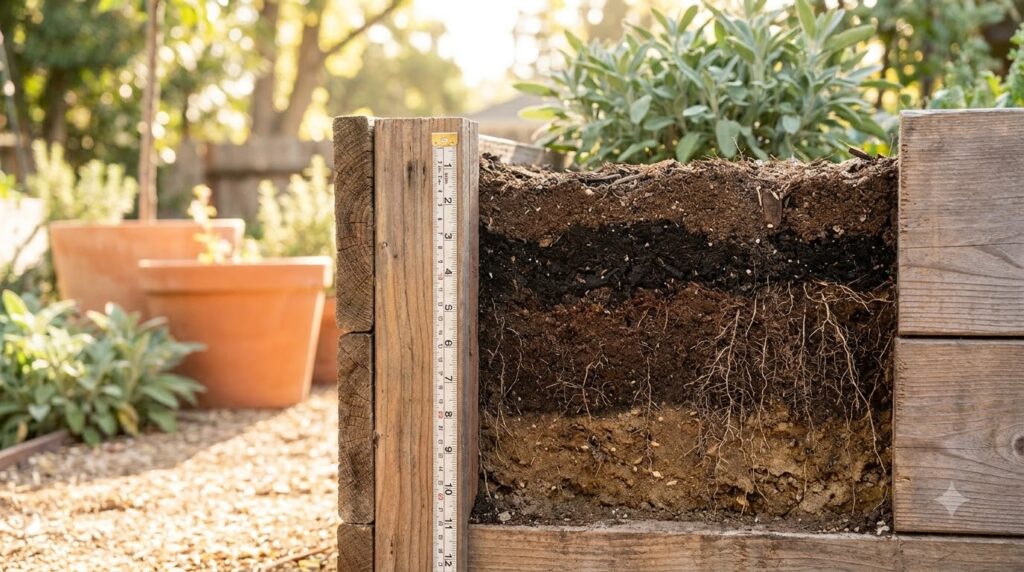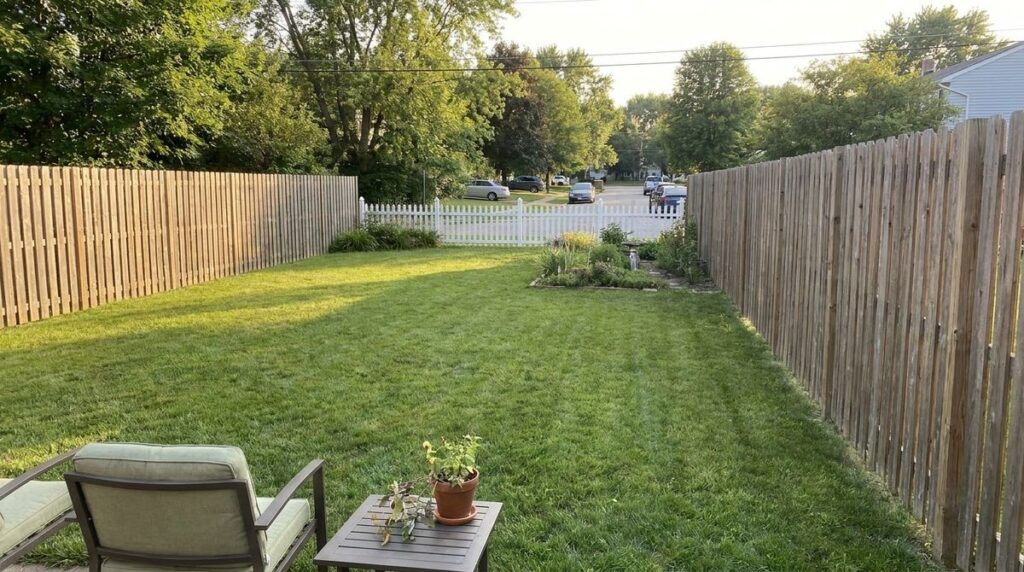
A privacy fence is usually 6 feet tall in side and rear yards, front-yard fences are commonly capped at 3 to 4 feet, and some cities allow 8 feet behind the house. The exact number comes from your city or county zoning code, which also decides whether lattice counts and how height is measured on a slope.
Key takeaways
- 6 feet is the common side and rear yard limit in codes such as Darien, Illinois, SeaTac, Washington, and Sebastopol, California.
- 8 feet is allowed in some places, such as single-family yards behind the front setback in Tempe, Arizona, but Tempe requires a building permit for any wall over 6 feet.
- Front yards are lower: 3 feet in Darien, 3½ feet in Sebastopol, 4 feet in Tempe and SeaTac.
- Lattice toppers are capped too. Sebastopol allows 2 feet of lattice on a 6-foot fence; SeaTac allows a 12-inch feature.
- Where you measure matters. SeaTac measures from the lower grade; Tempe from the highest ground within 20 feet.
| Item | Common size | Notes from real codes |
|---|---|---|
| Front yard fence | 3–4 ft | Darien 3 ft (landscape fences only), Sebastopol 3½ ft, Tempe and SeaTac 4 ft |
| Side and rear yard fence | 6 ft | Darien, SeaTac and Sebastopol 6 ft; Tempe 8 ft for single-family behind the front setback |
| Rear yard next to a neighbor’s front yard | 4 ft | Darien drops the rear limit to 4 ft in this case |
| Lattice or trellis topper | 12–24 in | Sebastopol 2 ft on fences no more than 6 ft; SeaTac 12 in, 8 ft overall cap in side and rear yards |
| Fence on a slope | Height averaged per step | SeaTac: 6 ft averaged in stepped segments, no point over 8 ft above grade |
| Building permit trigger | Over 6–7 ft | Model IRC exempts fences up to 7 ft; Tempe requires a permit over 6 ft; Darien permits every fence |
| Post length, 6 ft fence | 8–10 ft | At least 2 ft or one-third of the post in the ground, deeper below the frost line |
| Post length, 8 ft fence | About 12 ft | One-third burial: 4 ft down, 8 ft up |
How tall a privacy fence can be, by yard position
How tall a privacy fence can be depends first on which yard it stands in. Zoning codes split a lot into a front yard, side yards and a rear yard, and give each its own limit. The front stays low so drivers can see the street; the sides and back are where a full-height privacy fence is allowed.
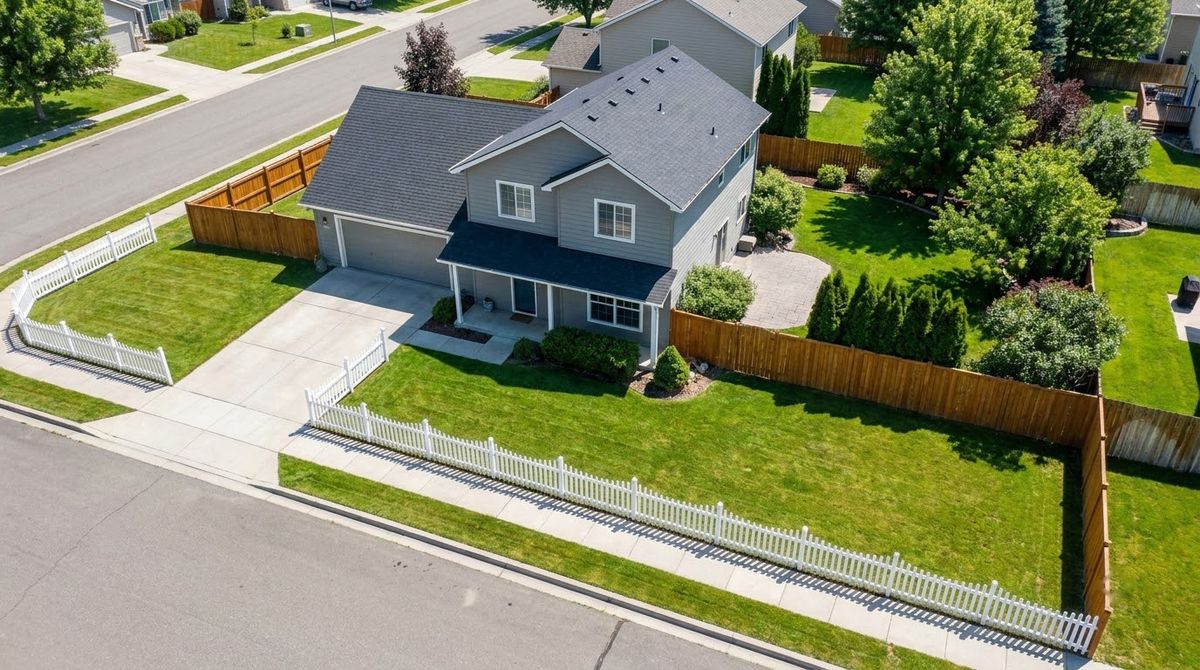
Here is how four real codes set those limits for a single-family home:
- Darien, Illinois: side, corner side and rear yards up to 6 feet. The rear limit drops to 4 feet where your rear yard borders the front yard of the lot next door. Front yards allow only landscape fences 3 feet or less and no longer than 25 feet.
- SeaTac, Washington (SMC 15.435): 4 feet in the front yard, and in side yards within the first 20 feet from the front property line; 6 feet along all other side lines and the rear line.
- Sebastopol, California: 6 feet in required side and rear yards, 3½ feet in a required front yard.
- Tempe, Arizona (ZDC 4-706): 4 feet in the required front setback, up to 6 feet with a use permit; up to 8 feet behind it for single-family homes.
Corner lots get extra rules. Tempe applies its clear vision requirements to fences and walls, and SeaTac draws separate fence-height figures for corner lots. If your house sits on a corner, ask the zoning office where the sight triangle and the second front yard begin before you set a post.
6 ft vs 8 ft privacy fence: when the extra 2 feet pays off
A 6 ft vs 8 ft privacy fence choice is often made for you by the code. Where 8 feet is legal, the extra height helps most when the neighbor’s yard sits higher than yours, when a raised deck or second-story window looks down into your yard, or when the fence backs onto a busy road.
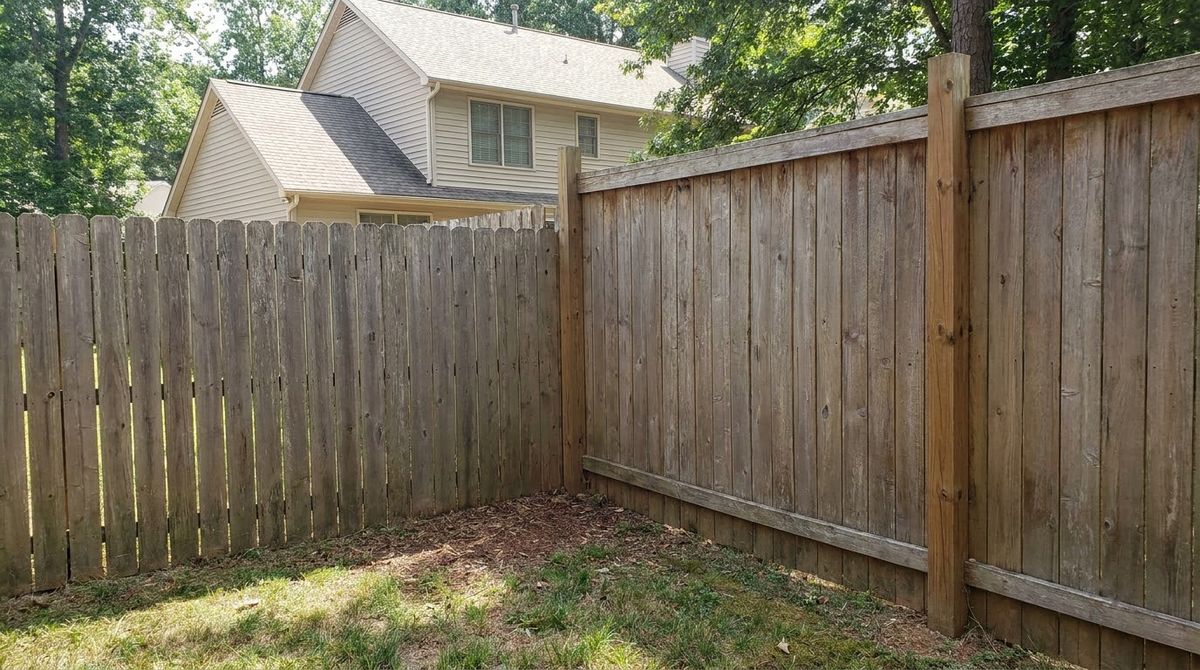
Going taller adds work beyond two more feet of boards:
- A permit. The model International Residential Code (IRC 2021, R105.2) exempts only fences not over 7 feet from a building permit, so an 8-foot fence usually needs one. Tempe requires a building permit for any wall over 6 feet.
- Longer, deeper posts. The common rule is to bury about one-third of a post. For 8 feet above grade, that means a 12-foot post with 4 feet in the ground.
- More wind load. Weatherables, a vinyl fence maker, says fences over 6 feet need reinforced posts, either aluminum inserts or concrete backfill, to at least 22 inches above grade.
- More cost per foot. The price gap is broken down in privacy fence cost per foot by height.
A 6-foot privacy fence remains the default for good reason: it fits most side and rear limits, it sits under the IRC permit exemption, and it uses stock 6-foot pickets on 8- or 10-foot posts. Build 8 feet only on the stretch that faces the problem view, if your code allows mixed heights.
Lattice toppers: do they count toward fence height?
Lattice toppers count toward fence height in most codes, but some codes give them a separate allowance. The idea is that an open band on top blocks less light and air than solid boards, so a city may let it rise above the solid limit. The allowance is small and comes with conditions.
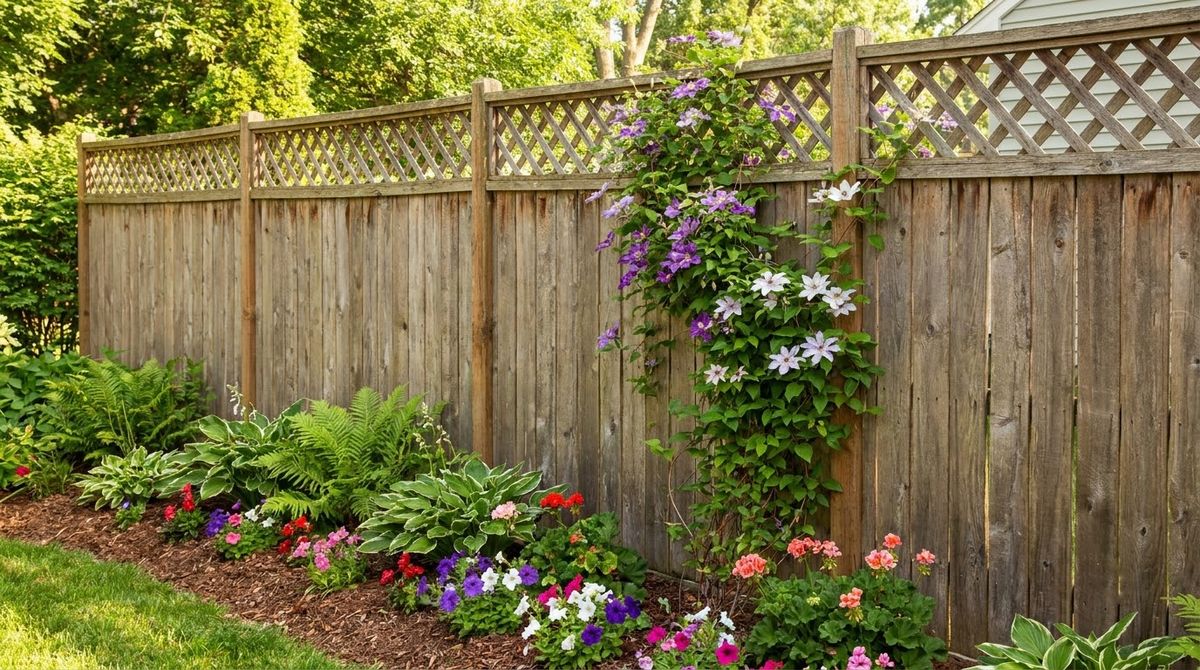
- Sebastopol: 2 feet of lattice may be attached to side and rear fences no more than 6 feet tall, for 8 feet overall.
- SeaTac: a trellis or lattice panel no more than 12 inches tall may sit above the fence limit, as long as at least 10 inches of open space remains above the top of the fence. Overall height, feature included, stays at 8 feet in side and rear yards and 6 feet in front.
- Tempe: in the front setback, with a use permit, 2 more feet are allowed for architectural features such as archways and pergolas.
If your code says nothing about lattice, treat the top of the lattice as the top of the fence. Wood fence styles that use a lattice top, and how private each one is, are compared in wood privacy fence styles, lumber and height rules.
Fence height on a slope: stepped sections and averaging
Fence height on a slope is measured section by section, because a stepped panel is taller at its low end. SeaTac writes this into its code: on a sloping side or rear yard, the 6-foot height may be averaged in stepped segments, but no part of the fence may exceed 8 feet above finished grade.
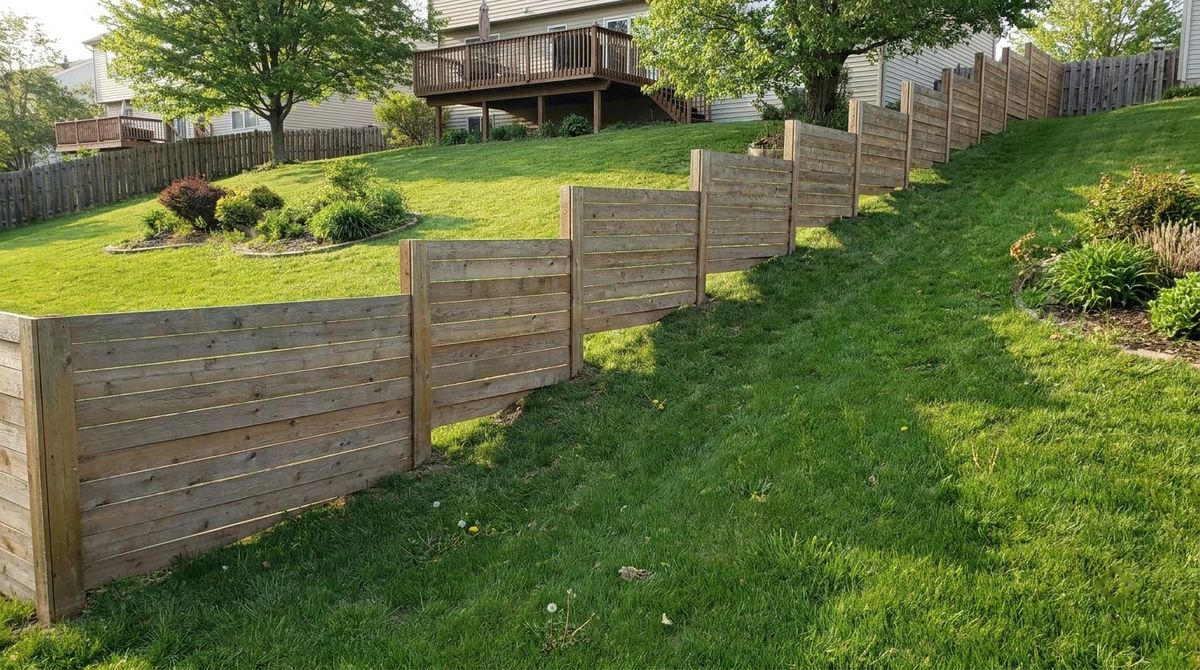
Two more slope rules to look for:
- Which grade counts. SeaTac measures from existing or finished grade, whichever is lower on the property line. Tempe measures from the highest adjacent finished ground, paving or sidewalk within 20 feet.
- Fences on retaining walls. SeaTac caps a raised wall and the fence on it at 9½ feet combined in side and rear yards and 6 feet in front; above that, the fence must be open plastic or metal you can see through.
Darien adds a practical warning: the ground under the fence may not be changed without the zoning officer’s approval. Building up soil to level a fence line can count as regrading, so ask first.
How to measure privacy fence height
To measure privacy fence height, start from the grade your code names and go to the highest point of the fence, topper included. Your tape reading only matters if it starts from the same ground the inspector uses.
- Find the measuring rule in your zoning code: lower grade, higher grade, or the ground within a set distance, as in Tempe’s 20 feet.
- Measure at the fence line, at each post, on the side the code names. On a slope, record the low and high end of every section.
- Measure to the top of the tallest element: boards, lattice or trellis. Ask whether post caps and decorative post tops count; codes differ.
- Average stepped sections only if your code allows it, and check the hard maximum, such as SeaTac’s 8 feet at any point.
- Plan post length from the result. One redwood fence instruction sheet calls for holes at least 2 feet deep, or one-third the post’s height, and below the frost line.
Write the measurements on your permit drawing. Darien, for example, asks for a plat of survey showing the fence location, height and type with every application.
How to check the limit for your own address
The limit for your own address is set by three separate rulebooks, and you have to clear all three. A fence that passes one can still fail another.
- Zoning code: sets height by yard, lattice allowances and slope rules. Search your city or county code for “fence” and the zoning district on your property record.
- Building permit: the model IRC exempts fences up to 7 feet, but your city may set a lower trigger, such as Tempe’s 6 feet, or permit every fence, as Darien does.
- HOA covenants: often stricter than the city on height, material and which side faces out. Get written approval before you order lumber.
Call or email your local building department with your address and planned height. A short written answer is worth more than any typical number in an article, this one included.
Height mistakes to avoid before you build
- Using a national “6 feet” rule. Darien drops to 4 feet next to a neighbor’s front yard; Tempe allows 8.
- Adding lattice after inspection. A topper can push the fence over its cap.
- Measuring from your own raised bed or patio when the code measures from the lower grade at the property line.
- Letting stepped panels run tall at the low end past a hard maximum like SeaTac’s 8 feet.
- Assuming no building permit means no zoning review. They are separate approvals.
- Buying 8-foot posts for an 8-foot fence. Plan on about 12 feet of post. For the full sequence, see how to build a wood privacy fence step by step.
Frequently asked questions
How tall is a standard privacy fence?
A standard privacy fence is 6 feet tall. That height matches the side and rear yard limit in many zoning codes, such as Darien, Illinois, SeaTac, Washington, and Sebastopol, California, and it stays under the 7-foot building permit exemption in the model IRC. Front-yard fences are usually limited to 3 to 4 feet.
Can I build an 8 ft privacy fence?
Only where your code allows it. Tempe, Arizona, permits 8 feet behind the front setback for single-family homes but requires a building permit for any wall over 6 feet. Many other cities cap rear fences at 6 feet. Check your zoning code, permit rules and HOA covenants before you buy 12-foot posts.
Does lattice on top of a fence count toward the height limit?
Usually yes, unless your code says otherwise. Sebastopol, California, allows 2 feet of lattice on a fence no more than 6 feet tall, and SeaTac, Washington, allows a 12-inch trellis or lattice panel with an 8-foot overall cap in side and rear yards. If your code is silent, measure to the top of the lattice.
How is fence height measured on a slope?
Each code sets its own measuring rule, so read it first. SeaTac measures from the lower of existing or finished grade and lets a 6-foot fence be averaged across stepped segments, with no point over 8 feet. Tempe measures from the highest adjacent ground within 20 feet. Measure each section at both ends.
How deep should posts be for a tall privacy fence?
Bury about one-third of the post, and at least 2 feet, going below your frost line where the ground freezes. For a 6-foot fence that means 8- to 10-foot posts. For an 8-foot fence, plan on 12-foot posts with about 4 feet in the ground, and ask whether your city requires engineered footings.
Sources
- International Code Council, 2021 International Residential Code, Section R105.2 Work exempt from permit (2021).
- City of Tempe, Arizona, General Fence and Wall Height Standards (ZDC 4-706) (checked October 2026).
- City of SeaTac, Washington, SeaTac Municipal Code Chapter 15.435 Fences (checked October 2026).
- City of Sebastopol, California, What are the fence regulations for a single-family home? (checked October 2026).
- City of Darien, Illinois, Residential Fence Information (checked October 2026).
- Weatherables, The Tall Fence Guide: 7-ft and 8-ft Privacy Fencing (manufacturer guide, checked October 2026).