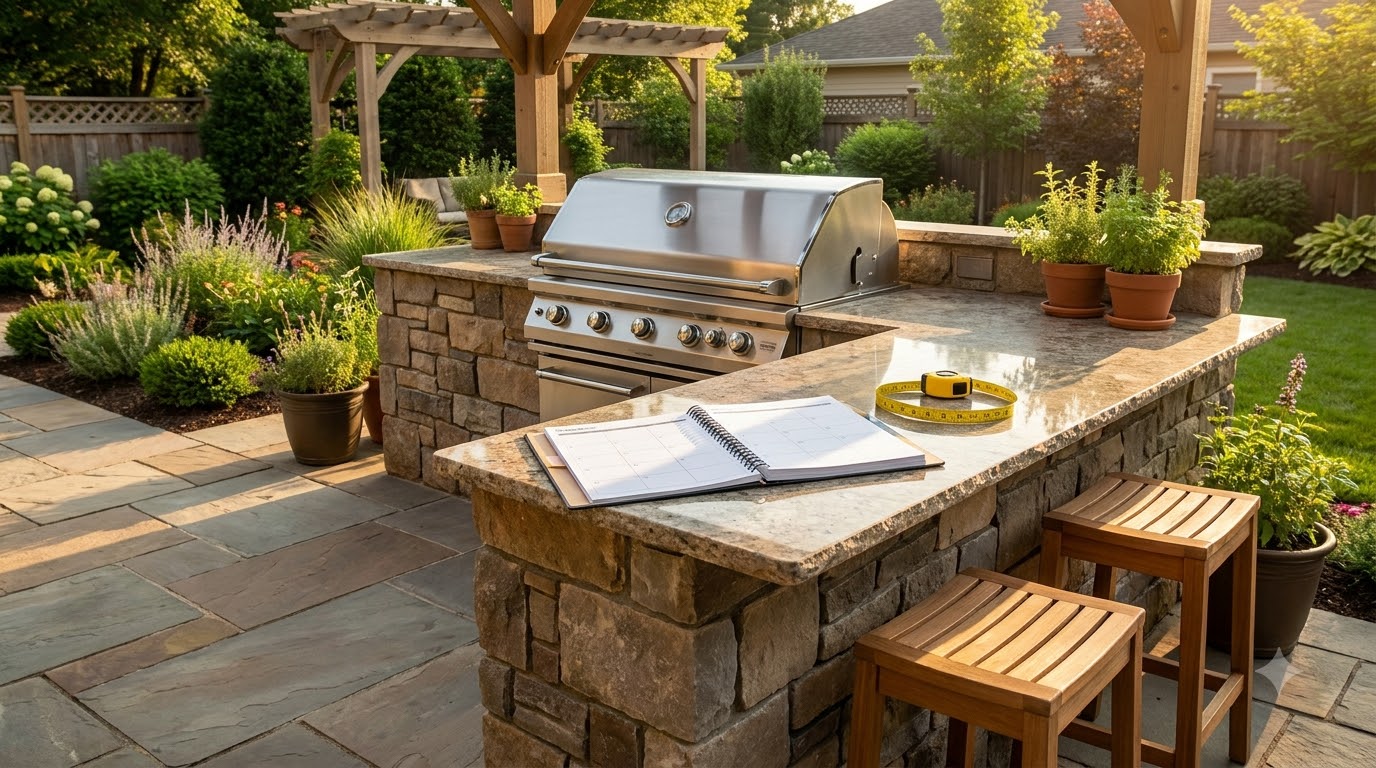
Outdoor kitchen cost is really four decisions: what you cook on, what holds it up, what covers it, and how far the services have to travel. A grill on a paver pad with a small counter sits at the bottom of the range; a roofed, plumbed, appliance-packed custom build sits at the top, often ten times over. Below: the four build tiers, the cost drivers inside each, and the service lines that quietly decide the final number.
Key takeaways
- Appliances and structure lead, but services (gas, water, power) are what blow budgets.
- Built-in appliances cost multiples of the freestanding equivalents — the single biggest specification lever.
- A roof is its own project — framing, footings, permits, and usually a vent hood.
- Block-and-veneer bases give masonry looks at a fraction of full custom cabinetry.
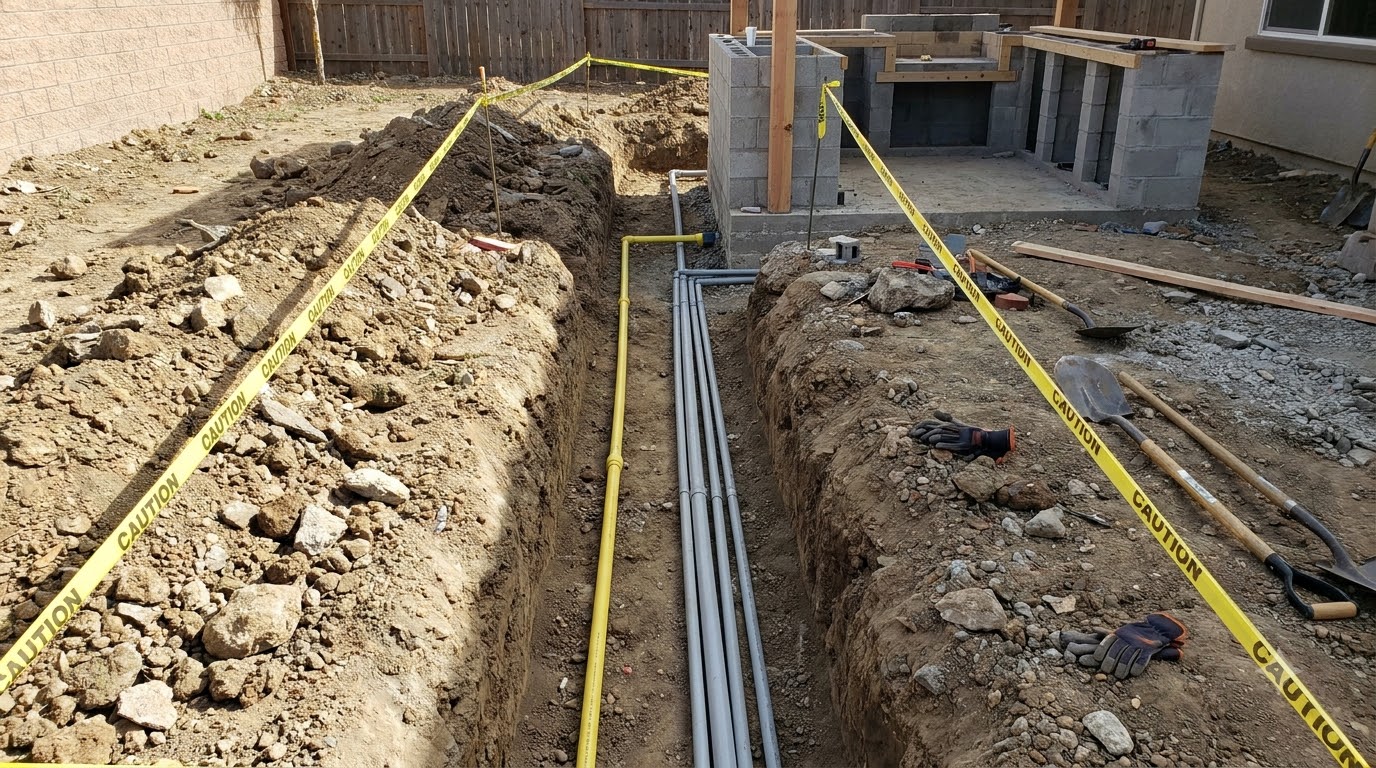
- Run services before paving. Retrofitting under a finished patio is the classic expensive mistake.
The four build tiers
| Tier | What it is | Relative cost | Typically includes |
|---|---|---|---|
| 1. Grill station | Existing grill plus a counter and storage | $ | No services, no structure — a weekend build |
| 2. Block build | Concrete block base clad in tile or stone, grill dropped in | $$ | Masonry look, DIY-able, power optional |
| 3. Modular / kit | Prefabricated units assembled on site | $$$ | Fast install, matched finishes, built-in appliances |
| 4. Full custom | Designed build with roof, services and multiple appliances | $$$$ | Everything — and permits, trades and design fees |
Most people over-estimate what tier they need. If the honest use case is grilling twice a week for the family, tier 1 or 2 delivers nearly all of the enjoyment for a fraction of the outlay.
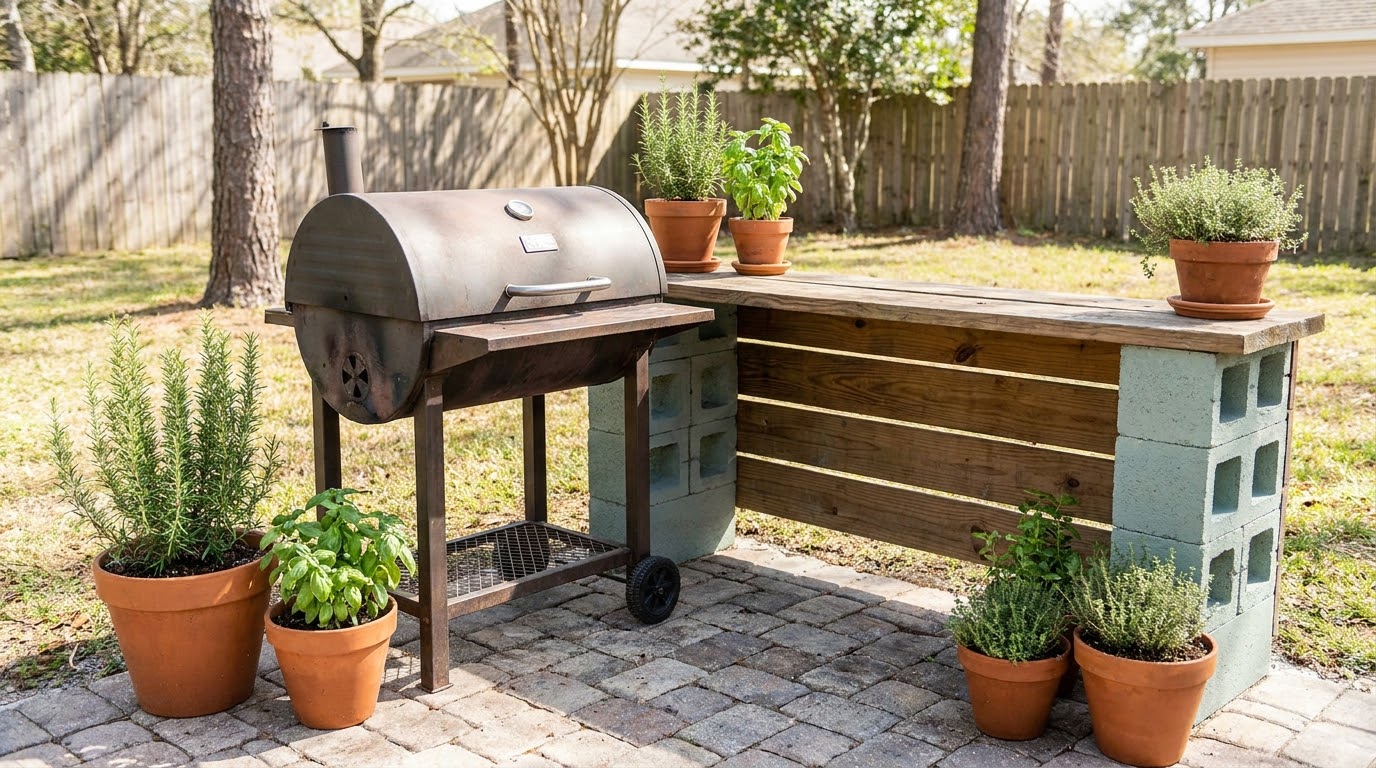
Outdoor kitchen cost: where the money actually goes
- Appliances. Built-in grills, side burners, refrigeration, ice makers and pizza ovens — each is a step up, and built-in versions cost far more than freestanding ones.
- Structure. Block-and-veneer is the value option; stainless modular units cost more; full custom masonry with stone tops sits at the top.
- Countertops. Granite, dense porcelain and concrete all outlast cheaper surfaces outdoors, and the price scales with the run length you specify.
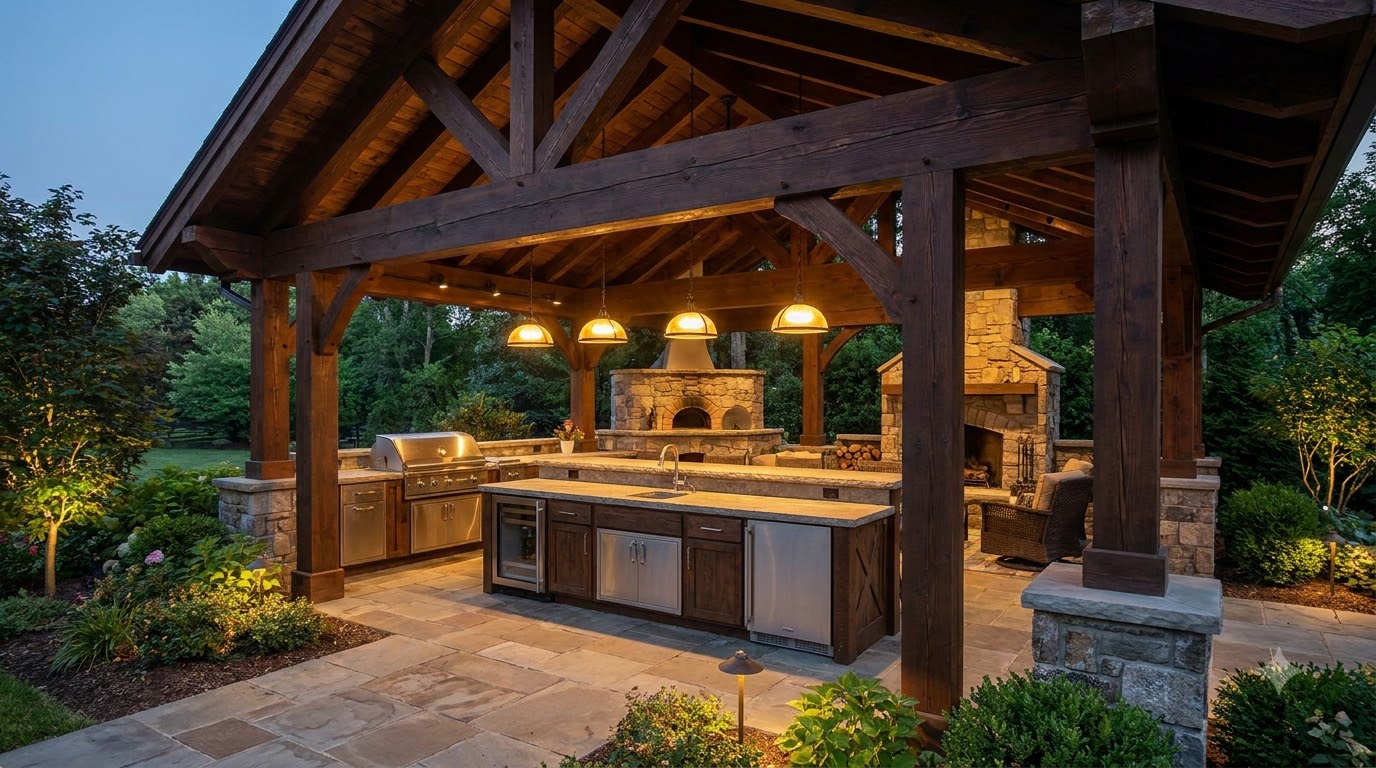
- Cover. Adding a roof brings its own framing, footings, permits and often a vent hood — see covered outdoor kitchen ideas.
- Site work. A new slab or paved area under the kitchen, if you do not already have one.
- Labor. On custom builds, labor commonly rivals materials — masonry, gas fitting and electrical are all licensed trades.
The hidden lines
- Gas line. Trenching plus a licensed gas fitter plus permit and inspection. Propane bottles avoid all of it.
- Water and drainage. A sink means supply, waste, and a winterization plan in cold climates — often the single least-used feature per dollar.
- Electrical. Outdoor-rated GFCI circuits for fridge, lights and outlets, run by an electrician.
- Permits and inspections for structure, gas and electrical.
- Delivery and access. Getting block, stone and appliances into a back yard with no side access adds real labor.
- Winter protection — covers, or the cost of replacing appliances that were not outdoor-rated. Gas and electrical work also has to be inspected, and the NFPA grilling safety guidance is a useful sanity check on clearances before you finalize a layout.
Where to save without regretting it
- Keep the grill you own and build around it; upgrade later if the kitchen earns it.
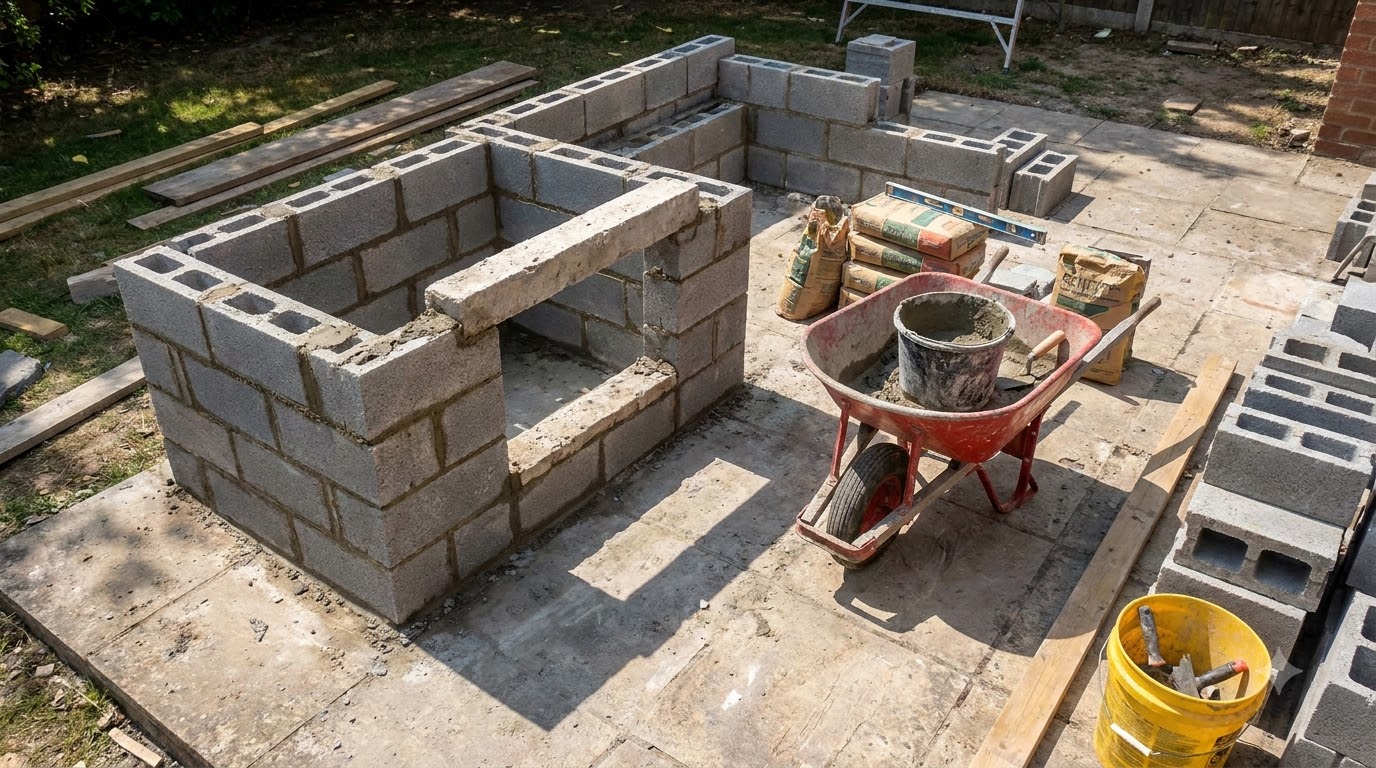
- Block base, good veneer. The cladding is what people see — spend there, not on the structure behind it.
- Skip the sink unless you know you will use it. A hose bib nearby covers most needs.
- Use propane instead of a gas line, at least initially.
- Build on the patio you already have, against an existing wall if possible.
- Phase it: base and grill this year, cover next year, fridge after that — but run conduit and sleeves now for services you may add later, because that is the part you cannot retrofit cheaply.
Where not to cut
Outdoor-rated appliances (indoor units fail fast outside), stainless fasteners and hardware, non-combustible surfaces around the grill, a proper base under the masonry, and licensed work on gas and electrical. Every one of those saves a little now and costs considerably more later — the same false economy as thinning the base on a paver patio.
Getting comparable quotes
Two outdoor kitchen quotes can differ by a factor of three and both be honest, because they include different scopes. Ask every bidder to itemize: appliance list and models, base construction, countertop material and length, cover, gas / water / electrical, site work and paving, permits, and warranty. Then compare line by line rather than total to total — the same discipline that works for pergola quotes.
Frequently asked questions
What drives outdoor kitchen cost the most?
Appliances, the structure, and the services. Built-in grills and refrigeration cost multiples of freestanding equivalents, masonry bases cost more than modular frames, and running gas, water and power is the line most people underestimate. A roof is its own major cost on top.
What is the cheapest way to build an outdoor kitchen?
Keep the existing grill, build a concrete block base clad in tile or stone veneer, and skip plumbing entirely. Siting it against an existing wall on an existing patio removes both structural and paving costs.
Do you need gas and water for an outdoor kitchen?
No. Propane avoids a gas line, and many outdoor kitchens work fine without plumbing. Adding either means licensed trades, trenching and often permits — decide early, because retrofitting after paving costs far more.
Is an outdoor kitchen worth it?
Worth it if you already cook and eat outside regularly. The value comes from usable outdoor living space, so a modest kitchen used weekly beats an elaborate one used twice a summer.
Does an outdoor kitchen add value to a home?
It can, particularly in warm climates and when the build matches the house in quality and style. Buyers respond to a coherent outdoor living area; a half-finished or over-specified kitchen rarely returns its cost.
How much does a covered outdoor kitchen add to the cost?
A roof is one of the largest single additions — framing, footings, permits and usually a vent hood. An open-slat pergola is the cheaper middle path; a solid roof or house extension sits at the top of the range.