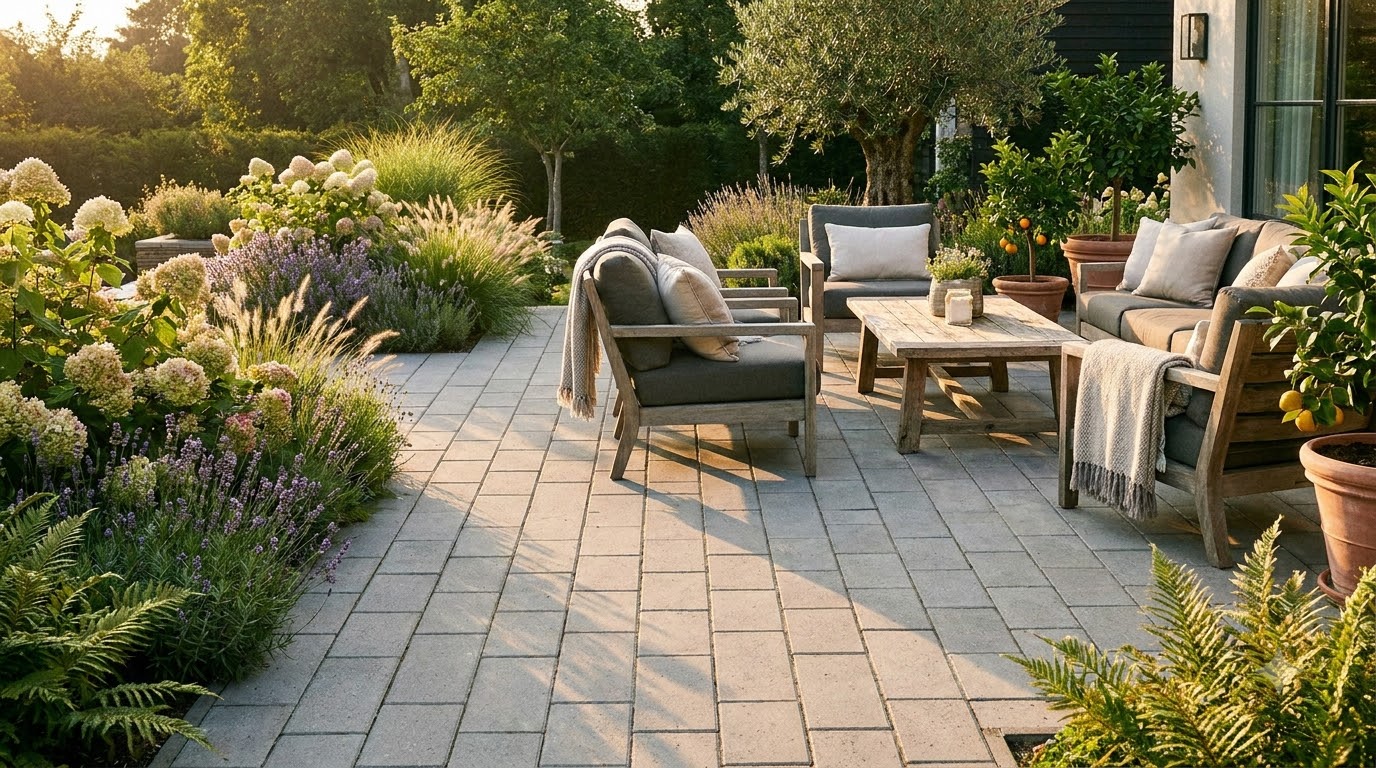
Paver patio ideas live or die on what is underneath them. A gorgeous herringbone field laid on thin, poorly compacted base will sink and ripple within two winters; a plain running bond on a properly built base looks good for decades. So: pattern and paver type below, but read the base section first — it is the part every failed patio has in common.
Key takeaways
- Base first: several inches of gravel compacted in layers, then about an inch of bedding sand.
- Herringbone is the strongest pattern — interlocking spreads load; running bond is fine for foot traffic.
- Edge restraint is not optional. Without it the perimeter creeps and the whole field loosens.
- Polymeric sand in the joints resists weeds and washout far better than plain sand.
- Pavers cost more than concrete but are repairable one unit at a time — the long-game advantage.
The base build, in order
- Excavate deep enough for base plus bedding plus paver thickness, sloping away from the house at roughly a quarter inch per foot.
- Compact the subgrade before adding anything — soft spots here become dips later.
- Add gravel in layers, compacting each layer. Several inches for a patio; more in cold climates or clay soils.
- Screed a bedding layer of coarse sand about an inch thick — and do not use it to correct base level; it is bedding, not filler.
- Lay pavers from a straight edge, working forward off the laid surface so you never walk the screeded sand.
- Install edge restraint, then sweep in polymeric sand, compact with a plate compactor over a protective mat, and wet the joints.
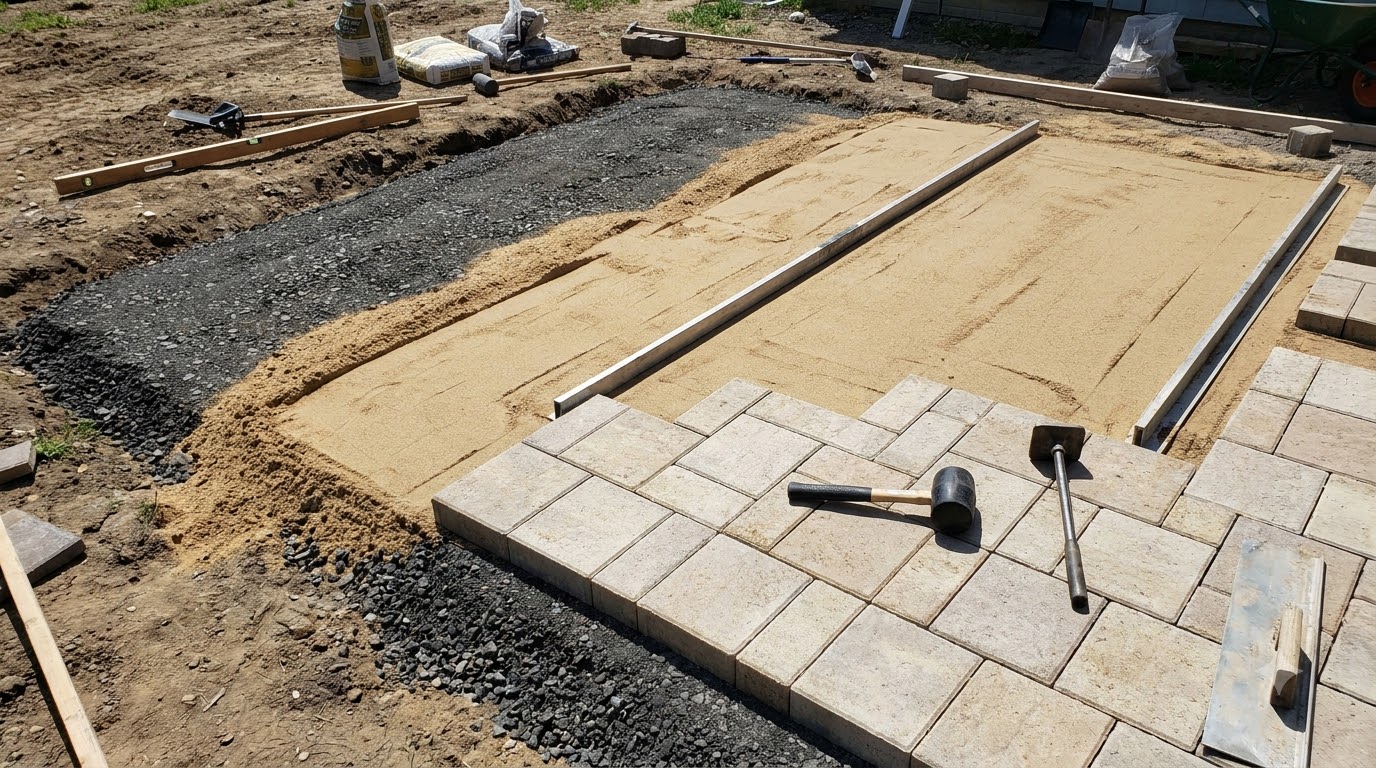
If any step feels tedious, it is the one holding the patio flat. The visual half of the job takes a weekend; the base is what makes that weekend last.
Paver patio ideas by pattern
| Pattern | Strength | Cutting waste | Best for |
|---|---|---|---|
| Running bond | Good | Low | Simple, fast, the default for a rectangle |
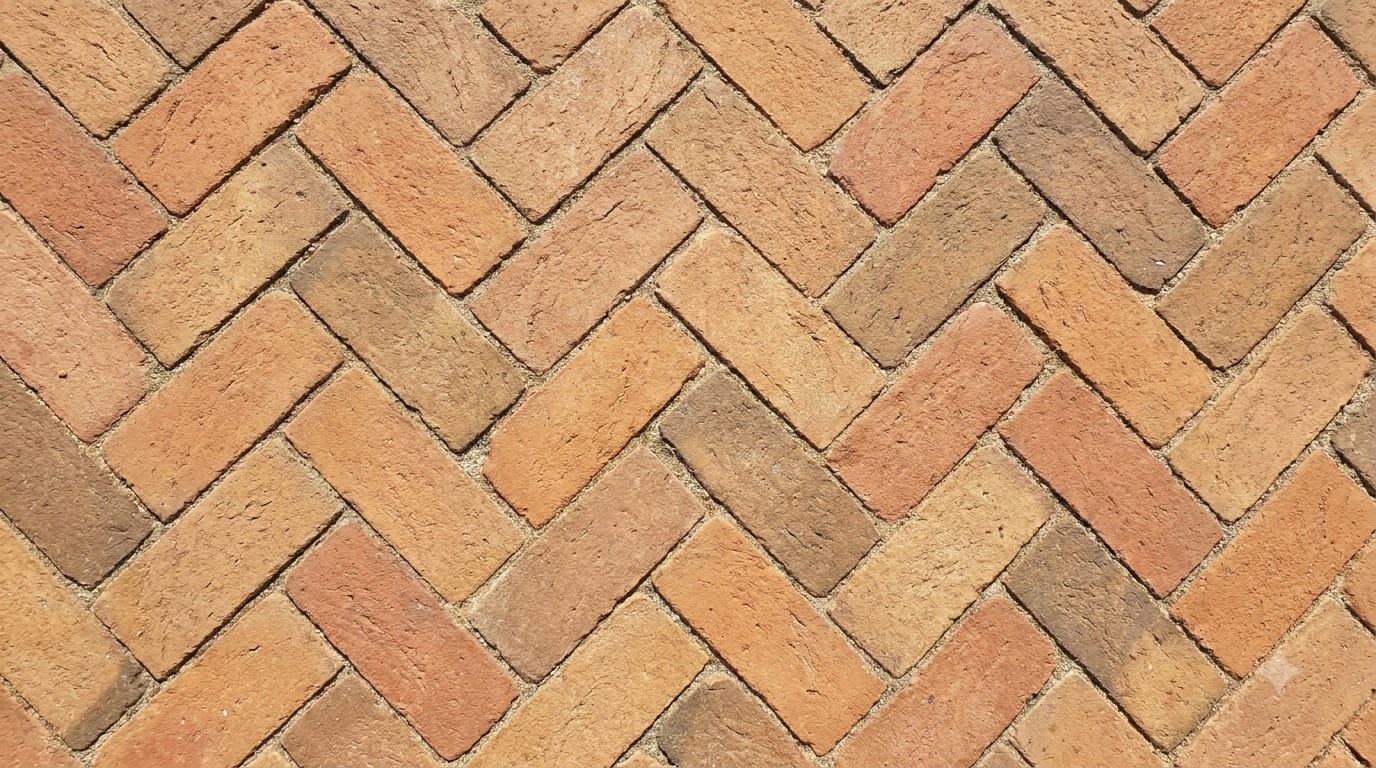
| Herringbone 45° | Strongest | High — many edge cuts | Driveways, heavy use, a formal look |
| Herringbone 90° | Very good | Moderate | Strength with fewer awkward cuts |
| Basketweave | Moderate | Low | Traditional and cottage styles |
| Stack bond (grid) | Lowest | Lowest | Modern large-format slabs, light use |
| Random / modular mix | Good | Low | Natural look, hides slight size variation |
Choosing pavers
- Concrete pavers — the value default: huge range of shapes and colors, consistent thickness, easy to source and replace.
- Clay brick pavers — warm color that never fades because it is fired in, and a classic fit with older houses.
- Porcelain pavers — crisp modern look, very low maintenance; buy outdoor-rated textured finishes, not indoor tile.
- Natural stone setts — the premium option; beautiful, heavy, and slower to lay because sizes vary.
- Permeable pavers — open-graded joints let rain soak away, which matters on tight lots and is exactly the approach the US EPA green infrastructure guidance encourages.
Buy 5–10% extra for cuts and future repairs, and take the whole order from one batch — color varies between production runs, and a repair in year five is much easier from a spare pallet than from a new one.
Design ideas worth stealing
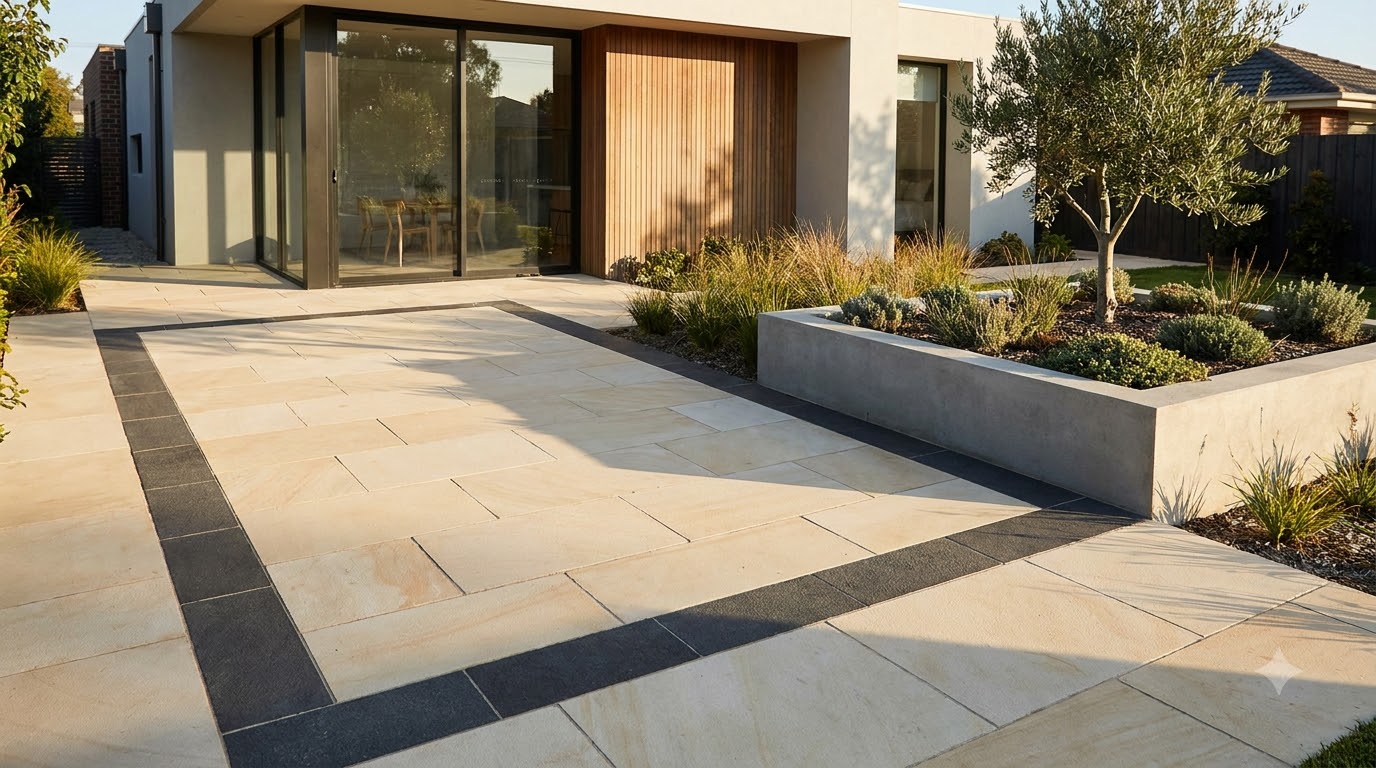
- Contrasting soldier course. A single border row in a darker paver frames the field and hides the edge restraint.
- Two-size modular field in one color — texture and rhythm without any color fuss.
- Planted joints at the perimeter. Let the last two courses open up with creeping thyme so the patio dissolves into the garden.
- Paver-and-gravel field. Large pavers set in gravel — cheaper per square foot, drains freely, very much in style.
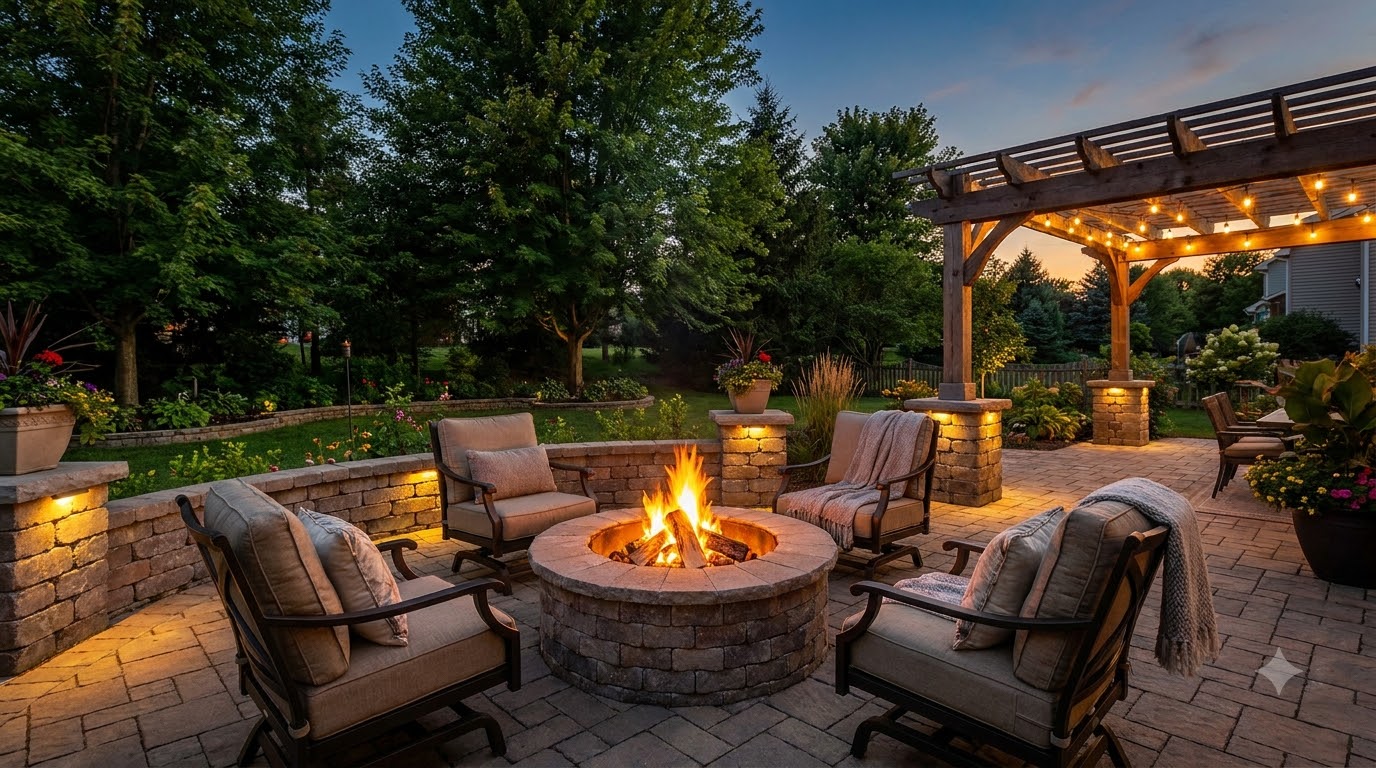
- Built-in fire pit or seat wall in the same paver family, so the vertical elements look original to the patio.
- Low warm perimeter lighting — the same layering logic as deck and patio lighting, aimed down.
Sizing and layout
Furniture decides the footprint: about three feet behind dining chairs, 18 inches from seating to a coffee table, and two to three feet for walkways — the same clearances covered in small patio layouts. Two paver-specific notes: size the patio to whole pavers where you can (fewer cuts, cleaner edges), and keep the finished surface below door thresholds and any damp-proof course on the wall.
Maintenance and repairs
- Top up joint sand as it wears; open joints are where weeds and washout start.
- Wash off algae film in damp shade — that film, not the paver, is what gets slippery.
- Lift and reset dips: pull the pavers, add and compact bedding, relay. The repair concrete cannot offer.
- Reseal only if you sealed originally, and use a matte non-slip product.
- Keep de-icing salts off clay and natural stone; they accelerate surface damage.
If a paver patio is beyond budget, the honest alternatives are a budget concrete slab dressed with a border, or dry-laid flagstone if you want natural stone character for a similar effort.
Frequently asked questions
How deep should the base be for a paver patio?
Several inches of compacted gravel for a pedestrian patio, more in cold climates or soft ground, plus about an inch of bedding sand. Compact the gravel in layers rather than all at once — that is what stops uneven settling later.
What is the strongest paver pattern?
Herringbone, especially at 45 degrees. The interlocking zigzag spreads load across neighboring pavers and resists shifting, which is why it is standard for driveways. Running bond is fine for foot traffic.
Do paver patios need edging?
Yes. Without restraint the outer pavers creep outward, joints open up, and the field loosens from the edge inward. Plastic or metal edging spiked into the base is standard; a concrete haunch is the heavy-duty version.
Are pavers cheaper than a concrete patio?
Materials usually cost more than poured concrete, but pavers are far more DIY-friendly and repairable — individual units lift and reset instead of breaking out a slab. Over the patio life, that often makes them better value.
How do you stop weeds between pavers?
Polymeric sand in the joints, which hardens after wetting and resists weeds and washout. Keep joints topped up and sweep debris off — most weeds germinate in collected soil and leaf litter, not in the sand.
Can you lay pavers over an existing concrete patio?
Yes, if the slab is sound, drains well, and the added height still clears door thresholds. If the slab is cracked or heaving, remove it and build a proper compacted base instead.