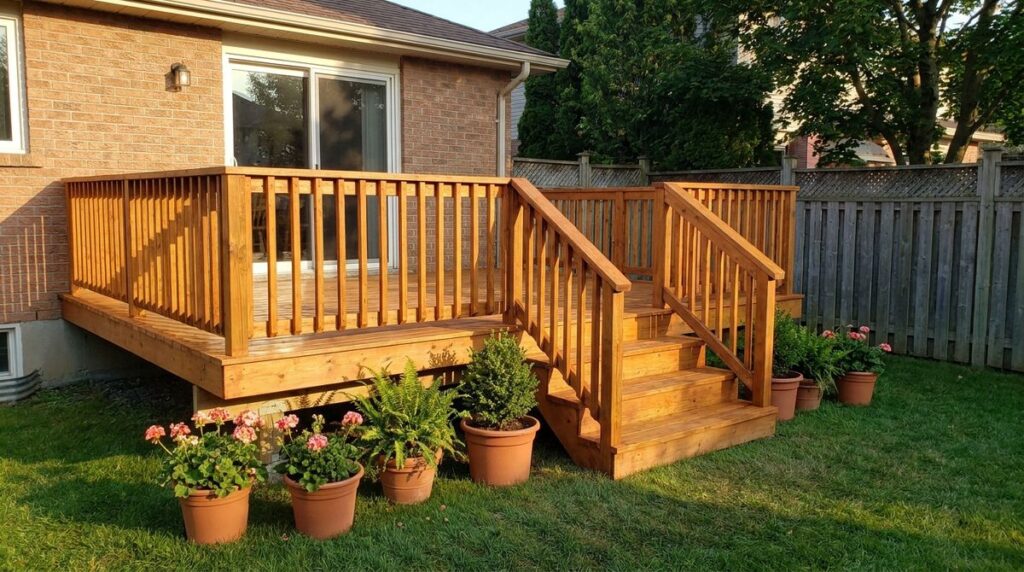
To stain a deck, clean and brighten the boards, let them dry for at least 48 hours, then brush or pad on stain when the surface is between about 40°F and 90°F and the forecast stays dry for 24 to 36 hours. Most of the work is prep and waiting; the staining itself fits in a morning or late afternoon.
Key takeaways
- New pressure-treated decks can be ready to stain within about 30 days. Sprinkle water on the boards: if it soaks in, stain; if it beads, wait and test again.
- Dry wood matters more than the calendar. Benjamin Moore’s oil-based data sheet calls for wood moisture below 15%.
- Read the can for coats. A penetrating oil semi-transparent goes on in one coat; Behr’s acrylic semi-transparent and solid stains call for two.
- Keep foot traffic off for 24 to 48 hours, and longer in cool, humid weather.
- Oil-soaked rags can catch fire on their own. Dry them flat outdoors, then store them in a sealed metal can of water.
Here is the shopping list for staining a wood deck, with what to pick and why.
| Item | What to choose | Notes |
|---|---|---|
| Deck cleaner | Wood cleaner or wood restorer for gray boards | Removes dirt, mildew and loose gray fibers |
| Brightener | Wood brightener and neutralizer | Follows a stripper or cleaner; also breaks mill glaze on new lumber |
| Stripper | Wood stain remover, only if old finish is peeling | Flaking film must come off before new stain |
| Sandpaper | 80-grit on a pole or floor sander | The grit Benjamin Moore specifies after cleaning |
| Stain | Transparent, semi-transparent or solid; oil or water-based | 200–500 sq ft per gallon depending on product and wood |
| Applicators | Stain brush, pad applicator, 3/8-in roller, optional pump sprayer | Back-brush after any pad, roller or sprayer |
| Prep and safety gear | Stiff scrub brush, garden hose or pressure washer, painter’s tape, drop cloths, gloves, eye protection | Add a metal can with a lid for oily rags |
When to stain a new pressure-treated deck
When to stain a new pressure-treated deck depends on how wet the lumber still is, not on a fixed number of months. YellaWood, a major treated-lumber brand, says a new project could be ready to finish within 30 days of completion, depending on local weather, and only once the boards pass a simple water test.
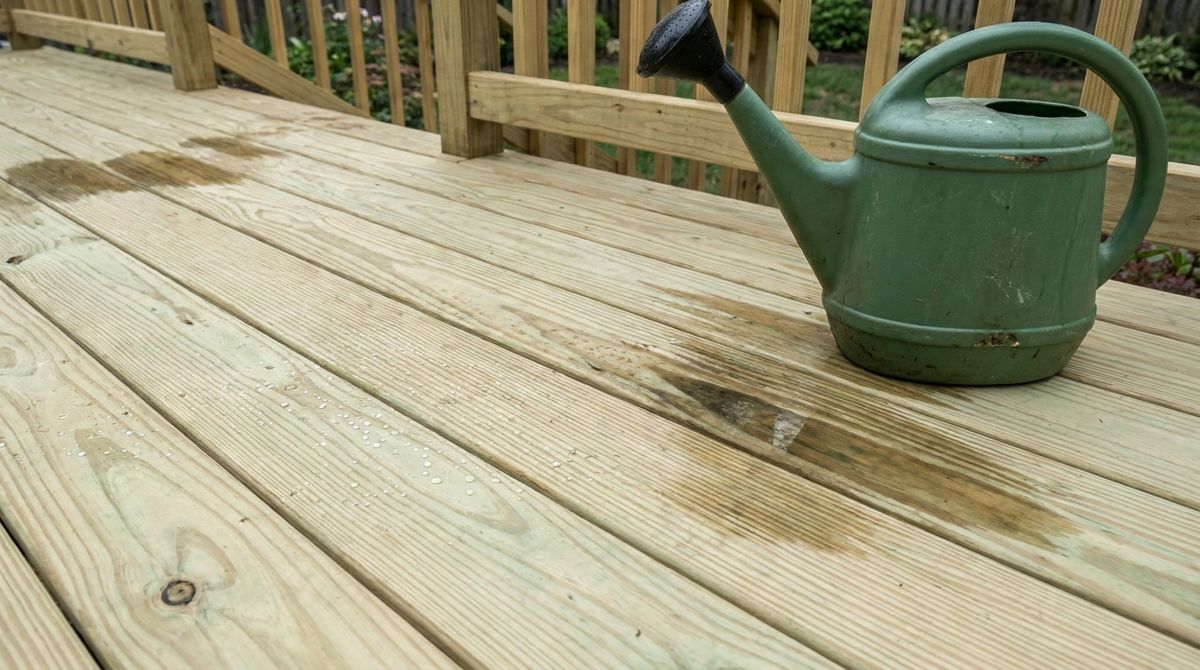
- Run the sprinkle test. Drop a few beads of water on several boards. If they soak in, the wood is ready. If they bead up, wait several days and test again.
- Check the stain’s own limit. Benjamin Moore’s oil-based semi-transparent data sheet says new pressure-treated lumber must dry to a moisture content below 15%.
- Kiln-dried after treatment (KDAT) lumber needs no waiting, per YellaWood. Boards with a factory water repellent may take longer.
- Break the mill glaze. Smooth new boards can have a glossy surface that blocks stain; a brightener scrub or sanding opens it.
Weather window: temperature, humidity and rain
The weather window for deck stain comes straight from the product’s data sheet, and the numbers differ more than most guides admit. The table compares three current data sheets with Benjamin Moore’s how-to advice.
| Product type | Temperature while applying | Rain | Recoat | Back in use |
|---|---|---|---|---|
| Oil-based semi-transparent (Benjamin Moore Woodluxe 592) | Air and surface 40–90°F | Dry forecast of 36 hours (Benjamin Moore how-to) | One coat only | 48 hours before furniture and use |
| Water-based semi-transparent (Behr Premium, rev. 2024) | Air, material and surface 40–90°F | Resists rain 4 hours after application | 1–2 hours | Light foot traffic 24–48 hours; full cure 72 hours |
| Water-based solid (Behr Premium, rev. 2017) | 35–90°F | Do not use if rain is expected within 24 hours | 1–2 hours | Light foot traffic 24–48 hours; full cure 72 hours |
Dry times on all three sheets are measured at 77°F and 50% relative humidity. Every sheet warns that lower temperatures and higher humidity stretch drying, so add time on cool or muggy days.
- Surface temperature counts. Benjamin Moore lists the 40–90°F range as surface temperature; boards in full sun run hotter than the air.
- Avoid direct sun. Both Behr and Benjamin Moore warn that hot surfaces dry stain too fast and cause lap marks. Plan the job for the hours the deck is in shade.
- Mind the night. Use the rain figure as a minimum and stop early enough that the stain is dry before evening dew.
Stain types compared: opacity, oil vs water, and how long each lasts
Stain types differ in two ways: opacity, from clear to solid, and base, oil or water. More pigment hides more grain and, by the makers’ own ratings, lasts longer on a deck.
| Type | Look | How long the maker says it lasts on decks |
|---|---|---|
| Clear sealer / transparent | Full grain, little or no color | YellaWood advises reapplying clear sealers on treated decks every year |
| Semi-transparent | Grain shows through a tint | Behr Premium semi-transparent: “up to 6 years on decks” (8 on fences and siding) |
| Solid | Opaque color; wood texture only | Behr Premium solid: “up to 10 years on decks” (25 on fences and siding) |
Treat those years as best cases from a label, not a schedule. Note that every maker cited here rates decks for fewer years than fences and siding. Restain when water stops beading and soaks into the boards, the same test used on new wood.
Oil-based or water-based?
- Oil-based penetrating stain soaks in rather than building a film. Benjamin Moore’s oil semi-transparent is touch-dry in 6–8 hours, cleans up with mineral spirits, and its rags are a fire risk.
- Water-based acrylic stain recoats in 1–2 hours and cleans up with soap and water. NFPA notes that oily-rag fires do not happen with water-based finishes.
- Do not stack mismatched finishes. Benjamin Moore’s oil stain goes over old transparent stain only if it is weathered and not flaking; otherwise strip it first.
Deciding on a color for the railings at the same time? One option is solid stain on posts and balusters with semi-transparent on the floor; these deck railing ideas by style and material show how the two read together.
How to stain a deck step by step
How to stain a deck comes down to seven steps over three or four days, most of it drying time. The order below works for new, weathered and previously stained wood decks.
Step 1: Clear, inspect and repair
Move furniture, grills and planters off the deck and sweep it. Replace split or rotted boards, reset popped nails and drive loose screws flush. Tape off the house siding and cover nearby plants with drop cloths.
Step 2: Clean, strip if needed, and brighten
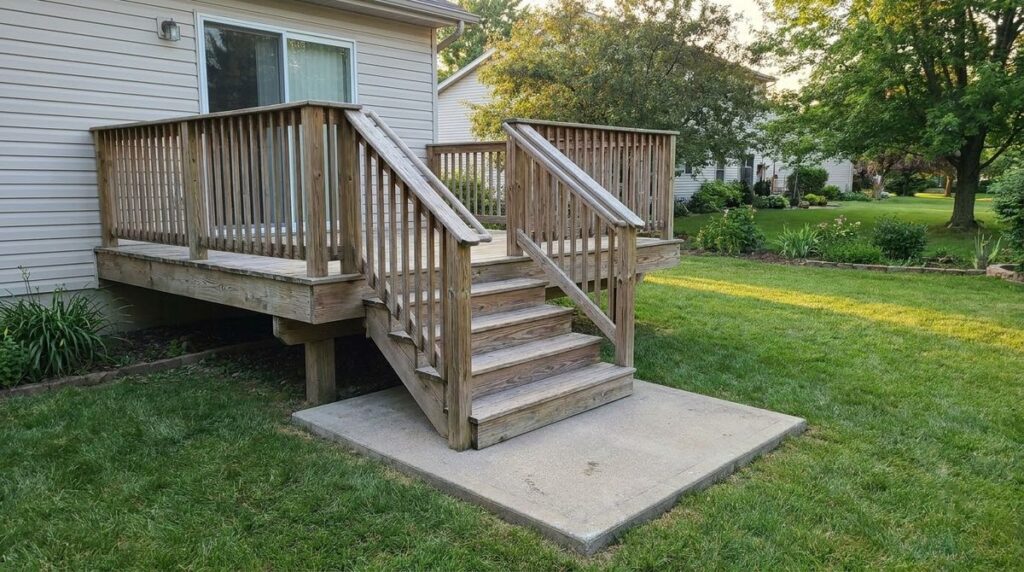
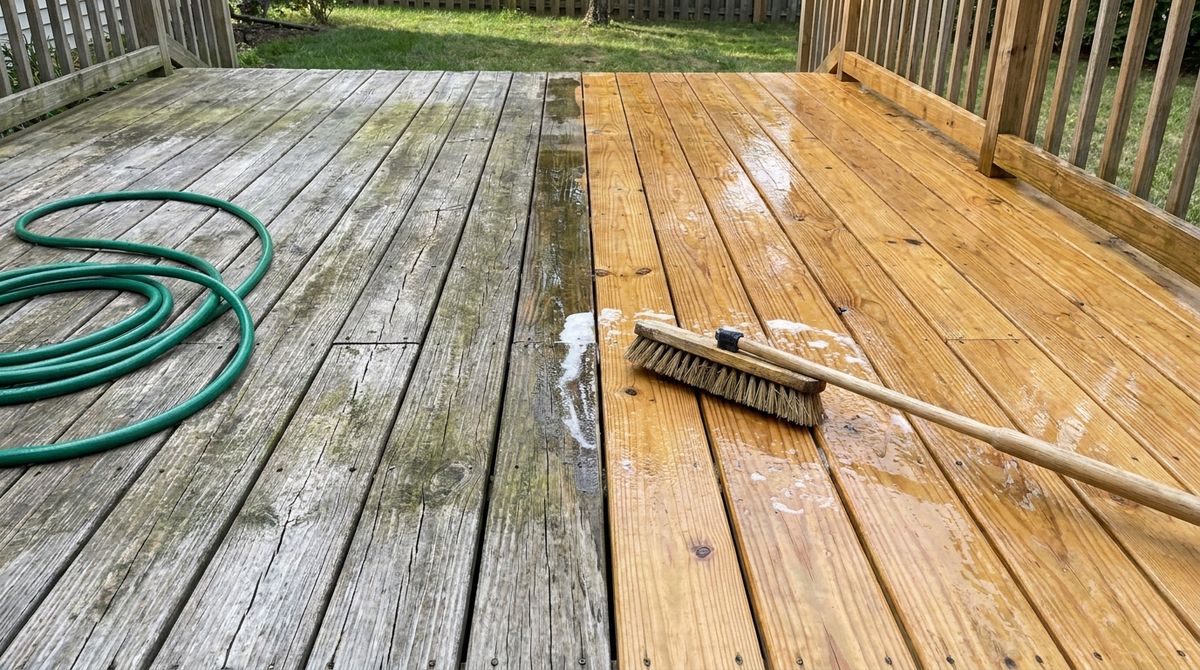
Scrub the boards with a wood cleaner, or a wood restorer if they have turned gray. If old stain is peeling, remove what you can with a pressure washer, wire brush or sander, then use a stain remover on the rest. Finish with a brightener and neutralizer, and rinse with a hose or pressure washer.
Step 3: Let it dry for 48 hours
Benjamin Moore calls for at least 48 hours of drying after washing. Then repeat the sprinkle test: the water should soak in quickly. If it beads, the wood is still too wet or the surface is still sealed.
Step 4: Sand
Sand the floor with 80-grit paper, the grit Benjamin Moore specifies, to knock down raised fibers left by washing. Behr’s data sheet also calls for a light sanding to remove remaining fuzz. Sweep or blow off the dust afterward.
Step 5: Test the color and check the forecast
Stain a hidden spot or a scrap board of the same wood; color in the can differs from the dried finish. Confirm the forecast meets your product’s rain window, and stir every can, mixing them together if you have more than one, so the color stays even.
Step 6: Apply the stain, a few boards at a time
Brush the railings, edges and the gaps between boards first. Then stain two or three floor boards along their full length, keep a wet edge, and stop only at a natural break such as the end of a board or the deck stairs. Work toward an exit so you are not trapped in a corner.
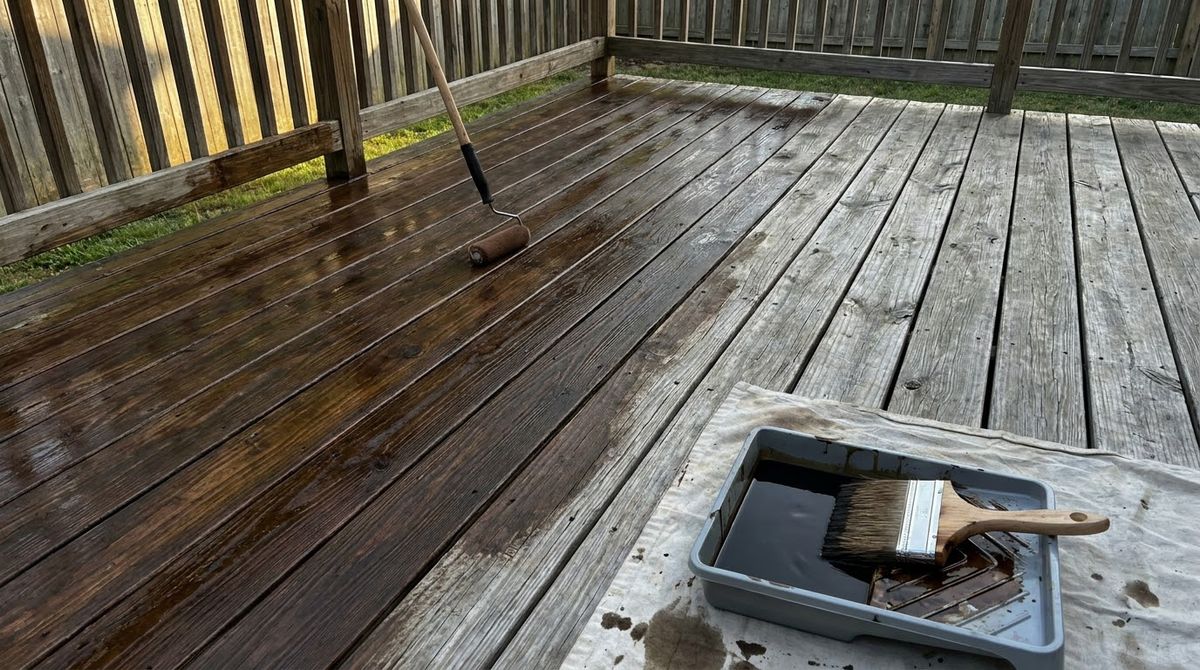
- Pad, roller or sprayer? All work, but follow each with back-brushing to push stain into the wood.
- Coverage. Behr puts its first coat at about 300 sq ft per gallon and a thinner second coat at 500; Benjamin Moore’s oil stain covers 200–400.
- Wipe puddles before they dry. Excess stain is what peels later.
Step 7: Second coat (if the label says so) and dry time
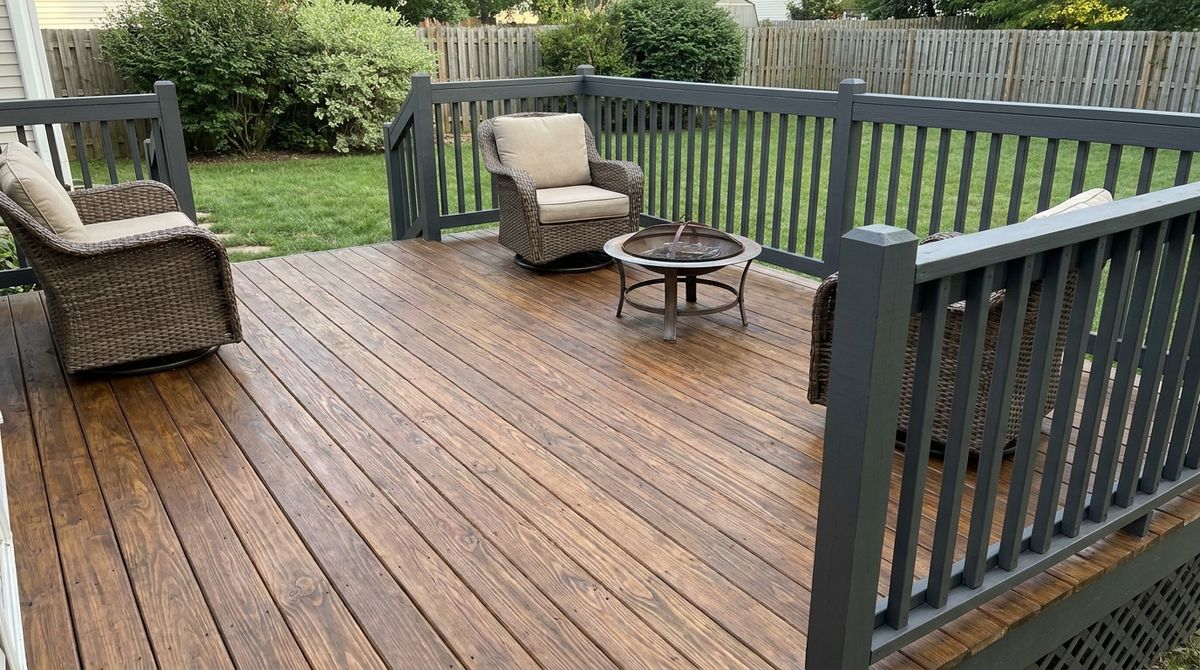
Add a second coat only if your product calls for it. Behr’s acrylic semi-transparent needs two coats, 1–2 hours apart; Benjamin Moore’s oil semi-transparent is one coat only. Keep people off for 24–48 hours, and wait the full 48 hours before moving furniture back onto an oil-stained deck.
Common mistakes when staining a deck
Most failed deck stain jobs trace back to the same short list:
- Staining wet wood. If water beads on new or freshly washed boards, stain cannot soak in and will sit on the surface.
- Too much stain. Benjamin Moore warns that extra coats or heavy application can cause premature failure; Behr says over application leads to peeling and cracking.
- Working in full sun. Hot boards dry the stain before it penetrates and leave lap marks.
- Stopping mid-board. A break in the middle of a board leaves a visible overlap line.
- Skipping the brightener after a stripper or on new, glazed lumber.
- Coating over peeling film. New stain only sticks as well as the flaking layer under it.
- Racing the weather. A shower inside the rain window on the can can streak or wash out fresh stain.
A pool deck adds one more risk: stained boards can get slippery when wet, as Behr’s data sheets note. Compare surfaces in these pool deck ideas built around heat and slip resistance before choosing a finish around water.
Safety: oily rags, lead dust and fumes
Safety while staining a deck comes down to three hazards, and the first is the one people miss. Oil-based stains release heat as they dry, and a pile of soaked rags can trap that heat until it ignites.
- Handle oily rags the NFPA way. Never leave them in a pile. Hang them or spread them outside, weighted down and away from buildings, to dry. Then seal them in a metal can filled with water and detergent, and check local disposal rules. NFPA counts an average of 900 home fires a year started by oily rags.
- Follow the label too. Benjamin Moore’s oil stain label says to place soaked rags in a sealed, water-filled metal container immediately after use.
- Test old paint for lead. Both Behr and Benjamin Moore warn that scraping or sanding old paint can release lead dust. Use a NIOSH-approved respirator and HEPA cleanup on older decks.
- Ventilate and protect your eyes. Wear gloves and eye protection for cleaners, strippers and stain.
When to hire a pro instead
Staining a deck is a reasonable first DIY project on a sound, single-level deck. Call a contractor when:
- The old finish is a thick, peeling film over most of the deck and needs full stripping or machine sanding.
- The house is old enough that the existing coating may contain lead.
- Boards are soft, rotted or the framing feels loose; that is a repair job before it is a finish job.
- The deck is elevated or large enough that you cannot finish whole boards before the stain dries.
Frequently asked questions
How long should you wait to stain a new pressure-treated deck?
Often about 30 days, according to YellaWood, but test rather than count days. Sprinkle water on the boards: if it soaks in, the wood is ready; if it beads, wait several days and test again. Kiln-dried after treatment lumber needs no wait, and some oil stains require wood moisture below 15%.
How many coats of stain does a deck need?
Follow the can. Penetrating oil stains such as Benjamin Moore’s oil semi-transparent are one coat, and its data sheet warns extra coats can cause early failure. Behr’s acrylic semi-transparent and solid stains call for two coats, applied 1 to 2 hours apart, with the second coat thinner than the first.
How long does deck stain need to dry before walking on it?
Plan on 24 to 48 hours. Behr’s water-based stains allow light foot traffic after 24 to 48 hours and reach full cure at 72 hours. Benjamin Moore asks for 48 hours before furniture goes back on an oil-stained deck. Those times assume 77°F and 50% humidity, so cool or damp weather adds time.
What happens if it rains after you stain a deck?
It depends on how long the stain had to set. Behr’s acrylic semi-transparent resists rain 4 hours after application, while its solid stain should not go on if rain is expected within 24 hours. Benjamin Moore suggests a dry forecast of at least 36 hours. Rain sooner than that can streak or wash out fresh stain.
How often should you restain a deck?
It varies by opacity. YellaWood says to reapply clear sealers yearly. Behr rates its semi-transparent stain for up to 6 years on decks and its solid stain for up to 10, but those are best-case label claims. Restain when water stops beading and starts soaking into the boards.
Is oil-based or water-based deck stain better?
Neither wins everywhere. Oil-based penetrating stain soaks in and does not build a film, but it dries slowly and its rags can catch fire. Water-based acrylic stain dries for a second coat in 1 to 2 hours and cleans up with soap and water. Match whatever is already on the deck, or strip it first.
Sources
- Benjamin Moore, How to Stain a Deck (checked October 2026).
- Benjamin Moore, Woodluxe Oil-Based Waterproofing Stain + Sealer Semi-Transparent 592, technical data sheet (2023).
- Behr, Behr Premium Semi-Transparent Waterproofing Stain & Sealer No. 5077, technical data sheet (revised July 2024).
- Behr, Behr Premium Solid Color Waterproofing Stain & Sealer No. 5011, technical data sheet (revised February 2017).
- YellaWood, Sealing Pressure Treated Wood (checked October 2026).
- National Fire Protection Association, Safety with Oily Rags tip sheet (2019, hosted by the City of Bloomington, MN).