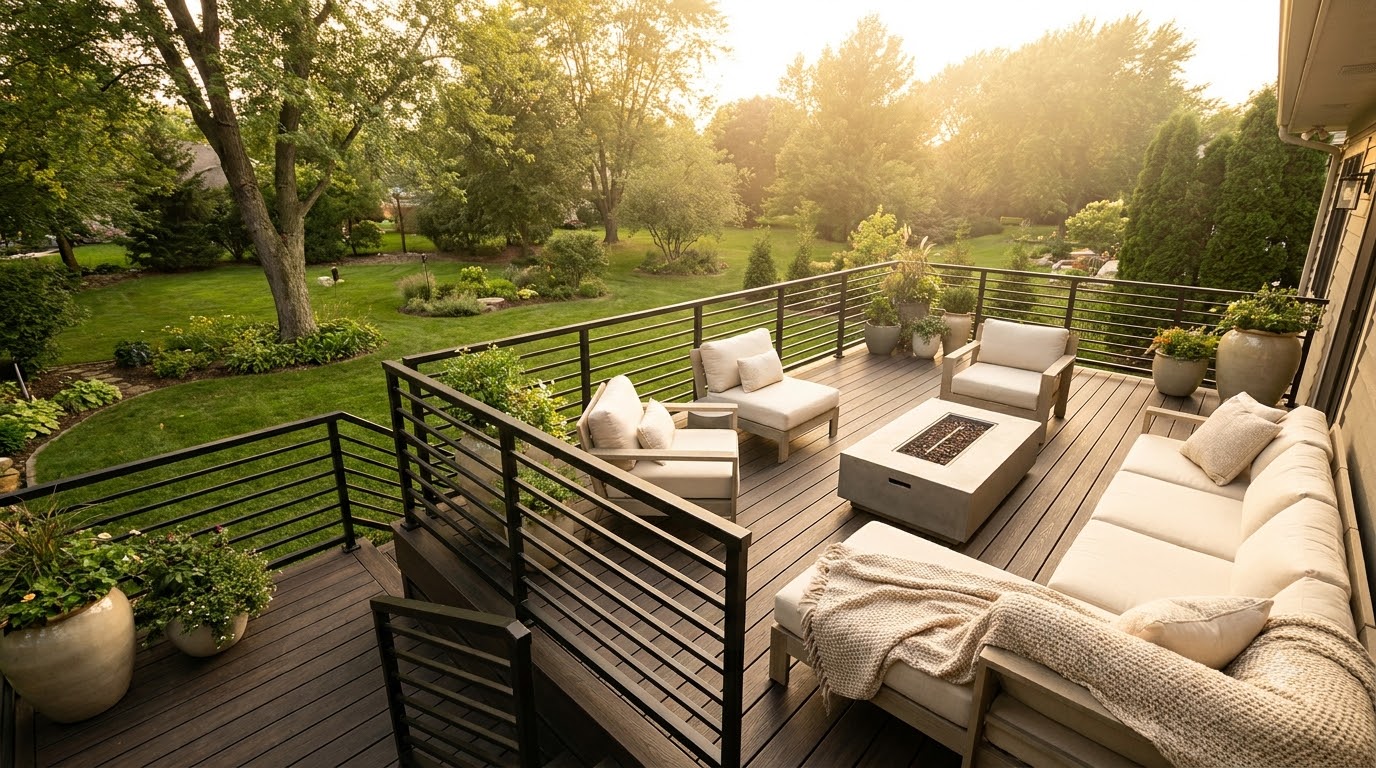
Deck railing ideas divide into two questions: what it is made of, and how much view it blocks. Cable and glass keep the sightline; wood and composite give warmth and cost less; metal balusters sit in the middle and suit almost any house. Whichever you pick, the railing has to clear the same safety bar — commonly 36 inches tall in residential code, with no gap a 4-inch sphere can pass through. Below: 14 ideas by material and style, and the code basics that rule them all.
Key takeaways
- Code first, style second: guard height (often 36 in, sometimes 42) and the 4-inch sphere rule apply to every design here.
- View-preserving railings — cable and glass — cost the most and pay off on decks with something to look at.
- Wood is cheapest; composite and metal cost more up front and skip the repaint-and-rot cycle.
- Posts are the structural part. Guards must resist real lateral load, so blocking and through-bolts matter more than the infill you choose.
- Mixed materials — metal balusters with a timber top rail — is the cheapest way to make a stock railing look custom.
The code basics behind every deck railing idea
Before the styles, the rules. These are the numbers inspectors check, and they are the reason some gorgeous ideas online would fail on a US residential deck:
- When a guard is required: typically once the deck surface sits more than 30 inches above grade.
- Height: commonly a minimum of 36 inches for residential guards; 42 inches applies in some jurisdictions and in commercial settings.
- Openings — the 4-inch sphere rule: no gap in the guard may let a 4-inch sphere pass. This governs baluster spacing, cable spacing, and any decorative infill.
- Load: guards must resist a substantial concentrated lateral force at the top rail — which is a statement about posts and blocking, not about the infill.
- Stairs have their own handrail rules on graspability and height above the nosings.
Codes are adopted and amended locally, so confirm the exact figures with your building department before ordering materials. The American Wood Council deck construction guide is the plain-language reference most inspectors and builders work from.
View-preserving railings (ideas 1–4)
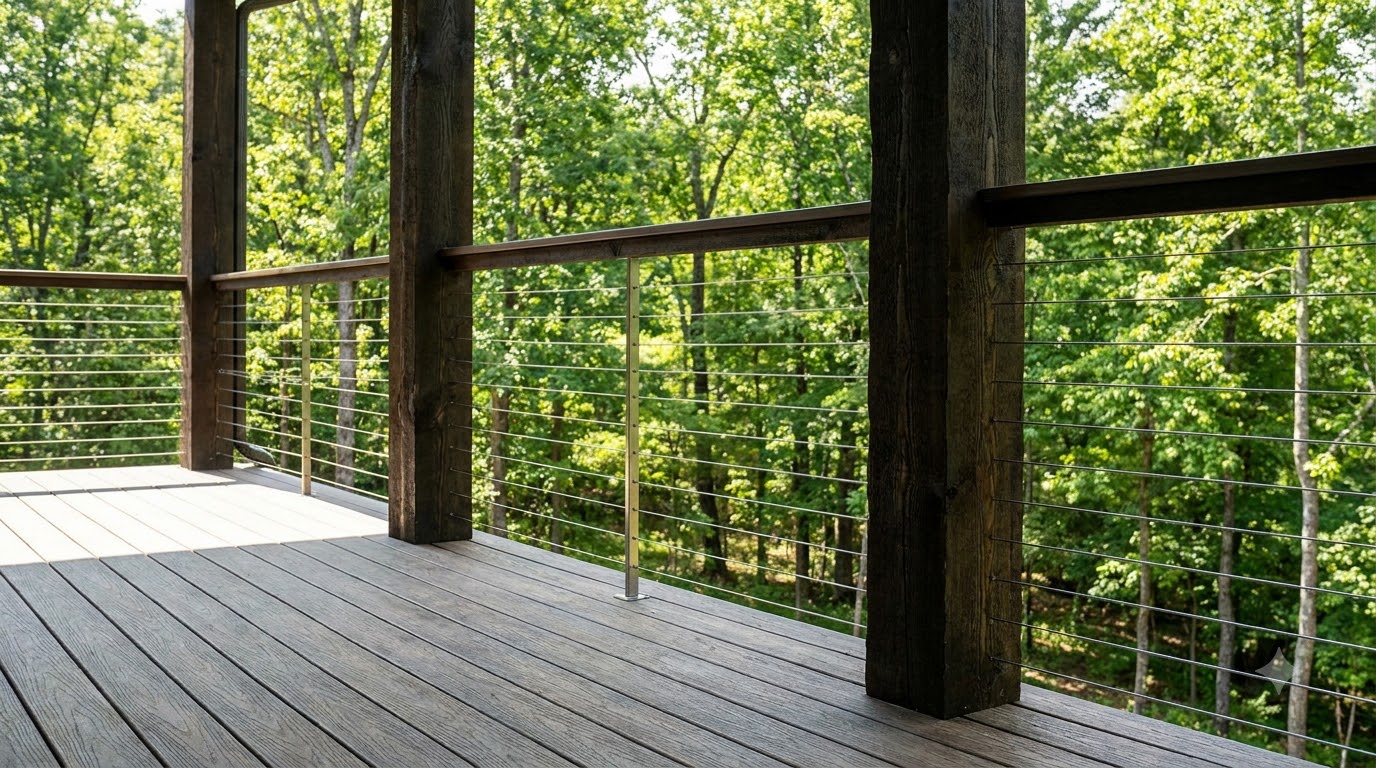
1. Stainless cable railing. Thin horizontal cables between sturdy posts — nearly invisible from a few feet back. The default modern choice where a view is the point. Cables need periodic re-tensioning, and end posts take serious load.
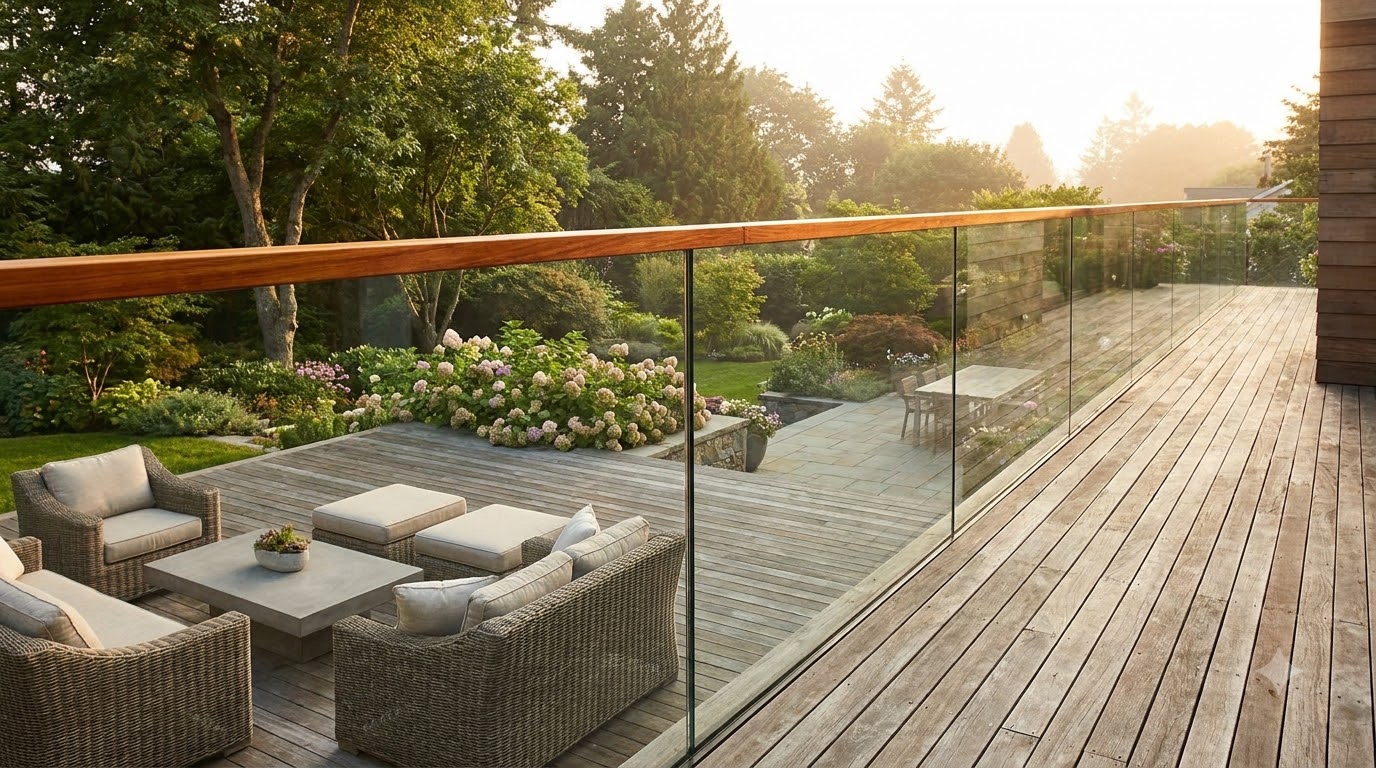
2. Tempered glass panels. Full transparency plus wind protection, which cable does not give you. Great on exposed decks and waterfront lots; the trade is cleaning, and the cost.
3. Glass with a timber top rail. Warm cap, clear panel — softens the coldness of a full-glass system and gives your hand something pleasant to rest on.
4. Thin vertical metal rods. Slim black rods, tightly spaced, read almost as a screen at an angle and nearly vanish head-on — cheaper than glass, less maintenance than cable.
Classic and warm (ideas 5–8)
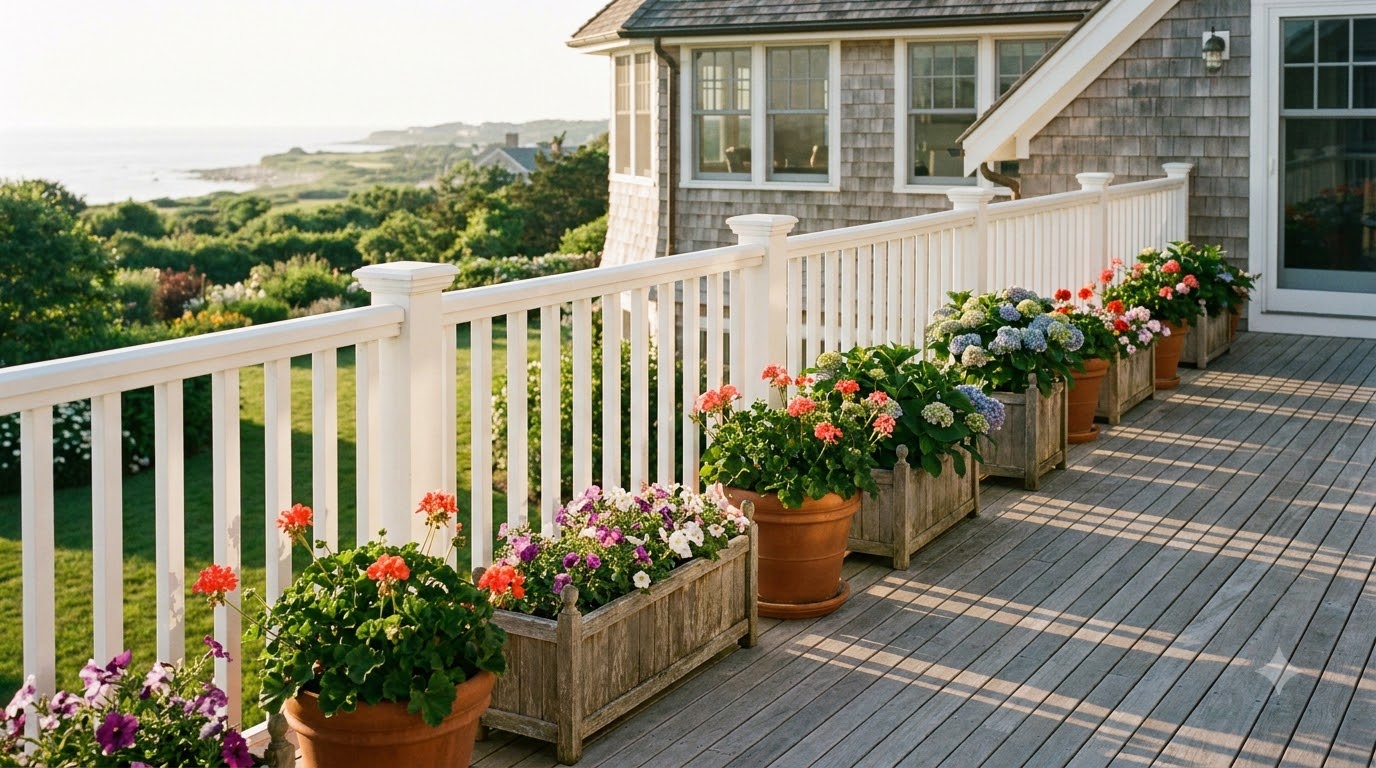
5. Painted wood with vertical balusters. The traditional look, cheapest to build, and genuinely handsome painted white against clapboard. Budget for repainting every few years.
6. Natural cedar, clear-finished. Warm and rot-resistant, silvering gracefully if you let it — the same material logic as any outdoor timber project, from pergolas to garden bed frames.
7. Composite railing. Color-matched to composite decking, no rot, no repaint. Costs more up front and looks best when it deliberately contrasts the deck boards rather than trying to disappear.
8. Chunky craftsman posts. Oversized square posts with caps and trim details, wide top rails — the choice that makes a plain rectangular deck look built rather than assembled.
Modern and mixed (ideas 9–11)
9. Horizontal metal or timber slats. Clean, contemporary, and the current favorite in design magazines. Check locally first: the openings still have to fail the 4-inch sphere test, and some authorities frown on layouts that read as climbable.
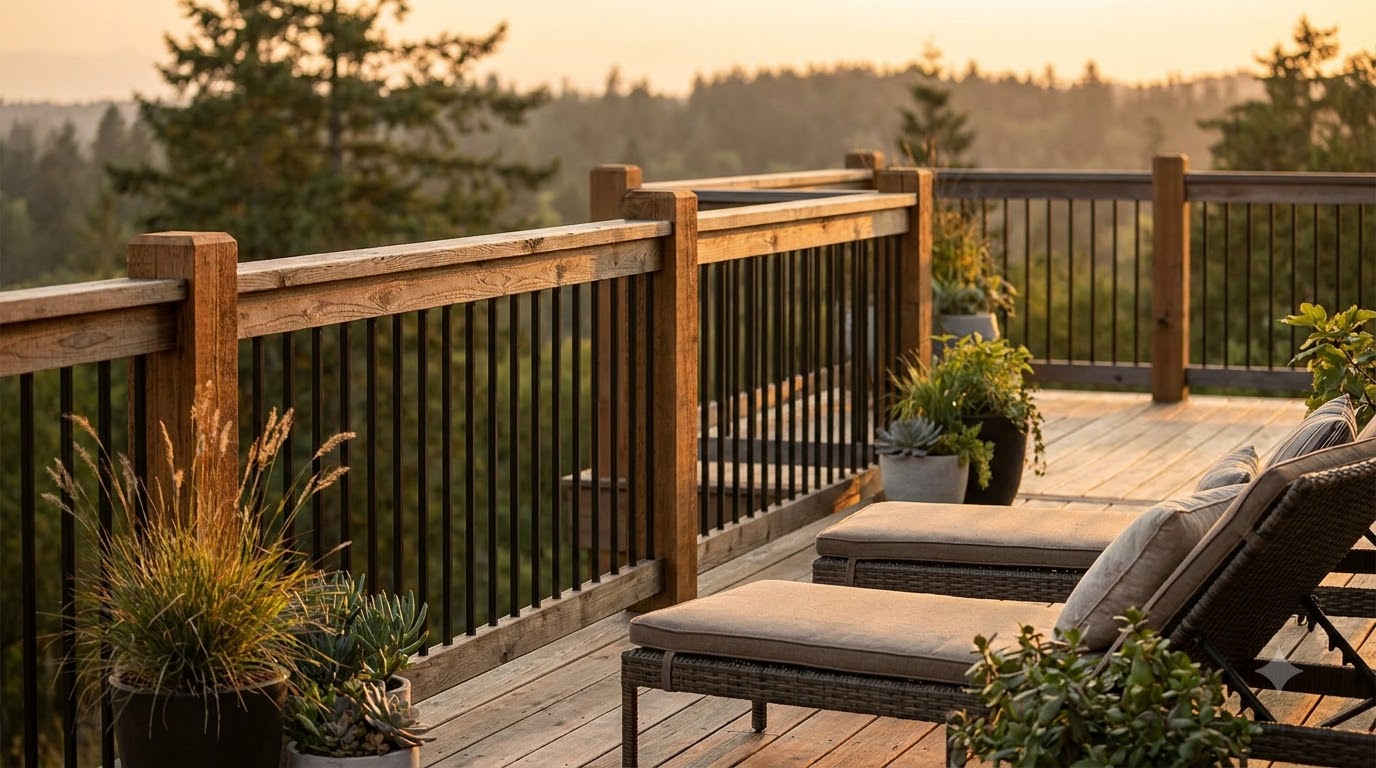
10. Black metal balusters with a cedar top rail. The best value on this page — stock metal balusters, one nice piece of timber, and the result looks bespoke.
11. Perforated or laser-cut metal panels. Panels with a pattern give privacy and shade while staying light — a strong option for the one side facing a neighbor.
Doing more than railing (ideas 12–14)
12. Built-in bench seating as the perimeter. On a deck low enough not to require a guard, a bench edge defines the space without any railing at all — and seats eight for parties.
13. Planter-box railing. Planters integrated at the rail line put greenery at eye level and soften the deck edge. Keep the guard requirements intact if the deck is high enough to need one — the planters trim the look, they do not replace the structure.
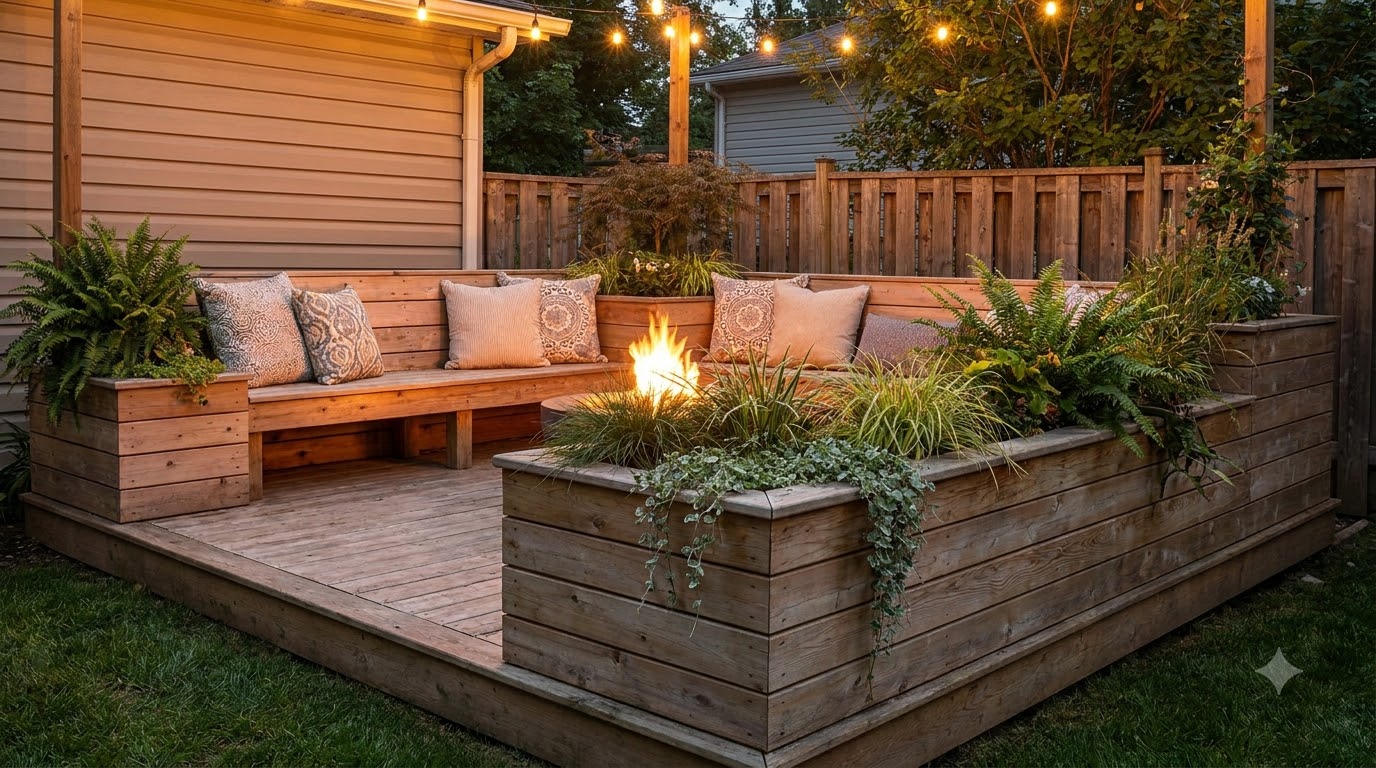
14. Lit railing. Post-cap lights or a strip recessed under the top rail turn the railing into the deck lighting — the same layering logic as pergola lighting, and it pairs neatly with a pergola over the deck.
Deck railing ideas by material, compared
| Material | Relative cost | Upkeep | View | Best for |
|---|---|---|---|---|
| Pressure-treated wood | $ | Repaint or restain every few years | Blocked | Budget builds, traditional homes |
| Cedar / redwood | $$ | Refinish or let silver | Blocked | Warm natural look |
| Composite | $$$ | Wash occasionally | Blocked | Matching composite decking |
| Metal balusters | $$ | Minimal | Mostly open | The value-for-money sweet spot |
| Cable | $$$ | Re-tension periodically | Nearly clear | Decks with a view |
| Glass | $$$$ | Cleaning, constantly | Clear | Wind exposure plus a view |
Choosing by what your deck actually is
The right railing depends less on taste than on the deck it sits on:
- Deck with a view (water, valley, mature trees): cable or glass. Anything else spends the view to save money.
- Deck facing a neighbor: solid or perforated panels on that side only, standard railing elsewhere — privacy where you need it, openness where you do not.
- Small deck: slim profiles and light colors. Chunky posts eat visual space and make a compact deck feel boxed in.
- Windy or exposed site: glass panels double as a windbreak; cable does nothing for wind.
- Kids and pets: vertical infill with tight spacing, and skip anything ladder-like.
- Low deck under 30 inches: you may not need a guard at all — a bench edge or planters can define the space instead.
Budget and install notes
- Railing is priced per linear foot — so the perimeter, not the deck area, drives cost. A long narrow deck costs more to rail than a square one of the same size.
- Corners and stairs cost extra in both hardware and labor; count them before comparing quotes.
- Posts first, infill second. Solid posts let you upgrade infill later; weak posts mean redoing everything.
- Kits simplify code compliance — manufactured systems come with spacing and load figures already worked out.
- Do the lighting wiring during the build if post-cap or rail lights are anywhere in the plan.
Mistakes that cost twice
- Choosing infill before checking code. A design that fails the sphere rule is a rebuild, not an adjustment.
- Posts fastened to the rim board with screws alone. Guards need blocking and through-bolts — this is the single most common structural failure in DIY railings.
- Ignoring the stairs. Stair guards and graspable handrails follow different rules than the deck perimeter; plan them together.
- Mixing metals carelessly. Fasteners and brackets that are not compatible with treated lumber or with each other corrode fast outdoors.
- Forgetting maintenance access. Cable needs tensioning, glass needs cleaning — leave room to reach both sides.
Frequently asked questions
How high does a deck railing have to be?
Residential codes commonly require guards at least 36 inches high, with some jurisdictions and commercial settings requiring 42 inches. Requirements typically kick in once the deck sits more than 30 inches above grade — always confirm with your local building department, since adopted code versions vary.
How far apart can deck railing balusters be?
The standard test is the 4-inch sphere rule: no opening in the guard may allow a 4-inch sphere to pass through. That governs vertical balusters, cable spacing and decorative infill, and it is the rule inspectors check first.
Is cable railing cheaper than glass?
Usually yes, though both sit well above basic wood. Cable costs more in hardware than lumber but less than tempered glass panels, and it is more forgiving to install in stages. Glass wins on wind protection; cable wins on airflow and repairability.
Are horizontal deck railings allowed by code?
In most US jurisdictions yes, provided the openings still fail the 4-inch sphere test and the guard meets load requirements. Some local authorities discourage designs that look climbable for children, so check locally first.
What is the cheapest deck railing?
Pressure-treated wood with standard vertical balusters, and it can look sharp when painted. Composite and metal cost more up front but skip the repainting and rot cycle, so the gap narrows over the life of the deck.
Can I add a railing to an existing deck?
Yes, but the posts are the hard part: guards must resist a substantial lateral load, so posts need proper blocking and through-bolting to the deck frame rather than screws into the rim board alone. Retrofitting often means opening up the framing at each post location.