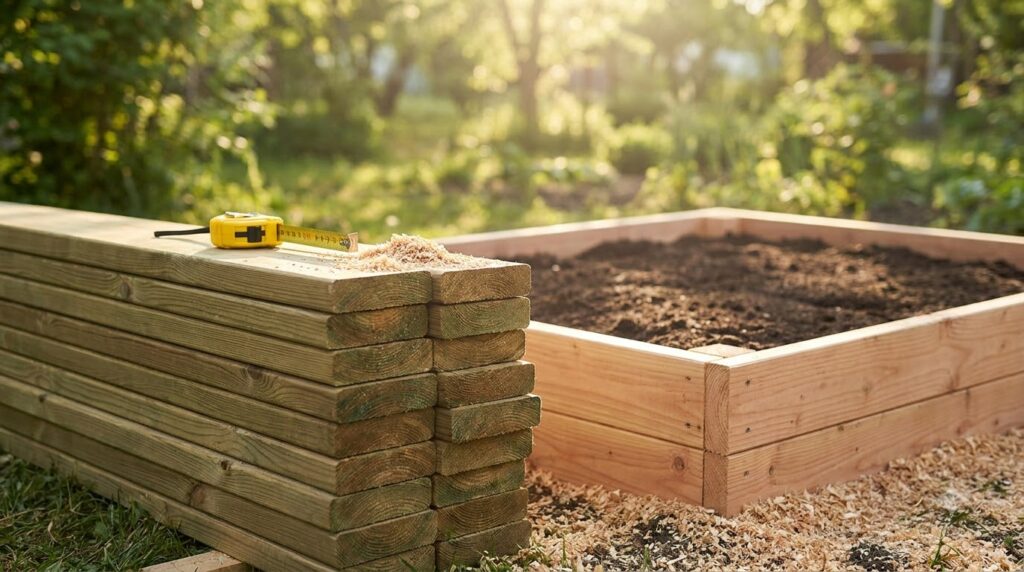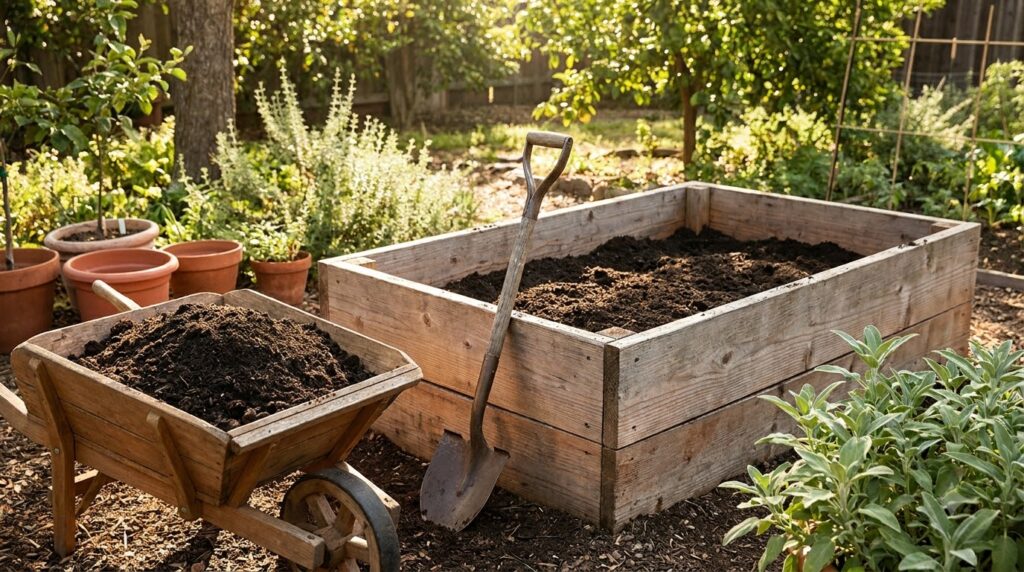
To fill a raised garden bed, you only need quality soil in the top 12 inches: a blend of one-half to two-thirds topsoil with one-third to one-half compost, per the University of Minnesota Extension. Anything deeper can be coarse organic material such as logs, branches, and leaves, which cuts the soil order for a 4×8 ft, 24-inch bed in half, from 64 to 32 cubic feet.
Key takeaways
- The mix that works: ½–⅔ topsoil + ⅓–½ plant-based compost (UMN Extension). Not bagged potting soil, and not 100% compost.
- Only the top 12 inches needs good soil. Below that, roots are sparse — fill deep beds with coarse organic material first.
- A 4×8 ft bed at 12 inches needs 1.2 cubic yards (about 22 bags at 1.5 cu ft). UMN notes that buying in bulk by the cubic yard is generally much cheaper than bags.
- Skip the gravel layer. Rocks in the bottom make drainage worse, not better.
- Fill to the rim, water it down, top up. A new bed settles noticeably in its first season.
What to fill a raised garden bed with
The filling is a two-layer job, and each layer has a different job to do:
| Layer | What goes in | Why |
|---|---|---|
| Top 12 in (30 cm) | ½–⅔ topsoil mixed with ⅓–½ plant-based compost | This is the root zone. The topsoil provides structure and minerals; the compost provides nutrients and water-holding. |
| Everything below | Logs, branches, twigs, dry leaves, grass clippings, plain cardboard | Fills volume for free, feeds soil life as it slowly breaks down, and improves moisture retention over time. |
Two fillers to avoid, both flagged by University of Minnesota Extension: bagged potting soil, which suits pots and seedlings but dries out too quickly in a bed, and pure compost, which dries out fast and can repel water once dry. UMN puts peat and coconut coir in the same drying category.
Compost advice varies: Clemson Extension keeps it to 10–20% of total bed volume, well below UMN’s one-third to one-half, so lean toward less compost if your topsoil is already rich. Both filler mistakes also appear in the common-mistakes list on how deep a raised garden bed should be.
How much soil you actually need
Soil is sold by volume, and volume is simple math: length × width × depth. Here is the shopping list for common bed sizes filled entirely with soil mix at 12 inches deep:
| Bed size | Volume at 12 in deep | Bags (1.5 cu ft) | Bulk order |
|---|---|---|---|
| 4×4 ft | 16 cu ft | 11 bags | 0.6 cu yd |
| 2×8 ft | 16 cu ft | 11 bags | 0.6 cu yd |
| 4×8 ft | 32 cu ft | 22 bags | 1.2 cu yd |
| 4×8 ft, 18 in deep | 48 cu ft | 32 bags | 1.8 cu yd |
| 4×8 ft, 24 in deep | 64 cu ft | 43 bags | 2.4 cu yd |
To convert any bed: cubic feet ÷ 27 = cubic yards (Oregon State Extension’s version of the same math: one cubic yard covers 162 square feet 2 inches deep). And before you order, check the depth you actually need — if your bed sits on open soil, you may need far less depth than you think, because roots continue into the ground below.
The layered method: fill a deep bed for half the price
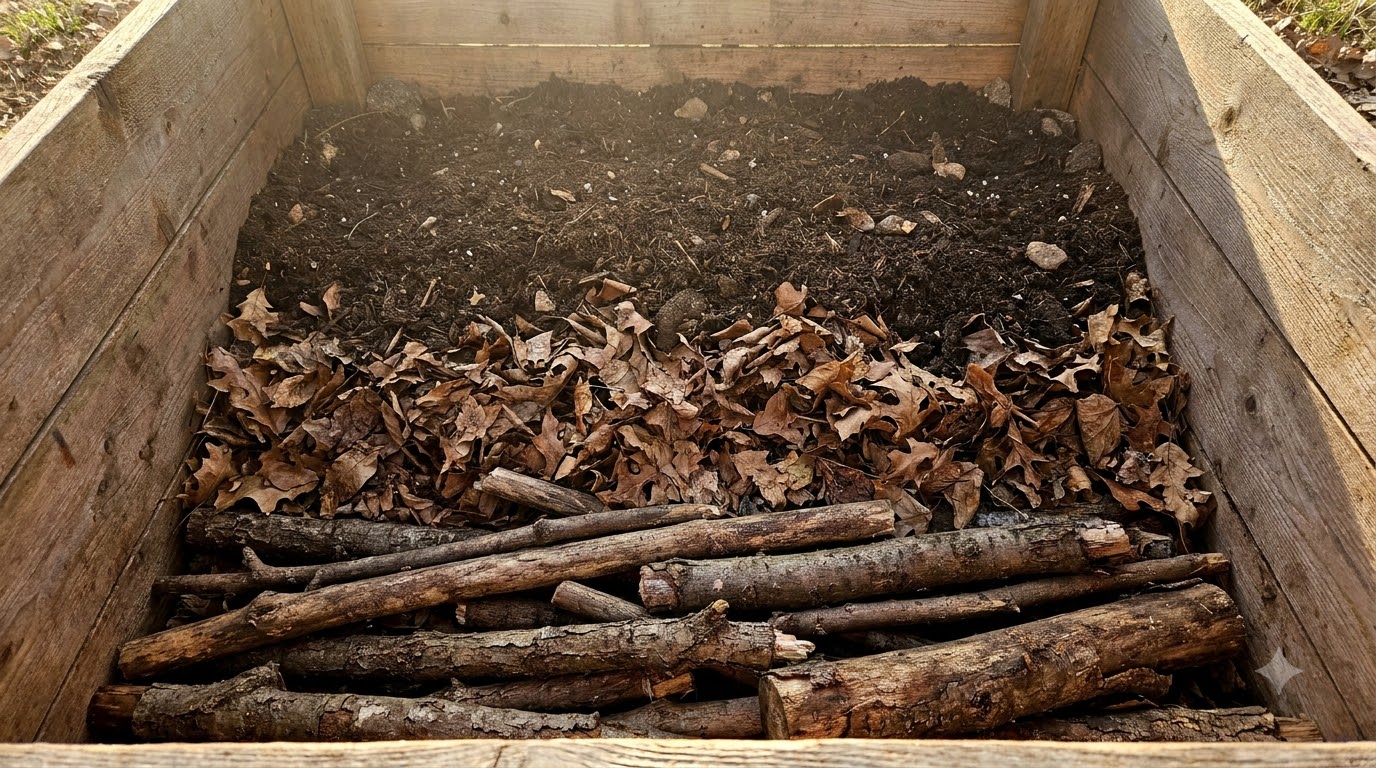
Those 18- and 24-inch numbers above are why tall beds intimidate people. The layered method — a simplified version of hügelkultur — solves it. University of Minnesota Extension notes that some gardeners with beds taller than 2 feet use lasagna-style layers of sticks, leaves, compost, and soil, usually to reduce costs, and that more soil has to be added as those materials break down.
- Bottom third: woody material. Logs, branches, and twigs, packed reasonably tight. The bigger the pieces, the slower they break down and the longer the volume lasts; Colorado State Extension notes buried wood can take ten or more years to decompose.
- Middle layer: fine organic matter. Dry leaves, straw, grass clippings, or rough compost. This fills the gaps between the woody pieces so the bed settles less.
- Top 12 inches: the real soil mix. Topsoil and compost at the UMN ratio. Roots live here; nothing below this layer needs to be plant-ready on day one.
On a 4×8 ft bed at 24 inches deep, layering replaces the bottom 32 of the 64 cubic feet with material most yards produce for free — about 21 bags of soil (1.5 cu ft) you are not buying. The trade-off: an organic-filled bed settles more in year one, so expect to top up with a few inches of soil or compost the following spring.
What NOT to put in the bottom
- Gravel or rocks “for drainage.” A long-running myth. University of Missouri IPM explains the “perched water table” effect in containers: a coarse layer underneath shifts the saturated zone upward, so the root zone stays wetter, not drier. An open-bottom raised bed drains into the ground on its own; that is half the reason to build one.
- Plastic sheeting. It blocks drainage entirely and turns the bed into a bathtub. If you need a liner over concrete, University of Minnesota Extension suggests a material that lets water pass, such as landscape fabric.
- Scraps of treated or painted lumber. Fine as a frame, not as fill that decomposes directly in your root zone.
- Anything with seeds or live roots. Weedy hay, fresh weeds, or invasive grasses will resurface right through two feet of fill.
- Food scraps in quantity. A bed is not a compost pile — large amounts of fresh scraps attract rodents and sink unevenly. Compost them first, then add the compost.
Filling day: step by step
- Level the ground and remove obstacles. The frame should sit flat with no gaps under the walls.
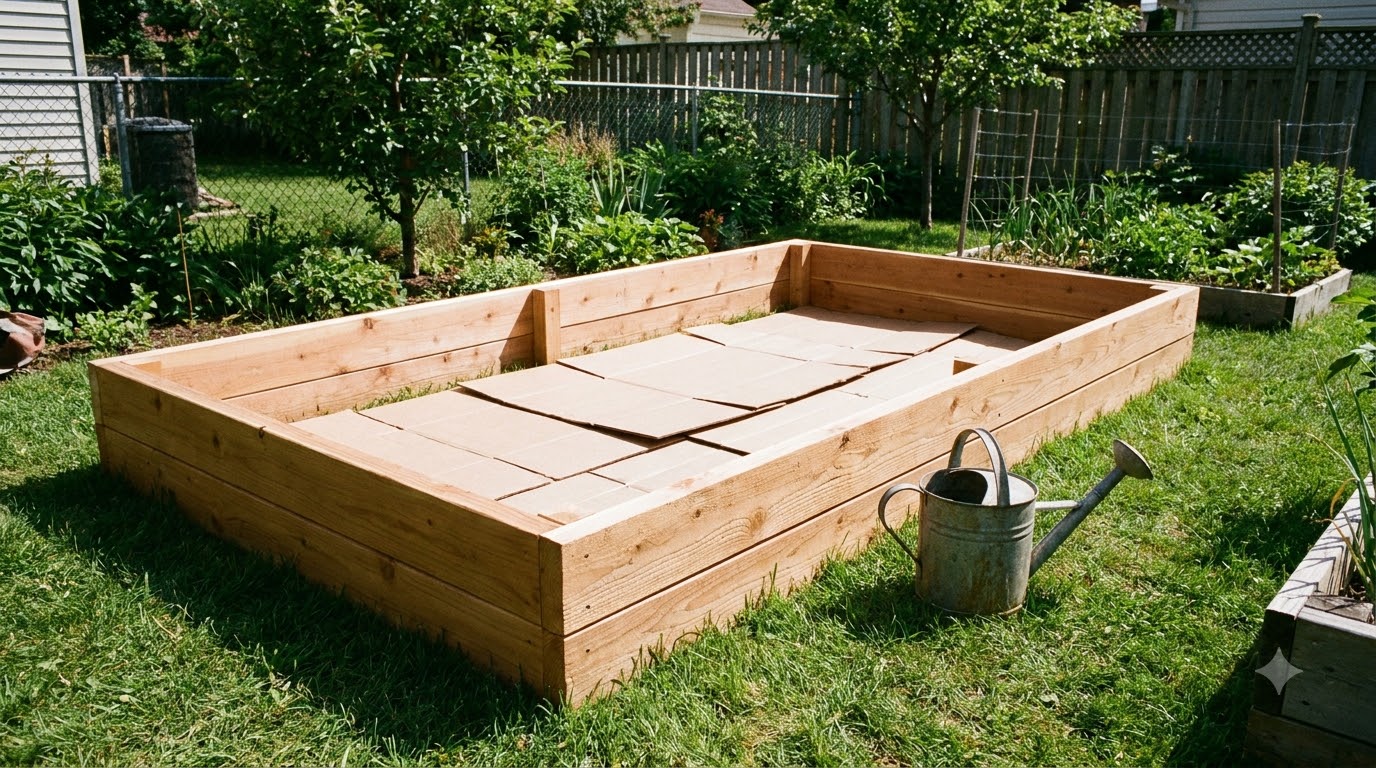
- Kill the grass first. University of Minnesota Extension advises killing existing vegetation and loosening the soil, and warns that a barrier is likely to stunt root growth, so skip landscape fabric on open soil. The common free route is to lay plain cardboard over grass, overlap the seams, and wet it down; it slows water until it starts to break down. Where mice or chipmunks tunnel, staple hardware cloth across the bottom first.
- Add the coarse layers (deep beds only): wood at the bottom, fine organic matter over it, watering each layer as you go.
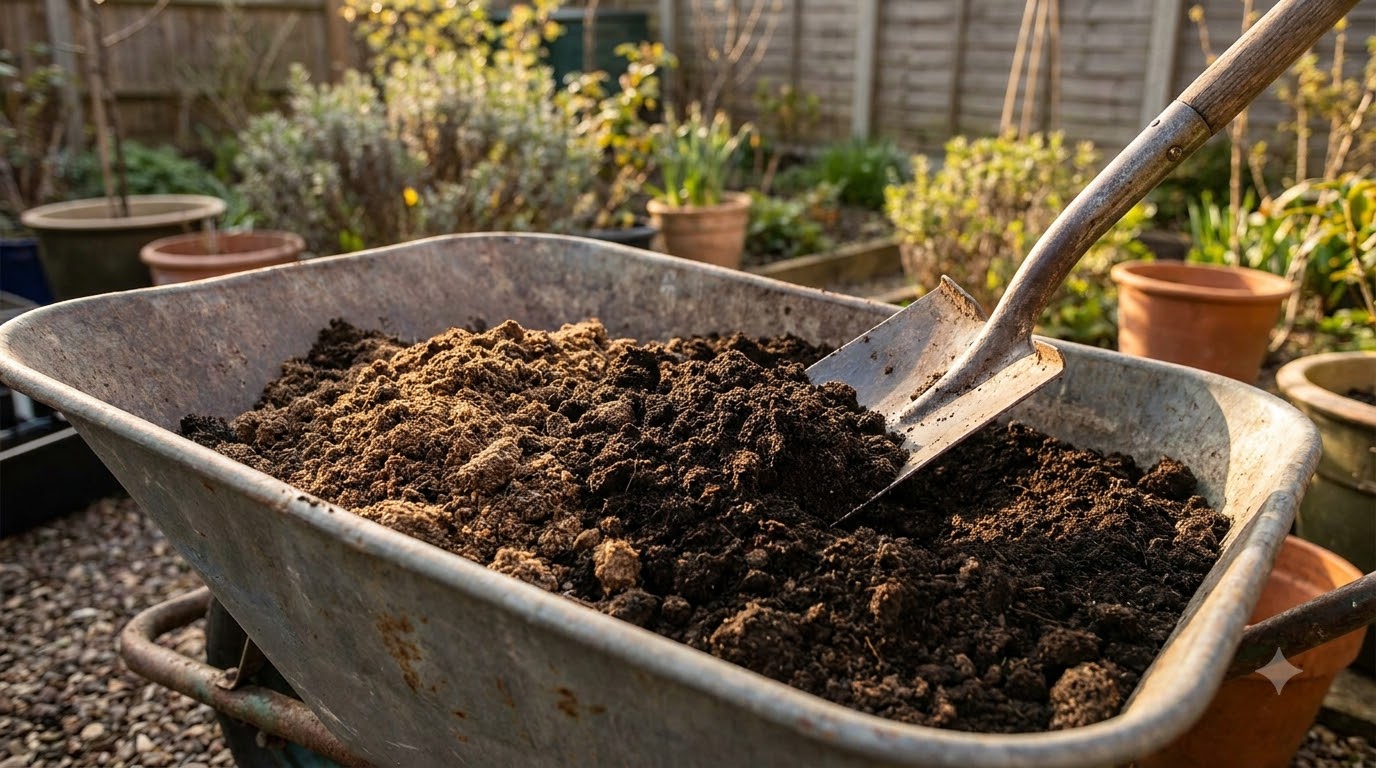
- Mix your soil before it goes in. Combining topsoil and compost on a tarp or in a wheelbarrow beats mixing inside the bed — the blend ends up even instead of striped.
- Fill to the very rim and water deeply. The level drops as the mix settles. Top it back up.
- Plant right away if you used finished compost. A bed built on raw materials (fresh manure, mostly-green layers) benefits from a few weeks of rest first.
Bagged or bulk: where the money goes
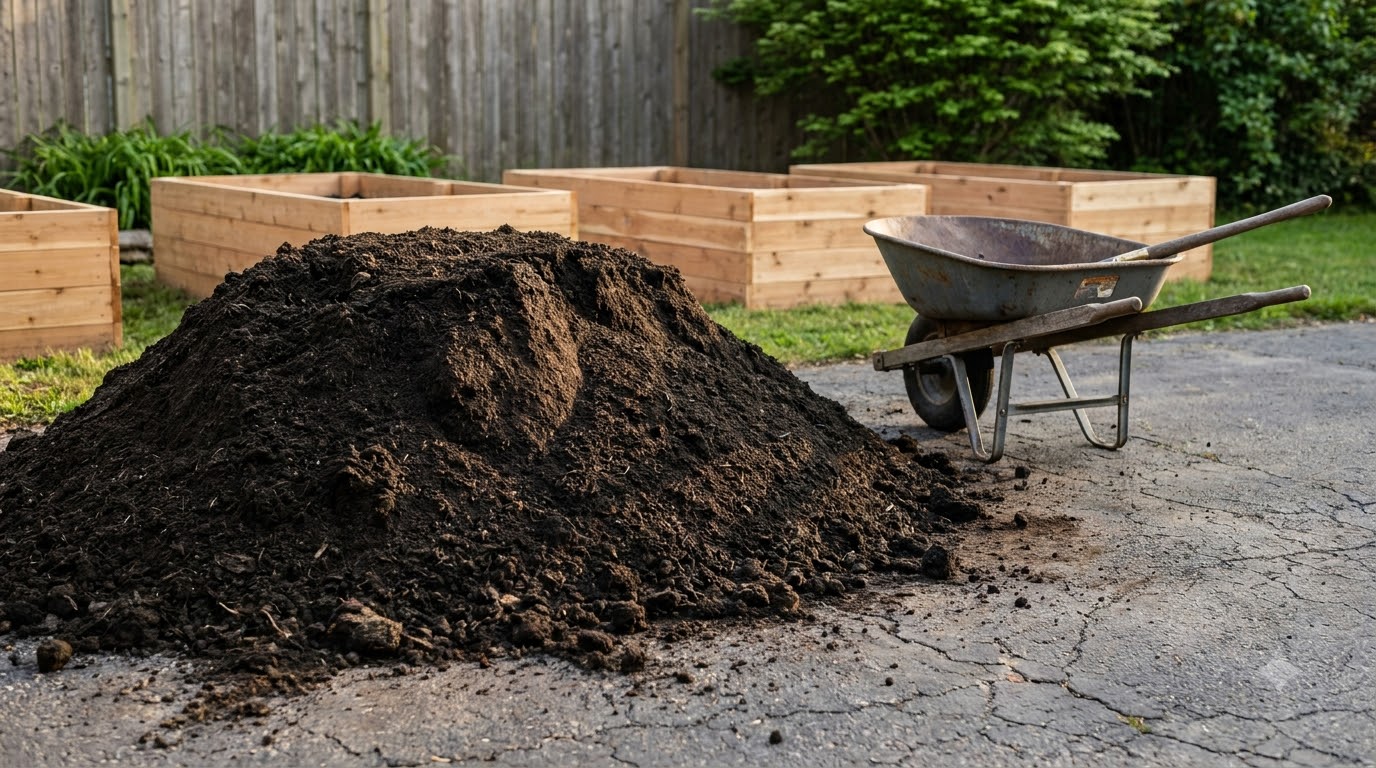
Bagged soil wins on convenience for small beds; bulk wins on price for everything else. University of Minnesota Extension notes that buying in bulk by the cubic yard is generally much cheaper than buying individual bags, and one 4×8 bed at 12 inches already needs 1.2 cubic yards. If you do buy bags, UMN suggests mixes labeled “raised bed mix.”
Ordering bulk? Ask the yard for a 50/50 topsoil-compost blend (many sell it pre-mixed as “garden mix” or “raised bed mix”) — it lands inside the UMN ratio and saves you the mixing step entirely.
Free fill most yards already produce
Before buying anything for the lower layers, look around — the layered method runs mostly on materials that usually get hauled away:
- Storm branches and pruning waste. The bottom-third woody layer, solved. Cut pieces to fit; no need for neat stacking.
- Fall leaves — yours and your neighbors’. Bagged leaves at the curb in October are exactly the middle layer a new bed wants. Dry leaves pack down to a fraction of their raked volume, so collect more than looks reasonable.
- Arborist wood chips. Some tree services give chips away free rather than pay to dump them; some cities run chip-drop programs. Use them in the lower layers only: Colorado State Extension warns that wood chips mixed into soil can cause a nitrogen deficiency, because the microbes breaking them down use nitrogen too.
- Municipal compost. Some US cities sell or give away finished compost from yard-waste programs for a fraction of bagged prices. Quality varies by batch — ask if it is screened, and let a strong-smelling load rest a couple of weeks before planting into it.
- Untreated grass clippings. Thin layers only, mixed with leaves — a thick mat of fresh clippings turns slimy and airless. Skip clippings from lawns treated with herbicide.
Expect settling — and plan for it
A freshly filled bed is full of air pockets. As organic matter decomposes and particles pack, the level drops over the first season, more if you used the layered method. This is normal and free to fix: fill higher than you think, water deeply at fill time, and top up with an inch or two of compost every spring; Clemson Extension advises replenishing raised beds with compost regularly.
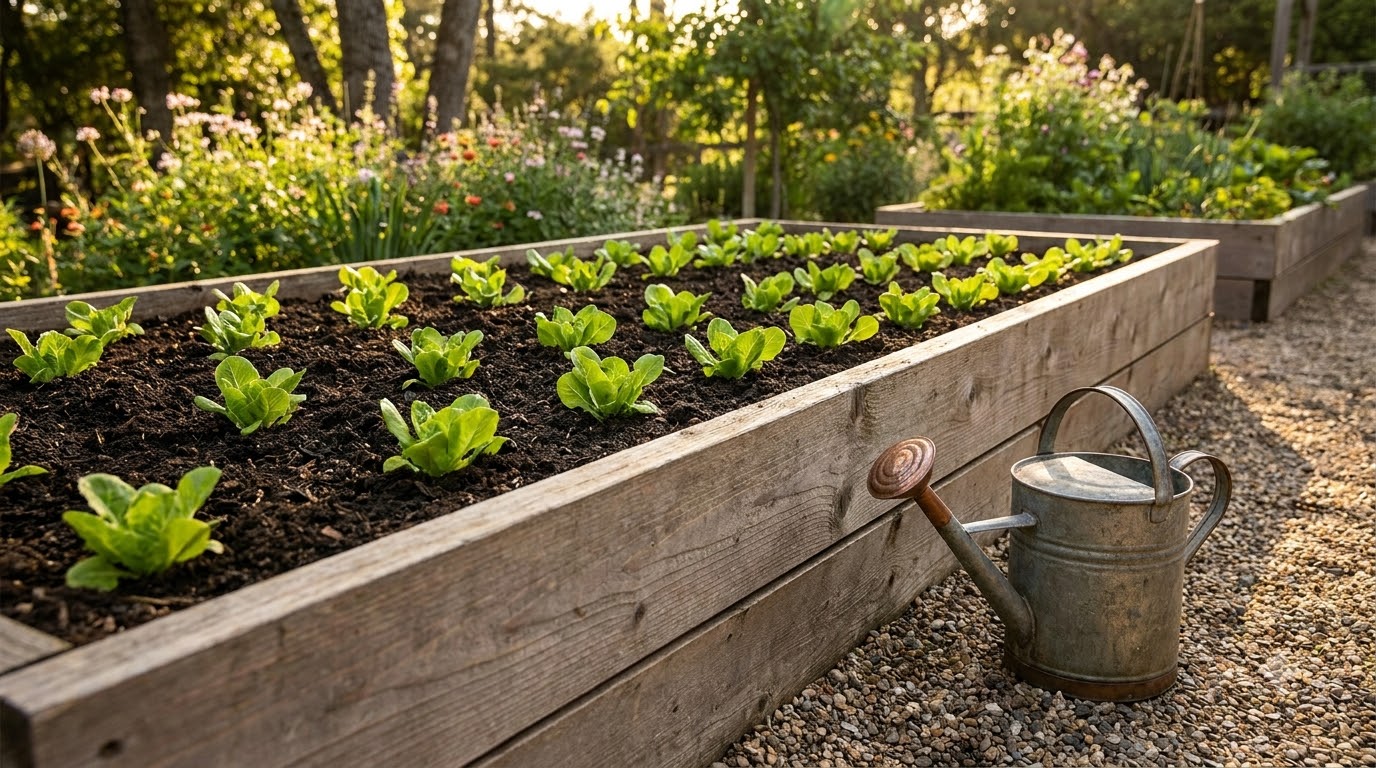
New to raised beds? Start with the complete raised garden bed guide — size, wood, soil, and cost in one place.
Frequently asked questions
What is the cheapest way to fill a raised garden bed?
The layered method: fill everything below the top 12 inches with logs, branches, and leaves from your own yard, then buy quality soil mix only for that top foot. On a 4×8 bed 24 inches deep, that halves the soil order from 64 to 32 cubic feet, and buying the mix in bulk rather than bags cuts the price further.
Can I fill a raised bed with only compost?
No. Pure compost holds water badly — it dries out fast and can start repelling water once dry. Blend it: one-half to two-thirds topsoil with one-third to one-half compost, per University of Minnesota Extension guidance. Clemson Extension goes further and keeps compost to 10–20% of total bed volume.
Should I put rocks in the bottom of a raised bed for drainage?
No. A gravel layer makes drainage worse: water perches above the coarse layer until the soil is saturated, keeping the root zone wetter. University of Missouri IPM calls this the perched water table effect. Raised beds drain well by design — no drainage layer needed.
Do I need cardboard or landscape fabric under a raised bed?
Neither is required. University of Minnesota Extension says most beds need no barrier, and landscape fabric on open soil blocks the root and worm traffic that makes an open-bottom bed work. Kill the grass first; plain cardboard over grass is the common free way to smother it, though it slows water until it breaks down.
How many bags of soil do I need for a 4×8 raised bed?
About 22 bags of 1.5 cu ft at 12 inches deep (32 cubic feet total, or 1.2 cubic yards). For any bed, multiply length by width by depth in feet, then divide by 27 for cubic yards or by 1.5 for the bag count. At that volume, a bulk delivery is usually cheaper than bags.
Can I use soil dug from my yard to fill a raised bed?
Partly. Native soil can replace some of the topsoil share if it is decent loam, blended with compost at the usual ratio. Skip it if it is heavy clay or full of weed roots — you would be importing the problems a raised bed is meant to escape.
Sources
- University of Minnesota Extension, Raised bed gardens (reviewed 2026). Checked October 16, 2026.
- Clemson Cooperative Extension HGIC, Raised Beds, HGIC 1257 (2017). Checked October 16, 2026.
- Oregon State University Extension, Raised bed gardening, FS 270 (reviewed 2024). Checked October 16, 2026.
- University of Missouri IPM, Gardening Advice: Fact or Fiction (2023). Checked October 16, 2026.
- Colorado State University Extension, Mulching (reviewed 2023). Checked October 16, 2026.