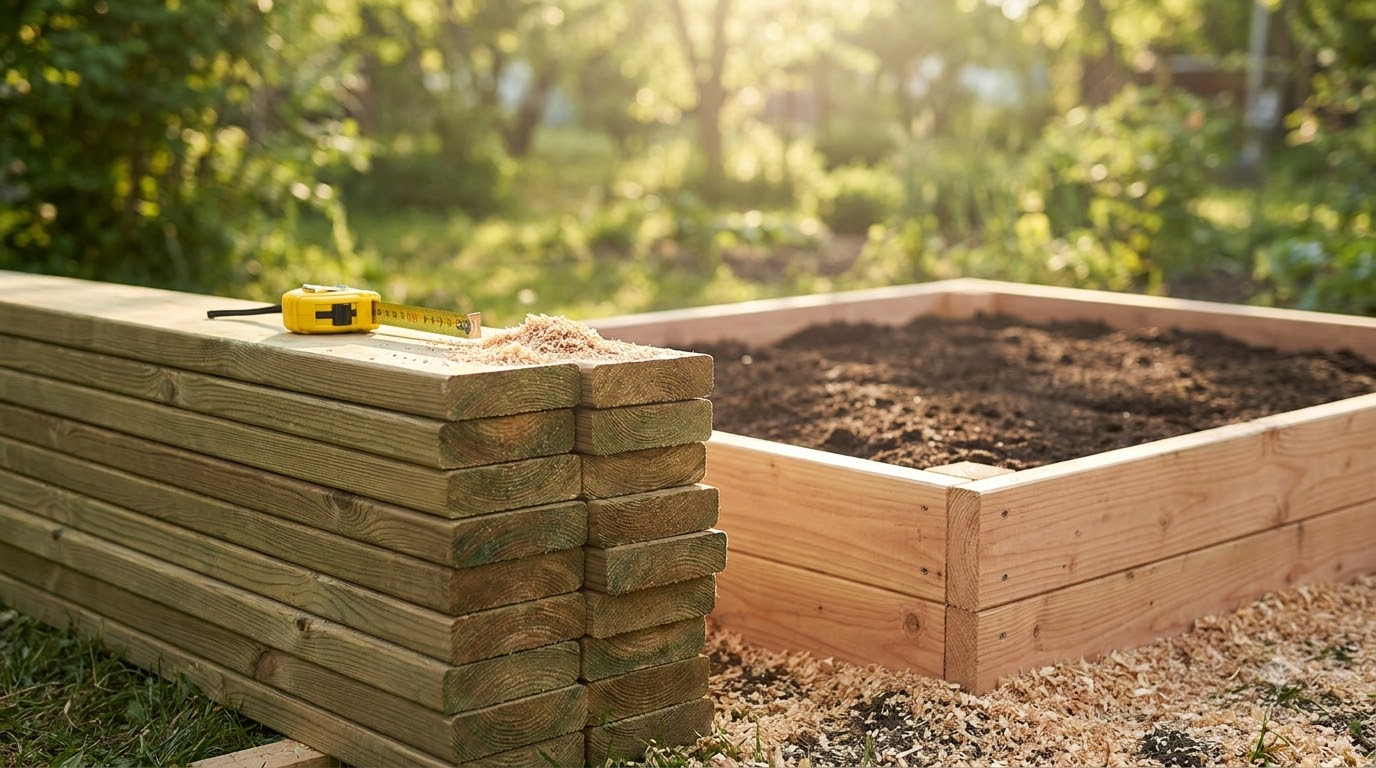
Modern pressure-treated wood is considered safe for raised garden beds. The lumber sold at yards since 2004 is preserved with copper-based compounds, and university extension research — including a dedicated Oregon State University study on treated-wood garden beds — found no reason to keep it away from vegetables. The wood people are actually remembering when they worry is CCA lumber, preserved with arsenic and phased out of residential sale after 2003. That one stays out of the garden.
Key takeaways
- Bought new at a lumber yard today = copper-based preservative (ACQ or copper azole). Extension research considers it acceptable for food gardens.
- The 2003 line: arsenic-treated CCA lumber left the residential market after 2003. Old wood of unknown age gets treated as CCA — and not used.
- Copper stays put. Studies measure preservative movement only in the soil immediately beside the boards — not across the bed.
- Free precautions exist anyway: line the side walls, plant a hand-width from the boards, never burn offcuts.
- The truly unsafe frames are elsewhere: railroad ties (creosote), utility poles, and pallets stamped MB.
What changed in 2003
For decades, the standard treated lumber was CCA — chromated copper arsenate. It preserved wood brilliantly and contained arsenic, and by agreement with the EPA it was withdrawn from residential products after December 2003. That is the wood that earned treated lumber its reputation in gardening folklore — and the reputation outlived the product.
What replaced it are copper-based preservatives — mainly ACQ (alkaline copper quaternary) and copper azole — the faintly green-brown boards on every rack today. Copper is toxic to the fungi and insects that eat wood, which is the point, but it is also a normal micronutrient that plants and people handle in small amounts every day. Different chemistry, different risk profile.
Treated wood for raised bed gardens: what the research says
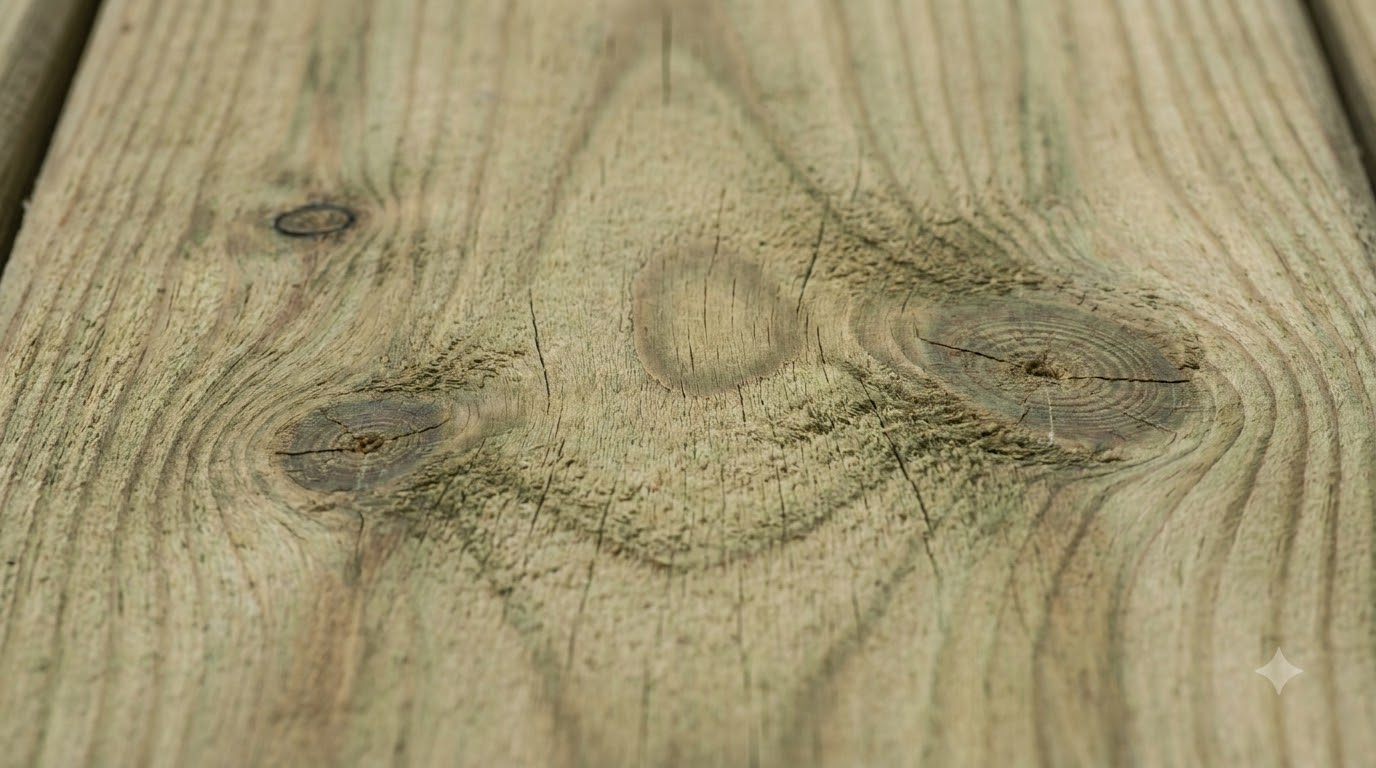
Oregon State University Extension ran the question to ground in a publication specifically about pressure-treated wood in raised bed construction. The pattern in this and similar university work is consistent: preservative that migrates out of modern treated lumber shows up in the soil immediately against the boards, tapering off within a short distance, at levels below health-concern thresholds — and plant uptake is minimal.
In practical terms: the root zone of a bed is overwhelmingly farther than an inch from the walls, and the crops themselves take up very little of what is there. That is why extension programs — the people whose job is to be cautious on behalf of home growers — list modern treated lumber as an acceptable raised-bed material.
Precautions that cost almost nothing
None of these are required with modern treated wood. All of them are cheap, so do them if the margin buys you peace of mind:
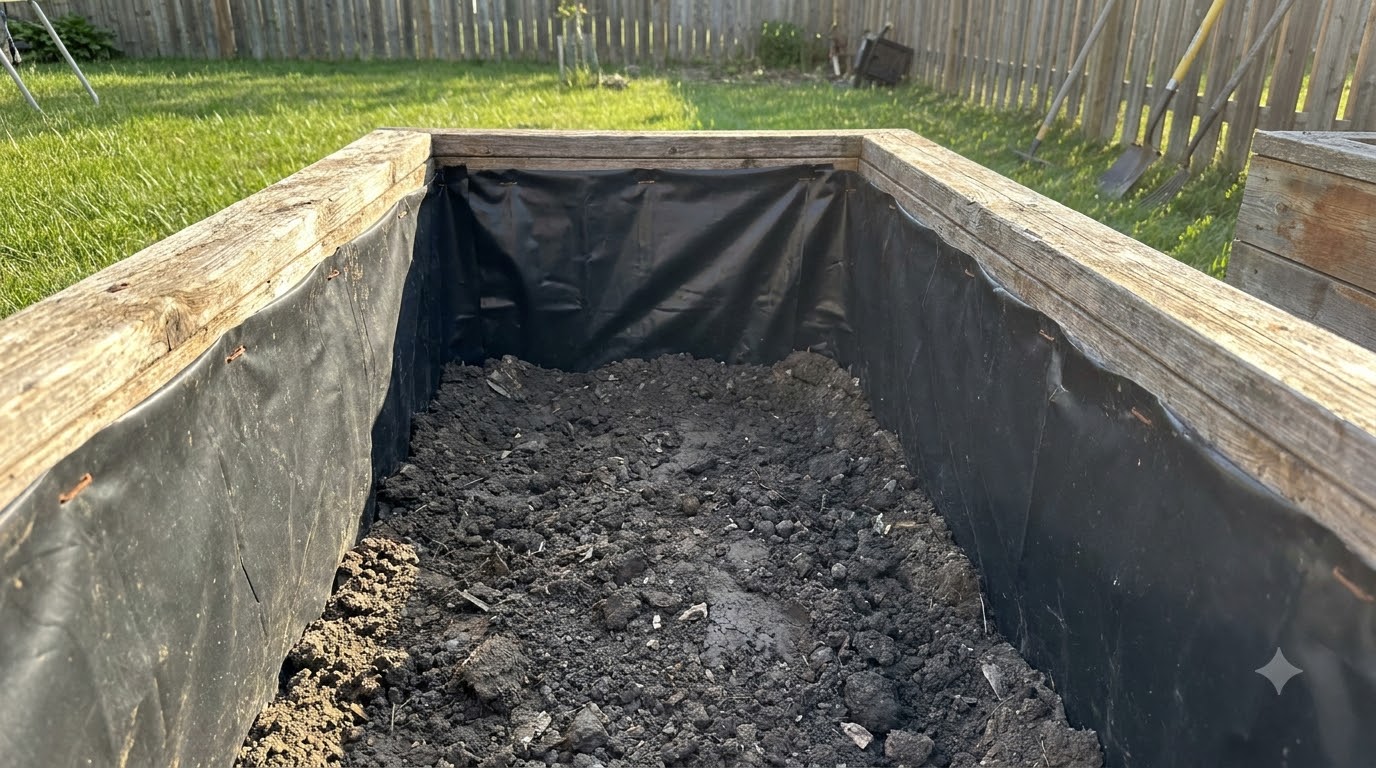
- Line the side walls with plastic — a barrier between board and soil. Walls only, never the bottom: the bed must drain.
- Plant a hand-width in from the edges. The only measurable preservative lives against the boards; root crops especially can simply grow elsewhere in the bed.
- Gloves and a dust mask when cutting, and wash up after — sawdust is the concentrated form of any treated wood.
- Never burn treated offcuts. Not in the fire pit, not in the wood stove. Landfill them; combustion is where treated wood genuinely turns hazardous.
- Buy “ground contact” rated boards for the frame — they carry more preservative and last longer against permanently damp soil.
Treated pine vs cedar vs everything else
| Material | Typical lifespan as a bed | Relative cost | The honest trade-off |
|---|---|---|---|
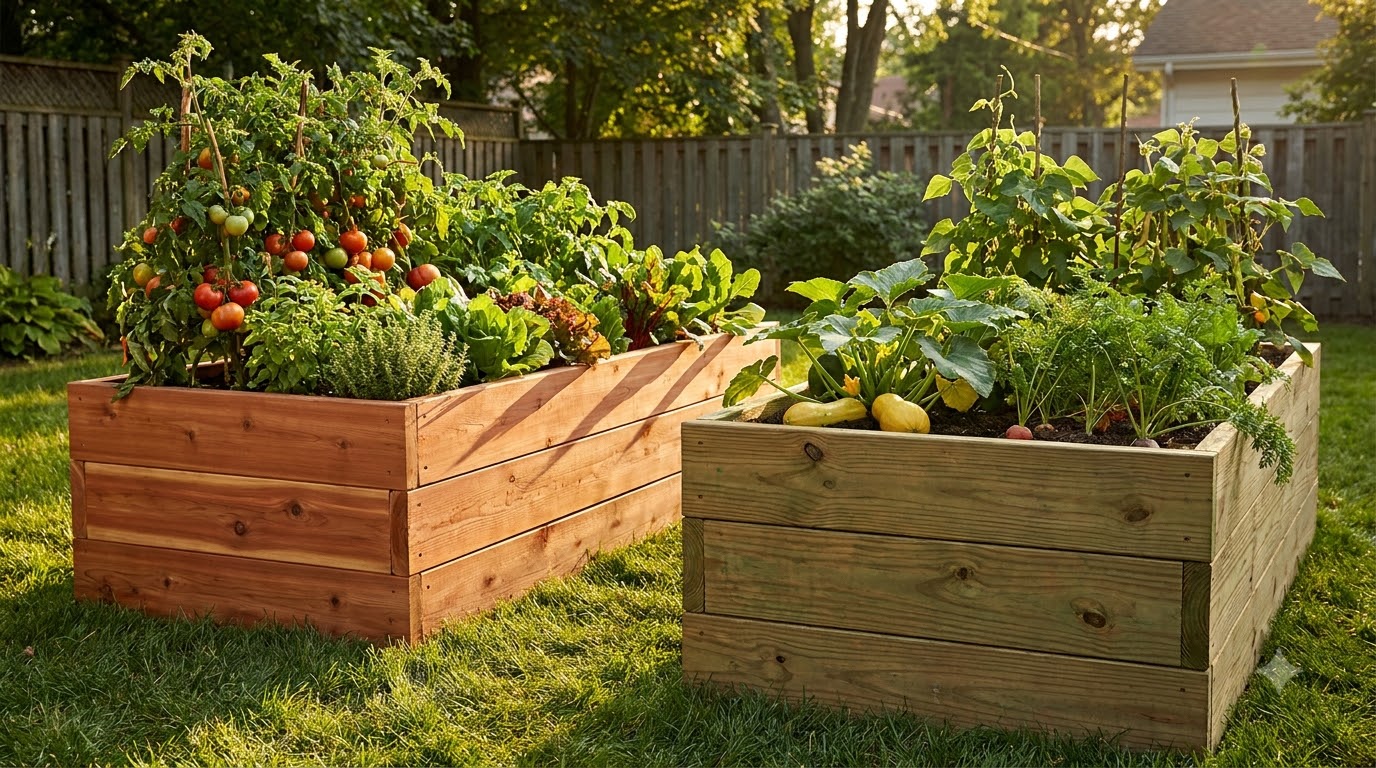
| Pressure-treated pine (ground contact) | Longest of the woods — on the order of 10–20 years | $ | Cheapest per year of service; the green-brown look isn’t for everyone |
| Cedar | Roughly 10–15 years | $$$ | Naturally rot-resistant, beautiful, no preservatives — you pay for all three |
| Redwood | Similar to cedar | $$$$ | Superb where it’s local; expensive freight anywhere else |
| Untreated pine / fir | A handful of years | $ | Fine as a starter bed you expect to rebuild; ages fastest at the soil line |
| Metal kit bed | 20+ years | $$ | No rot ever; sides run hot on pavement — mind depth and placement |
If you are building with lumber either way, the widths decide your depth for you — the board-size cheat sheet is here.
How to spot modern treated wood at the store (and old wood at home)
Every stick of treated lumber sold today carries a plastic end tag stapled to one end — and that tag answers all the questions people squint at the wood trying to guess:
- Preservative code: look for ACQ, CA-B, CA-C, or MCA — all modern copper systems. The tag on CCA wood (still legal for some industrial uses) says CCA; leave it at the yard.
- Use rating: “Ground Contact” (or code UC4A) is the one a bed frame wants. “Above Ground” boards carry less preservative and quit early against damp soil.
- No tag, no history? That is exactly the “unknown age” case — assume old, use it for something that isn’t food.
At home, age is the real tell: any treated lumber you know was bought after 2004 is the modern kind, whatever its color has faded to. Receipts beat tints.
If you’d rather skip treated wood entirely
Perfectly reasonable — plenty of gardeners simply prefer zero preservatives near food, and the honest way to frame the choice is cost per year:
- Cedar costs two to three times as much up front but runs a decade-plus untreated. Prettiest wood on the list.
- Untreated pine or fir is the cheapest bed you can build today and the first one you’ll rebuild — budget for replacement boards within a handful of years, sooner at the soil line.
- Slow the clock on any untreated wood by lining the inside walls with plastic (walls only), keeping mulch pulled back from the boards, and setting the frame on gravel rather than directly in muddy ground.
- Metal and masonry opt out of the rot question entirely — a metal kit bed outlasts every wood option above.
The frames that genuinely are unsafe
- Railroad ties. Treated with creosote, which is not approved for residential use — and old ties weep it in summer heat. This is the material every warning about “treated wood” should have been aimed at.
- Utility poles. Same story: creosote or industrial-grade preservatives, never intended to sit against food soil.
- Old lumber of unknown age. If it might predate 2004, treat it as CCA and keep it out of food beds. A faded green tint is a hint, but absence of tint proves nothing — unknown age means no.
- Pallets stamped MB. Methyl-bromide fumigated. Heat-treated pallets (stamped HT) are the ones fine for garden projects.
- Painted or stained mystery boards. Old paint can mean lead; you can’t tell by looking.
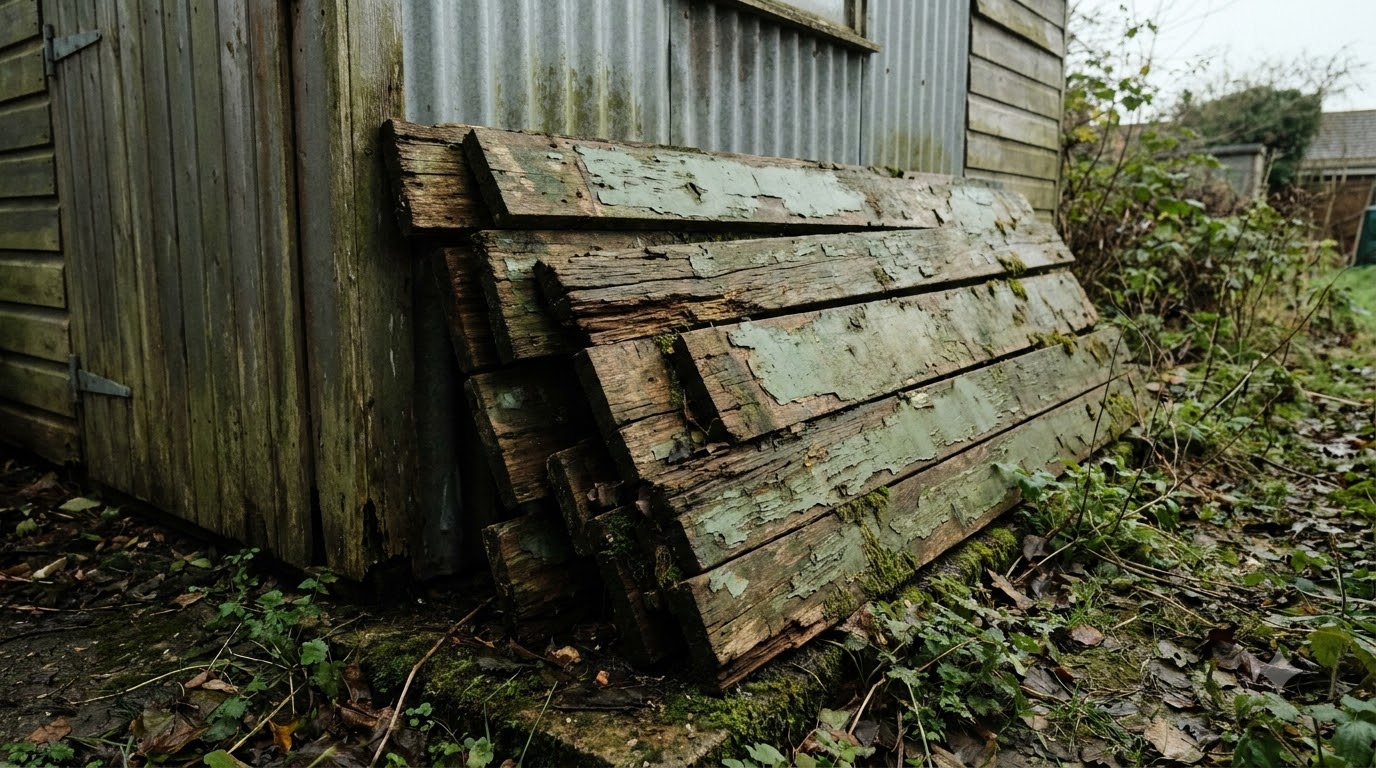
Already built from old CCA wood?
No need to tear the garden apart the same afternoon. Reasonable options, in rising order of effort: line the inside walls with plastic now; keep root crops (carrots, potatoes) toward the center and leafy harvests washed; replace boards one season at a time as they age out; and when you do rebuild, the table above is the shopping list. What actually moves the risk needle with CCA is long-term contact — which is exactly what a liner interrupts.
New to raised beds? Start with the complete raised garden bed guide — size, wood, soil, and cost in one place.
Frequently asked questions
Is pressure-treated wood safe for vegetable gardens?
Modern pressure-treated lumber (sold since 2004) uses copper-based preservatives, and university extension research — including a dedicated Oregon State study — considers it acceptable for raised vegetable beds. The old arsenic-treated CCA lumber, phased out of residential use after 2003, is the wood to avoid.
How long does treated wood last as a raised bed?
Ground-contact rated treated lumber typically outlasts every untreated option — expect on the order of 10 to 20 years depending on climate and soil moisture, versus a handful of years for untreated pine or fir.
Should I line a treated-wood raised bed with plastic?
It is optional with modern treated wood, but lining the side walls is a cheap extra margin if you want it. Walls only — never the bottom, which must stay open for drainage.
Can I use railroad ties for a raised garden bed?
No. Railroad ties are treated with creosote, which is not approved for residential garden use. The same goes for utility poles. This is a different substance entirely from the copper preservatives in modern lumber-yard treated wood.
How do I know if old wood is the dangerous CCA kind?
If the lumber predates 2004 or you cannot verify its age, assume it is CCA and do not use it for food beds. Old CCA often shows a faded green tint, but appearance is not proof either way — the safe rule is: unknown age means no.
Do I need a food-safe sealer on a raised bed?
No sealer is required on treated or untreated wood. If you want to slow weathering on untreated boards, a plain oil finish such as raw linseed oil is the common choice — decorative stains and paints belong on the outside faces only.
Sources
- Oregon State University Extension — EM 9879: Pressure-treated wood for raised bed construction (preservative migration, plant uptake)
- University of Minnesota Extension — Raised bed gardens (bed materials overview)