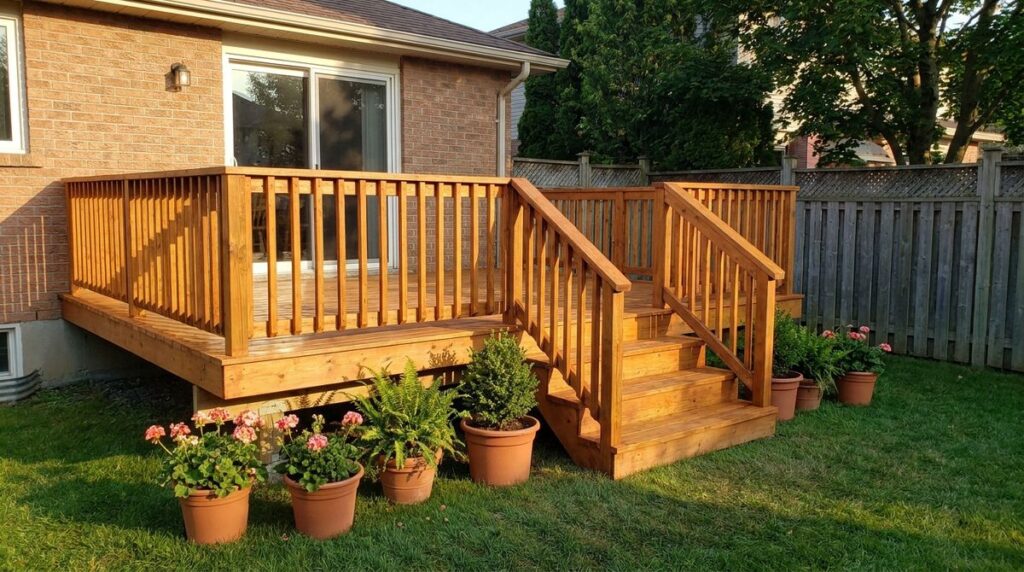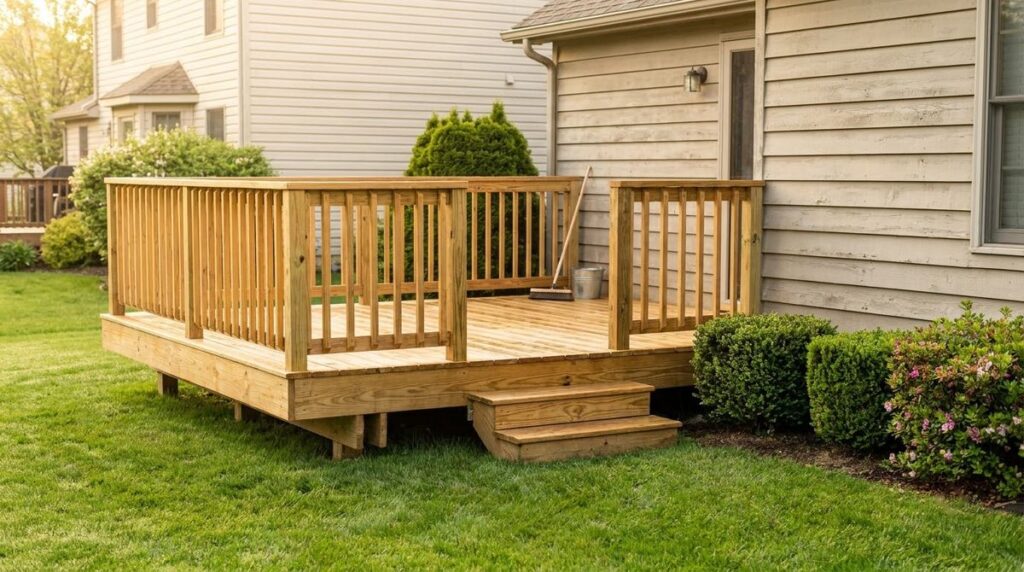
Deck maintenance comes down to one structural inspection a year, a cleaning every spring and fall, and a new coat of water repellent or stain on wood every 1 to 3 years; composite and PVC boards skip the coating but still need the inspection and the cleaning. Below: what to check, how to clean each material within warranty limits, and how to handle mildew, snow and popped nails.
Key takeaways
- Inspect once a year, starting at the ledger board, which NADRA calls a common source of deck failure.
- Probe the wood. If a screwdriver sinks in 1/4 to 1/2 inch easily, or the wood is soft and spongy, decay may be present.
- Clean twice a year. Viance says at least twice yearly for treated wood; Trex says spring and fall for its composite.
- Pressure limits differ by brand: Trex allows up to 3,100 psi with a fan tip on three lines; TimberTech allows 1,500 psi, for rinsing only.
- Plastic shovels only on composite. Trex accepts rock salt; TimberTech says avoid it.
Here are the tools and materials for a yearly deck maintenance day, with what to choose for each.
| Item | What to choose | Notes |
|---|---|---|
| Probe | Ice pick or flat screwdriver | NADRA’s tool for finding soft, decayed wood |
| Flashlight and hammer | Any | A loose bolt rings hollow when struck; a tight one sounds solid (TimberTech) |
| Drill and replacement fasteners | Hot-dip galvanized or stainless deck screws | DCA 6 lists galvanized, stainless, silicon bronze or copper for treated wood |
| Brush | Stiff brush for wood; medium-to-stiff nylon for TimberTech composite; soft bristle for Trex | A stiff natural-fiber brush can dull TimberTech composite |
| Cleaner | Liquid detergent and water, or the decking maker’s cleaner | No chlorine bleach on treated wood (Viance) |
| Pressure washer (optional) | Fan tip, low setting | Check your board maker’s psi limit first |
| Putty knife | Thin, stiff blade | Clears leaves and dirt from the gaps between boards |
| Snow shovel | All-plastic blade | No metal edge on composite (TimberTech, Trex) |
A yearly deck maintenance schedule
A deck maintenance schedule works best tied to the seasons: inspect and deep-clean in spring, clean again in fall, and keep snow and leaves moving in winter. NADRA runs Deck Safety Month in May, a natural date for the inspection. TimberTech lists an annual inspection and cleaning for every deck, plus sealing every 1 to 3 years for wood.
| When | Wood deck | Composite or PVC deck |
|---|---|---|
| Spring | Full inspection, clean, check the finish | Full inspection, clean (Trex: spring and fall) |
| Summer | Sweep, clear gaps, wipe spills; restain if due | Sweep, clean food spills within 7 days (Trex stain warranty) |
| Fall | Clean off pollen and leaves before winter | Second cleaning; clear gaps for drainage |
| Winter | Keep snow and leaves off | Plastic shovel; calcium chloride ice melt |
| Every 1–3 years | Water repellent or stain (Viance: repellent at least every 2 years) | No coating; railing cleaning at least yearly (TimberTech) |
How to inspect and maintain a deck, step by step
This inspection follows NADRA’s consumer checklist and the American Wood Council’s DCA 6 construction guide. NADRA states that its checklist does not make a deck code compliant; it is a homeowner screen. If anything below fails, get an evaluation from a deck builder or home inspector, and check with your local building department before structural repairs.
Step 1: Check the ledger and flashing
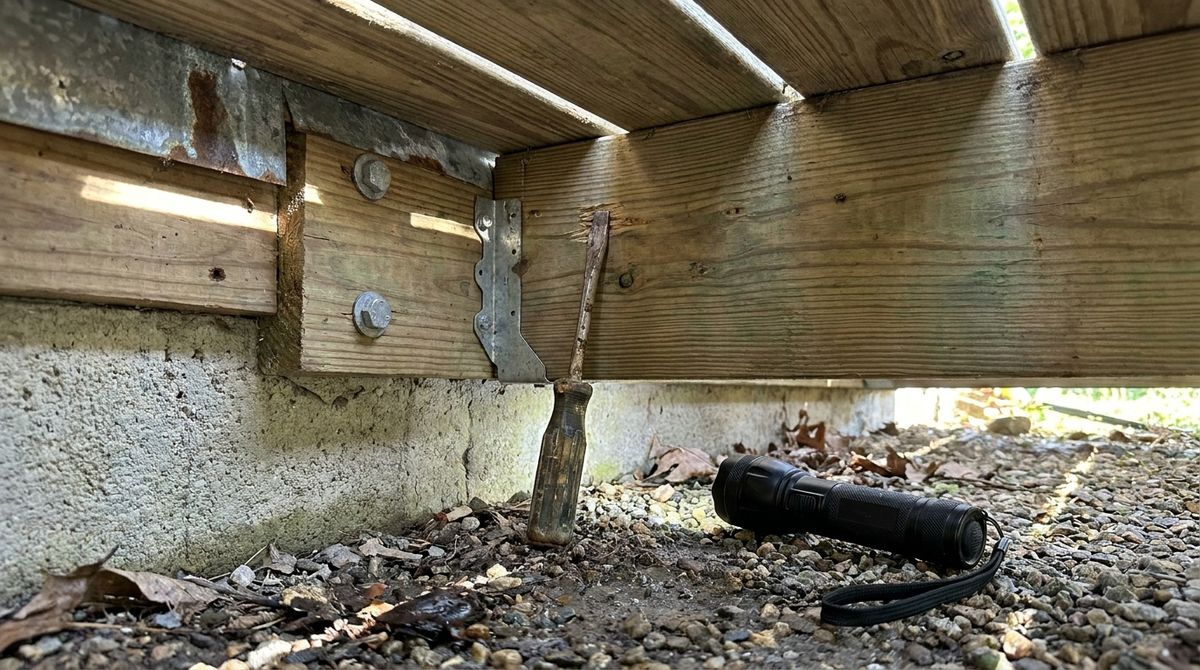
Start under the deck where it meets the house. The ledger should be held with lag screws or through-bolts; DCA 6 prohibits lead anchors, and NADRA notes a ledger should not be fastened with nails alone. Look for corrosion-resistant flashing above the ledger. If water collects there, NADRA advises adding or replacing the flashing.
Step 2: Probe posts, joists, boards and stairs for decay
Push an ice pick or screwdriver into several spots, especially areas that stay damp or touch fasteners. NADRA’s signs of decay: the tool sinks in 1/4 to 1/2 inch easily, a sliver breaks off without splintering, or the wood feels soft and spongy. Small holes can mean insects. Check posts where they meet the ground and the ends of joists.
Step 3: Tighten and replace fasteners and connectors
Tighten loose screws and bolts, paying special attention to guard posts and the ledger. TimberTech adds that lag screws should have washers and bolts should have nuts and washers. Replace rusted fasteners; NADRA warns corrosion can damage the wood around them. The deck and stairs should look even, with no sag, and should not sway when you push on them.
Step 4: Test railings and stairs
Push hard on every railing and handrail, especially on a high deck. DCA 6 requires a guard on any deck more than 30 inches above grade. On stairs, check that stringers and risers are sound and that any open space behind a tread is no more than 4 inches high (NADRA). For heights and spacing, see the code basics in our deck railing ideas and the deck stair dimensions.
Step 5: Clear the gaps and clean the surface
Run a putty knife between boards, then clean with the method for your material in the next section. TimberTech says clear gaps let water drain and help prevent mildew. TimberTech also advises trimming back plants to limit moss and mildew, and NADRA asks you to check overhanging trees for dead limbs.
Step 6: Decide whether a wood deck is due for restaining
NADRA’s rule is simple: if mildew is present or the coating has worn away, clean the deck and apply a new waterproofing coating. Use the water-bead test and the full prep, weather and coat sequence in our guide on how to stain a deck; the timing depends on stain opacity and the label.
Cleaning a wood deck vs a composite deck
Cleaning a wood deck and cleaning a composite deck use similar tools but different limits, and the limits for composite come from each brand’s warranty documents. Identify your board before you start; TimberTech even offers photo identification by email for older decks.
Wood and pressure-treated wood
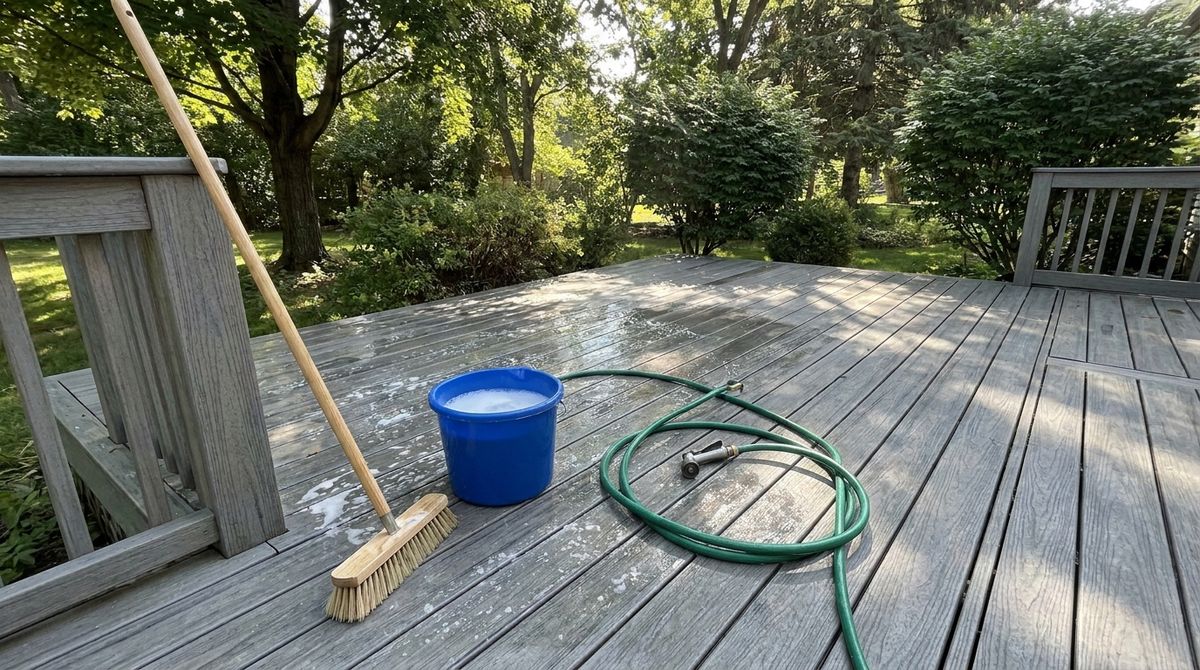
- Scrub with detergent and water. Viance, which makes preservatives for treated lumber, says a liquid detergent solution and a stiff brush remove mildew and dirt.
- Skip chlorine bleach and foaming cleaners. Viance says they can strip the preservatives.
- Go easy with a pressure washer. Viance warns excessive pressure may damage the wood; it gives no psi figure, so start low and test a hidden board.
- Frequency: at least twice a year, per Viance, and more often if mold keeps returning.
Composite and PVC
| Brand guide | Cleaner and brush | Pressure washer |
|---|---|---|
| Trex (Transcend, Enhance, Select) | Soap and a soft bristle brush | 3,100 psi max, fan tip, no closer than 8 inches |
| TimberTech (2026 guide) | TimberTech DeckCleaner; medium-to-stiff nylon brush on composite | Rinsing only, fan tip, 1,500 psi max, spray along the grain |
Both brands warn against letting dirty water or cleaner dry on the boards, which leaves a film. TimberTech adds: do not clean in direct sun, and do not use cleaners sold as “composite deck cleaners” on its current capped boards. Other brands have their own rules, so read yours.
Mildew and mold on a deck
Mildew and mold on a deck feed on what sits on the surface. Trex explains that when pollen and dirt stay on composite for a long time, mold feeds on that film, which is why it recommends spring and fall cleaning. NADRA lists leaves and debris as both a slip hazard and a cause of mildew on any deck.
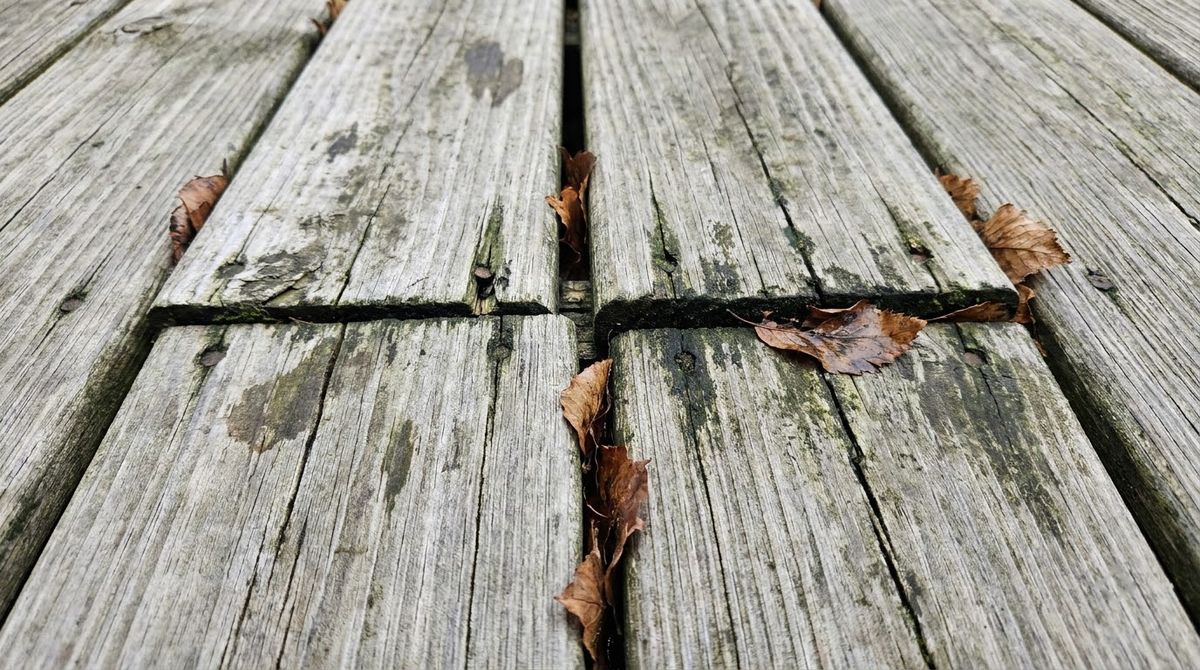
- Remove the food source. Trex recommends a hose, warm soapy water and a soft bristle brush.
- On wood, use oxygen bleach rather than chlorine bleach. BRANZ, New Zealand’s building research body, says chlorine bleach is toxic to plants and corrosive to metal fixings. Wear rubber gloves and goggles.
- Keep air moving. Clear board gaps and trim back plants. TimberTech also warns rubber-backed mats can discolor its boards.
- Mildew or rot? Mildew scrubs off. Wood that is soft under a probe is decay, so go back to Step 2.
Snow and ice removal on a deck
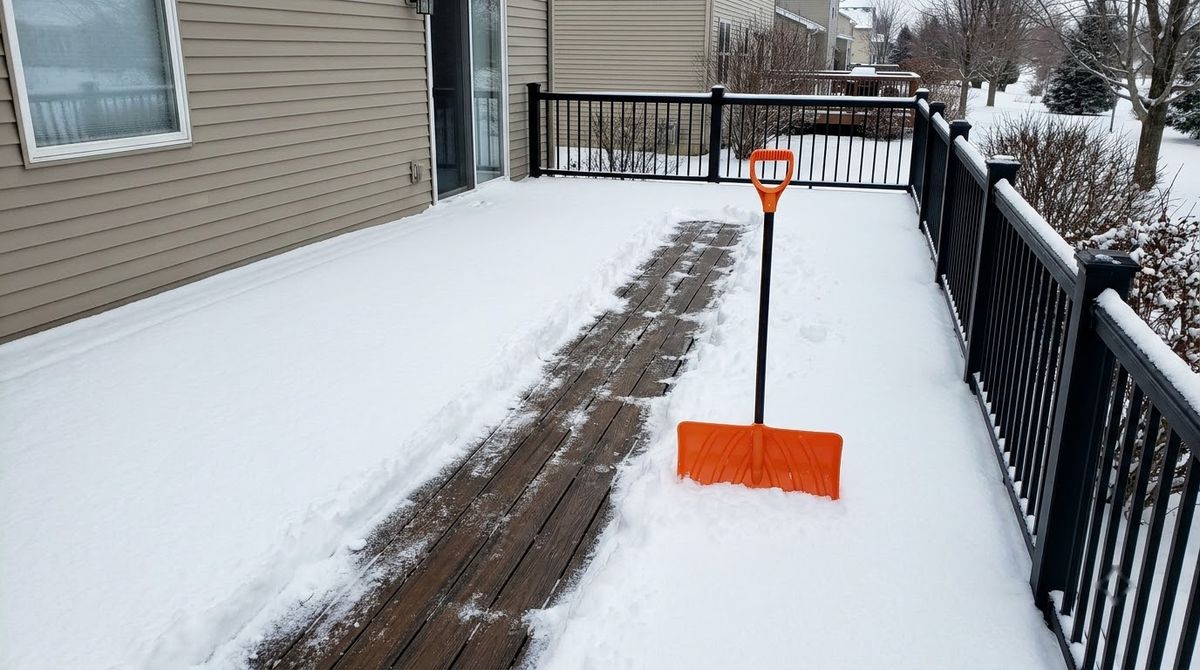
Snow and ice removal on a deck is where composite brands disagree most, so follow the guide for your boards. Both allow plastic shovels and calcium chloride. TimberTech says an all-plastic shovel; metal shovels or plastic ones with a metal edge damage the surface. Calcium chloride can leave a white residue that washes off later.
| Question | Trex | TimberTech |
|---|---|---|
| Shovel | Plastic | All-plastic, no metal leading edge |
| Calcium chloride | Yes | Yes, most products |
| Rock salt | Yes | Avoid, along with abrasive ice melts |
Load matters too. DCA 6 sizes deck framing for a 40 psf live load and does not apply to decks that see snow loads above 40 psf. If your area gets deep, heavy snow, ask your building department what load your deck was built for, and clear it before it piles up.
Popped nails and loose deck boards
Popped nails are a normal part of deck maintenance on older wood decks. BRANZ says timber movement with temperature causes nails to pop, and DCA 6 notes that smooth-shank nails tend to back out as the wood cycles between wet and dry. NADRA’s quick fix is to pound popped nails back in.
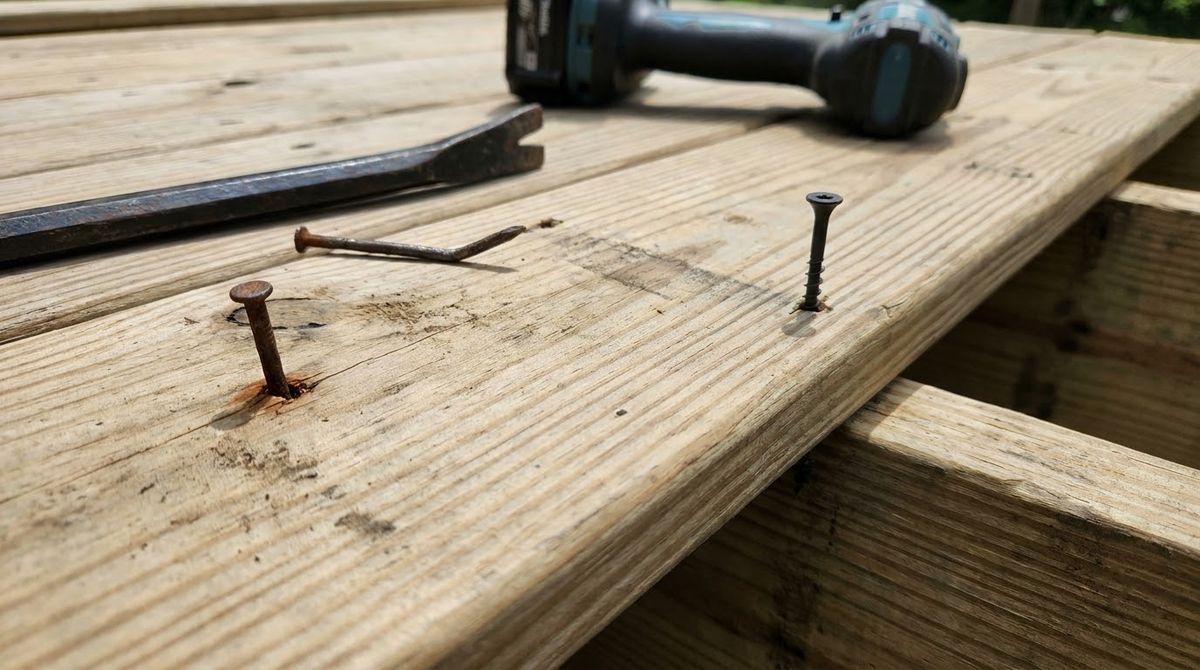
- Re-hammering is temporary. BRANZ expects the nail to pop again as the wood keeps moving.
- Swap in a better fastener. BRANZ suggests slightly longer ring-shank nails or screws; in the US, use deck screws whose coating matches DCA 6.
- Match metals. DCA 6 requires fasteners and connectors of the same corrosion-resistant material, and grade 304 or 316 stainless within 300 feet of salt water.
- Check the board. If the nail pulls out of soft wood, it is a decay problem, not a fastener problem.
Common deck maintenance mistakes
- Using chlorine bleach on treated wood or near plants and metal connectors.
- Pressure washing composite beyond the brand limit, or across the grain on TimberTech boards.
- Shoveling composite with a metal blade or chipping ice with a tool.
- Re-hammering the same nails every spring instead of replacing them.
- Looking only at the surface. The ledger, posts and joist ends fail first and are out of sight.
- Sealing in moisture with tarps, rubber-backed mats or piled leaves.
Safety and when to call a pro
- Treat structural signs as urgent: a ledger pulling from the house, a swaying deck, or a soft post. Keep people off and get a deck builder or home inspector to look.
- Wear gloves and eye protection with any cleaner or bleach, and rinse plants that get overspray.
- Keep heat sources off the boards. NADRA says grills, fire pits and heaters belong away from flammable surfaces or on a non-flammable pad.
- Check lights and cords. NADRA’s list includes working lights, outlets in good condition and no cords across walkways.
Frequently asked questions
How often should a deck be inspected?
Once a year is the common baseline. TimberTech lists an annual inspection for both wood and composite decks, and NADRA promotes May as Deck Safety Month with a homeowner checklist covering the ledger, flashing, fasteners, railings and stairs. Inspect again after a severe storm, heavy snow or any sign of movement.
How often should you clean a deck?
Twice a year for most decks. Viance, which makes wood preservatives, says to clean treated wood at least twice a year to limit mold. Trex recommends spring and fall cleaning for its composite, and TimberTech lists cleaning at least annually. Sweep leaves and clear the gaps between boards more often than that.
Can you pressure wash a composite deck?
Usually yes, within the maker’s limits. Trex allows up to 3,100 psi with a fan tip held at least 8 inches away on Transcend, Enhance and Select. TimberTech allows a power washer for rinsing only, at 1,500 psi or less with a fan tip, sprayed along the grain. Going beyond the limit risks the warranty.
What is the best way to remove snow from a composite deck?
Use an all-plastic shovel. TimberTech says metal shovels or plastic shovels with a metal edge will damage the surface. Both Trex and TimberTech accept calcium chloride ice melt, which may leave a white residue to rinse later. Trex also allows rock salt; TimberTech says to avoid it.
How often does a wood deck need to be sealed?
Every one to three years for most wood decks. TimberTech gives a range of 1 to 3 years, and Viance says to apply a water repellent sealer at least every two years. Recoat sooner if mildew returns or the finish has worn through, which is NADRA’s signal to clean and apply a new waterproofing coat.
Why do deck nails keep popping up?
The wood moves. BRANZ says temperature-driven timber movement pops nails, and the American Wood Council notes that smooth-shank nails back out as wood cycles between wet and dry. Hammering them back is a short-term fix. Replace them with longer ring-shank nails or corrosion-resistant deck screws, and check the board for rot.
Sources
- North American Deck and Railing Association (NADRA), Check Your Deck: Consumer Checklist (Deck Safety Month, 2023).
- American Wood Council, DCA 6: Prescriptive Residential Wood Deck Construction Guide (2015 IRC edition, posted 2018).
- Trex, How to Clean Composite Decking (checked October 2026).
- TimberTech, 2026 Care and Cleaning Guide; also its Deck Maintenance Steps and Checklist page (checked October 2026).
- Viance, Ask the Experts: cleaning and sealing treated wood (checked October 2026).
- BRANZ, Timber decks: common problems and repairs (checked October 2026).