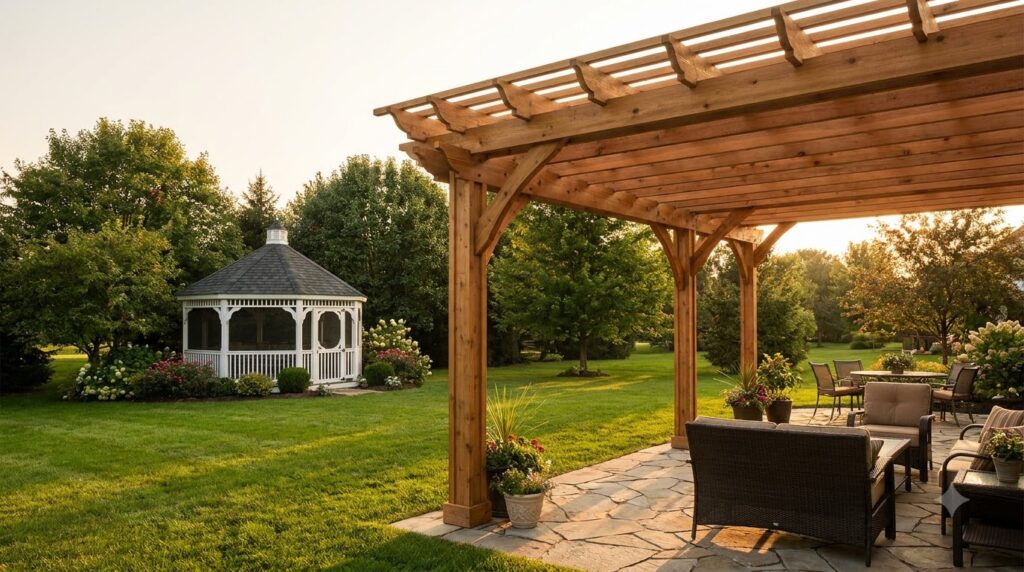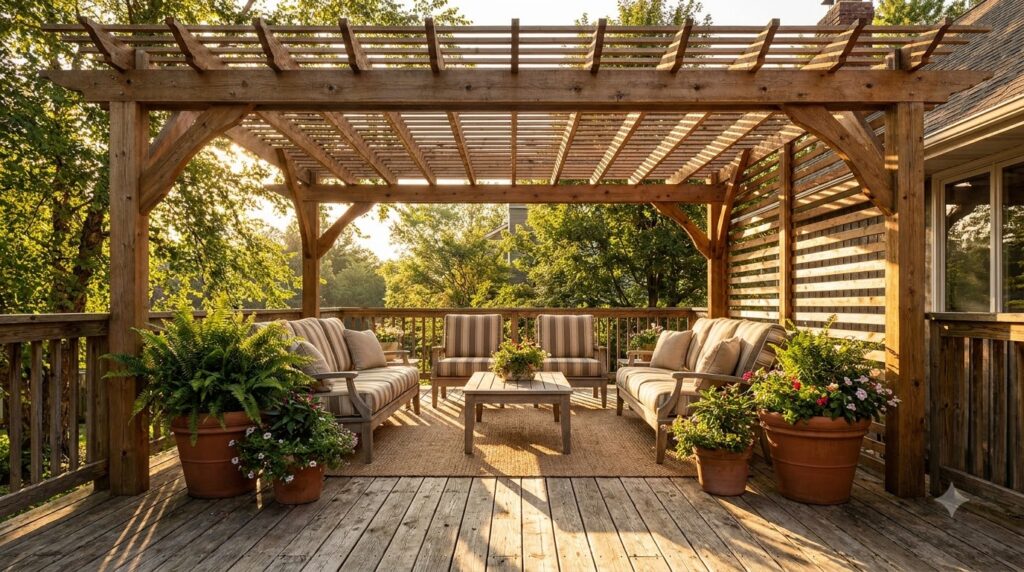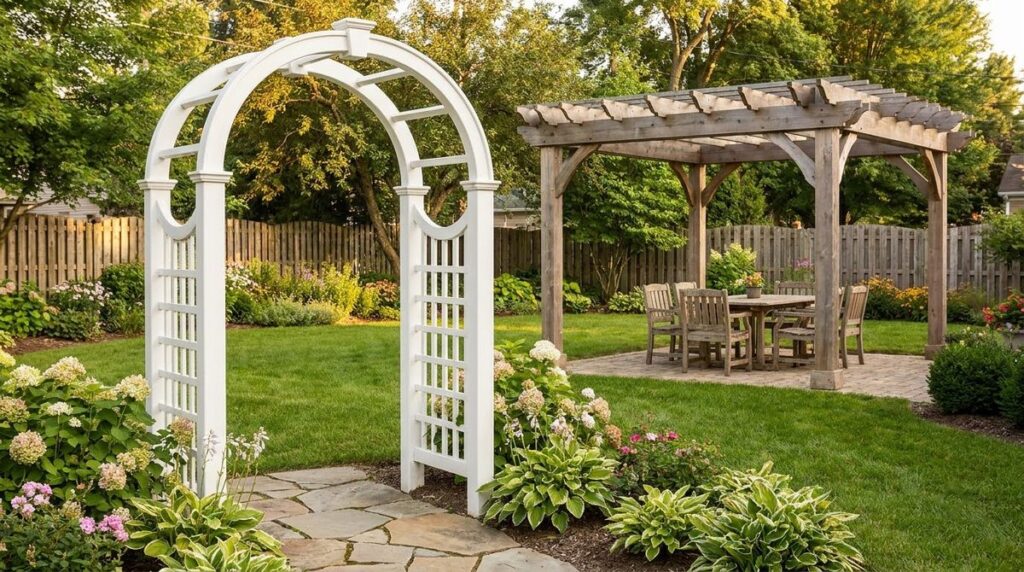
In the arbor vs pergola choice, an arbor is a walk-through structure, usually 6 to 10 feet tall and only a few feet wide, while a pergola is an outdoor room big enough for furniture, such as 10×10 or 12×12 feet. Fixr puts a prefab 6×4-foot arbor at $550–$1,050 installed, and HomeGuide puts a 12×12 pergola kit at $1,450–$5,750 installed.
Key takeaways
- An arbor frames a path; a pergola shades a room. Pick by what happens under it: walking through, or sitting down.
- A trellis is flat. It is a single panel for vines, not a structure you stand under, and Fixr puts one at $650–$950 installed.
- A garden arbor should be at least 6 feet high and 3 feet wide so people can walk through it, per Fixr.
- Pergolas need real footings. Geneva, Illinois, requires 10-inch postholes at least 2 feet deep for a detached pergola, inspected before the concrete goes in.
- Heavy vines need the pergola. Extension sources warn that wisteria can grow heavy enough to pull down patio structures.
| Structure | Typical size | Best use | Posts and footings | Installed cost (data year) | DIY difficulty |
|---|---|---|---|---|---|
| Trellis | One flat panel | Vines on a wall, fence or bed edge | Fixed to a wall or two stakes | $650–$950 (Fixr, 2022) | Easiest |
| Arbor | About 6–10 ft tall; 6×4 ft to 12×12 ft | Garden entry, gate, walkway, bench nook | 2–4 posts, staked or set in concrete | $550–$1,050 prefab 6×4 ft; $2,500–$4,500 national range (Fixr, 2022) | Easy to moderate |
| Pergola | Often 10×10 to 12×12 ft; priced from 8×8 to 30×30 ft | Shade over a patio, deck or dining set | 4 or more posts on dug, inspected footings | $1,000–$4,000 kit 10×10; $4,300–$9,350 custom 12×12 (HomeGuide, 2026) | Moderate to hard |
Fixr arbor sizes are height by width; costs include materials and installation. Fixr data updated August 2022; HomeGuide page titled 2026 prices.
Arbor vs pergola: the difference is what happens underneath
The arbor vs pergola difference is not style; it is use. Fixr’s arbor guide describes an arbor as an archway or vertical structure on walkways, paths, gardens or entrances, and calls a pergola an outdoor living space. An arbor is a doorway into another part of the yard. A pergola is the room itself.
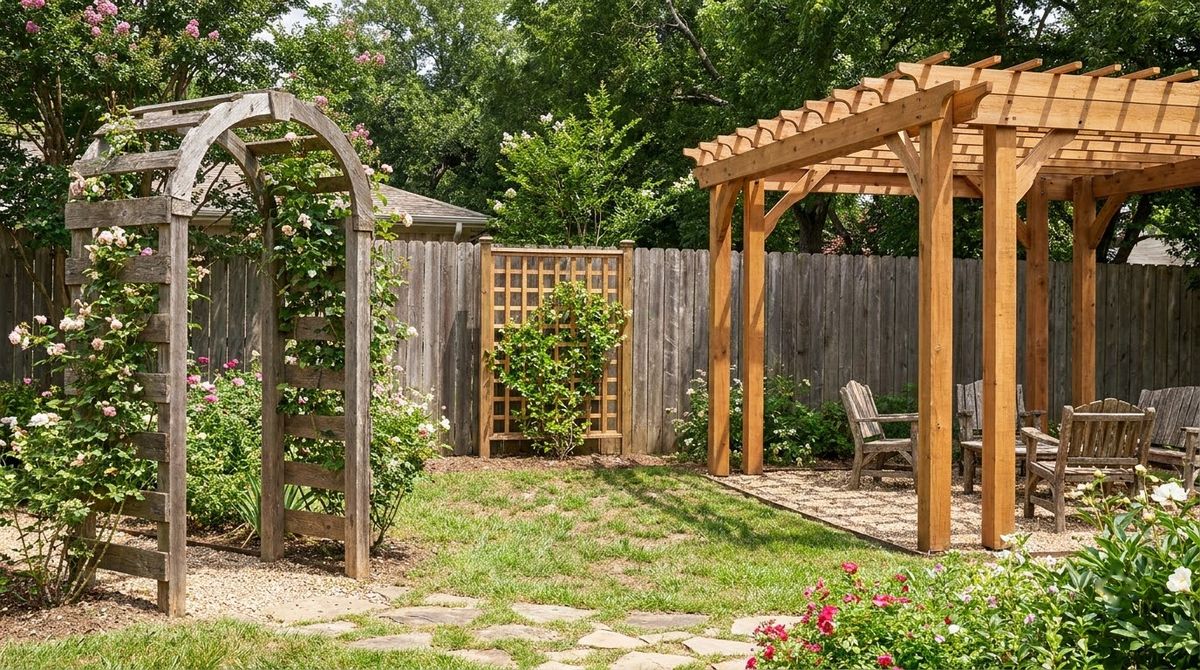
- Arbor: two or four posts, a narrow footprint, often an arched or gabled top, and lattice sides for vines. Some add a gate or a built-in bench.
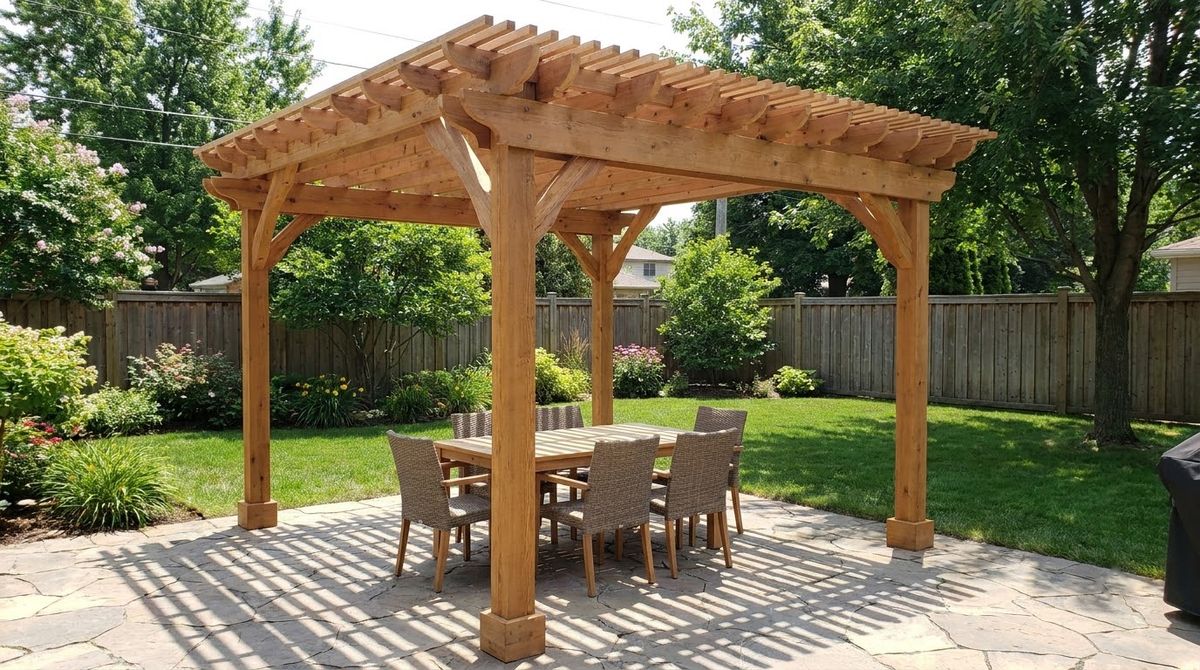
- Pergola: four or more posts, a flat top of beams and rafters, open sides, and space for a table or seating group.
- Trellis: a single flat panel of lattice or wire. Fixr notes a trellis is made specifically for growing plants such as ivy and flowers.
A pergola also differs from a gazebo, which adds a solid roof. That is a separate decision with its own trade-offs, covered in the pergola vs gazebo comparison.
Size: walk-through clearance vs a room for furniture
Size is the first filter. Fixr says the smallest arbors average 6 feet tall, the average height is 8 to 10 feet, and a garden arbor should be at least 6 feet high and 3 feet wide to walk through. Its common arbor sizes run from 6×4 to 12×12 feet.
A pergola is sized around furniture. Trex Furniture’s table guide calls a 36×72-inch rectangle the most popular six-seat table and recommends at least 3 feet of clearance on every side. Add that clearance and the dining zone alone is about 9×12 feet, which is why 12×12 is a common pergola footprint.
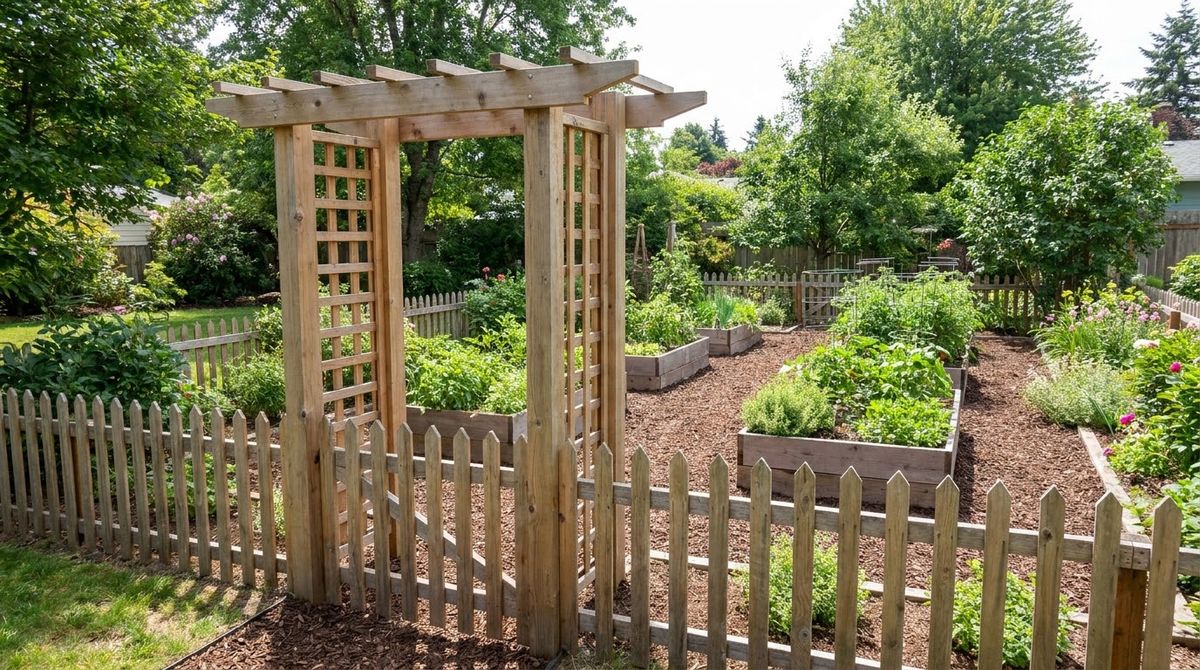
- Path or gate opening: an arbor, at least 3 feet wide inside.
- One or two seats: an arbor with a bench; Fixr says arbors are not as useful for more than one to two people.
- Four- to six-seat dining: a pergola, 12×12 feet or larger.
- Dining plus lounge: a larger pergola; HomeGuide prices kits up to 30×30 feet.
Structure: posts, top and sides
The structure of each one follows its size. An arbor’s short spans let it stand on two or four light posts, and many are sold as prefab kits in vinyl, metal, composite or wood. Fixr says a prefab arbor can be installed in a few hours, while a custom arbor can take days or weeks.
A pergola carries longer beams and a full grid of rafters over a seating area, so its posts, beams and connections matter more. Fixr’s comparison notes that a pergola is strong enough for curtains, swings and a canvas shade along the roof, which is extra load that does not belong on a light arbor.
An attached version changes the picture for both. Fixr notes that an attached arbor is mounted to a wall or structure with a beam or anchor and should be installed by a professional to protect the home. The same is true of an attached pergola, which is held to stricter footing rules in some cities, as the next section shows.
Footings and permits: what the codes say
Footings and permits split an arbor from a pergola more sharply than looks do. The model International Residential Code (IRC 2021, Section R105.2) exempts one-story detached accessory structures up to 200 square feet from a building permit, but it also says the exemption does not authorize work that breaks any other local law.
Cities often go further. The City of Geneva, Illinois, requires a building permit before installing or replacing any pergola, with a $150 fee and at least 15 working days for review. Its handout sets minimum postholes for the footings:
- Detached pergola: 10-inch diameter by 2 feet deep, minimum.
- Attached pergola: 10-inch diameter by 42 inches deep, minimum.
- Inspection: postholes are inspected before they are filled with concrete.
- Posts: at least 4×4 inches unless a licensed professional designs the structure.
Arbors usually sit on lighter anchors. Fixr says an arbor can be secured with brackets and stakes on soft ground, or set in holes filled with concrete for a firmer hold, and that some locations require a permit for one.
Rules for pergolas in more cities are collected in the guide to when a pergola permit is required. Either way, check with your local building department before you dig.
Cost: arbor vs pergola by size
Cost tracks size, so an arbor almost always costs less than a pergola of the same build quality. Fixr’s arbor data (updated August 2022) and HomeGuide’s pergola page (2026 prices) give these installed ranges, materials and labor included.
| Size | Prefab or kit, installed | Custom, installed | Source |
|---|---|---|---|
| Arbor 6×4 ft | $550–$1,050 | $2,050–$5,250 | Fixr, 2022 |
| Arbor 8×8 ft | $800–$1,500 | $2,550–$5,800 | Fixr, 2022 |
| Arbor 12×12 ft | $1,800–$2,750 | $3,800–$7,500 | Fixr, 2022 |
| Pergola 8×8 ft | $650–$2,550 | $1,900–$4,150 | HomeGuide, 2026 |
| Pergola 10×10 ft | $1,000–$4,000 | $3,000–$6,500 | HomeGuide, 2026 |
| Pergola 12×12 ft | $1,450–$5,750 | $4,300–$9,350 | HomeGuide, 2026 |
Assumptions: freestanding, standard wood or common kit materials, professional installation, no electrical. The two sources use different methods, so compare ranges, not single numbers.
Doing it yourself narrows the gap. Fixr puts prefab arbor labor at $300–$500, and HomeGuide puts a DIY pergola kit at $700–$4,000 before permits, which HomeGuide averages at $60–$150. The full pergola breakdown by material, kit and hidden costs is in the pergola cost guide.
Climbing plants each structure supports
Climbing plants are often the reason for building either one, and how a vine climbs decides which structure suits it. A Washington State University Extension Master Gardener column sorts vines into four groups by how they attach, and each group wants a different kind of support.
- Tendril vines (passion vine, grapes, crossvine) do best on narrow supports they can spiral around, such as lattice or wire.
- Twining vines (clematis, jasmine, honeysuckle, wisteria) usually coil too tightly to wrap trellis posts, so add string or wire.
- Clinging vines (trumpet vine, Parthenocissus such as Boston ivy) attach with disks or rootlets that can damage surfaces, so keep them away from the house.
- Vines that need tying, such as climbing roses, have no grip of their own.
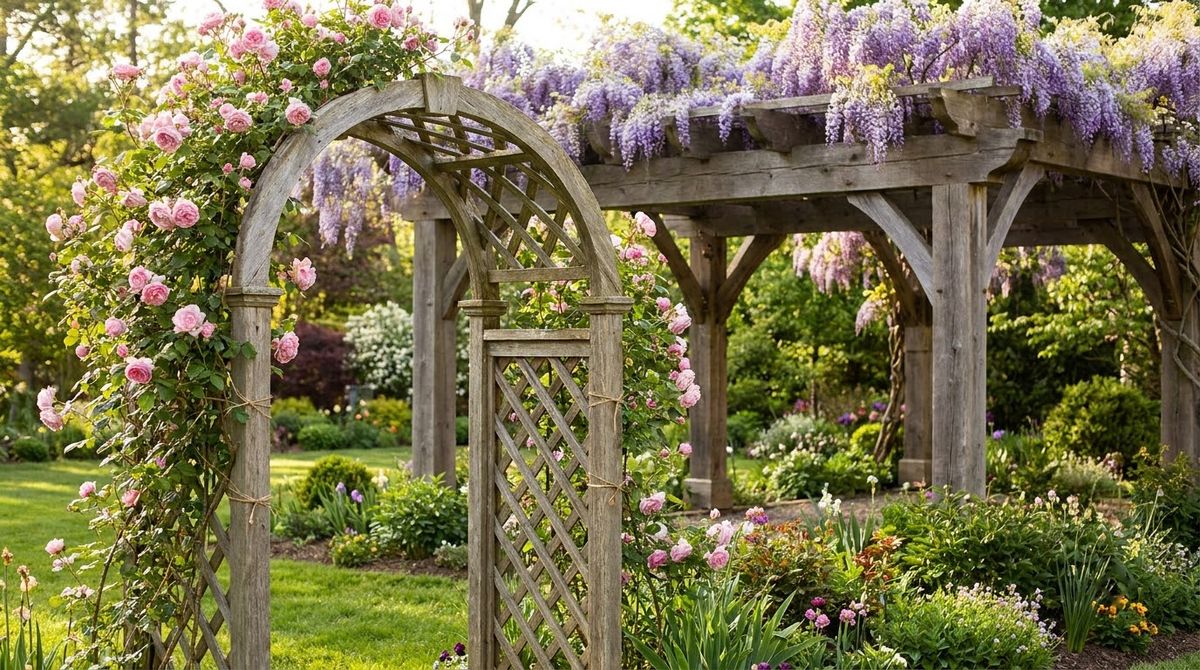
The WSU column warns that wisteria can become heavy enough to pull down patio structures, and can pull an attached patio cover off a house. A University of Minnesota Extension answer on Ask Extension names grapes, American bittersweet, Dutchman’s pipe, trumpet vine and wisteria for covering a pergola top, and says all of them need a very sturdy support.
Lighter climbers suit an arbor or the sides of a pergola. The same answer says most clematis die back in winter and are not vigorous enough to cover a top, and that climbing roses grow long canes that will not naturally cover it. Plants that suit a pergola in more detail are in the pergola ideas list.
Arbor vs pergola verdict: which one to build
The arbor vs pergola verdict comes down to whether people will stand under it for a second or sit under it for an evening. Use the situation that matches your yard.
- Pick an arbor if you want to mark a garden entry, a gate in a fence, or a path, or you want roses, clematis or other light climbers on a budget under about $1,500 for a prefab install.
- Pick an arbor with a bench if you want a seat for one or two people in a corner of the garden.
- Pick a pergola if you want filtered shade over a dining table or lounge set, which needs roughly 9×12 feet for six seats plus clearance.
- Pick a pergola if you plan to grow wisteria, grapes or trumpet vine across the top, or hang lights, curtains or a swing.
- Pick a trellis if you only want vines on a wall, fence or raised-bed edge and nothing to walk through.
- Pick a gazebo instead if you want a solid roof that keeps off rain; that is a different structure from all three.
Mistakes to avoid when choosing between them
- Planting wisteria on an arbor. It is one of the heaviest common vines; give it a sturdy pergola away from the house.
- Buying an arbor too narrow to walk through. Fixr’s minimum is 3 feet wide and 6 feet high.
- Sizing a pergola to the patio, not the furniture. Measure the table plus 3 feet on each side first.
- Assuming a small pergola needs no permit. The IRC 200-square-foot exemption is a model rule; Geneva, Illinois, requires a permit for any pergola.
- Setting pergola posts on stakes. Dig footings to the depth your city requires and book the posthole inspection before pouring.
- Letting clinging vines climb the house. Their holdfasts can damage siding and masonry.
Frequently asked questions
What is the difference between an arbor and a pergola?
An arbor is a small walk-through structure that frames a path, gate or garden entry, usually with two or four posts and an arched or gabled top. A pergola is a larger outdoor room with four or more posts and an open beam-and-rafter roof, built to shade a patio, deck or seating area for several people.
Is a trellis the same as a pergola?
No. A trellis is a single flat panel of lattice or wire that holds vines against a wall, fence or bed, and you do not stand under it. A pergola is a freestanding or attached structure with posts and an overhead grid. Fixr puts an installed trellis at $650 to $950 in 2022 data.
Is an arbor cheaper than a pergola?
Usually, yes. Fixr’s 2022 data puts a prefab 6-by-4-foot arbor at $550 to $1,050 installed, while HomeGuide’s 2026 prices put a 10-by-10-foot pergola kit at $1,000 to $4,000 installed. Large custom arbors overlap with small pergolas, so compare quotes for the same size and material.
How tall should a garden arbor be?
Fixr recommends a garden arbor at least 6 feet high and 3 feet wide so people can walk through comfortably, and says most arbors are 8 to 10 feet tall. Taller visitors and climbing plants that hang down from the top both argue for the taller end of that range.
Do you need a permit for an arbor or a pergola?
Often for a pergola, sometimes for an arbor. The model IRC exempts detached accessory structures up to 200 square feet, but cities can be stricter: Geneva, Illinois, requires a permit for every pergola and inspects postholes. Fixr notes some locations require a permit for an arbor. Check with your local building department first.
Sources
- Fixr, How much does it cost to build an arbor? (updated August 2022).
- HomeGuide, How Much Does a Pergola Cost? (2026 Prices) (2026).
- International Code Council, 2021 International Residential Code, Section R105.2 Work exempt from permit (2021).
- City of Geneva, Illinois, Building Division, Pergola Permit Information (revised April 2020).
- Washington State University Skagit County Extension, Ask the Master Gardener: Plan Now for Vines Next Summer (2005).
- Ask Extension (University of Minnesota Extension expert), Best vining plant for a pergola (2017).