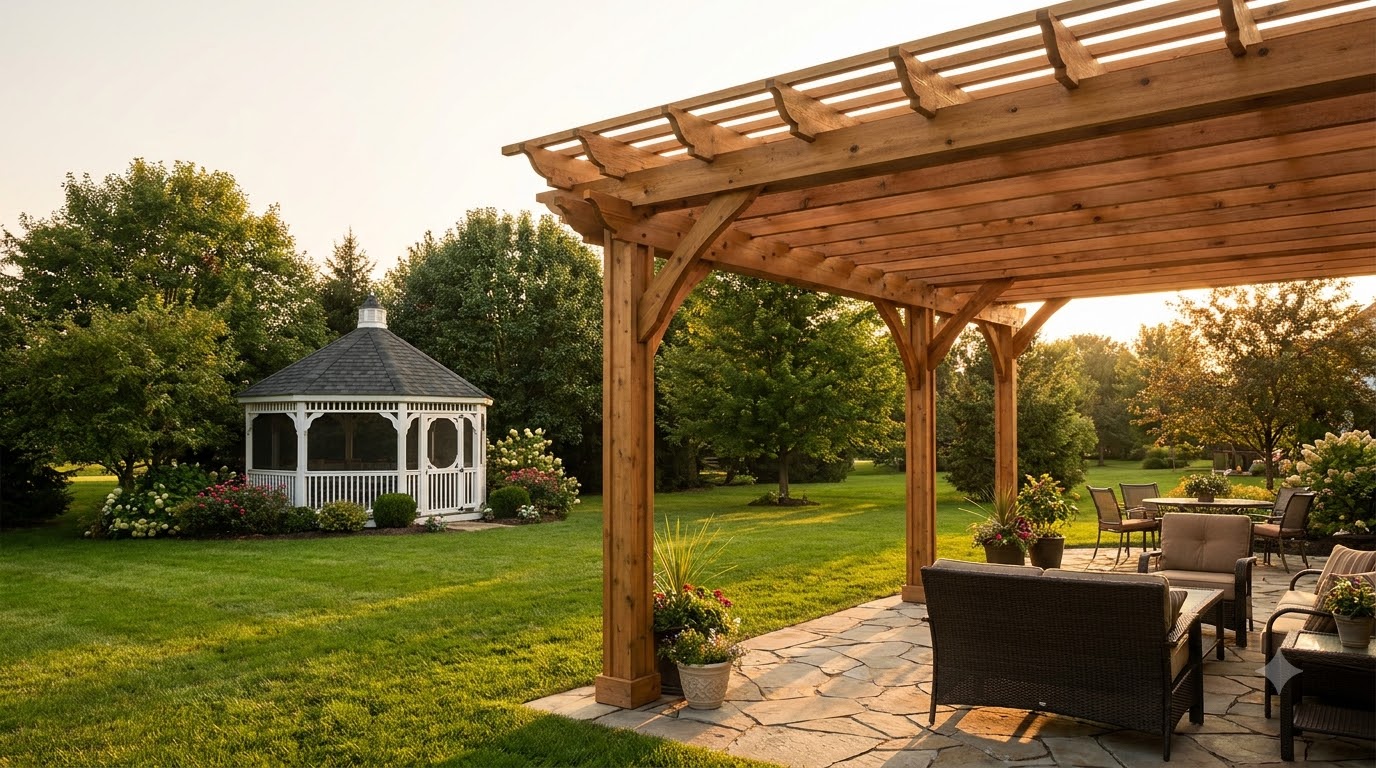
The pergola vs gazebo choice comes down to the roof. A pergola has an open, slatted top — it filters sun, frames an outdoor room, and lets air and light through. A gazebo has a solid roof — full shade, real rain protection, and its own floor, standing apart from the house. Pick the pergola to extend your patio or deck into a stylish half-shaded living space; pick the gazebo when you want an all-weather destination out in the yard. Everything else — cost, permits, placement — follows from that roof.
Key takeaways
- Roof decides it: pergola = open slats, partial shade, sky visible. Gazebo = solid roof, full shade, dry in rain.
- Pergolas attach to the house or stand alone; gazebos are almost always freestanding with their own floor.
- Like for like, pergolas start cheaper — less material, simpler build. Louvered “smart” pergolas are the luxury exception.
- Solid roofs and attached structures trigger permit rules more often — check local code and HOA before ordering either.
- Rain matters most: if you want to sit outside during a storm, the gazebo wins the argument on the spot.
Pergola vs gazebo at a glance
| Pergola | Gazebo | |
|---|---|---|
| Roof | Open slats or adjustable louvers | Solid — shingles, metal, or hardtop panels |
| Shade | Partial, striped, moves with the sun | Full, constant |
| Rain protection | None (unless louvered/canopied) | Yes |
| Typical shape | Square or rectangle | Octagon, hexagon, or rectangle |
| Placement | Over patio or deck; attached or freestanding | Freestanding in the yard, own floor |
| DIY difficulty | Very kit-friendly | Harder — roof framing and footings |
| Relative cost | $ to $$$ (louvered) | $$ to $$$ |
| Permit likelihood | Lower for small freestanding; rises if attached | Higher — solid roof, larger footprint |
What a pergola actually is
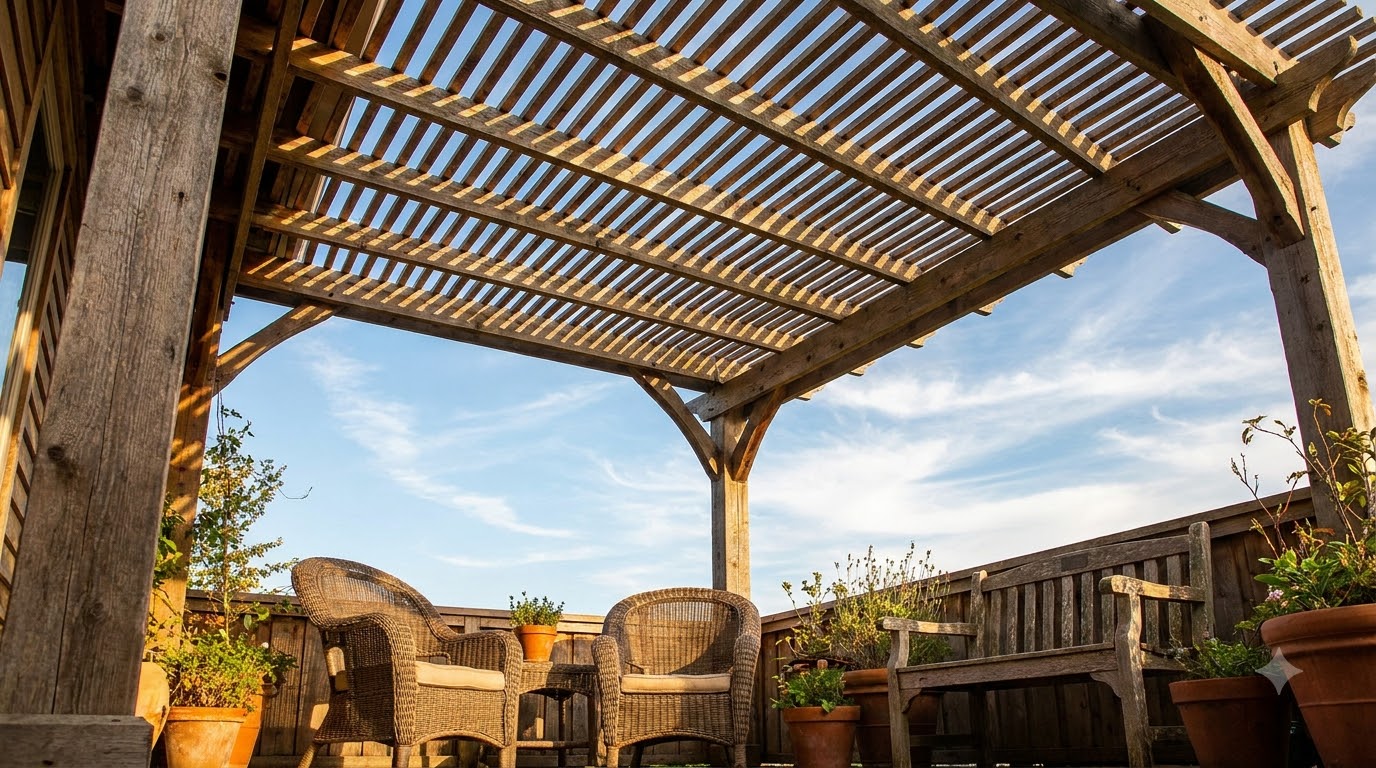
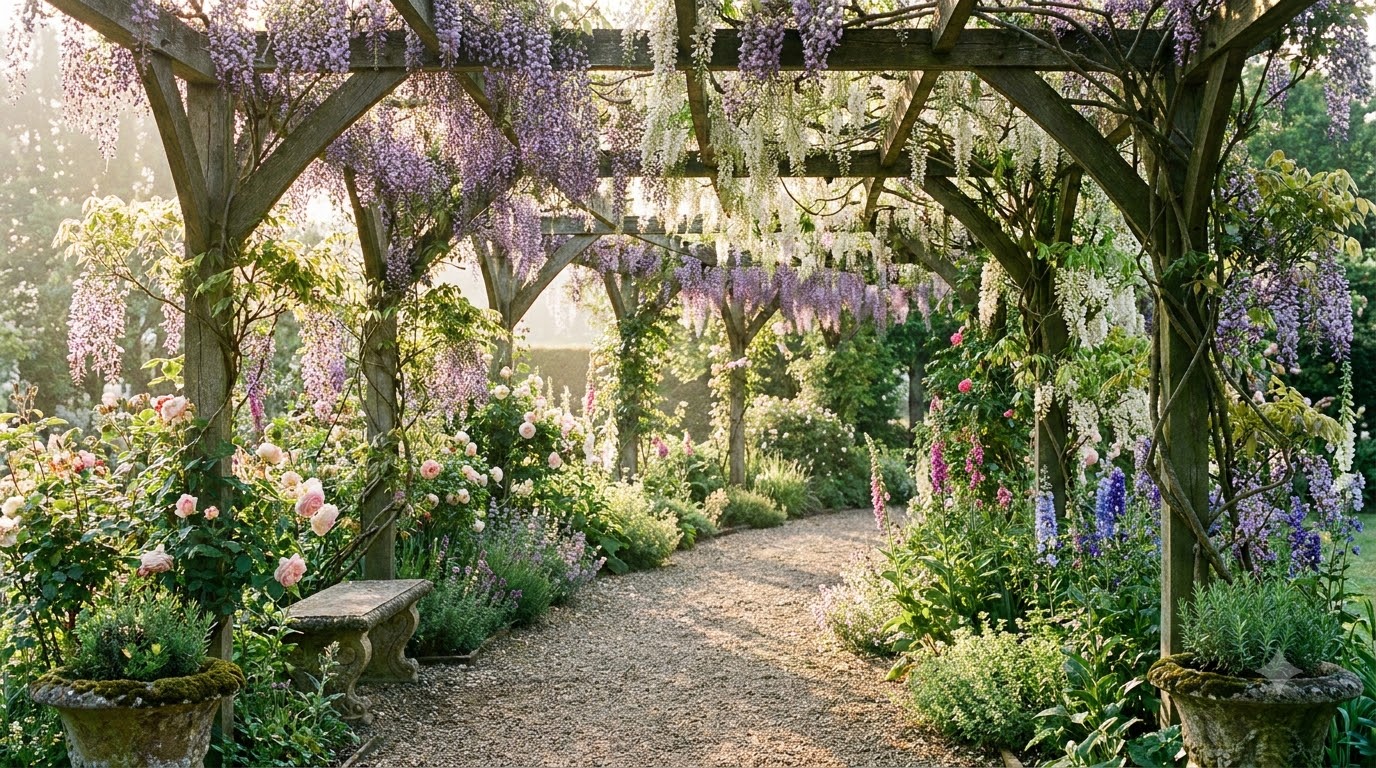
Posts, beams, and an open lattice of rafters overhead — that is the whole recipe, and it is ancient: the word traces back to the Latin pergula, a projecting eave, and garden historians track pergola-type structures from Egyptian and Roman gardens to the Italian Renaissance. The slatted roof casts moving stripes of shade that change through the day, which is precisely the charm: you get light, air, and a defined “room” without sealing out the sky. Pergolas attach flat against the house to roof a patio, or stand free over a dining set, a spa, or a garden path under climbing vines.
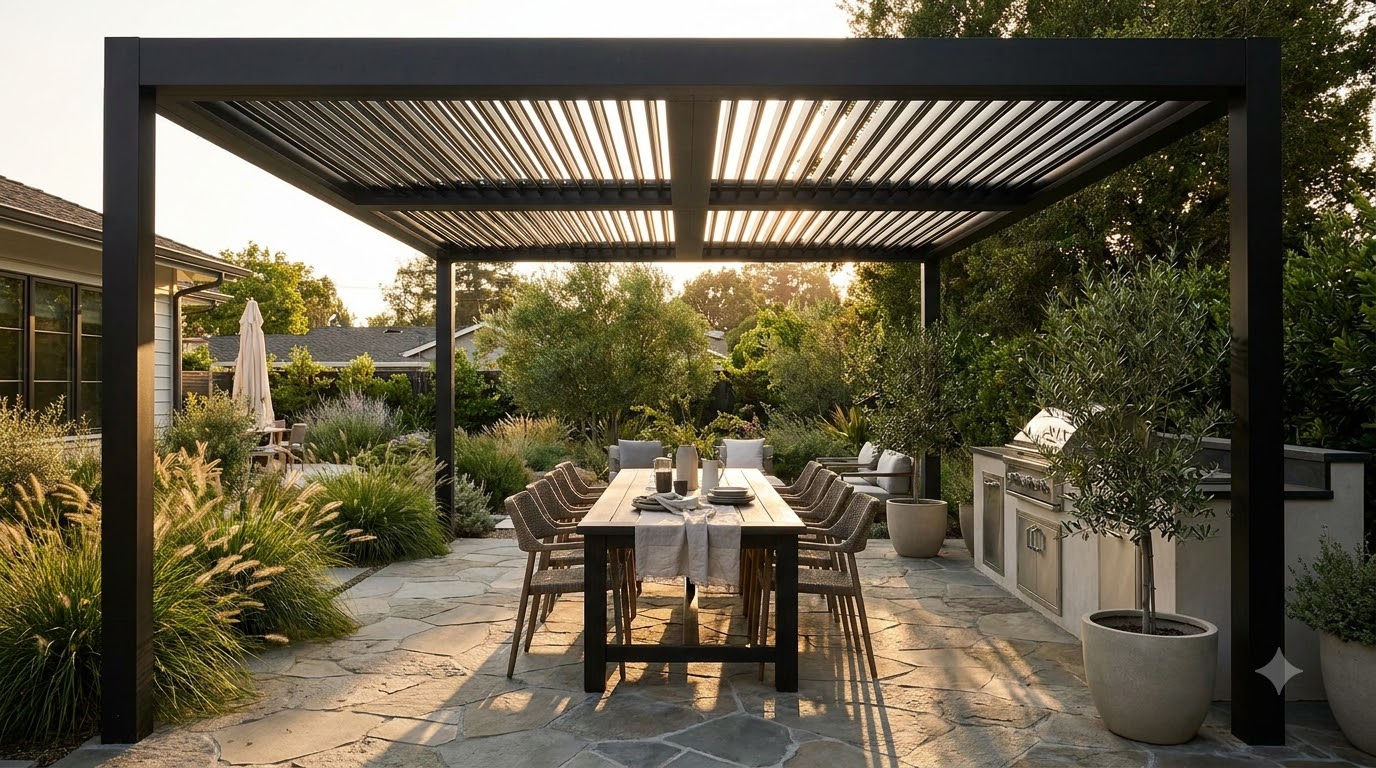
The modern branch of the family is the louvered pergola — aluminum frame, rotating roof blades that open for sun and close tight for shade or rain. It blurs the line toward a gazebo’s protection while keeping the pergola’s footprint and look, and it carries the segment’s luxury price tag.
What a gazebo actually is
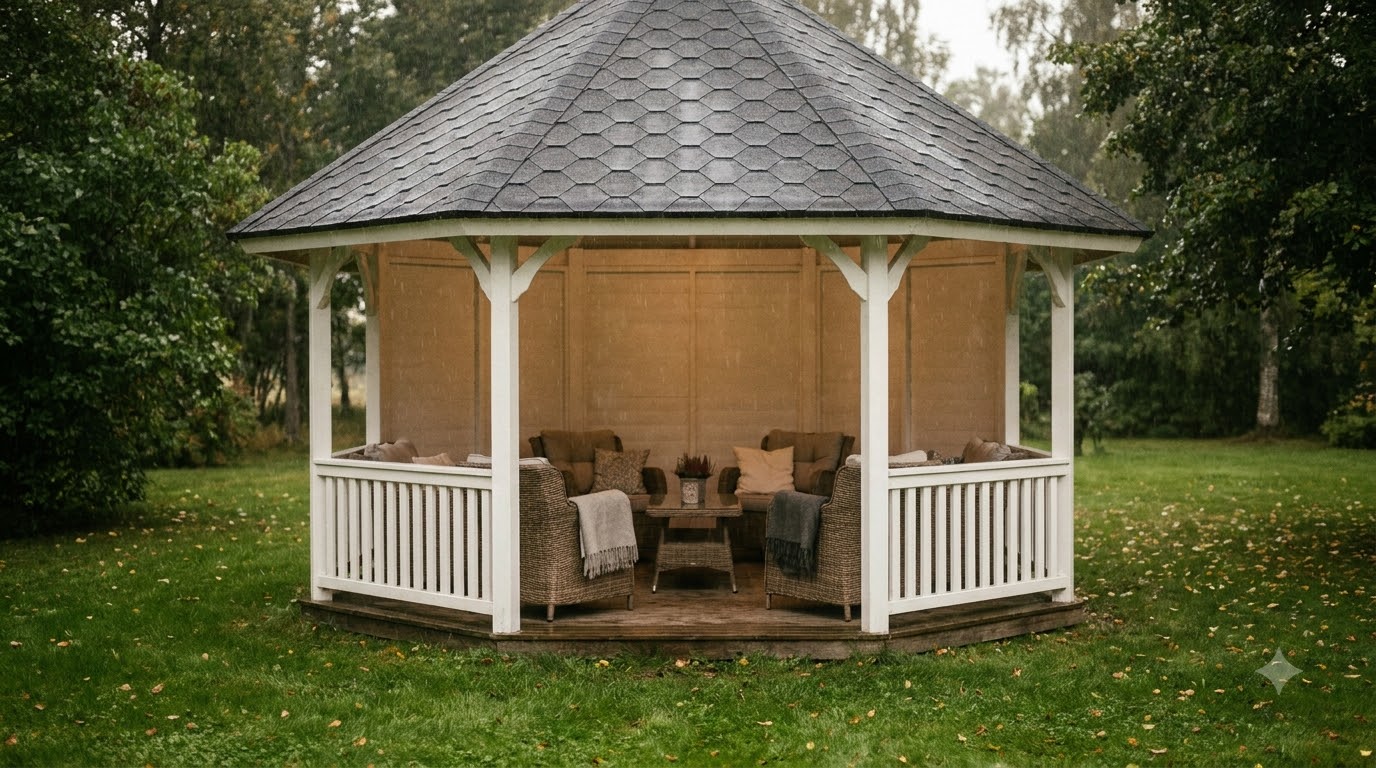
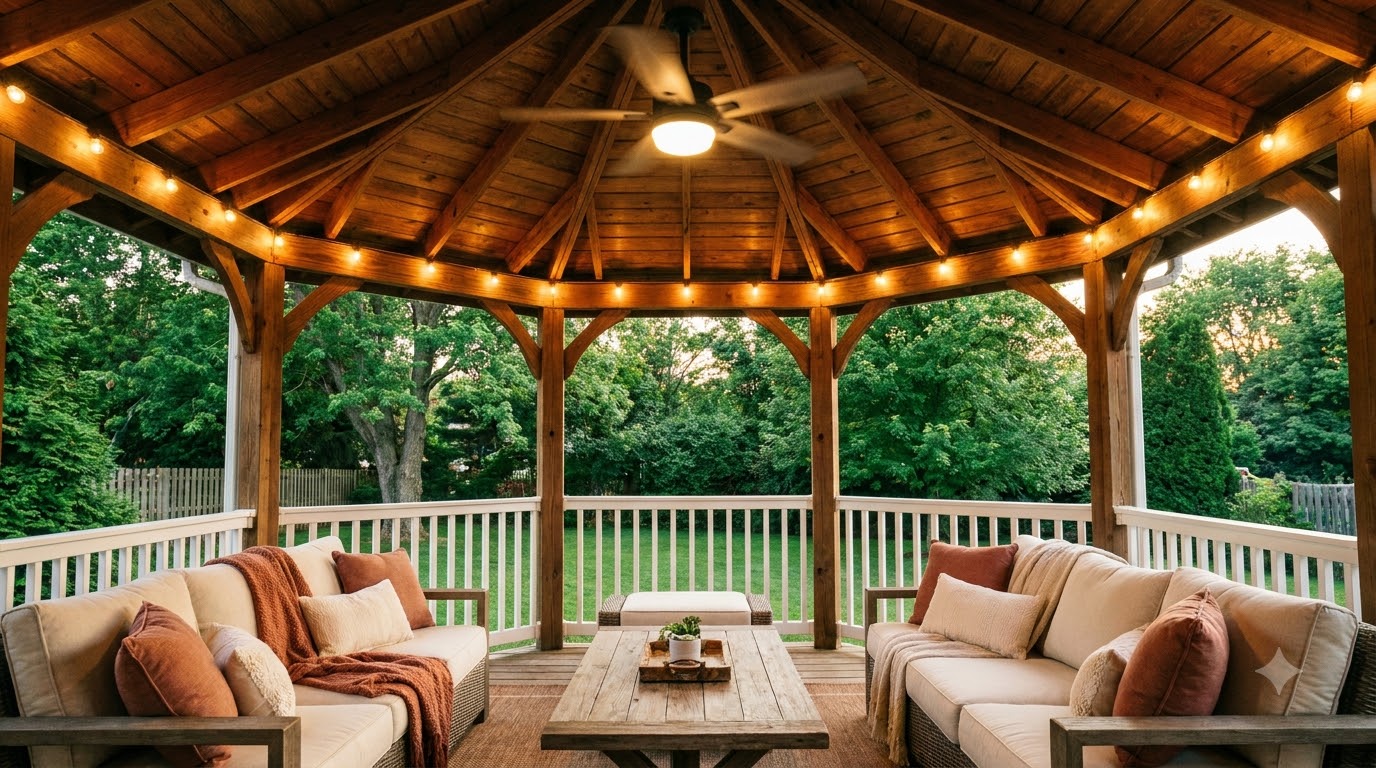
A gazebo is a small freestanding building: solid roof, its own floor, usually railings between posts, classically octagonal though modern hardtop kits are mostly rectangles. The solid roof changes everything about how it is used — a gazebo is dry in rain, fully shaded at noon, and screenable against mosquitoes, which makes it the closest thing to an outdoor room with the walls left off.
The trade: it does not extend your house. A gazebo is a destination — you walk to it across the yard — and it wants a real footprint with level footings or a pad under it.
The cousins people confuse them with
- Pavilion: solid roof like a gazebo, but an open rectangle with no railings or floor — the picnic-shelter shape. Effectively “gazebo protection, pergola openness.”
- Arbor: a small arched gateway with lattice for climbers — garden punctuation, not a living space.
- Ramada: southwestern term for a solid-roof, open-sided shade structure — a pavilion by another name.
- Cabana: poolside structure with at least one closed side, often curtained.
If a salesperson uses one of these words for the thing you’re pointing at, the table above still applies — just ask two questions: is the roof solid, and does it stand alone?
Shade and weather: what you actually get
A pergola’s shade is real but partial — how much depends on slat depth, spacing, and which way the slats run relative to the afternoon sun. Deeper, tighter slats block more of the high midday sun; a canopy, shade sail, or a vine like wisteria upgrades it toward full cover over a couple of seasons. What a standard pergola never gives you is a dry seat in rain.
The gazebo’s solid roof is binary in the best way: full shade at noon, dry furniture in a downpour, and with mesh panels, a bug-free evening. Its weakness is the other side of the same coin — on a mild spring day you may find yourself sitting in shade you didn’t want, and no roof setting can change that.
Cost, honestly
Comparing like for like — kit vs kit, custom vs custom — the pergola starts cheaper and stays cheaper until you enter louvered territory. An open frame simply uses less lumber or aluminum than anything carrying a waterproof roof, and the build is post-and-beam carpentry rather than roof framing. Hardtop gazebo kits sit a tier above comparable pergola kits; custom builds scale with size and material in both camps; and motorized louvered pergolas can out-price everything else on this page.
Two budget notes that outrank the sticker: the pad and footings a gazebo wants can rival the kit price if you don’t have level ground, and delivery plus assembly on big hardtop kits is a real line item — the boxes are enormous.
Permits, codes, and the HOA
Rules vary by municipality, but the pattern is consistent: solid roofs, larger footprints, and anything attached to the house trip permit requirements more often than a small freestanding open pergola. Setback rules — how close to the property line you may build — catch more people than the permit itself, and HOAs frequently regulate height and visibility. Twenty minutes with your city’s website and your HOA covenants before ordering beats any amount of paperwork after.
Placement: deck, patio, or lawn
Over a deck or patio, the pergola is the natural fit — its posts anchor to the deck frame or bolt to the slab, and attached versions borrow the house for support. A gazebo generally wants its own spot on the lawn with real footings, which is exactly what makes it feel like a destination. The rough rule: pergola to extend the living space you have, gazebo to create one where there’s nothing.
Wind, snow, and climate
Climate quietly votes in this decision. Wind favors the pergola: air passes straight through an open roof, while a gazebo’s solid top catches gusts like a sail — in wind-prone areas a gazebo needs serious anchoring, and cheap pop-up versions simply leave. Snow favors neither, but punishes gazebos specifically: a solid roof carries the load, so hardtop kits publish snow ratings worth reading before a mountain-state winter — while snow falls straight through a pergola. Relentless summer sun favors the gazebo, whose shade never moves. If your weather has a personality, let it break the tie.
Materials and upkeep
- Wood (cedar, treated pine): the classic look for both structures; plan on restaining every few years, and expect the same lifespan logic as any outdoor lumber.
- Aluminum: the low-maintenance modern option — most louvered pergolas and many hardtop gazebos; a hose-down is the annual upkeep.
- Vinyl: maintenance-free white, loved and hated on sight; strongest in traditional gazebo styles.
- Gazebo roofs age like roofs: shingles eventually need replacing; metal hardtops mostly don’t.
The five questions that settle it
- Do you want to be outside during rain? Yes → gazebo (or a louvered pergola if the budget reaches).
- Is this space attached to the house? Extending a patio or deck → pergola. A far corner of the yard → gazebo.
- How much sky do you want to keep? Dappled light and openness → pergola. Deep, reliable shade → gazebo.
- Who’s building it? Weekend DIY with a friend → pergola kit. Roof framing or big hardtop assembly → gazebo, with help or a crew.
- What’s the budget ceiling? Tightest budgets → basic pergola kit. Mid → hardtop gazebo. Sky’s the limit → motorized louvered pergola.
Score it honestly and the structure usually picks itself — and if the answers split down the middle, the pavilion (solid roof, open rectangle) is the compromise both sides accept.
Frequently asked questions
Which is cheaper, a pergola or a gazebo?
Like for like, pergolas start cheaper: an open slatted frame uses less material and simpler joinery than anything with a weatherproof roof. Entry-level pergola kits undercut entry-level hardtop gazebo kits, and the gap widens with size. Custom louvered pergolas are the exception — they can out-price a gazebo.
Does a pergola actually provide shade?
Partial shade — how much depends on slat depth, spacing, and orientation. Deeper, closer slats block more midday sun. For full shade under a pergola, add a canopy, shade cloth, or climbing vines, or choose a louvered roof you can close.
Can you put a solid roof on a pergola?
Yes — polycarbonate panels, a fixed canopy, or adjustable louvers all convert a pergola toward full cover. At that point it functionally becomes a pavilion, and in many jurisdictions a solid roof changes how the structure is treated for permits, so check before you convert.
Do I need a permit for a pergola or gazebo?
It depends on your local code, size, and whether the structure is attached or roofed. Solid-roof and attached structures trigger permit rules more often than small freestanding open pergolas. Check your municipality and HOA before ordering — setback rules catch more people than the permit itself.
Which adds more value to a home?
Either can, when it matches the yard: a pergola that defines an outdoor living room off the house, or a gazebo that turns an unused corner into a destination. Buyers pay for usable outdoor space, not for the structure type itself — condition and placement matter more than the pergola-gazebo choice.
Can a pergola go on a deck?
Yes — pergolas are the natural choice over decks because their posts can anchor to the deck frame, while a gazebo generally wants its own footprint and footings on the ground. Post placement must land on blocking or joists, not just deck boards.