The best deck stain ideas start with opacity, because Benjamin Moore’s Woodluxe line alone comes in 7 translucent colors, 75 semi-transparent, 75 semi-solid and more than 3,500 solid colors, and each step up hides more grain. Below are 16 deck stain ideas, each tied to a real manufacturer color, its opacity and the deck it suits.
Pick the opacity first from the age and condition of your boards, then the color. New or hardwood decks suit translucent and semi-transparent stains; older, weathered or patched decks suit semi-solid and solid ones. The application steps, coats and dry times are covered in how to stain a deck, from prep to dry time.
Key takeaways
- Opacity is the first decision. Benjamin Moore rates translucent stain best for new or younger decks and hardwoods, and solid stain best for weathered decks where hiding flaws matters.
- Softwoods take more pigment well. Benjamin Moore says pressure-treated southern yellow pine and cedar benefit from the weather barrier of semi-solid and solid stains.
- To change a deck’s color, go solid. Benjamin Moore calls its solid stain a great choice for a color change, available in 3,500+ colors.
- Two-tone looks follow surfaces: floor in one stain, railings, trim or a border in another.
- Test on your own boards. Benjamin Moore sells 8 oz. samples in every Woodluxe opacity; screen colors vary from the real finish.
| # | Deck stain idea | Real color (maker, code) | Opacity | Best for |
|---|---|---|---|---|
| 1 | Honey teak | Teak ES-30, Benjamin Moore Woodluxe | Translucent, oil | New decks, hardwoods |
| 2 | Classic redwood | Redwood ES-20, Benjamin Moore Woodluxe | Translucent, water | New cedar or redwood |
| 3 | Light chestnut | Chestnut Brown ES-65, Benjamin Moore Woodluxe | Translucent, water | Young pine with even color |
| 4 | Mahogany red-brown | Mahogany ES-60, Benjamin Moore Woodluxe | Semi-transparent, water | Decks a few years old |
| 5 | Coffee brown | Coffee ST-2008, Olympic | Semi-transparent | Grain plus deeper color |
| 6 | One brown for deck and rails | Oxford Brown ES-67, Benjamin Moore Woodluxe | Semi-solid, oil | Mismatched older boards |
| 7 | Burgundy brown | Sweet Rosy Brown 1302, Benjamin Moore Woodluxe | Semi-solid, water | White or light houses |
| 8 | Near-black brown | Cordovan Brown ES-62, Benjamin Moore Woodluxe | Semi-solid, oil | Modern houses, older decks |
| 9 | Gray with grain | Cape Cod Gray ST-2004, Olympic | Semi-transparent | A gray look on sound wood |
| 10 | Flat warm gray | Platinum Gray HC-179, Benjamin Moore Woodluxe | Ultra flat solid, water | Decks with imperfections |
| 11 | Pale blue-gray | Celtic Blue ES-31, Benjamin Moore Woodluxe | Solid, water | Dark or gray siding |
| 12 | Soft white | Maritime White OC-5, Benjamin Moore Woodluxe | Solid, water | Coastal and cottage houses |
| 13 | Cedar floor, white railings | Natural Cedartone ES-45 + White Heron OC-57 | Semi-transparent + solid | Matching cedar siding |
| 14 | Stained floor, painted rails | Mahogany ES-60 + Meditation AF-395 paint | Translucent + paint | Porches and covered decks |
| 15 | Green railings, brown floor | Woodland Green SC-1090 + Coffee ST-2008, Olympic | Solid + semi-transparent | Wooded or garden lots |
| 16 | Dark picture-frame border | Black Walnut ST-2002 + Cedar Naturaltone ST-2005, Olympic | Semi-transparent, two tones | Large or multi-zone decks |
Color names, codes and opacities from Benjamin Moore’s Woodluxe and deck stain idea pages and Olympic’s exterior stain color list, checked October 2026. Colors on screen are approximate; test a sample on your own wood.
Natural wood deck stain ideas: translucent and semi-transparent (ideas 1–4)
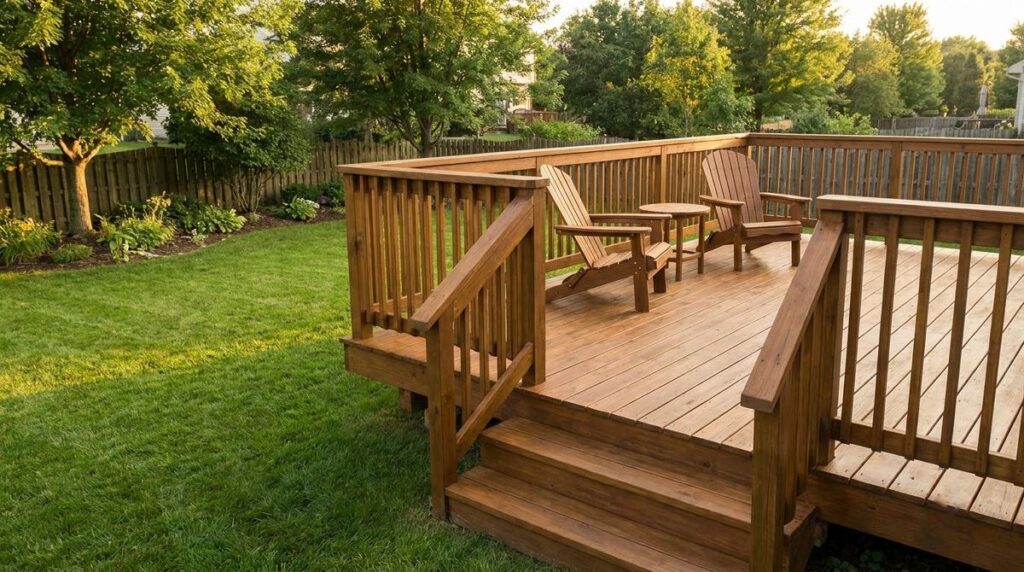
Natural wood deck stain ideas use the lowest opacities, so the grain stays the main feature. Benjamin Moore says translucent stain lets the full beauty of the wood show and suits new or younger decks in good condition, while semi-transparent suits decks a few years old.
1. Honey teak, translucent
Color: Teak ES-30 in Woodluxe Oil-Based Waterproofing Stain + Sealer, Translucent. It reads as a warm golden honey tone. Pick it if your deck is new or built from a hardwood such as mahogany or ipe; Benjamin Moore lists translucent as ideal for hardwoods, and it comes in only 7 ready-mix colors.
2. Classic redwood, translucent
Color: Redwood ES-20 in Woodluxe Water-Based Waterproofing Stain + Sealer, Translucent. Benjamin Moore shows it next to Chestnut Brown on sample boards. Pick it if you want the traditional red deck look and still want to see the grain. Water-based means soap-and-water cleanup and quick drying.
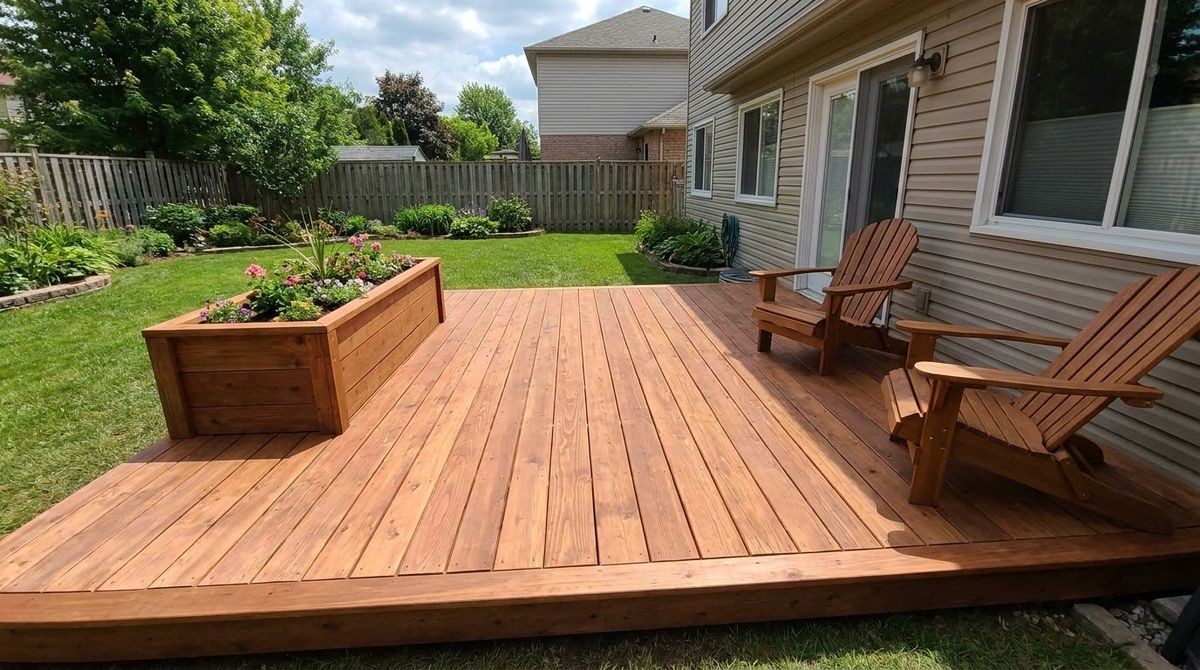
3. Light chestnut, translucent
Color: Chestnut Brown ES-65, also in Woodluxe Water-Based Translucent. It is a soft mid-brown rather than red or gold. Pick it if your boards are young, even in color and you want a plain wood-brown that works with most siding.
4. Mahogany red-brown, semi-transparent
Color: Mahogany ES-60 in Woodluxe Water-Based Waterproofing Stain + Sealer, Semi-Transparent. Benjamin Moore says semi-transparent lets most of the grain and texture show through and comes in 75 colors. Pick it if the deck is a few years old and slightly uneven; the extra pigment evens it out without hiding the wood.
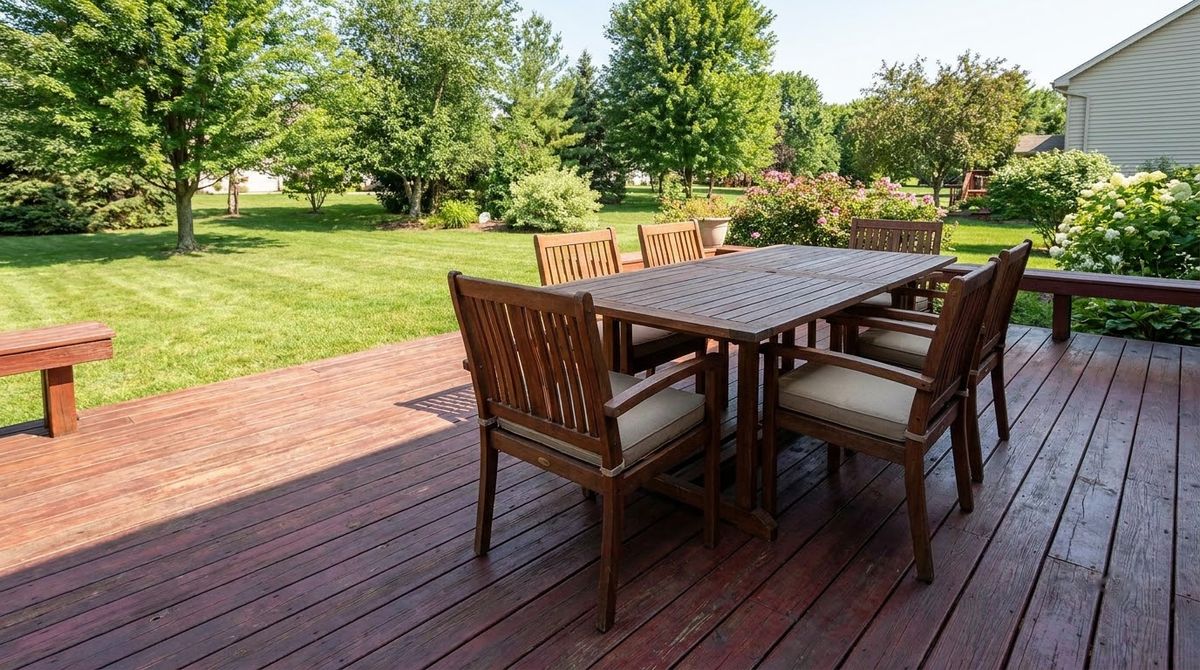
Brown deck stain ideas, from coffee to near-black (ideas 5–8)
Brown deck stain ideas cover the widest range of shades, and darker browns usually come in semi-solid. Benjamin Moore describes semi-solid stain as showing texture and some grain, and rates it best for an older deck or wood that needs a slight touch-up to its color.
5. Coffee brown, semi-transparent
Color: Coffee ST-2008, listed by Olympic as a semi-transparent stain. Olympic says its semi-transparent stains add a more pronounced color while some grain and texture still show, with over 45 colors. Pick it if you want a deeper brown than a natural tone but the boards are still sound enough to show.
6. One brown for the deck and railings
Color: Oxford Brown ES-67 in Woodluxe Oil-Based Waterproofing Stain + Sealer, Semi-Solid, which Benjamin Moore shows on both deck and railings of a waterside deck. Pick it if the floor and railings were built at different times or from different lumber; one semi-solid color across both hides the mismatch.
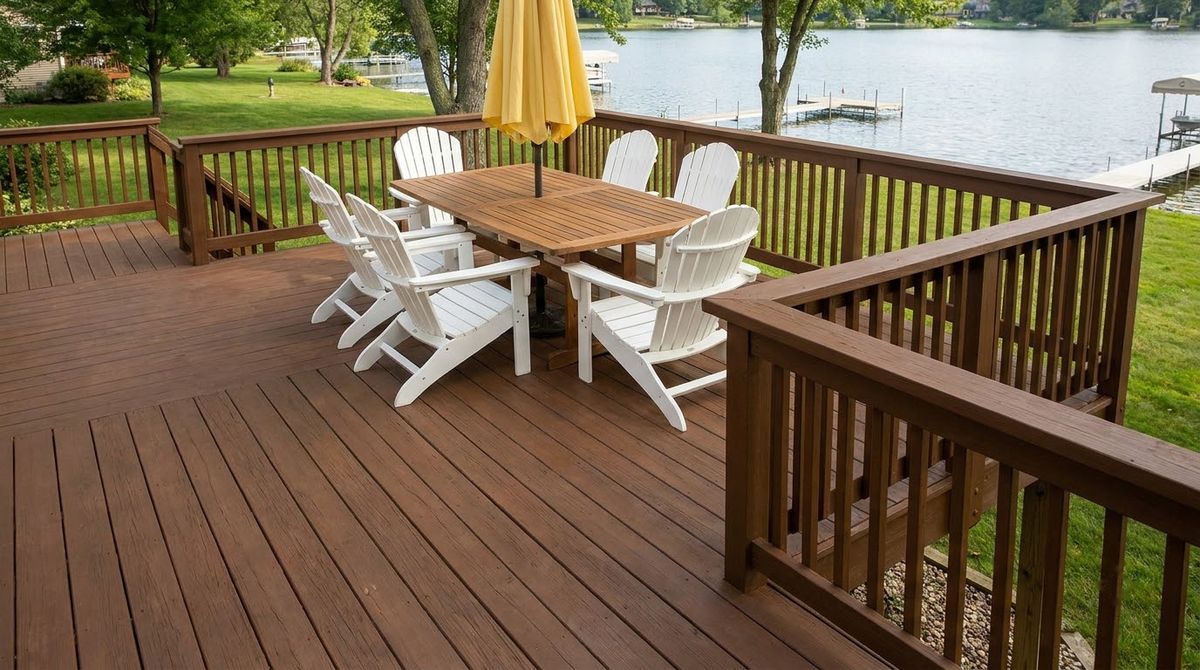
7. Burgundy brown, semi-solid
Color: Sweet Rosy Brown 1302 in Woodluxe Water-Based Waterproofing Stain + Sealer, Semi-Solid. Benjamin Moore pairs it on deck and steps with a house painted White Dove OC-17. Pick it if your house is white or cream and you want a warm red-brown that stands apart from it.
8. Near-black brown, semi-solid
Color: Cordovan Brown ES-62 in Woodluxe Oil-Based Waterproofing Stain + Sealer, Semi-Solid, the darkest brown in Benjamin Moore’s deck examples. Pick it if you have a modern house with dark windows or black trim, or an older pine deck where you want depth without a solid, painted look.
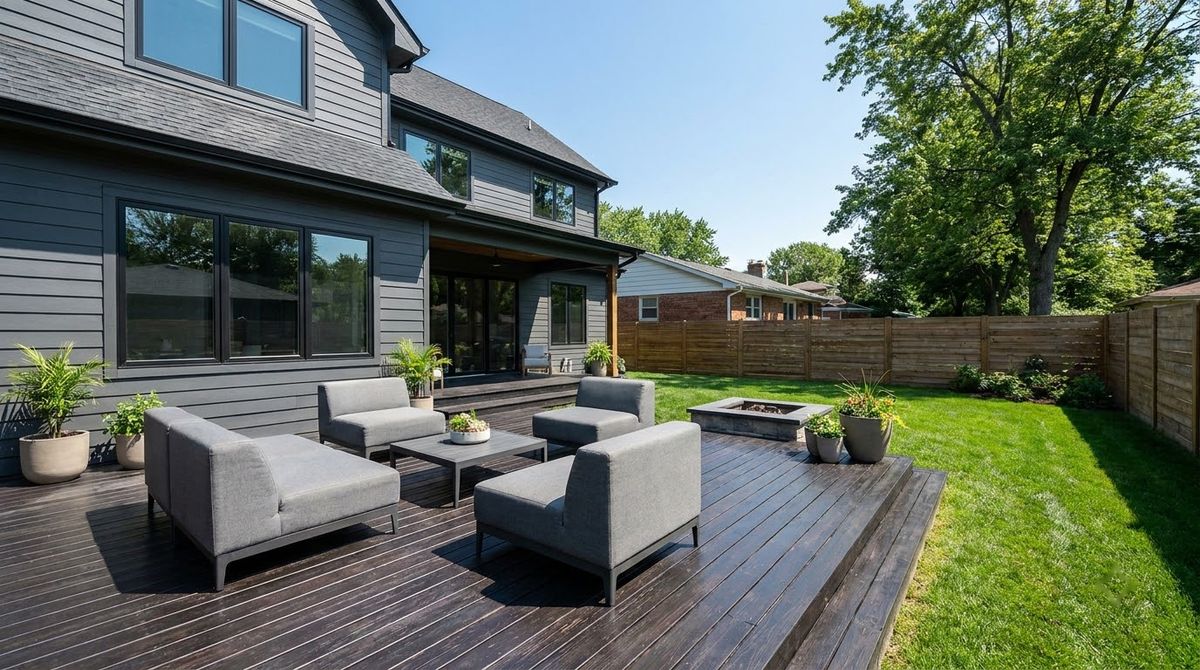
Gray, white and blue deck stain color ideas (ideas 9–12)
Gray, white and blue deck stain color ideas mostly mean solid stain, since light colors cannot hide the brown of the wood underneath. Benjamin Moore says solid stain lets only the texture show and is a great choice if you want to change your deck’s color.
9. Gray with the grain showing, semi-transparent
Color: Cape Cod Gray ST-2004, listed by Olympic as semi-transparent. Pick it if you want a gray deck but still want to see the boards; it works best on clean, sound wood. Olympic also sells Cape Cod Gray as a solid color (SC-1012), so check the code on the can.
10. Flat warm gray, ultra flat solid
Color: Platinum Gray HC-179 in Woodluxe Water-Based Deck + Siding Exterior Stain, Ultra Flat Solid. Benjamin Moore says ultra flat solid shows the wood’s texture with a flat finish and rates it best for decks with imperfections. Pick it if your boards have patches, stains or old repairs you want to disappear.
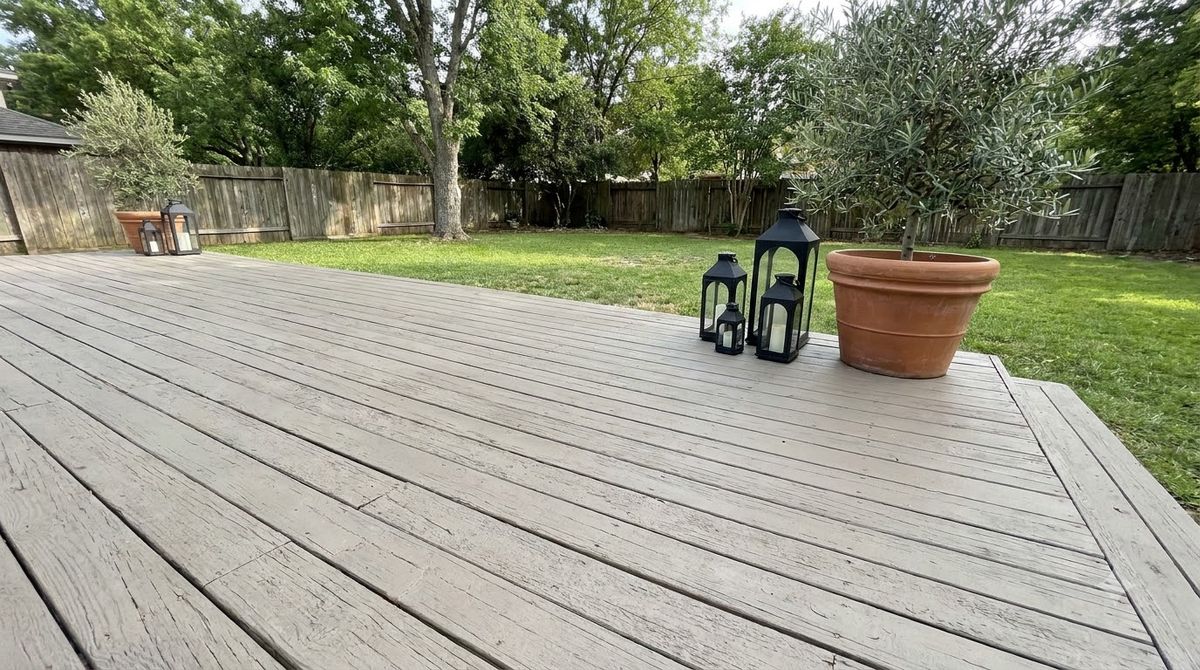
11. Pale blue-gray, solid
Color: Celtic Blue ES-31 in Woodluxe Water-Based Deck + Siding Exterior Stain, Solid. On a deck it reads as a light blue-gray; Benjamin Moore pairs it with siding, columns and trim in Ashland Slate 1608. Pick it if your house is dark gray or slate and you want the deck lighter than the walls.
12. Soft white, solid
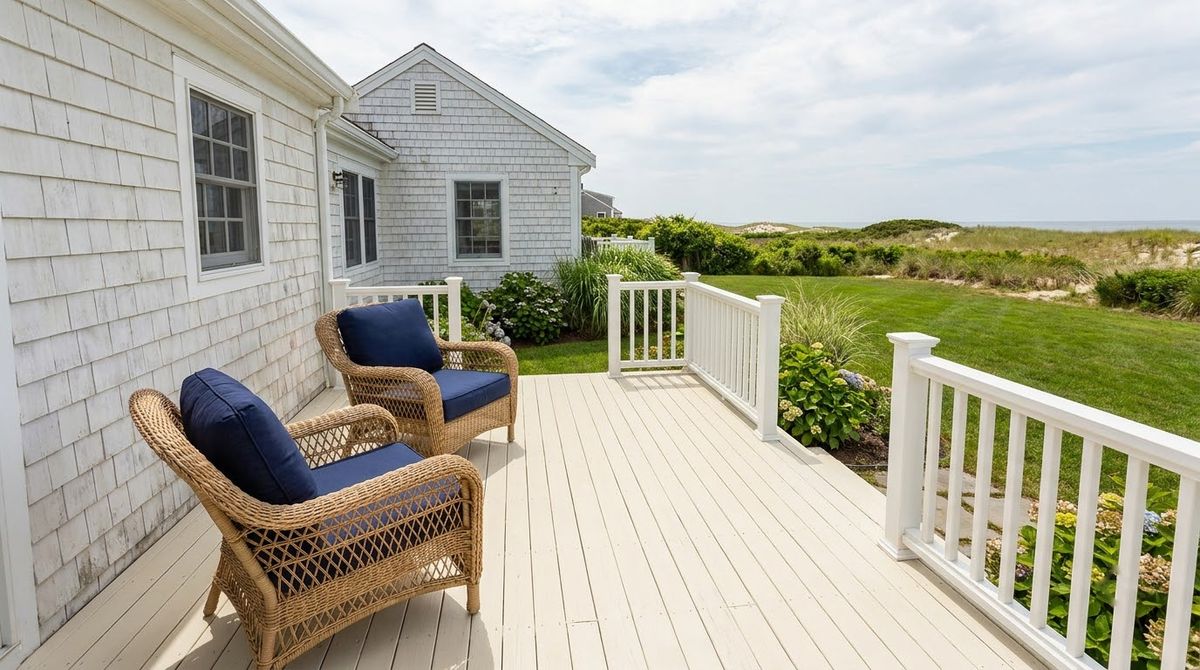
Color: Maritime White OC-5 in Woodluxe Water-Based Deck + Siding Exterior Stain, Solid. Pick it if you have a coastal or cottage-style house and want the deck to read as light as the trim. Benjamin Moore lists solid as suitable for all wood types, including pressure-treated lumber, cedar and redwood.
Two tone deck stain ideas (ideas 13–16)
Two tone deck stain ideas split the deck by surface: the floor in one stain, railings, trim or a border in another. Benjamin Moore suggests matching the deck to your house trim, staining only the handrails and banisters, or using a combination of stains to mark where one section ends and another begins.
13. Cedar floor with white railings
Colors: Natural Cedartone ES-45 in Woodluxe Oil-Based Semi-Transparent on the floor and siding, with White Heron OC-57 Woodluxe Solid on the railings and soffit. Pick it if your house has wood or cedar-tone siding; the deck matches the walls and white rails carry the trim color across.
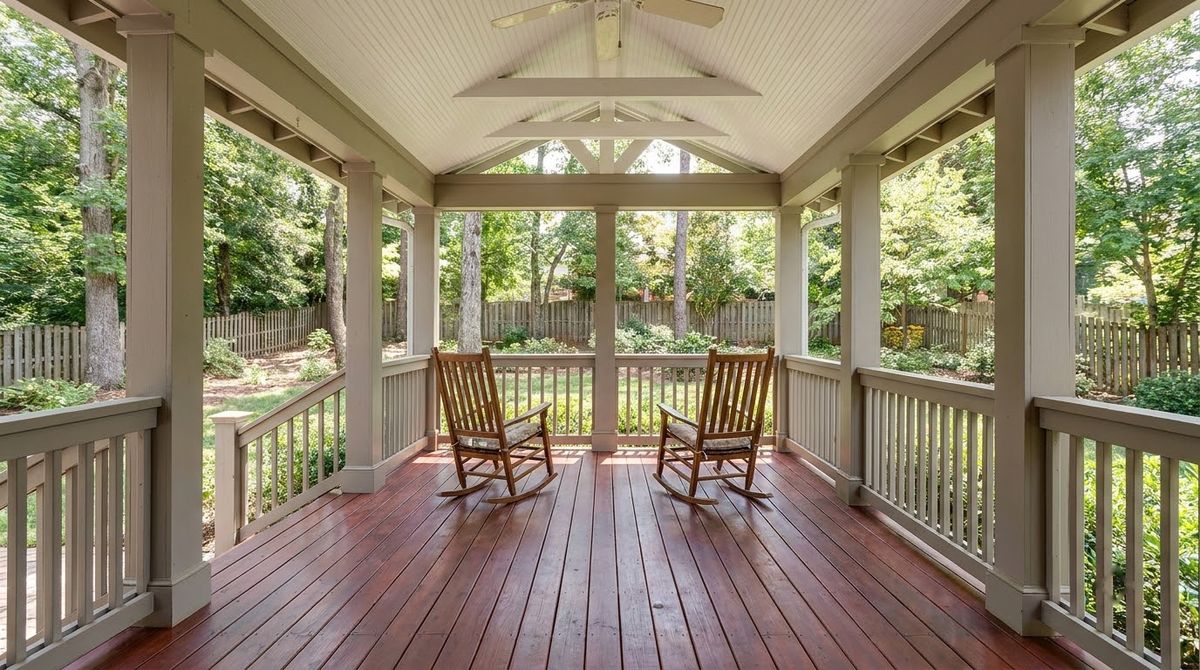
14. Stained floor, painted railings and columns
Colors: Mahogany ES-60 in Woodluxe Water-Based Translucent on the porch floor, with balusters, railings and columns painted Meditation AF-395, a soft greige, in Element Guard exterior paint. Pick it if you have a covered porch or deck where the rails can match the house trim. Compare rail styles in these deck railing ideas by style and material.
15. Green railings over a brown floor
Colors: Woodland Green SC-1090, an Olympic solid color, on posts and railings, over Coffee ST-2008 semi-transparent on the floor. Olympic’s solid colors cover the wood completely and its Maximum solid stain comes in over 140 colors. Pick it if your yard is wooded or planted heavily and you want the railings to recede into the green.
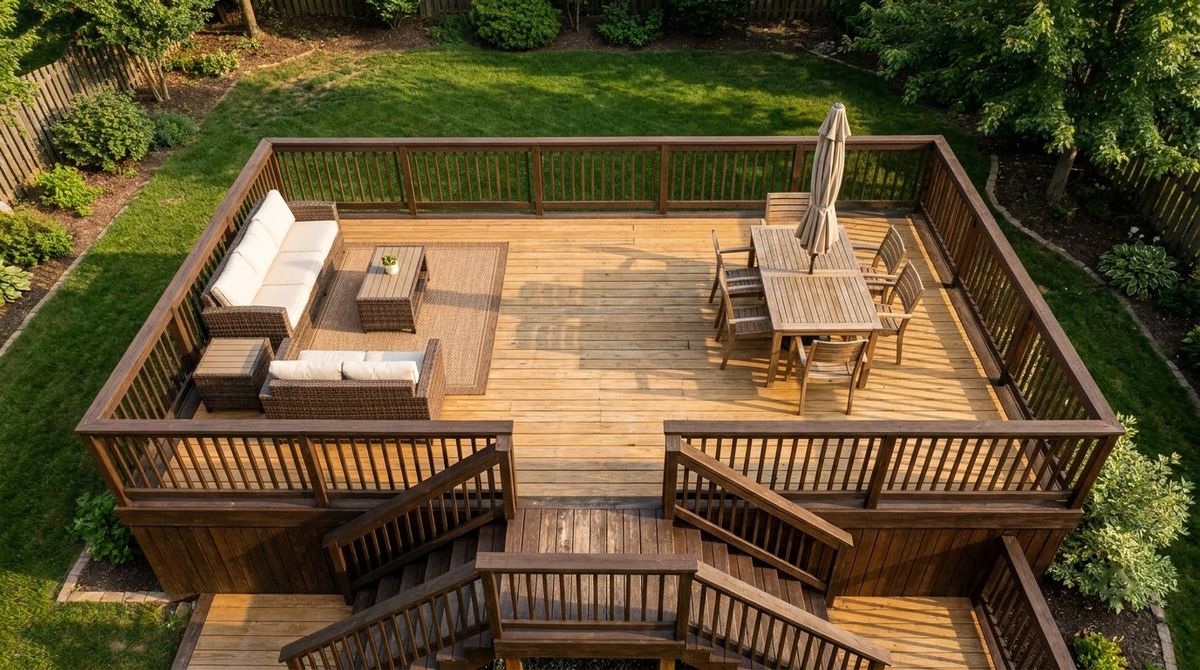
16. Dark picture-frame border
Colors: Black Walnut ST-2002 on the perimeter boards and stairs, around a field of Cedar Naturaltone ST-2005; both are Olympic semi-transparent colors. Pick it if your deck is large or has separate dining and lounge zones. Put each color change on a board edge, so every board gets one stain along its full length.
How to choose deck stain opacity for your wood
How to choose deck stain opacity comes down to the age of the boards, the wood species and whether you want to keep or change the color. These verdicts follow Benjamin Moore’s and Olympic’s own opacity guidance:
- New deck or hardwood (ipe, mahogany): translucent, ideas 1–3. Benjamin Moore says lower-opacity stains let a hardwood’s grain shine through.
- Deck a few years old, cedar or pine: semi-transparent, ideas 4, 5 and 9.
- Older deck needing a color touch-up: semi-solid, ideas 6–8.
- Weathered, patched or color-change deck: solid or ultra flat solid, ideas 10–12. Benjamin Moore offers these only in water-based.
- You want the wood to gray naturally: Olympic says a clear sealant shows the most grain but gives the least protection of any opacity.
More pigment generally holds up longer on a deck floor; the maker-rated life of each opacity is compared in the deck stain types and how long each lasts section. Plan the recoat interval with the yearly deck maintenance schedule.
Deck stain color mistakes to avoid
Most disappointing deck stain colors come from the same few choices:
- Choosing from a screen or a chip. Benjamin Moore warns on-screen colors vary from the real finish, and the wood’s own hue changes the result. Brush a sample on a spare board of your decking.
- Putting translucent stain on a gray, weathered deck. Low-opacity stain shows every blotch; Benjamin Moore points weathered decks to solid stain.
- Expecting a semi-transparent to go lighter. To change a deck’s color, Benjamin Moore points to solid stain.
- Mixing finishes without checking. A new stain has to suit what is already on the boards; see the oil vs water notes in the deck staining guide before you buy.
- Ignoring the house colors. Benjamin Moore suggests a shade similar to the main house color for a monochrome look, or the trim color to make the deck stand out.
Frequently asked questions
What color stain is best for a deck?
The best color depends on the house and the boards. Match the trim color to make the deck stand out, or pick a shade close to the main house color for a monochrome look, as Benjamin Moore suggests. Natural browns such as Teak or Chestnut Brown suit new wood; grays and whites need solid stain to cover the wood’s own color.
Should I use semi-transparent or solid stain on my deck?
Use semi-transparent if the deck is sound and you want to see the grain; Benjamin Moore rates it best for decks a few years old and for cedar and pine. Use solid if the boards are weathered, patched or you want a new color. Solid shows only the wood’s texture and comes in 3,500+ Benjamin Moore colors.
Can you stain a deck two colors?
Yes. The common split is one stain on the floor and another on railings, posts or trim, such as Natural Cedartone floors with White Heron railings. A darker border around a lighter field also works. Benjamin Moore suggests using a combination of stains to mark where one section of a deck ends and another begins.
Can you go lighter with deck stain?
Not with a semi-transparent or translucent stain, which tints the wood rather than covering it. Benjamin Moore calls solid stain a great choice if you want to change your deck’s color, and it is available in more than 3,500 colors, including whites such as Maritime White OC-5. Stripping the old stain is the other route.
What stain color works on pressure-treated pine?
Almost any, but opacity matters more than color. Benjamin Moore says softer woods, including pressure-treated southern yellow pine and cedar, benefit from the weather barrier of semi-solid and solid stains. Brush a sample on a spare treated board first, since the wood’s own color changes the result.
Sources
- Benjamin Moore, Deck Stain Ideas & Inspiration (checked October 15, 2026).
- Benjamin Moore, Woodluxe Exterior Stains (checked October 15, 2026).
- Olympic, Exterior Wood Stain Colors (checked October 15, 2026).
- Olympic, How To Choose A Stain Opacity (checked October 15, 2026).