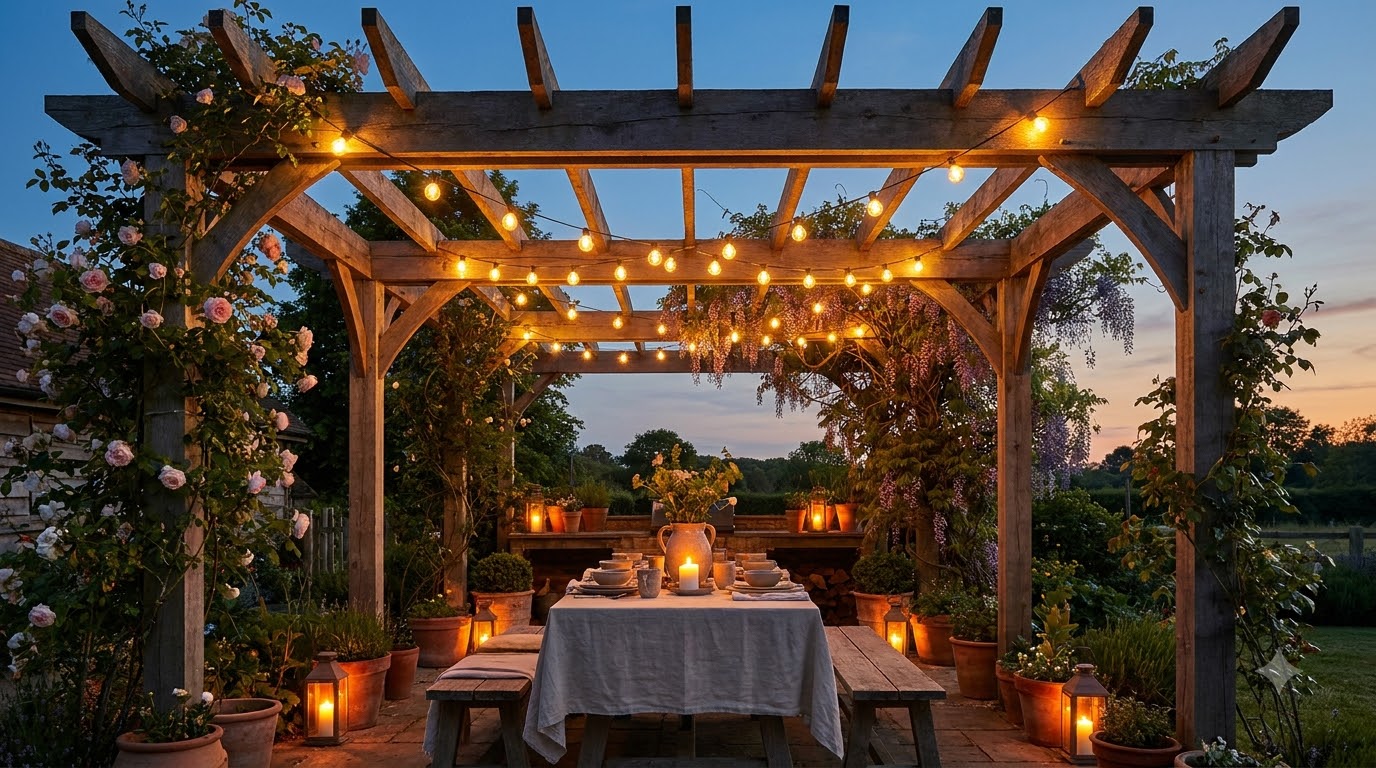
The pergola lighting ideas that actually work at night all follow one principle: layer three heights. Overhead light for the space, mid-height light at eye level, and low light at the ground. Almost every disappointing pergola has exactly one layer — a single string of bulbs overhead — which is why it looks flat once the sun goes down. Below: twelve ideas sorted by layer, plus the mounting and safety details the shopping pages skip.
Key takeaways
- Layer three heights — overhead, eye level, ground. Two layers already look designed; one looks decorated.
- Warm white (2200–2700K) for everything. Cool white outdoors reads as a parking lot.
- Wet-rated fixtures on open-slat pergolas — there is no “sheltered” spot under open rafters.
- Run a guide wire for string lights so the cord never carries weight and never sags.
- Wire during the build if you can — retrofitting hardwired lights costs multiples of doing it during construction.
The three-layer rule behind the best pergola lighting ideas
| Layer | Height | Job | Typical fixtures |
|---|---|---|---|
| Overhead | Rafters and beams | Fills the space, defines the “ceiling” | String lights, downlights, integrated LED, chandelier |
| Eye level | Posts, table, walls | Makes faces look good; adds warmth | Post lanterns, sconces, candles, table lamps |
| Ground | Base of posts, planting, path | Depth, safety, drama on structure and plants | Uplights, path lights, step lights |
Overhead ideas (4)
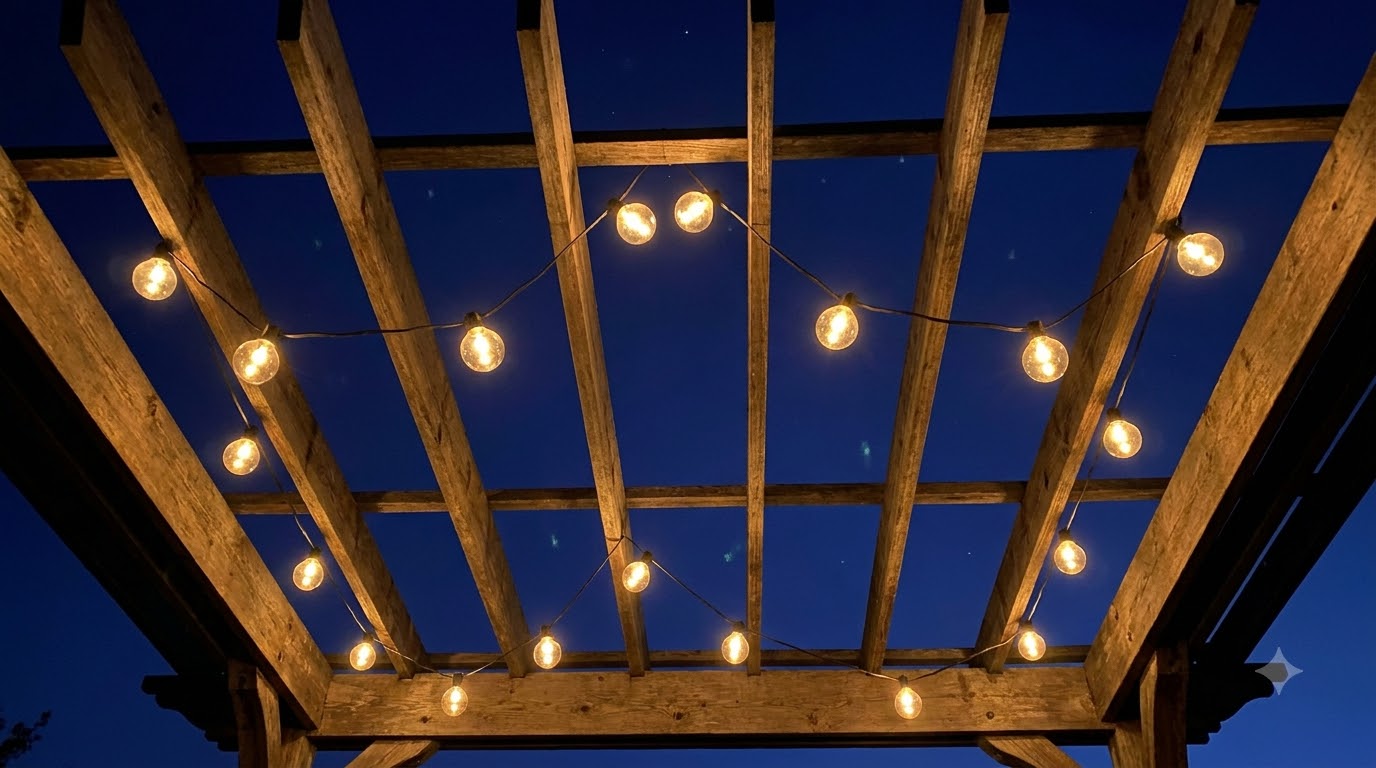
1. Café string lights, zigzagged
The classic, and still the best value. Zigzag the strands across the rafters rather than running them straight down the length — the crossing pattern spreads light evenly and doubles the visual sparkle. Globe bulbs beat mini-lights for a grown-up look.
2. Perimeter run for a clean edge
Instead of crossing the middle, hug the outer beams with one continuous run. The pergola’s shape becomes the light fixture — understated, architectural, and it keeps the sky above your table unbroken.
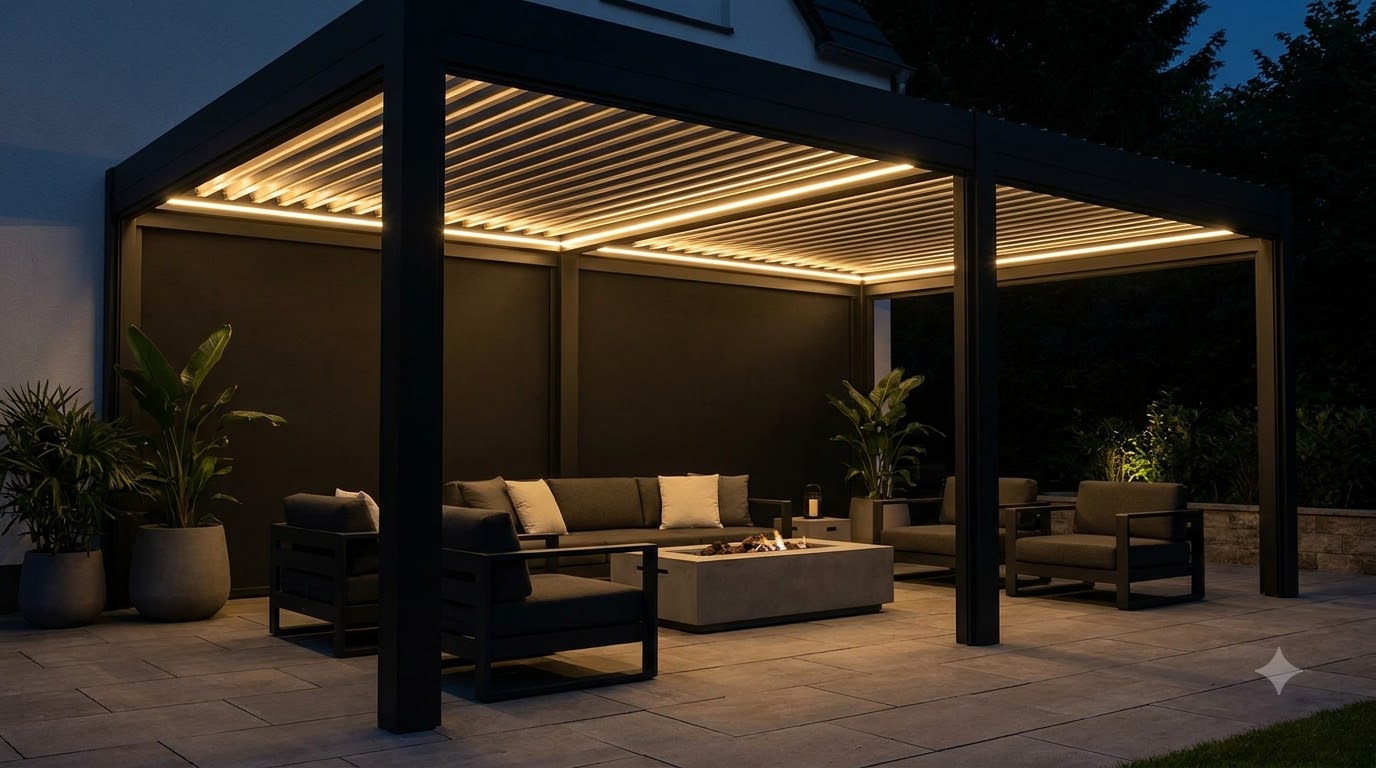
3. Integrated LED strips
Warm strip lighting tucked into a channel on the underside of the beams throws light down without a visible bulb. Standard on aluminum louvered pergolas, and achievable on wood with a routed channel or a slim aluminum profile screwed to the beam edge.
4. One statement fixture
An outdoor-rated chandelier or oversized pendant centered over the table anchors the whole space. Pair it with something dimmer around the edges — a single bright statement alone creates a spotlight effect nobody enjoys sitting under.
Eye-level ideas (4)
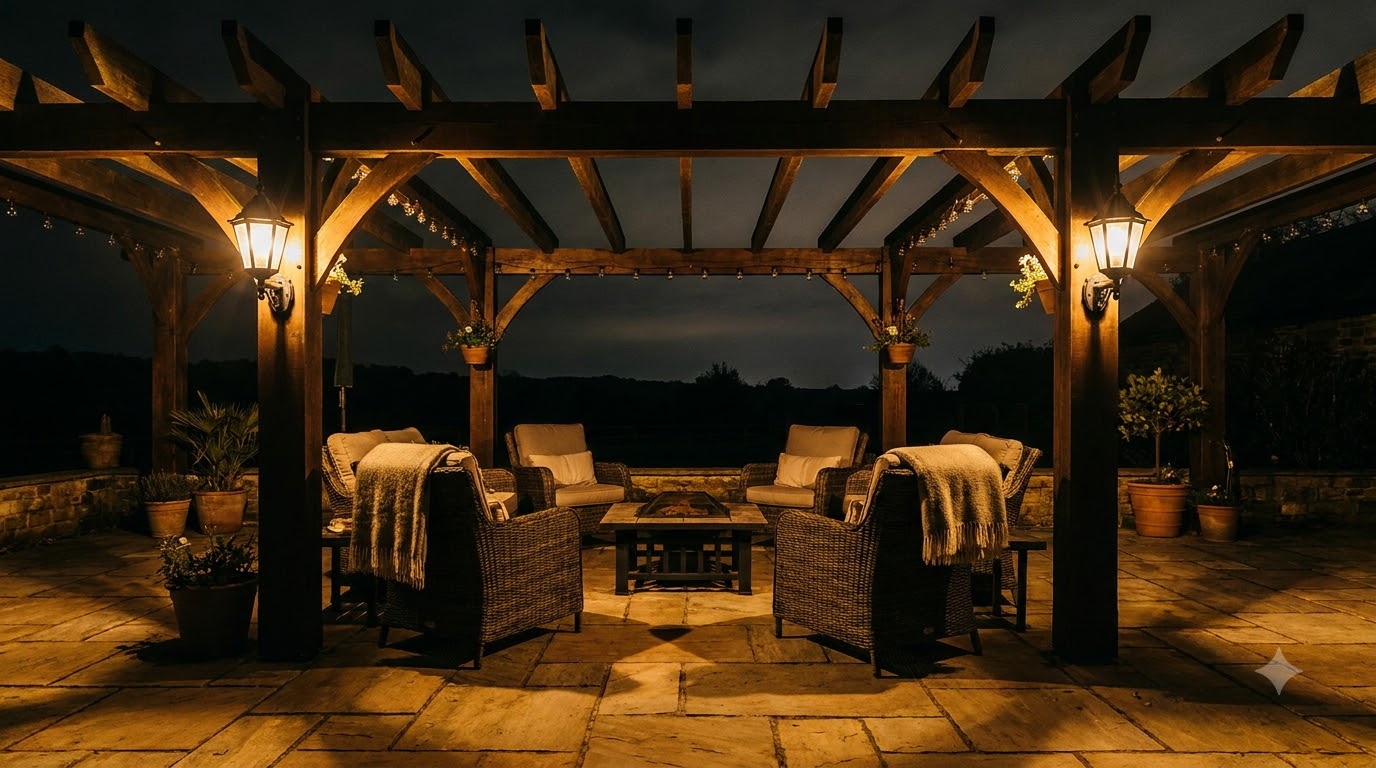
5. Post-mounted lanterns
Wall lanterns on the pergola posts throw warm pools at seated height — the layer that makes an evening feel intimate rather than lit. Two or four, evenly placed, dimmed low.
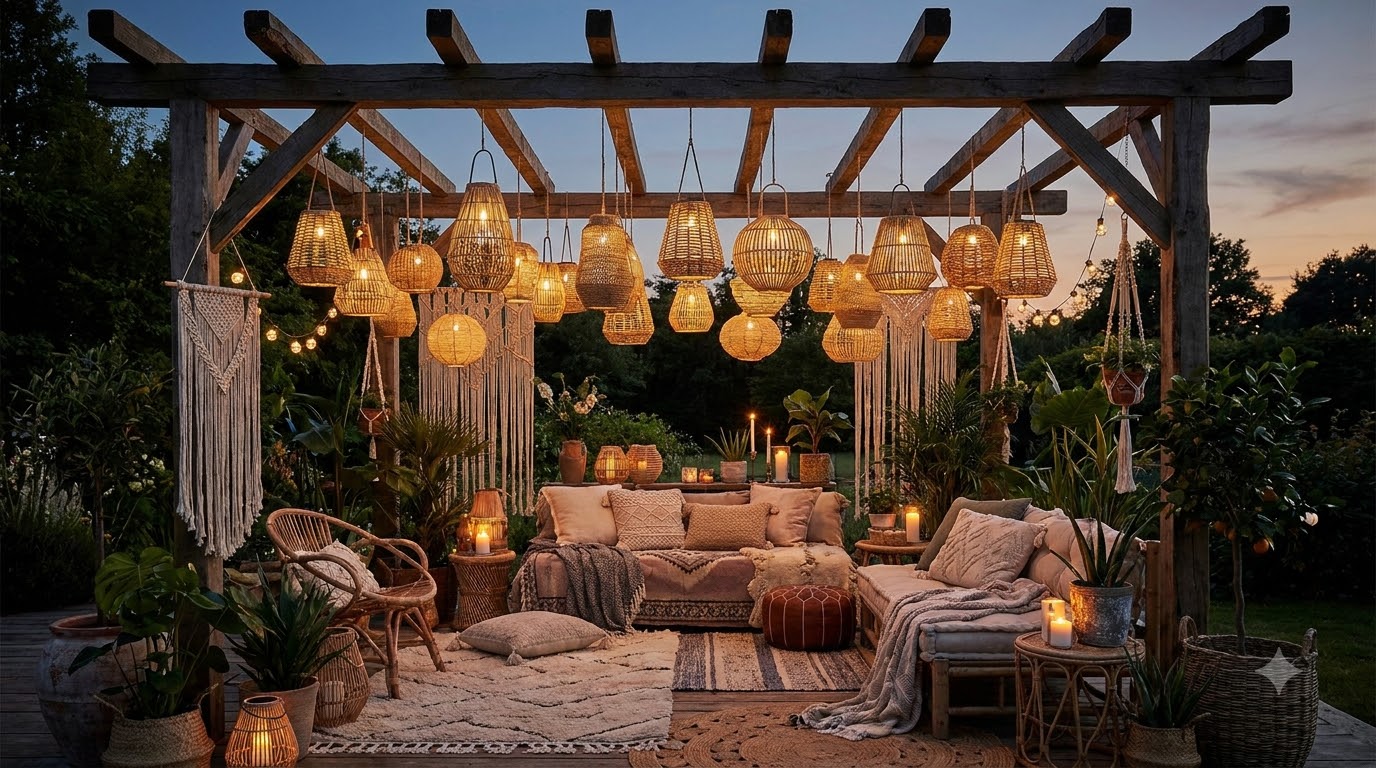
6. Hanging lanterns at mixed heights
Woven or metal lanterns dangling from the beams at three different heights read as intentional; all at one height reads as a store display. Solar or candle versions need no wiring at all.
7. Real flame, contained
Hurricane candles on the table, a lantern on the ledge, or a small fire feature nearby. Flame does something LEDs can’t — it moves. Keep it well clear of fabric canopies and vines.
8. Curtain lights along one side
A vertical curtain of fine string lights down one open side gives the pergola a “wall” of light — excellent for defining the space against a dark yard, and the best trick for a pergola that feels adrift in open lawn.
Ground-level ideas (4)
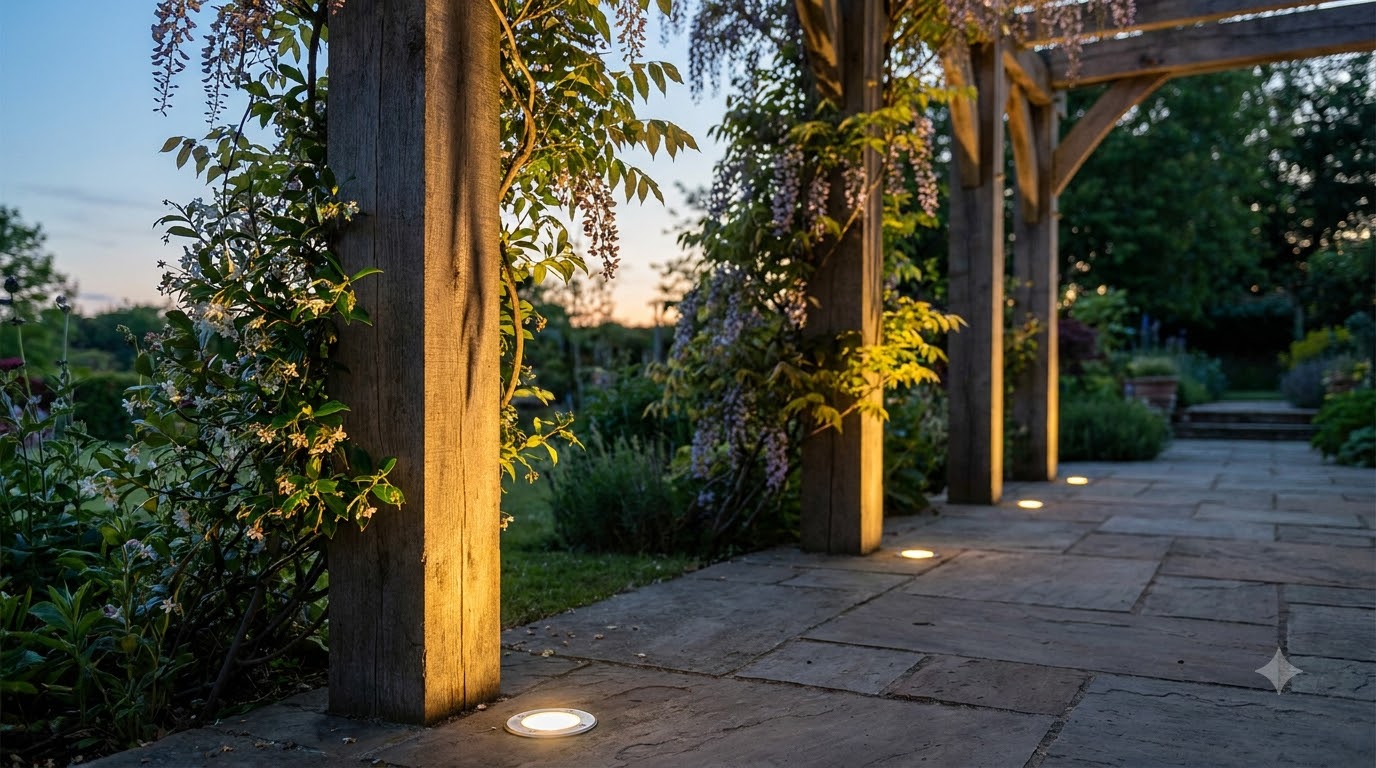
9. Uplight the posts
Small uplights at each post base wash light up the timber, turning the structure itself into the feature after dark. Two watts of the most dramatic light on this list.
10. Light the plants, not the patio
Uplighting a climbing vine, an ornamental grass, or the tree behind the pergola throws texture and shadow onto the space. Plants lit from below are the single biggest upgrade a small yard can get at night.
11. Path and step lights
Low bollards or recessed step lights along the route from the door to the pergola. Practical, yes — but they also make the pergola feel like a destination you travel to.
12. Under-bench and under-rail glow
Strip lighting hidden beneath built-in benches or railings makes the furniture float. Invisible fixture, visible effect — the most “designer” trick in this list.
Mounting without wrecking the pergola
- Guide wire first. Tension a stainless cable between posts or rafters and clip lights to it. The wire takes the load; the cord just hangs along. This is the difference between taut café lighting and a sad droop by August.
- Cup hooks, not staples. Screw-in hooks are removable and don’t pierce the cable. Staples through a cord are a shock and fire risk.
- Never nails in timber. Nails split beams along the grain; screws and clamps don’t.
- On aluminum, use the channel. Manufacturers sell accessory clips for their track — drilling a powder-coated aluminum frame invites corrosion and can void the warranty.
- Leave slack for weather. Cords contract in cold; a run tensioned bar-tight in July strains its fittings in January.
Power, ratings, and safety
- Wet-rated vs damp-rated: under open slats, rain reaches everything — buy wet-rated. Damp-rated is only for genuinely covered spots.
- GFCI outlets for anything plugged in outdoors, with an in-use (“bubble”) cover so the receptacle stays protected while a plug sits in it.
- Outdoor-rated cords only, and treat extension cords as temporary — a permanent setup deserves a proper outdoor receptacle.
- Low-voltage systems (12V transformer plus cable) are the DIY-friendliest way to run several fixtures safely, and they are what most landscape uplighting uses.
- Hardwiring, fans, or a new circuit — electrician territory. Run conduit or cable during the pergola build; retrofitting later costs multiples, a point worth adding to your pergola budget from day one.
Getting the look right
- Dim everything. Dimmers turn one installation into a dinner setting and a party setting.
- Aim for pools, not floods. Several small warm sources beat one bright one every time.
- Hide the source, show the effect — light on a wall, a plant, or a table, with the fixture itself out of the sightline.
- Match temperature across layers. Mixing 2700K and 4000K in one space is the most common reason a nicely planned setup still looks off.
- Respect the neighbors and the dark. Shielded, downward-facing fixtures keep glare out of bedrooms and the stars visible — the DarkSky lighting principles (warm, aimed, shielded, only where needed) double as a solid design checklist for a backyard.
If you are still deciding what the structure itself should be, lighting is easier under an open slat roof than a solid one — the trade-offs are in pergola vs gazebo, and on decks the wiring route matters too, per pergola on a deck.
Frequently asked questions
How do you hang string lights on a pergola?
Run a stainless guide wire between the posts or rafters first, tension it, then clip the light strand to the wire with hooks or zip ties. The wire carries the weight so the cord never sags, and the whole run comes down in minutes.
What kind of lights are safe outdoors under a pergola?
Look for a wet-location rating if the fixture is exposed to rain, or at minimum damp-rated for spots fully sheltered under a solid roof. On an open-slat pergola almost everything is exposed, so wet-rated is the safe default, along with outdoor-rated cords and covered receptacles.
What color temperature is best for pergola lighting?
Warm white, roughly 2200K to 2700K. It flatters skin, food and timber, and reads as candlelight rather than parking lot. Cool white looks harsh outdoors at night.
Do pergola lights need an electrician?
Plug-in string lights and solar fixtures need nobody. Hardwired downlights, fans, or a new outdoor receptacle on a GFCI circuit are electrician territory — and the wiring is far cheaper to run during the pergola build than after.
Are solar pergola lights bright enough?
For ambience, yes — for task lighting over a dining table, usually not. Solar works best as accent and path lighting where the panel gets full sun. Expect dimmer output in winter and after cloudy days.
How do you attach lights without damaging pergola beams?
Use screw-in cup hooks or clamp-style hangers rather than staples through cords, and avoid nails, which split timber along the grain. On aluminum pergolas, use the manufacturer’s channel accessories instead of drilling the frame.