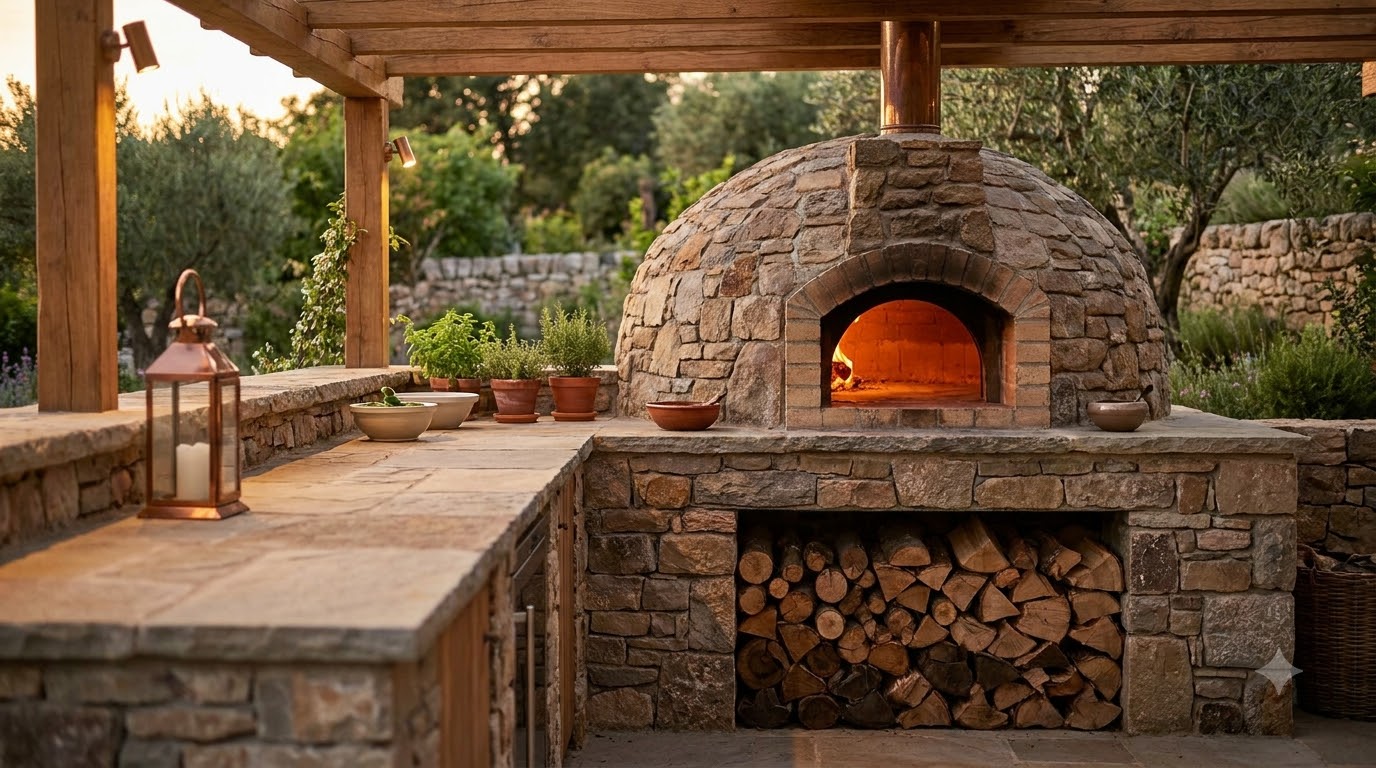
An outdoor kitchen with a pizza oven works or fails on one honest question: how often will you really fire it? A portable countertop oven reaches pizza temperature in minutes and gets used on a Tuesday. A masonry wood-fired dome needs a fire built hours ahead, cooks magnificently, and in many yards ends up a beautiful ornament. Decide that first, because the answer changes the structure, the budget and the layout underneath it.
Key takeaways
- Match the oven to your habits: countertop for weeknights, gas built-in for speed, masonry for the ritual.
- Masonry ovens are extremely heavy — they need a reinforced hearth on a purpose-built base and foundation.
- Landing counter beside the mouth is essential — you cannot work a peel without it.
- Clearances come from the manual, plus local code for anything with a flue.
- Site the smoke away from windows, seating and anything combustible overhead.
Oven types compared
| Type | Heat-up | Build demand | Cost | Best for |
|---|---|---|---|---|
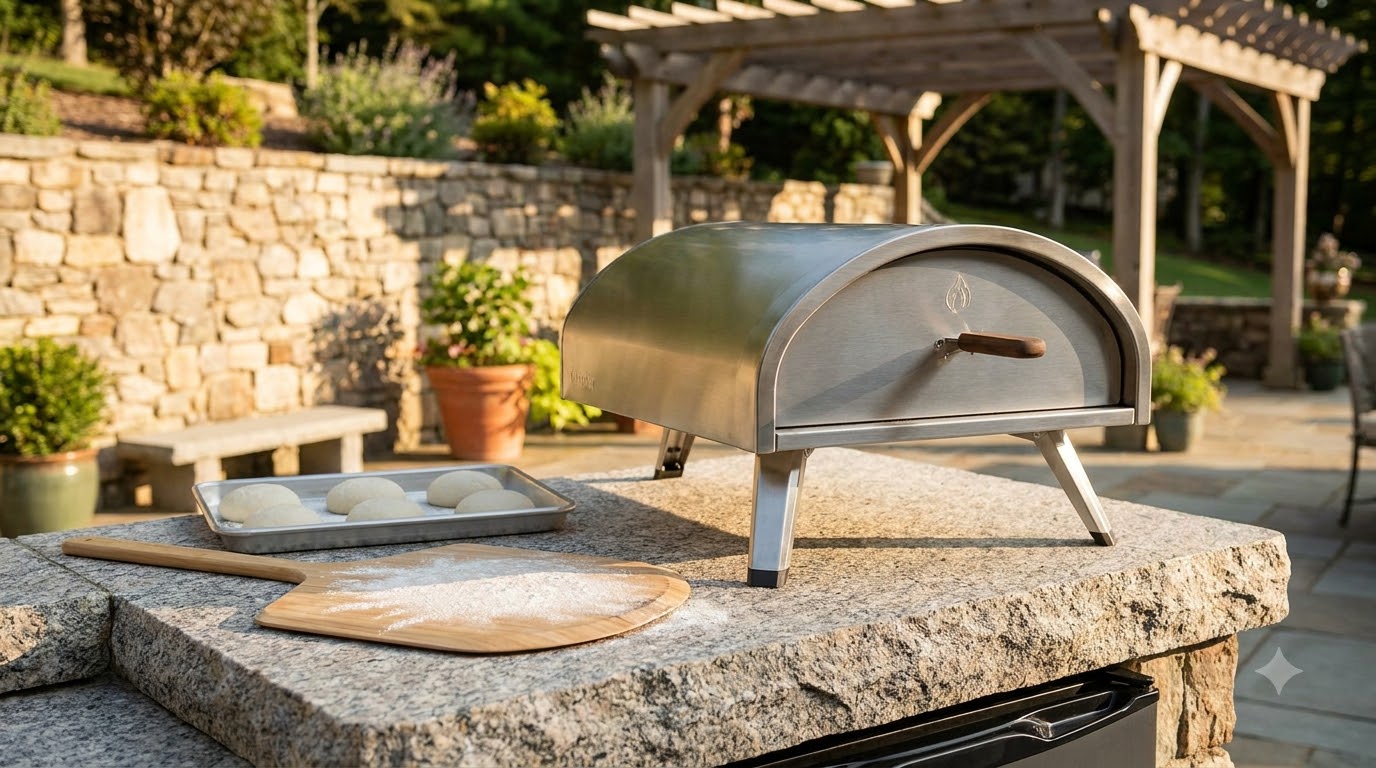
| Portable countertop (gas or pellet) | Minutes | Just a sound counter | $ | Frequent, casual pizza nights |
| Built-in gas oven | Fast | Cutout plus gas supply | $$$ | Speed with a built-in look |
| Modular masonry kit | Slow (wood) | Reinforced base, flue, cladding | $$$ | Wood-fired results without full custom |
| Full masonry / brick dome | Slowest — hours | Foundation, hearth, dome, chimney | $$$$ | The centerpiece build, if you will use it |
| Hybrid gas + wood | Fast or slow | As per model | $$$ | Weeknight speed, weekend flavor |
The base: what carries the oven
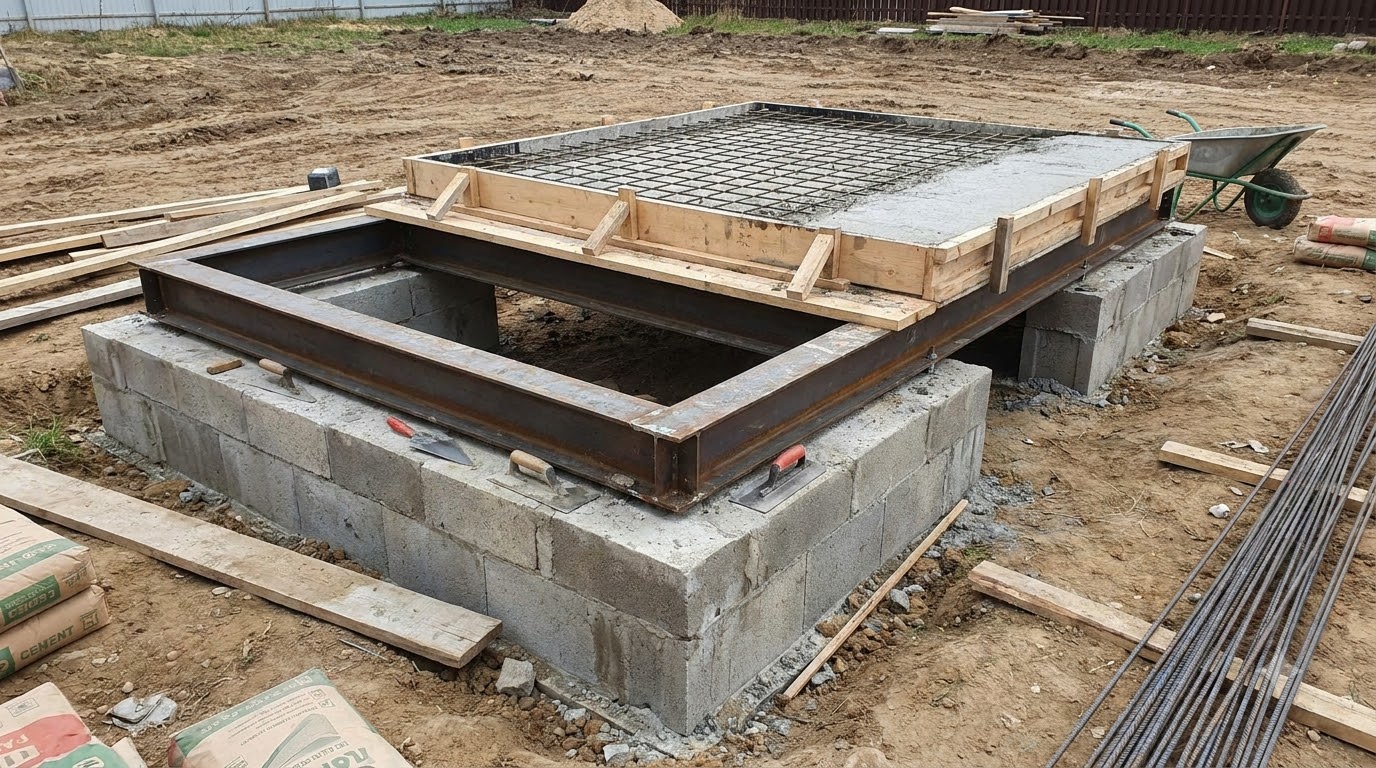
This is where pizza-oven projects go wrong. A masonry oven is a serious weight sitting in one spot, and it needs a load path all the way to solid ground: a proper foundation, a block or steel base, and a reinforced concrete hearth slab under the oven floor. Insulation between hearth and oven matters too — it is what keeps heat in the dome instead of soaking into the structure.
Practical rules that apply whatever the oven:
- Build the base on a foundation or sound slab, never on pavers or bare soil — the same rule as any block outdoor kitchen build.
- Countertop ovens still need a rated surface — check the weight and heat spec of your counter material.
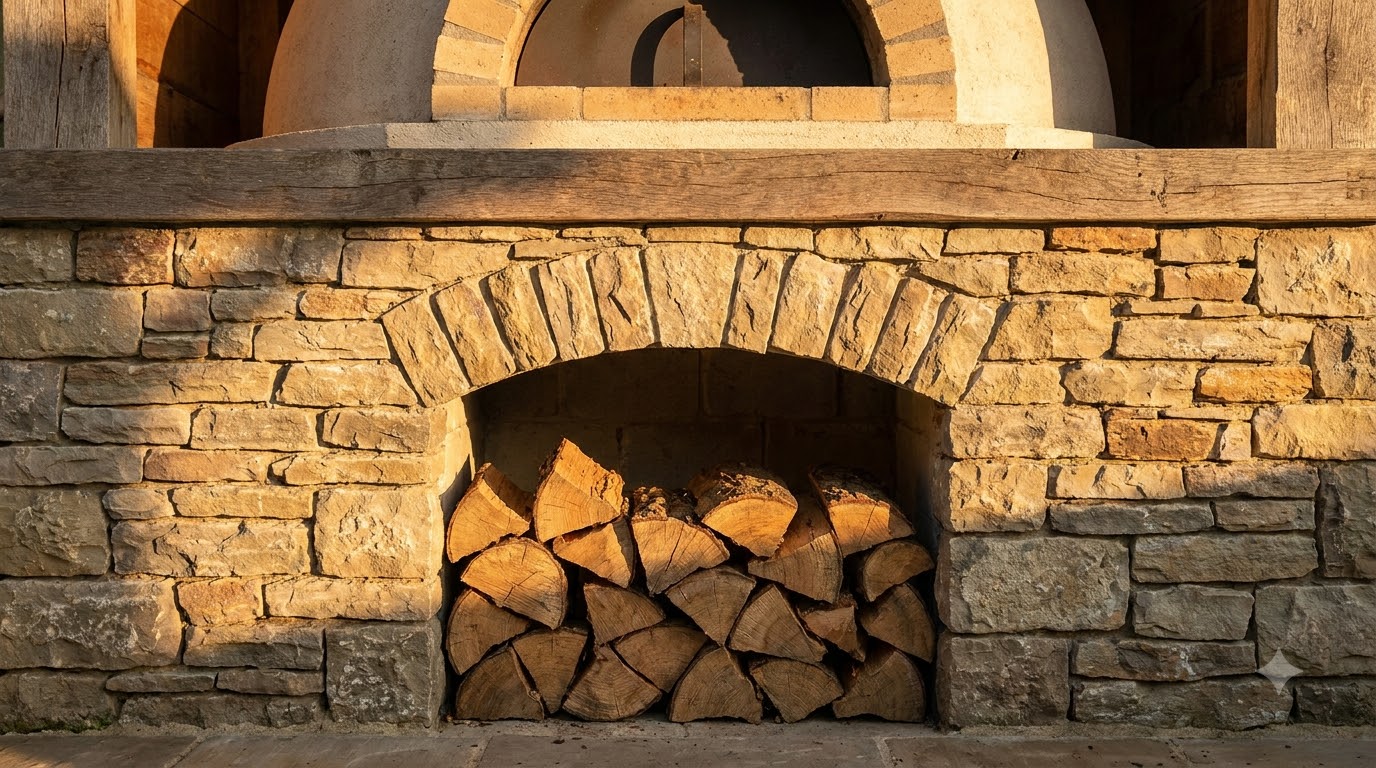
- Leave a wood or fuel store in the base if the oven burns wood; dry, ventilated, and out of the rain.
- Plan the flue path early on masonry ovens — chimney position affects the roof structure above.
- Get masonry work checked if you are not experienced; this is the least forgiving element in an outdoor kitchen.
Laying out an outdoor kitchen with a pizza oven
An oven is not simply an appliance slotted into the counter run — it changes traffic flow:
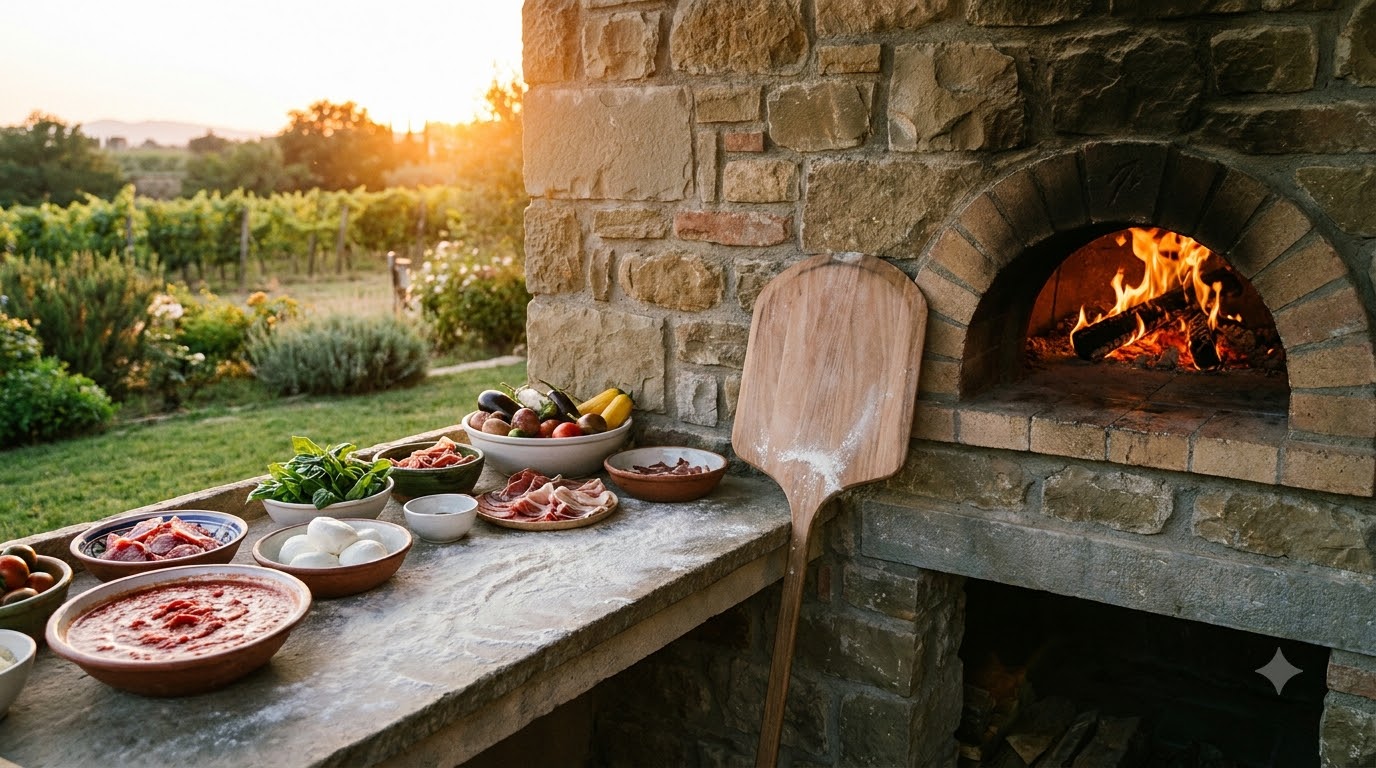
- Landing counter right beside the mouth — the single most important detail. Somewhere to set the peel, the pizza and the toppings within one step.
- Prep space beyond that for stretching dough and loading up; the zone logic from any outdoor kitchen applies.
- Clear working room in front — peels are long, and you turn pizzas constantly. Keep the walking route behind the cook.
- Fuel storage close but not in the heat path.
- Guests on the far side of the counter, watching rather than crossing the working zone — a pizza oven is a spectator appliance.
Clearances, flue and safety
- Manufacturer clearances first — distances to combustible walls, cabinets, eaves and overhead structure are specified for a reason.
- Local code applies to anything with a flue; permits are common for masonry ovens and for gas connections.
- Wood-fired means sparks. Keep the oven away from dry planting, fabric canopies and low branches.
- Under a pergola: generous height, open slats above the flue, nothing combustible directly overhead — the same clearance thinking as an outdoor kitchen pergola.
- Non-combustible surround and hearth at the mouth, where embers and hot tools land.
- General fire practice — clearances, never operating in an enclosed space, keeping the area clean — follows the NFPA outdoor cooking guidance.
Running it: fuel, curing and upkeep
- Cure a new masonry oven slowly with small fires over several days — rushing it cracks the dome.
- Use seasoned hardwood, never treated or painted timber, and never construction offcuts.
- Expect a long warm-up on masonry: the dome has to saturate with heat, which is exactly why it then cooks so well.
- Cover or door the mouth when not in use to keep rain and animals out.
- Sweep the flue on wood-burning ovens as you would any chimney.
- Winterize in freezing climates — trapped moisture in masonry is what causes spalling.
Budget reality check
A portable oven on an existing counter costs a fraction of a built-in and gets used more often — genuinely the highest-satisfaction option for most families. A masonry dome is the centerpiece build: foundation, base, oven, flue, cladding, plus the counter and prep space around it, and it belongs in the full custom tier of any outdoor kitchen budget. A sensible middle path is to build the base and counter now with the oven position planned, start with a countertop model, and upgrade once you know how often pizza night actually happens.
Frequently asked questions
What type of pizza oven is best for an outdoor kitchen?
A countertop oven if you want pizza with minimal building, a built-in gas oven for fast weeknight cooking, and a masonry wood-fired oven if the ritual and flavor are the point. Match the choice to how often you will realistically fire it up.
Does a pizza oven need a special base?
A masonry oven does — they are extremely heavy and need a reinforced hearth slab on a block or steel base over a proper foundation. Countertop models only need a sound, level counter rated for the weight and heat.
How far should a pizza oven be from the house?
Follow the manufacturer clearance specs and local code, which cover distance to combustible walls, eaves and overhead structures. Wood-fired ovens also throw sparks, so site them away from windows, low branches and fabric canopies.
Can you put a pizza oven under a pergola?
Under an open-slat pergola with generous height, often yes, provided clearances are met and nothing combustible sits directly above the flue or mouth. Under a solid roof, treat it as a fire appliance needing proper flue and ventilation design.
Is a wood-fired pizza oven hard to use?
It takes practice: a masonry oven needs a fire built well in advance to bring the dome to temperature, and managing that heat is a skill. Gas and modern portable ovens reach temperature far faster, which is why they get used more often.
How much space does a pizza oven need in the layout?
More than its footprint: a landing counter right beside the mouth for the peel, plus prep space and fuel storage. Working a peel needs clear room in front, so keep the traffic path behind the cook.