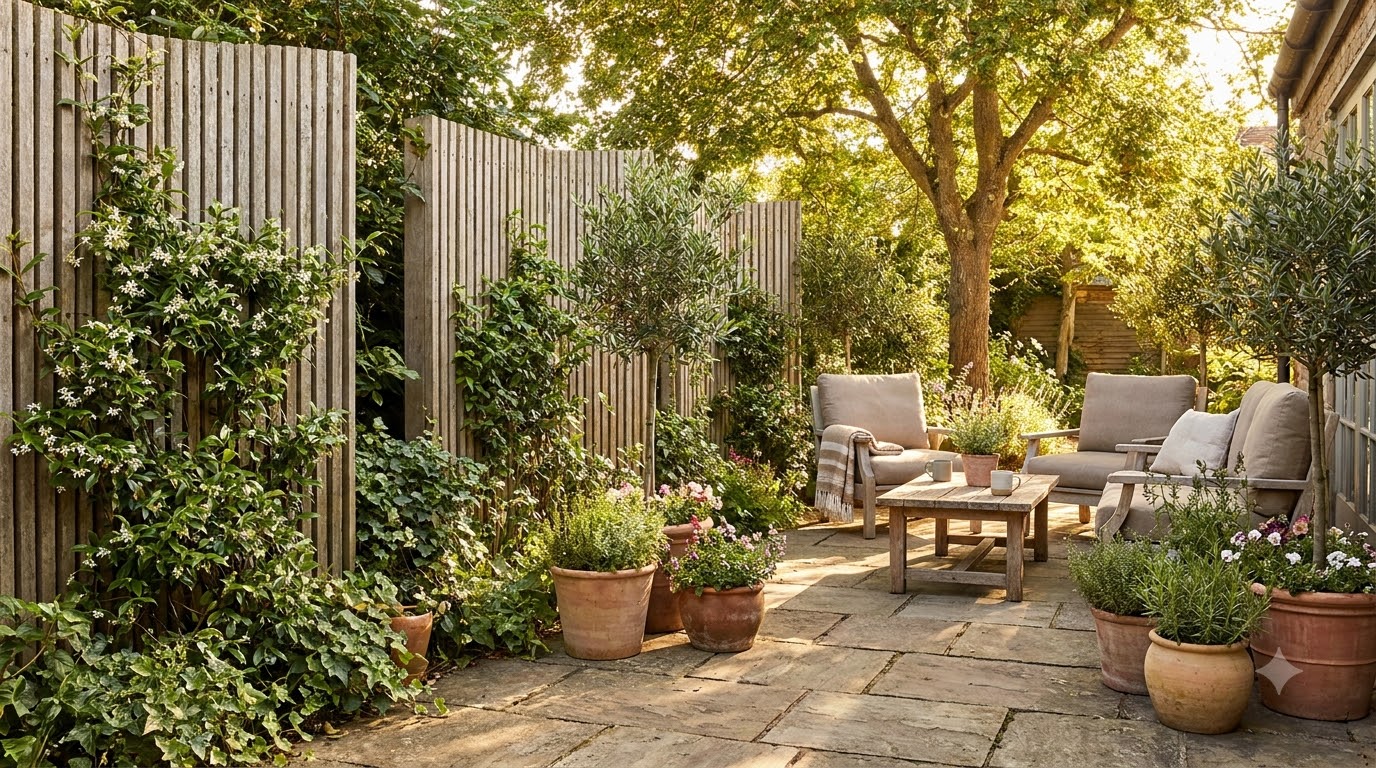
The best privacy ideas for a patio depend entirely on where the exposure comes from. A neighbor at ground level needs a screen or hedge at seated eye height. An overlooking upstairs window needs something overhead — no fence solves that. An open side facing the street needs layered planting rather than a wall. Diagnose the sightline first, and the solution is usually cheaper and lighter than the fence people reach for by default.
Key takeaways
- Overlooked from above? Screen overhead — a pergola with slats, a sail, or a canopy tree.
- Overlooked from the side? Block at seated eye level; it does not need to be tall.
- Slatted beats solid — keeps light and breeze, and reads lighter in a small space.
- Height limits are local, and HOAs add their own rules — check before building anything tall.
- Renters have real options: weighted freestanding screens, tall planters, curtains on tension rods.
Diagnose the sightline first
| Where the exposure is | What works | What does not |
|---|---|---|
| Neighbor at ground level | Slat screen, hedge, tall planters at eye height | Overhead structures |
| Upstairs window overlooking | Pergola with slats, shade sail, canopy tree | Fences and hedges of any height |
| Open side to street or path | Layered planting, staggered screens | One solid wall — it just looks defensive |
| Both sides in a narrow yard | Two light slat screens, not one heavy fence | Solid panels — airless and dark |
| Just the seating nook | A single screen or curtain behind the sofa | Screening the entire perimeter |
The last row is the money-saver: most patios only need privacy where you sit, not around the whole boundary. Sit in your usual chair and look around — screen only what actually bothers you from there.
Built screens: privacy ideas for a patio boundary (1–4)
1. Vertical slat panel. The current standard: timber battens with narrow gaps, tall enough to break the sightline from a seat. Light and air pass; views do not.
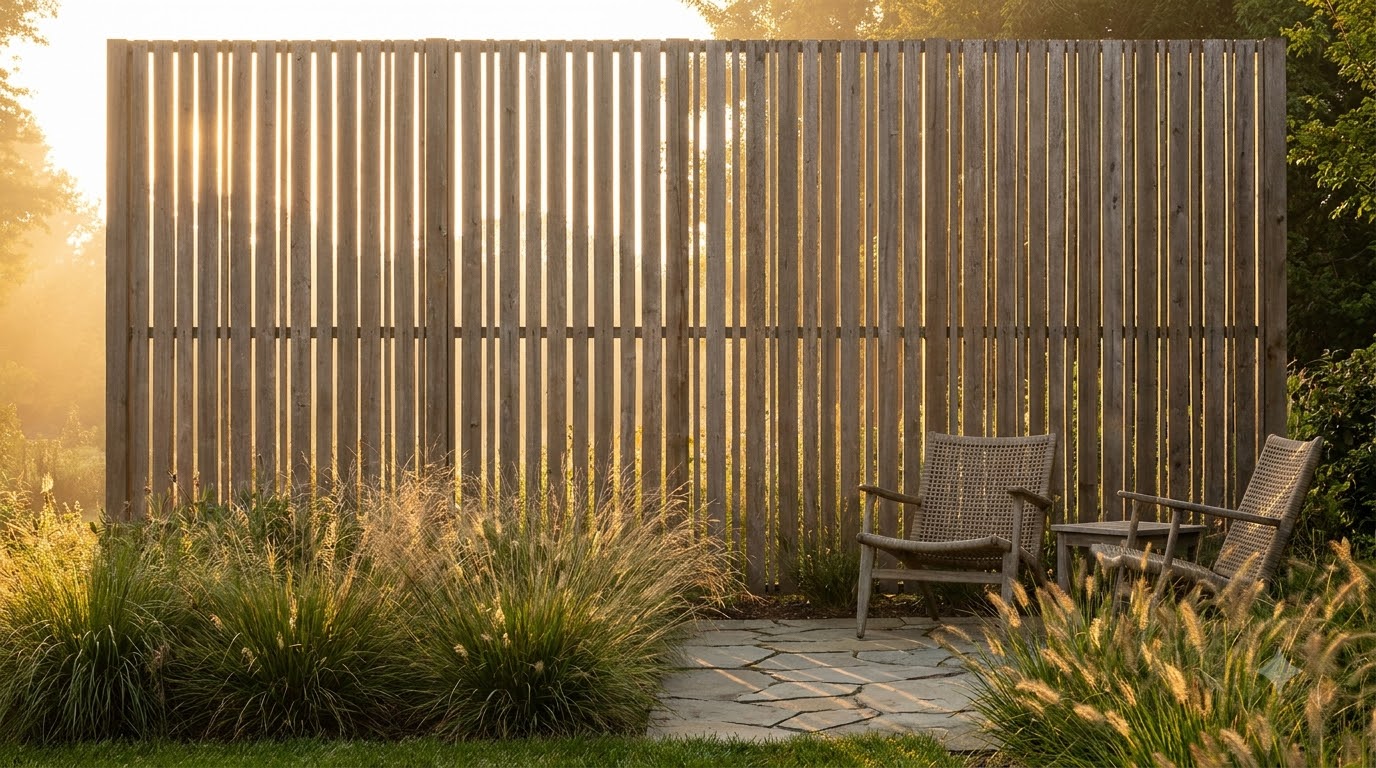
2. Angled louver screen. Slats set at an angle block a specific direction while staying almost transparent from another — the precision tool when one window is the problem.
3. Trellis with climbers. A frame that is half structure, half plant; screening improves every season, and it costs a fraction of solid fencing.
4. Freestanding screen panels. Weighted or footed panels that need no fixing at all — the renter-friendly option, and easy to reposition as the sun moves.
Green screens (5–8)
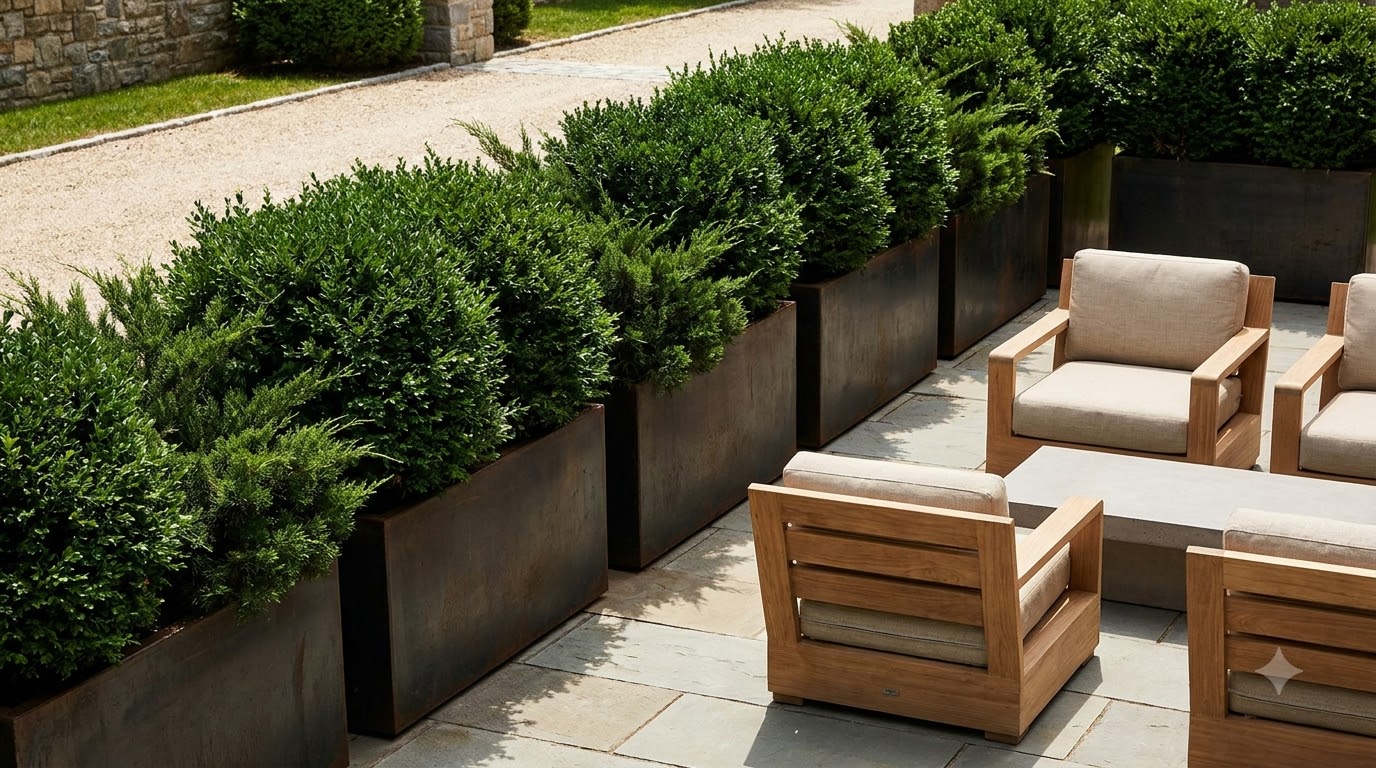
5. Tall planters with evergreens. Instant, movable, and green year-round. Raising the planter means you buy less plant height for the same screening effect.
6. Bamboo in containers. Fast, tall and dense — but keep running species contained; in the ground they escape and become a decade-long problem.
7. Ornamental grasses. Soft, moving, informal screening at seated height through summer and autumn; cut back in late winter.
8. A single small tree. The only plant that solves overhead overlooking. Choose a modest, spreading species and place it between the seat and the window, not in the middle of the patio.
Overhead and fabric (9–12)
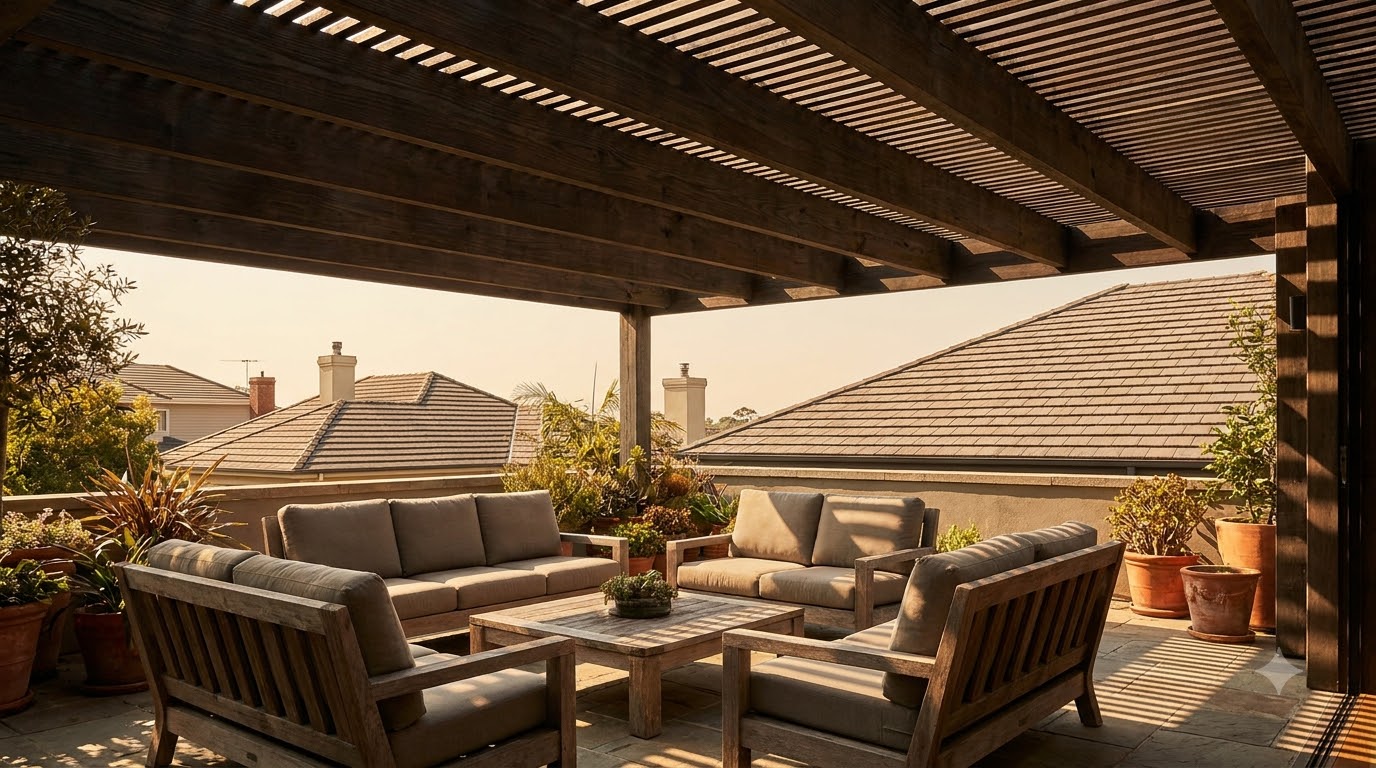
9. Pergola with tight slats. The definitive answer to upstairs windows: it interrupts the downward sightline while keeping the patio open on all sides — sizing and placement in pergola ideas.
10. Shade sail. Cheaper and faster than a pergola, and just as effective from above. Angle it toward the offending window.
11. Outdoor curtains. Drawn when you want a room, tied back when you want the yard. Weather-rated fabric on a rod or wire between posts.
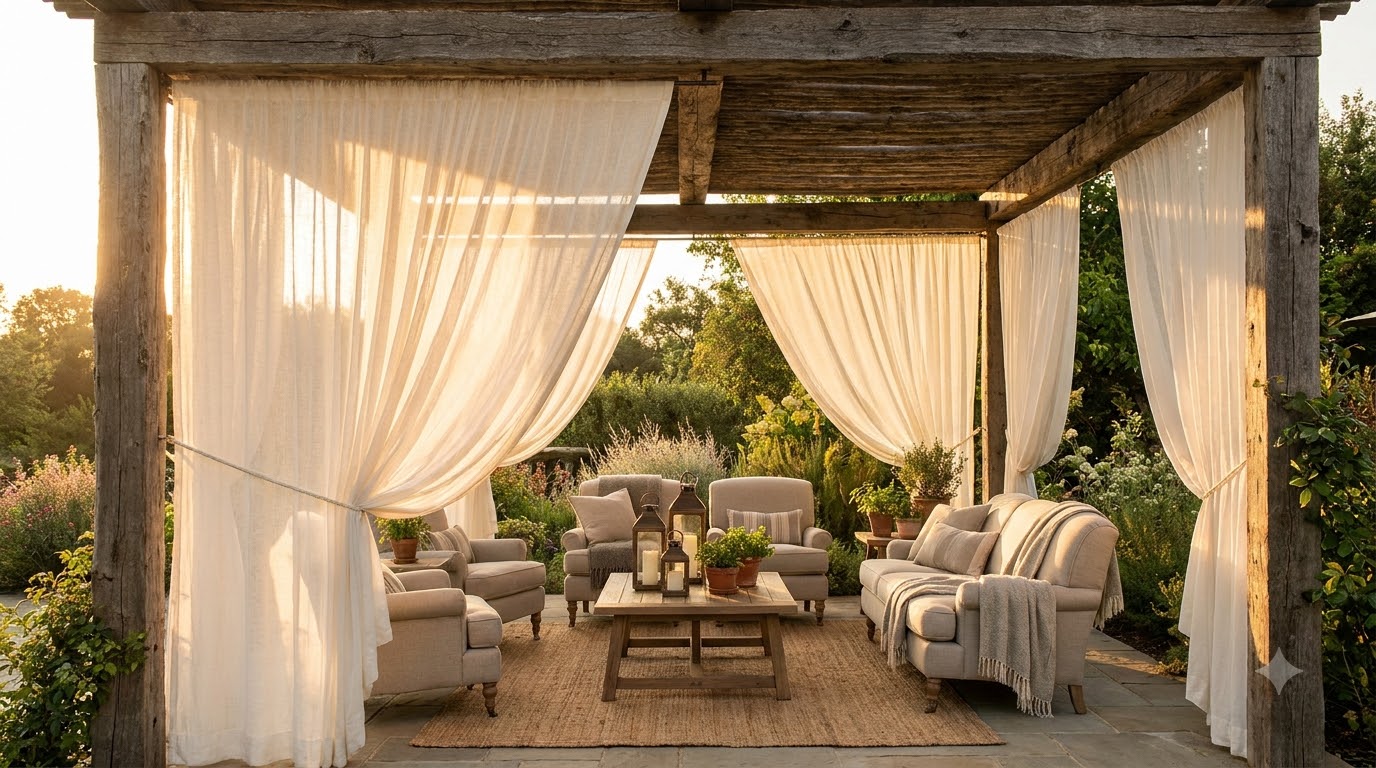
12. Rollup bamboo or reed blinds. Hung from a pergola beam or wall bracket; the cheapest adjustable screen there is.
Rules, height limits and neighbors
Fence and screen heights are governed locally, often with different limits for front and rear yards, and HOA covenants frequently add stricter rules on height, material and visibility (many US cities publish their fence rules online — the USA.gov local government directory is the fastest route to the right department). Free-standing screens, pergolas and planted hedges may be treated differently from fences — sometimes more leniently, sometimes not. Ask your building department before committing to anything tall, and check property line setbacks: building a screen a few inches over the line is a costly way to meet the neighbors.
One social note worth as much as any code: a slatted screen that keeps some light on the other side is far less likely to start a dispute than a solid wall at maximum permitted height.
Quick wins by season
- Spring: plant evergreens and climbers now so they establish before you need them in summer.
- Summer: curtains, sails and umbrellas — instant cover while the planting catches up.
- Autumn: build screens and trellises; timber is easier to work in cool weather and contractors are less busy.
- Winter: the honest test — look at the patio with the leaves gone and see what actually screens year-round.
Renter-friendly, no-drill privacy
- Weighted freestanding panels — screening you can take with you when you move.
- Tall planters on castors, repositioned by season or occasion.
- Tension rods between walls in a courtyard, with outdoor curtains hung from them.
- Reed or willow screening zip-tied to an existing fence — removable, and it raises the effective height instantly.
- Umbrella or freestanding sail for overhead cover with no fixings at all.
Design notes so it does not feel like a box
- Stagger the screening rather than running one continuous line — layers read as garden, walls read as enclosure.
- Keep one open view if you have a good one; screening everything makes a patio claustrophobic.
- Mix hard and soft — a screen with planting in front of it always looks better than either alone.
- Match materials to the house or the patio surface so the screen looks intentional.
- Light the screen at night — an unlit panel becomes a black wall after dark; a softly washed one becomes a backdrop.
Frequently asked questions
What is the cheapest way to make a patio private?
Outdoor curtains on a simple frame or wire, or tall planters filled with grasses. Reed and willow screening fixed to an existing fence costs little and instantly raises an effective barrier without construction.
How do I block the view from a neighbors upstairs window?
Screen overhead rather than sideways. A pergola with slats or a shade sail interrupts the sightline from above, which no fence or hedge can do. A small spreading tree achieves the same thing over time.
How tall can a patio privacy screen be?
Height limits are set locally and often differ between front and rear yards, with HOAs adding their own rules. Free-standing screens and pergolas may be treated differently from fences — check with your building department first.
What are the best plants for patio privacy?
Evergreen shrubs for year-round screening, bamboo in containers for fast height, and ornamental grasses for soft seasonal cover. For narrow spots, climbers on a trellis take up almost no ground.
How can renters get patio privacy without drilling?
Freestanding screen panels with weighted bases, tall planters, tension-rod curtains between walls, and rollup bamboo blinds. Everything stays movable, and nothing needs permission or a permit.
Do privacy screens block breeze and light?
Solid panels do, which is why slatted and louvered screens are usually better. Angled slats can block a specific sightline while still passing air and daylight, and planting filters rather than seals the space.