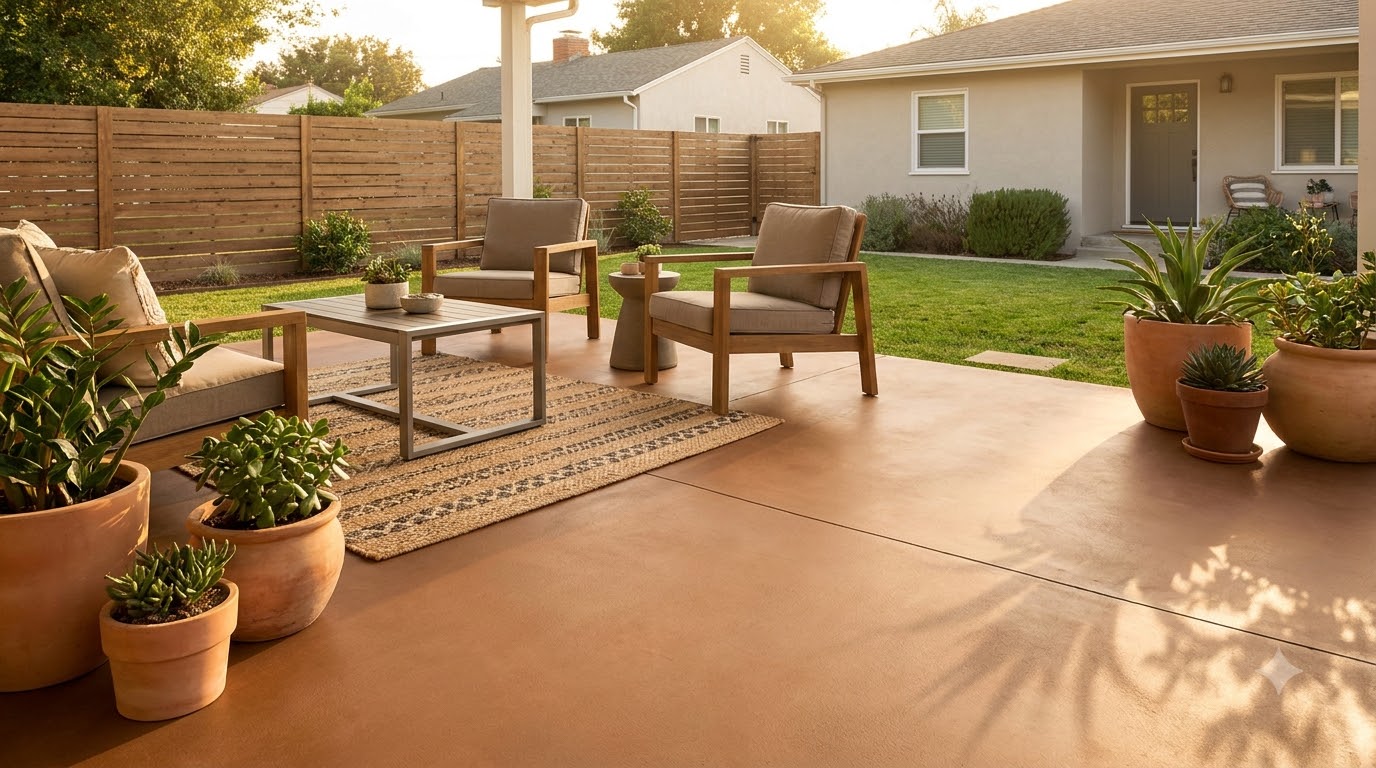
Concrete patio ideas on a budget split cleanly in two: you either have a tired slab already, or you are pouring a new one. If the slab exists, the cheapest real transformation is cleaning it properly and then staining it — not replacing it. If you are starting fresh, the savings come from keeping the shape simple and the finish honest, never from thinning the base. Below: what each route costs you in effort, and how to make plain concrete look deliberate rather than cheap.
Key takeaways
- Pressure wash before you decide anything — a surprising number of “ugly” slabs are just dirty.
- Stain beats paint outdoors: it colors the concrete instead of sitting on top, so it cannot peel.
- Overlays fix surface damage, not structural cracks — movement telegraphs straight back through.
- Never save money on the base or thickness. Four inches over a compacted base is the residential standard for a reason.
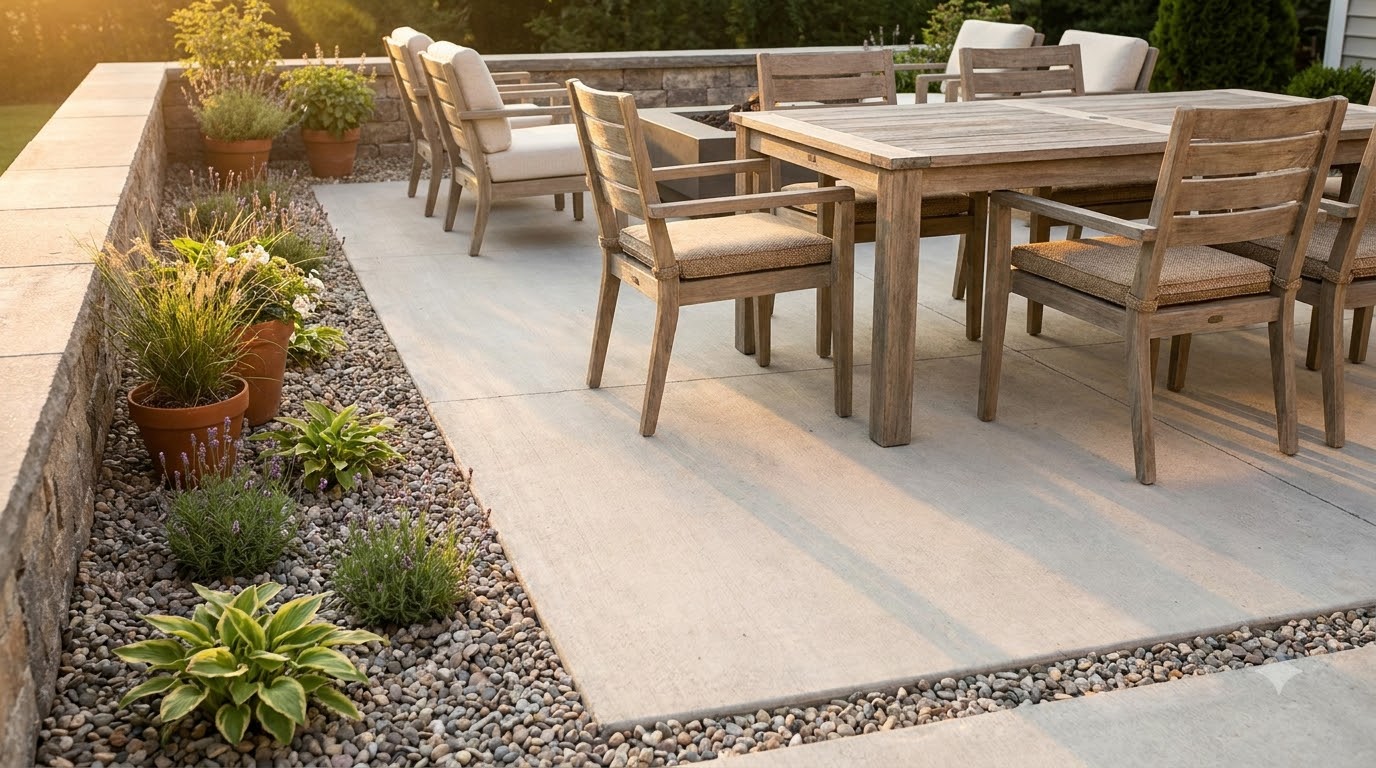
- Frame it well: a gravel border, planters and warm lighting lift a plain slab more than any surface treatment.
Route A: upgrading a slab you already have
| Treatment | Relative cost | Effort | Best when |
|---|---|---|---|
| Deep clean | $ | An afternoon | Always — do this first, then decide |
| Concrete stain | $ | A weekend | Sound slab, plain grey, want real color |
| Masonry paint | $ | A weekend | Want a specific color or a painted pattern |
| Resurfacer / micro-topping | $$ | Weekend plus prep | Surface spalling, pitting, hairline cracks |
| Pavers or tile over the slab | $$$ | Multi-weekend | Slab is sound but you want a different material |
| Break out and repour | $$$$ | Contractor job | Structural cracking, heaving, bad drainage |
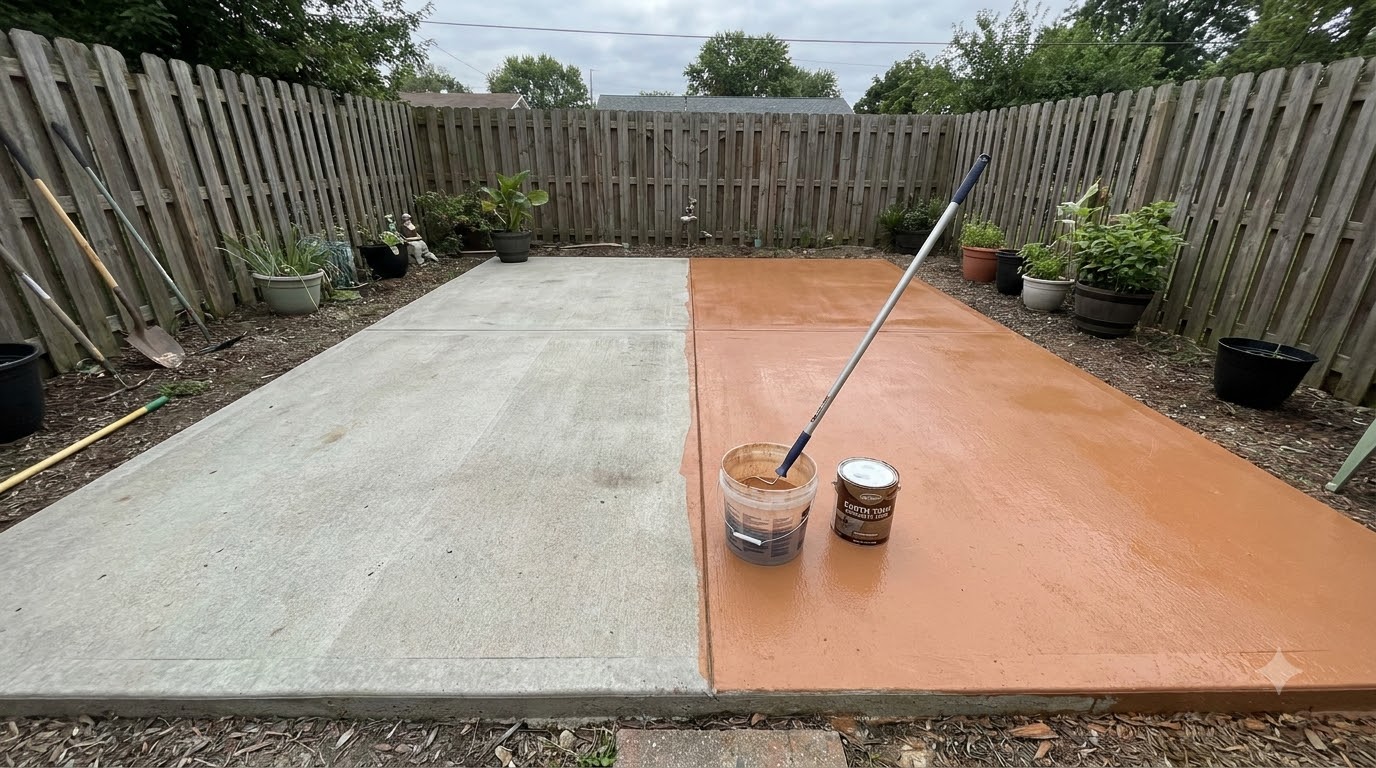
Staining, step by step
- Clean thoroughly and let the slab dry completely — stain reacts with the concrete, and residue blocks it.
- Repair cracks with a concrete patch compound; stain will not hide them, and it may highlight them.
- Test in a hidden corner. Concrete varies enormously, and the same stain looks different slab to slab.
- Apply thin and even, working in sections and keeping a wet edge.
- Seal with an outdoor-rated sealer containing a non-slip additive — a glossy patio is a slippery patio.
Painted patterns
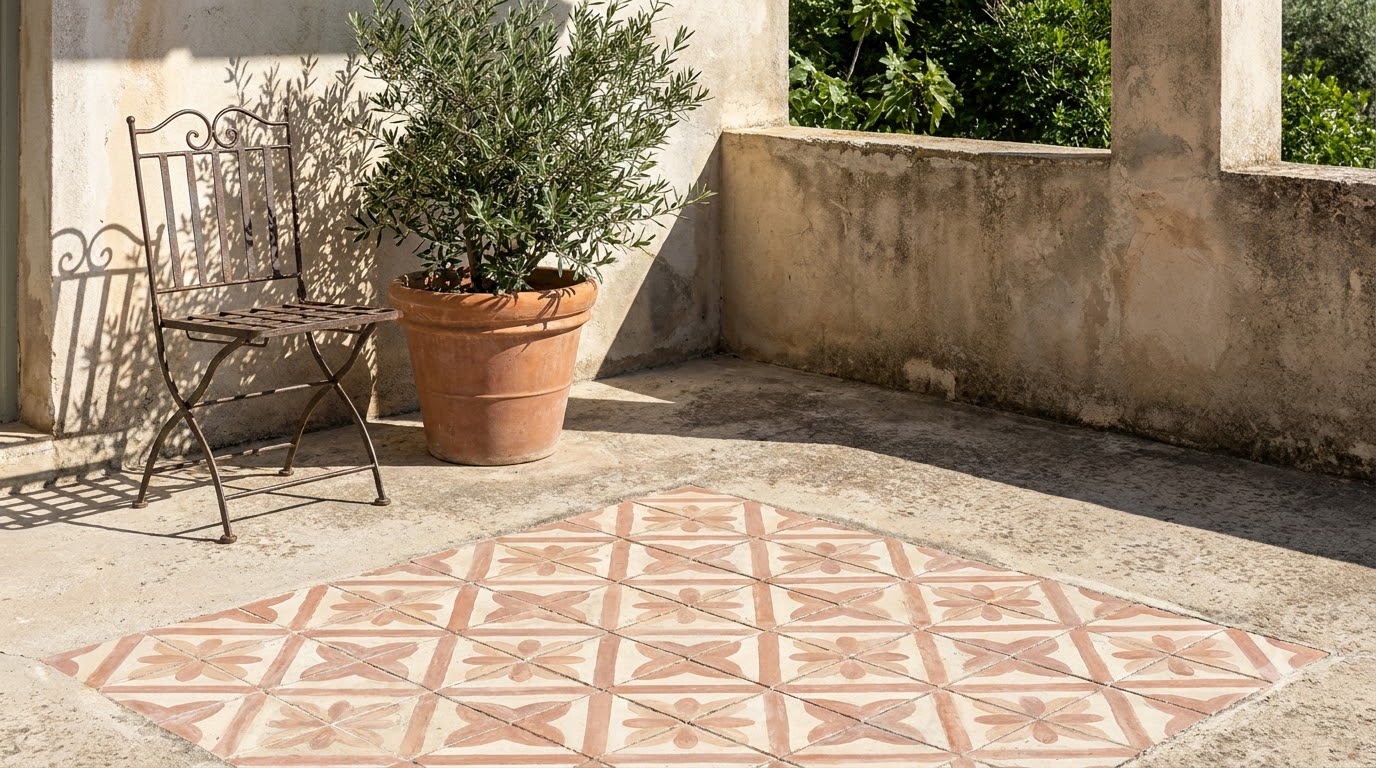
Masonry paint plus a stencil or taped-off grid turns a plain rectangle into a designed floor for the price of a couple of cans. It suits courtyards and small patios where the pattern reads as a feature. Accept the trade: paint eventually chips where chairs drag and where sun is harshest, so plan on touch-ups.
Route B: pouring a new slab for less
- Keep the shape a simple rectangle. Curves and multiple levels multiply forming, cutting and labor.
- Right-size it — measure furniture and clearances first, exactly as with any small patio layout. Extra square footage is the most expensive thing you can add by accident.
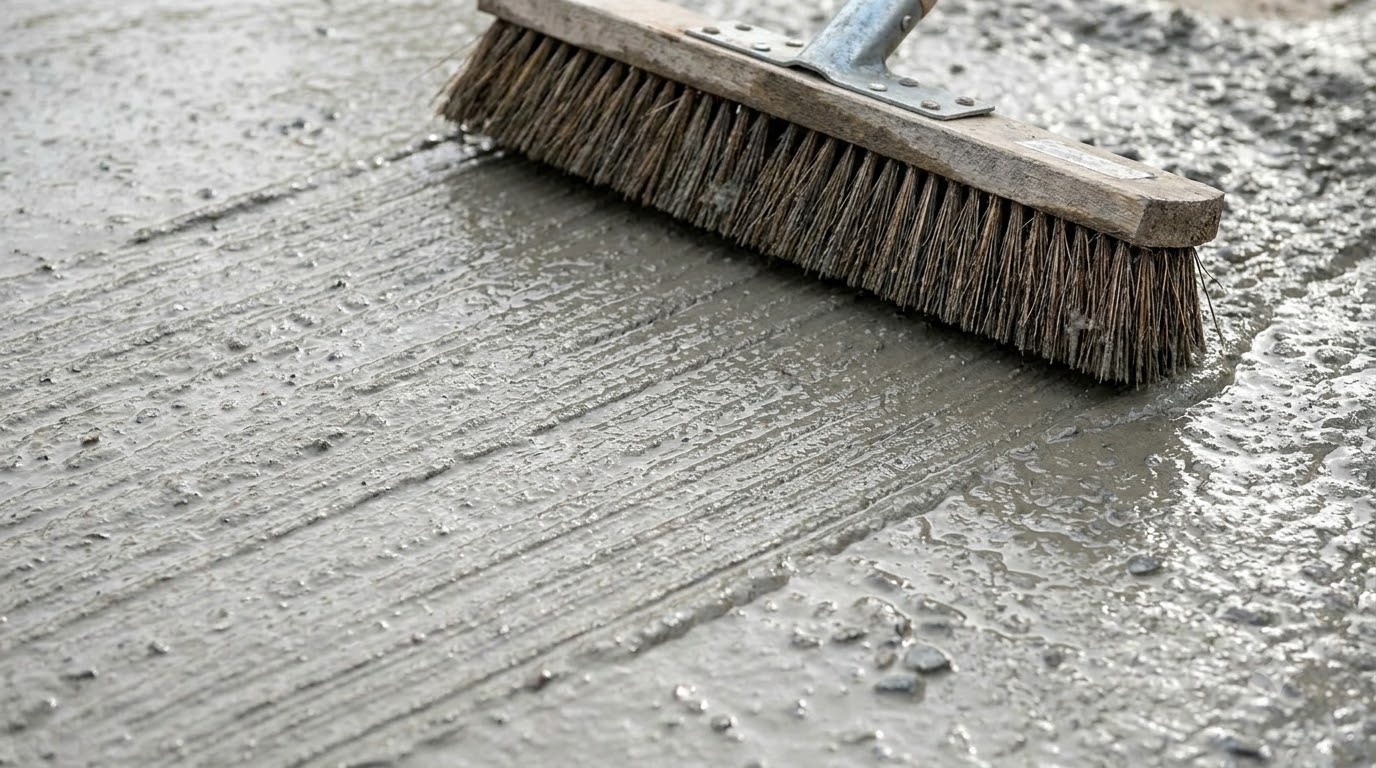
- Choose a broom finish. Cheapest, grippiest, and honest-looking; stamped finishes cost considerably more.
- Do the excavation and base yourself if you are able, and hire out the pour and finish — that split saves the most without risking the part that must be right.
- Order concrete once. Splitting a small patio into multiple pours means multiple delivery charges and a visible cold joint.
- Off-season quotes from concrete crews are often better than spring ones.
What not to trim: base preparation, slab thickness, reinforcement, and control joints (the Portland Cement Association publishes the residential slab basics these standards come from). The four-inch-over-compacted-base standard exists because thinner slabs on soft ground crack in their first freeze-thaw cycle, and a cracked cheap patio costs more than a sound one did.
Concrete patio ideas on a budget that look intentional
- Border it. A band of gravel, brick or pavers around the perimeter frames the slab and hides an untidy edge.
- Score a pattern. Saw-cut lines in a grid or diagonal give the surface rhythm at almost no cost.
- Plant the perimeter. Greenery softening three edges is the fastest way to make hardscape feel designed.
- Add an outdoor rug to anchor the seating zone and break up the grey.
- Warm low lighting at the edges — the same layered approach as deck and patio lighting.
- Overhead structure. Even a simple pergola or shade sail turns a slab into a room, and it distracts entirely from the floor.
When concrete is the wrong answer
Repouring is not always the cheapest path to a good patio. If the existing slab is heaving, cracked into shifting sections, or sits where water collects, the problem is the ground beneath it — and a new slab in the same conditions fails the same way. In those cases a flexible surface often wins: flagstone or pavers on a proper base tolerate ground movement, and individual units can be lifted and reset instead of the whole floor being demolished.
Frequently asked questions
What is the cheapest way to upgrade an old concrete patio?
Clean it properly first — a thorough pressure wash transforms more slabs than people expect. After that, acid or water-based concrete stain is the cheapest real change, followed by masonry paint, then a thin resurfacing overlay for slabs with surface damage.
Is staining or painting concrete better outdoors?
Stain penetrates and colors the concrete itself, so it does not peel and wears gradually; paint sits on top, offers more color choice, and eventually chips, especially where furniture drags. Outdoors, stain is generally more durable.
Can you resurface a cracked concrete patio?
Yes for hairline and surface cracks — repair them, then apply a resurfacer. No for structural cracking or heaving: those signal a base or drainage problem that telegraphs straight back through any overlay.
How thick should a concrete patio be?
Four inches is the usual residential standard over a compacted base, thicker where heavy loads sit. Skimping on thickness or base preparation is the classic false economy.
How can I make a plain concrete patio look expensive?
Change the edges and the texture rather than the slab: a gravel or paver border, a scored pattern, an outdoor rug, planters along the perimeter, and warm low lighting. Framing a cheap surface well beats disguising it.
Do I need to seal a concrete patio?
Sealing helps stained and decorative finishes last and resists grease and leaf stains, but use an outdoor-rated sealer with a non-slip additive. Bare structural concrete does not strictly need it, and a glossy sealed surface can be slippery when wet.