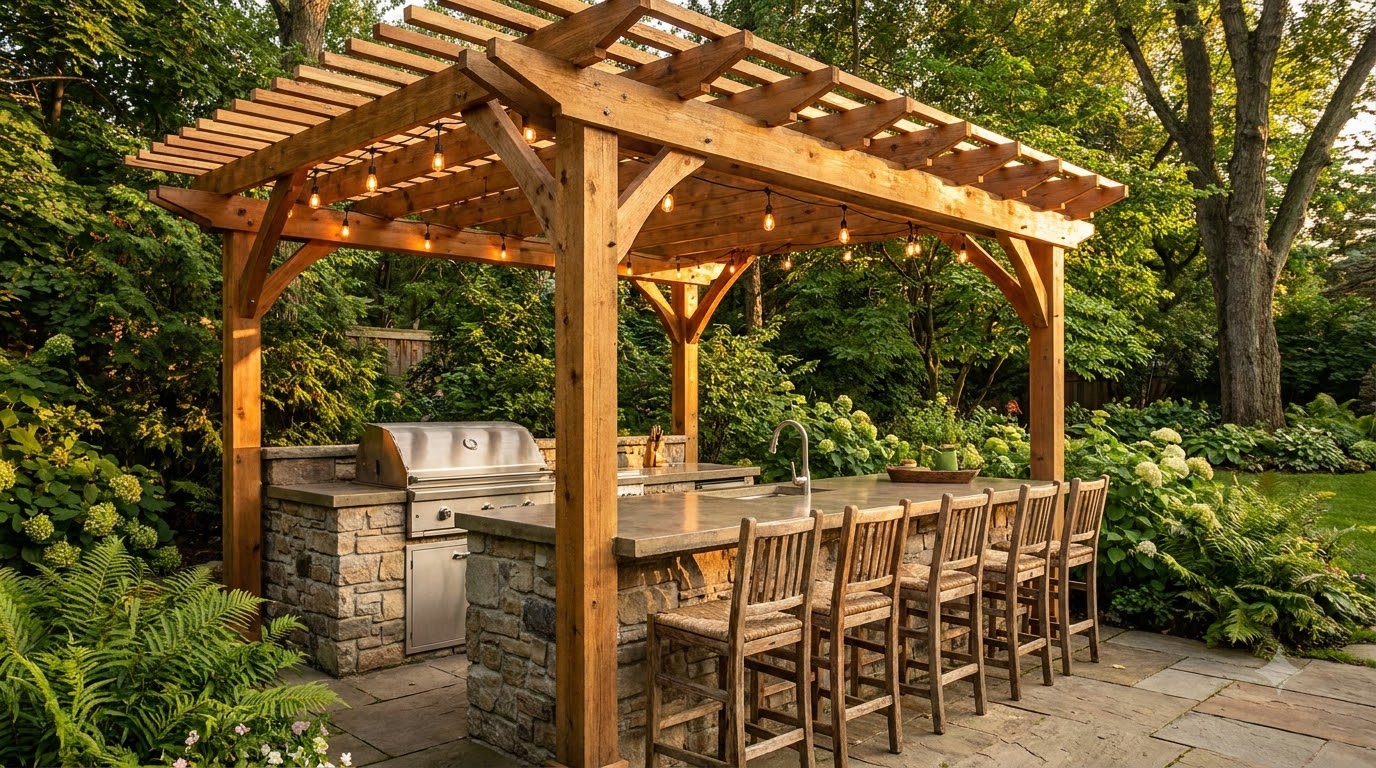
An outdoor kitchen pergola is the sweet spot between no cover and a solid roof. Open slats shade the cook and define the space while letting smoke and heat rise straight out — which is exactly why a pergola usually avoids the vent hood a solid roof demands. The work is in the details: size it around the counter plus the cook plus the stools, keep the grill clear of the tightest roof area, and use materials that shrug off heat and grease.
Key takeaways
- Open slats let the plume out — the main reason a pergola suits a grill better than a solid roof.
- Size it in three parts: counter run + ~3 ft for the cook + ~3 ft where stools sit.
- Follow the appliance clearance specs to combustibles, and give generous height above the cooking surface.
- Add panels or louvers and you add ventilation duty — the trade-off is not free.
- Wire during the build. Lighting and outlets are far cheaper before the structure is finished.
Why a pergola suits a kitchen
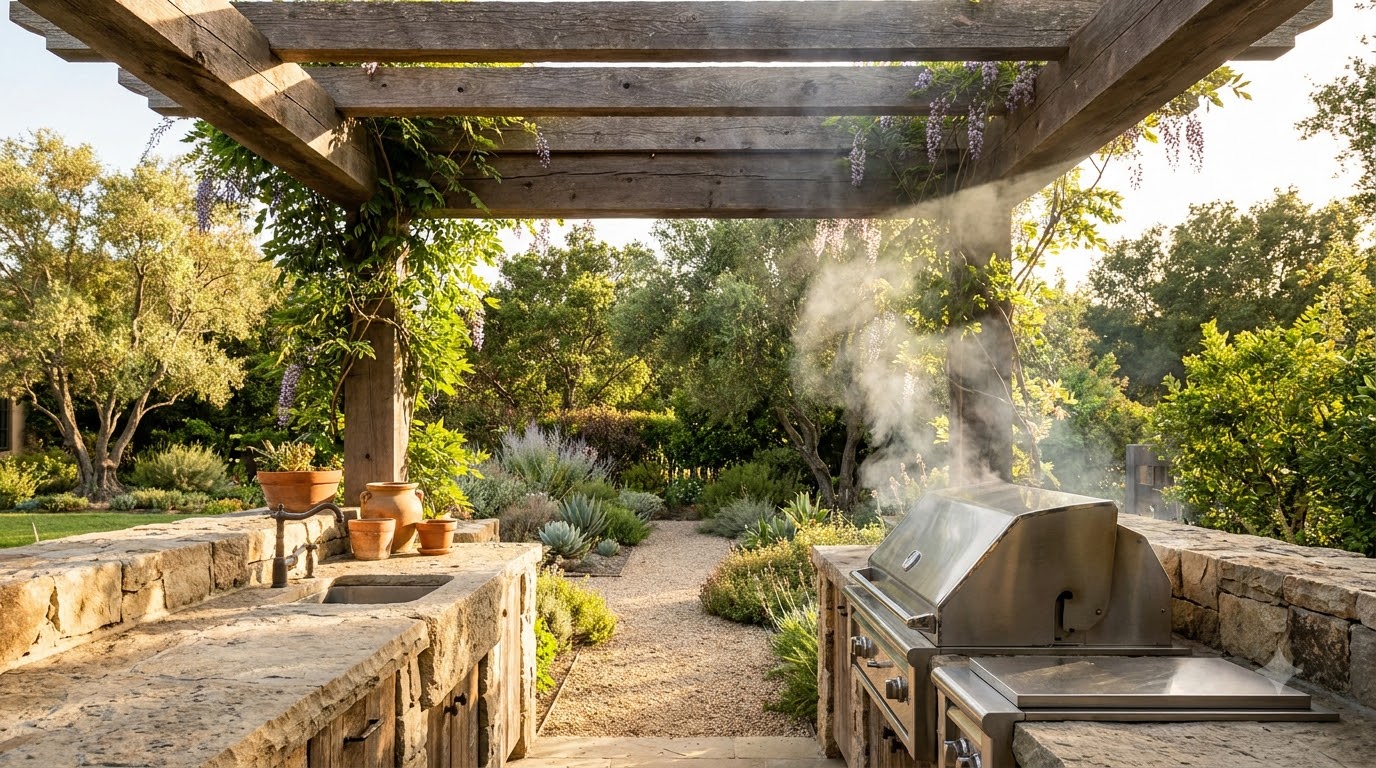
Grills produce smoke, grease-laden vapor and a lot of heat. A solid roof holds all three against the ceiling, which is why covered outdoor kitchens need an outdoor-rated vent hood and extra height. A slatted pergola does the opposite: it interrupts sun and defines the room while leaving the sky open above the plume.
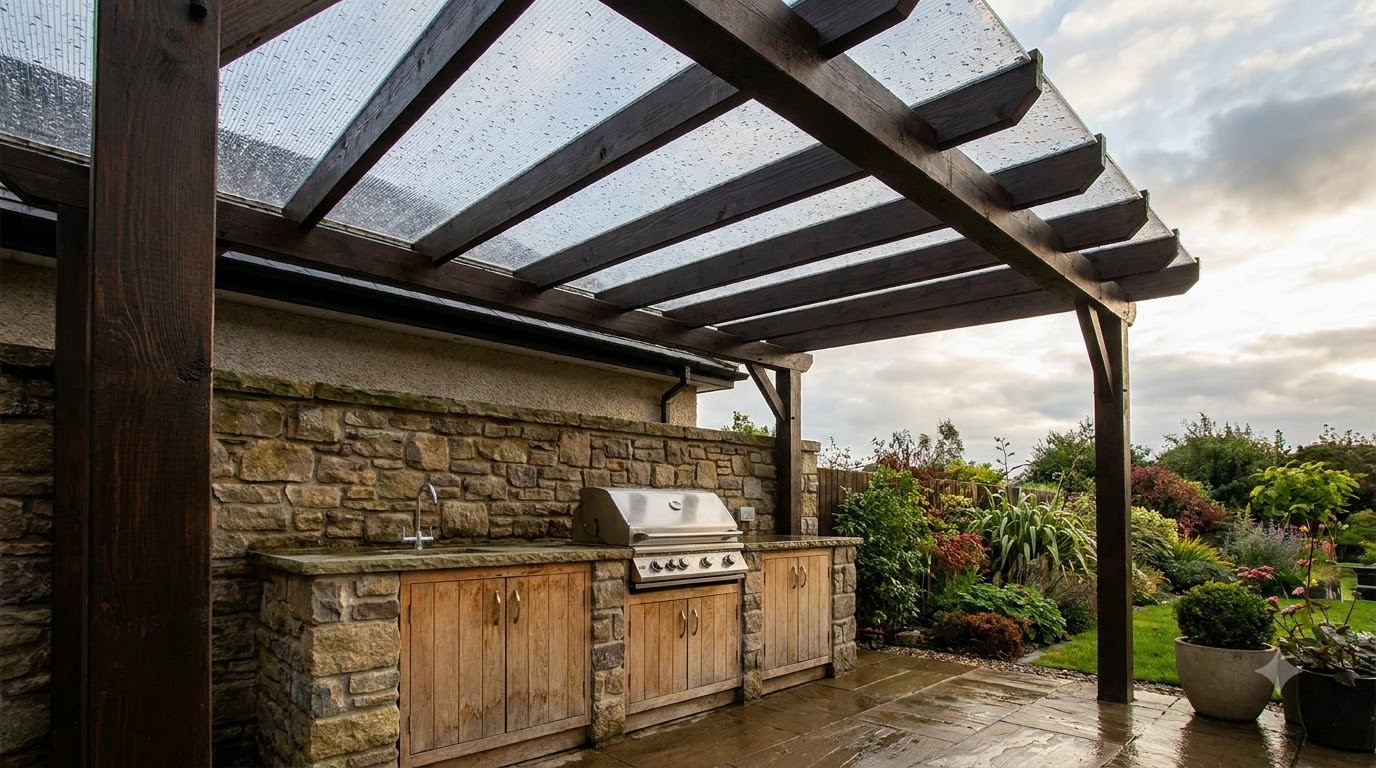
What you give up is rain protection. If cooking through a downpour matters, the answer is a pergola with panels over the seating and open slats over the grill — the split that keeps guests dry without trapping smoke.
Roof options and what they cost you
| Roof | Rain cover | Grill ventilation | Best for |
|---|---|---|---|
| Open slats | None | Excellent | The default — shade plus free airflow |
| Tight slats / double purlins | Minimal | Good | More shade in hot climates |
| Panels over seating only | Partial | Good over the grill | Rainy regions; the practical compromise |
| Full polycarbonate panels | Full | Reduced — plan ventilation | All-weather cooking, with clearance care |
| Louvered roof | Full when closed | Open while cooking | Premium flexibility |
Sizing an outdoor kitchen pergola
Three measurements decide the footprint:
- The counter run itself — grill, prep space and any cabinets, measured end to end.
- About three feet in front for the cook to stand and open appliance doors.
- About three feet beyond that if bar stools tuck under an overhang, so guests are covered too.
Height matters more here than on an ordinary patio pergola: extra clearance above the cooking surface helps heat and smoke disperse before they reach the beams. And where the posts land is not a free choice — keep them out of the cook path and clear of appliance doors, and if the kitchen sits on a deck, the posts need a proper load path into the framing, as covered in pergola on a deck.
Clearances and safety
- Read the grill manual first. Drop-in units specify clearances to combustibles and often required enclosure ventilation.
- Position the grill toward an open edge of the pergola rather than the middle of the tightest slat area.
- Non-combustible surround: masonry, stone or metal at the appliance — never timber cladding tight to a grill.
- Keep fabric away from the plume. Canopies, shade cloth and curtains belong over seating, not cooking.
- Trim back climbers above the grill; dry vine growth over a heat source is an obvious hazard.
- General grill practice — clearances, never cooking in an enclosed space, keeping the unit clean of grease — is summarized by the NFPA grilling safety guidance.
Materials that handle smoke and heat
- Aluminum frames — unaffected by heat and easy to wipe clean when grease film builds up.
- Cedar or treated timber — warmer looking and cheaper up front; refinish periodically and keep it clear of the plume.
- Masonry piers under timber posts — lifts the wood off the wet zone and looks deliberate.
- Stainless fixings throughout, as with any outdoor kitchen hardware.
- Light-colored ceilings if you clad any part of the roof — smoke discoloration shows less and reflects light onto the counter.
Lighting and power
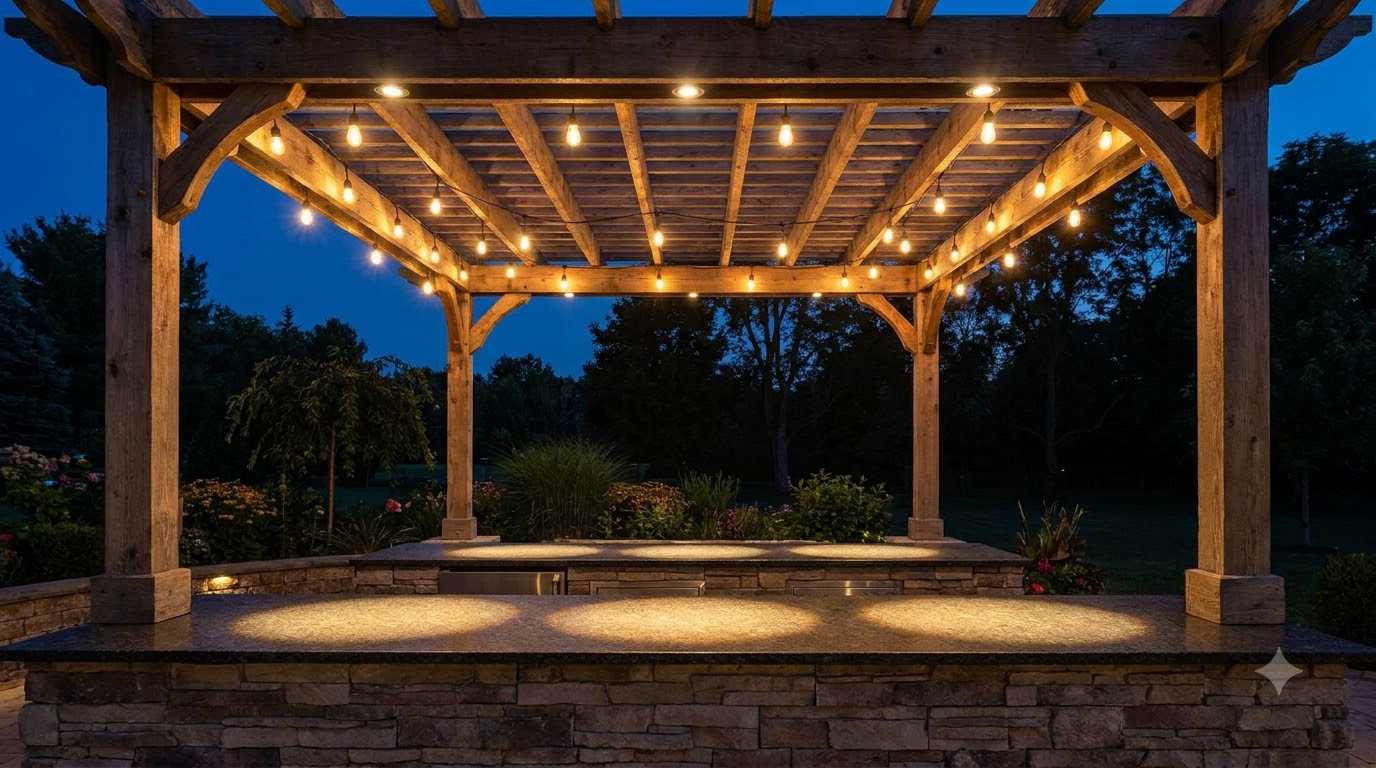
A kitchen needs more light than a lounge. Layer three: task light aimed at the counter and grill so the cook can actually see doneness; ambient light over the seating on a dimmer; and accent light on the structure or planting. Use wet-rated fixtures, keep them out of the direct grease plume where they get filmed over, and run the wiring while the pergola is being built — the same economy that applies to pergola lighting generally. Add weatherproof outlets on a GFCI circuit for blenders, fans and phone chargers while the electrician is on site.
Layout and flow
Position the kitchen so the cook faces the guests, not a wall — the bar overhang is what turns cooking into hosting. Keep the walking route from the house to the seating clear of the grill so nobody squeezes past a hot appliance carrying plates. And think about prevailing wind: siting the grill so smoke drifts away from both the seating and the house windows is a free decision at planning stage and an expensive one afterward.
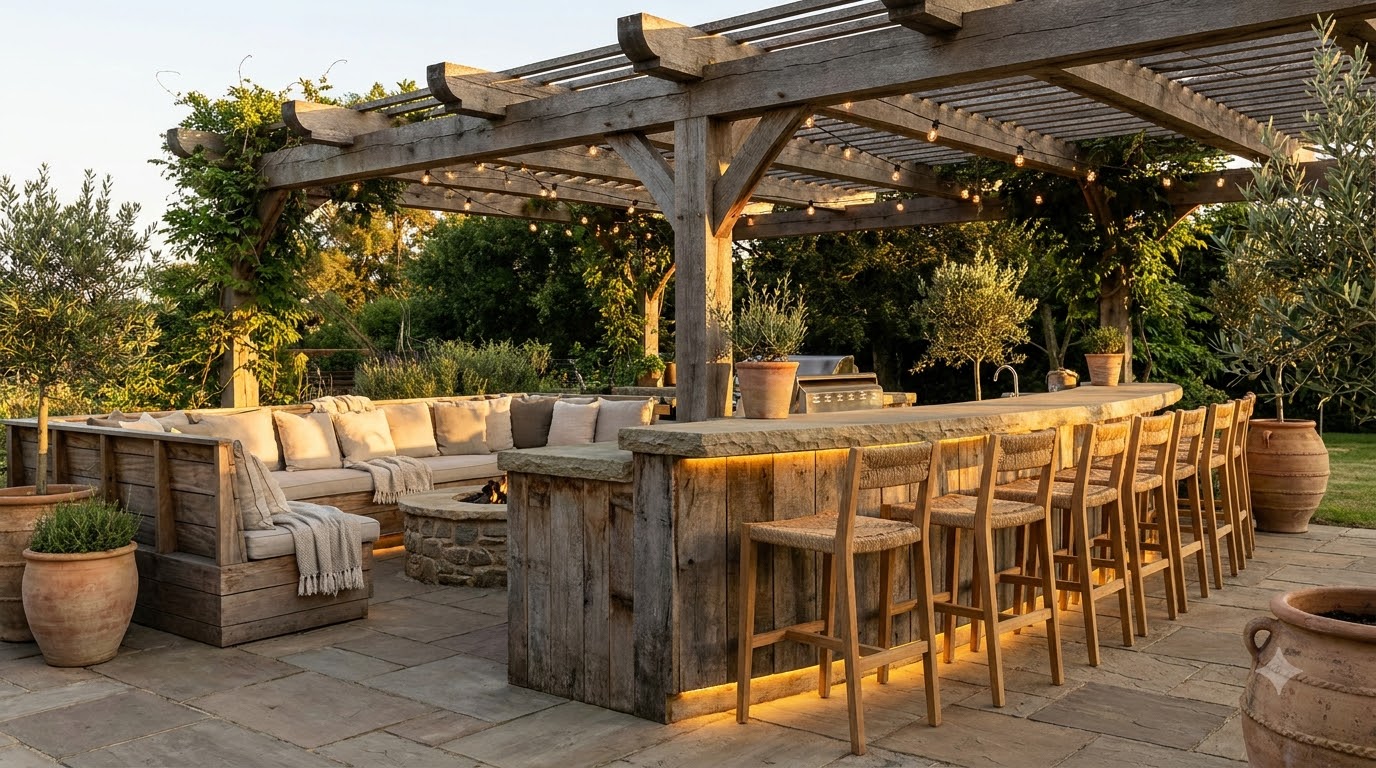
If you are still choosing the structure itself, the trade-offs between an open frame and a solid roof are laid out in pergola vs gazebo, and the budget lines in pergola cost and outdoor kitchen cost.
Frequently asked questions
Can you put a grill under a pergola?
Yes — an open-slat pergola is one of the better structures to grill under, because smoke and heat escape between the rafters. Follow the manufacturer clearance specs, keep generous height above the cooking surface, and position the grill toward an open edge.
How big should a pergola over an outdoor kitchen be?
Cover the counter run plus standing room for the cook, and extend it over any bar seating you want sheltered. Add about three feet in front of the counter and another three where stools go, then size the pergola to those combined dimensions.
Does a pergola over a grill need a vent hood?
Usually not, if the roof is open slats with real airflow — that is the main advantage over a solid roof. Once you add panels, a canopy or closed louvers over the cooking zone, ventilation becomes a genuine issue.
What is the best pergola material for an outdoor kitchen?
Aluminum is the low-maintenance choice and handles smoke and heat well; cedar and treated timber look warmer and cost less up front but need refinishing and must stay clear of the plume. Keep non-combustible material immediately around the appliance.
Should the pergola be attached to the house or freestanding?
Attached shortens service runs when the kitchen sits against the house, but it puts the plume near walls and windows. Freestanding gives more flexibility in siting smoke away from the house and often faces less permit scrutiny.
How do you light an outdoor kitchen pergola?
Layer it: task lighting on the counter and grill, softer ambient light over seating, and warm accent light on the structure. Use wet-rated fixtures, keep them clear of the grease plume, and dim the ambient layer.