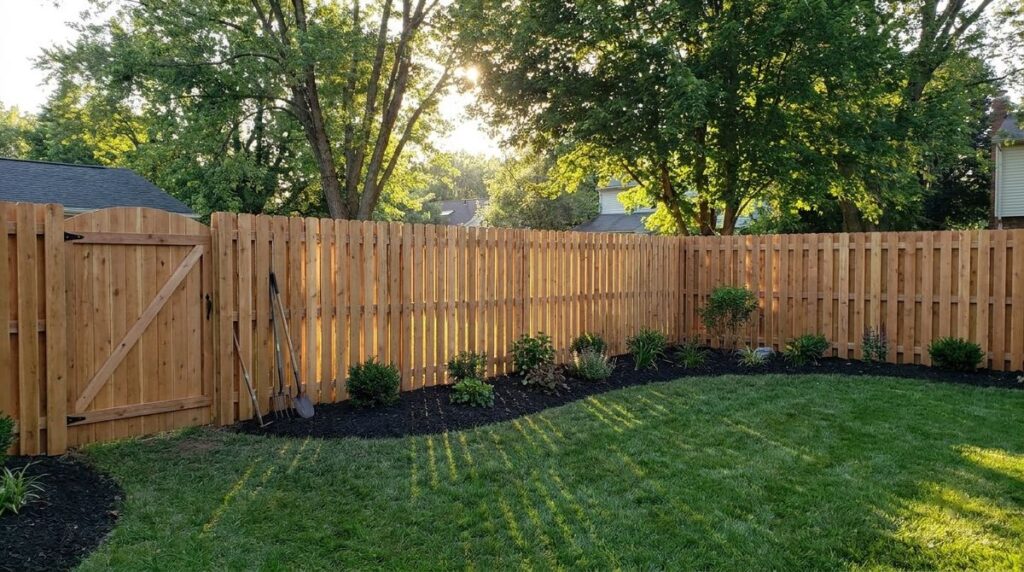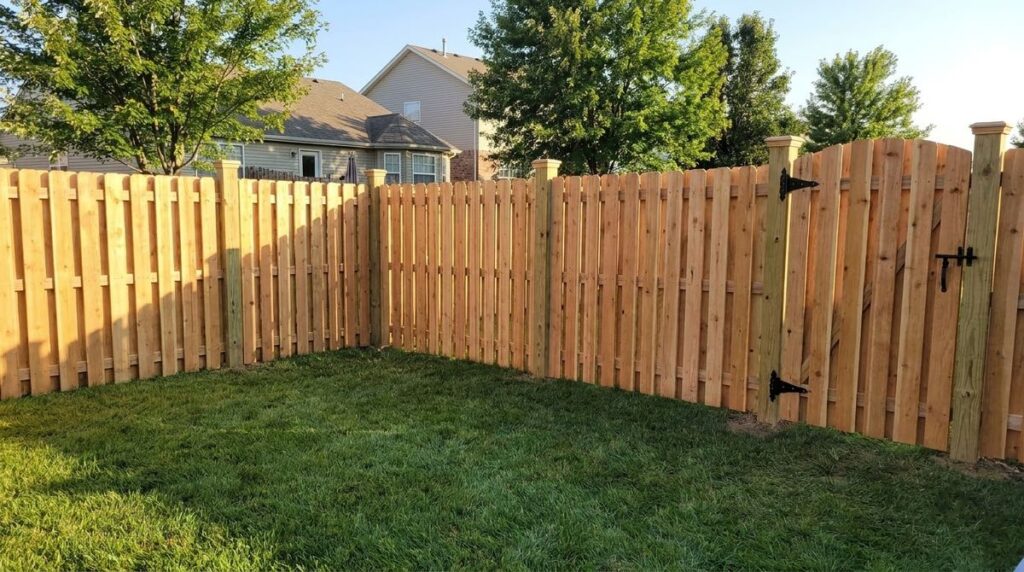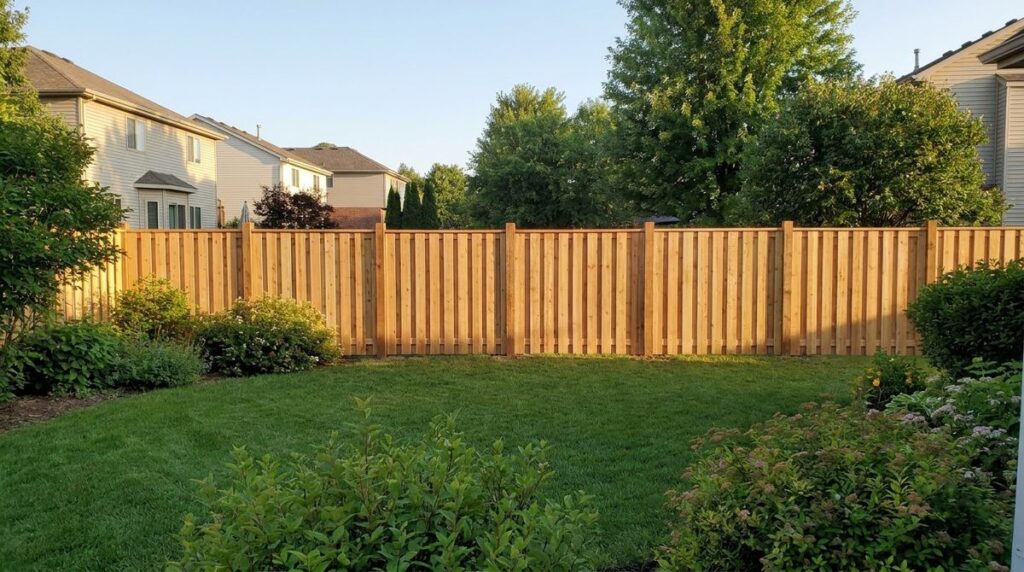
A wood privacy fence is usually built 6 feet tall from cedar or pressure-treated pine, on posts set no more than 8 feet apart, and how long it lasts is decided where the posts meet the soil. In Oregon State University’s in-ground post test, untreated western redcedar posts averaged 22–24 years and redwood 21, while posts that were mostly sapwood or from non-durable species averaged only 4–7 years.
Key takeaways
- Board-on-board is the most private wood style because a second layer covers the gaps that open as boards shrink; stockade starts solid but gaps over time.
- Posts set the lifespan. Buy posts stamped for ground contact (AWPA Use Category 4A or higher); pickets only need 3B.
- Heartwood cedar and redwood resist decay; sapwood does not. In the Oregon State test, untreated ponderosa pine posts lasted about 6 years.
- 6 feet is the common side and rear yard cap in zoning codes such as Darien, Illinois, and it sits under the 7-foot permit exemption in the model IRC.
- Space posts 8 feet on center at most, 6 feet for maximum strength, and bury about a third of each post.
| Style | How private it really is | Best for | Lumber use (relative) | DIY difficulty |
|---|---|---|---|---|
| Stockade (side by side) | Solid when new; hairline to visible gaps as boards dry | Lowest cost per foot, long runs | $ | Easiest |
| Board-on-board | Full privacy, even after shrinkage | Close neighbors, pools, noise | $$$ | Moderate |
| Shadowbox | Solid straight on, see-through at an angle | Windy sites, a good face on both sides | $$ | Moderate |
| Horizontal | Set by the gap you leave between boards | Modern houses, short runs | $$–$$$ | Hardest to keep straight |
| Lattice-top | Solid below, see-through band on top | Softening a tall fence, climbing plants | $$ | Moderate |
Wood privacy fence styles compared: how private each one is
Wood privacy fence styles differ less in looks than in one detail: what happens to the gaps between boards as the wood dries and moves. Every board shrinks and swells with the seasons, so a fence that looks solid on install day can show daylight a year later. Here is how each of the five common styles handles that.
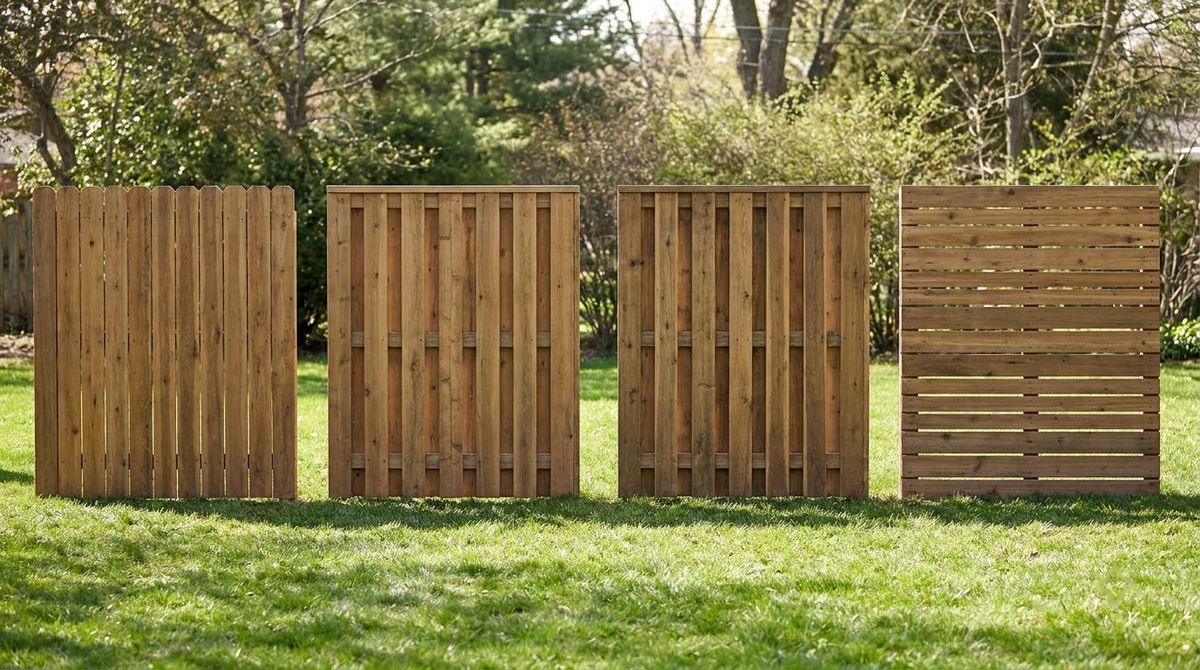
Stockade (side-by-side boards)
Boards are butted edge to edge on one side of the rails. It uses the fewest boards per foot, so it is the cheapest wooden privacy fence to build. The catch: as fresh lumber dries, thin gaps open between boards. Rails show on one side only, and some towns decide which side faces out.
Board-on-board
A first row of boards goes up with gaps, then a second row covers each gap with an overlap. When boards shrink, the overlap still blocks the view, so this is the most private wood fence you can build. It also uses the most lumber and loads the posts most, so post quality and depth matter more.
Shadowbox
Boards alternate on each side of the rails, with the gap on one side narrower than the board on the other. Straight on, it reads as solid; from an angle, you can see through. Air passes through the zigzag, which helps on windy lots, and both sides look finished, which neighbors appreciate.
Horizontal privacy fence
Boards run sideways from post to post, and privacy depends entirely on the gap you set between them. Because each board spans the full bay, a horizontal privacy fence is the style most likely to sag or cup if posts are far apart, so plan on the tighter 6-foot post spacing and straight, dry boards.
Lattice-top
A solid lower fence carries a band of lattice on top. It looks lighter than a full-height solid wall and gives vines something to climb, but the lattice is see-through. Height limits apply to the fence as built, so check how your code measures a lattice topper before counting on it for extra height.
Cedar vs pressure-treated pine vs redwood
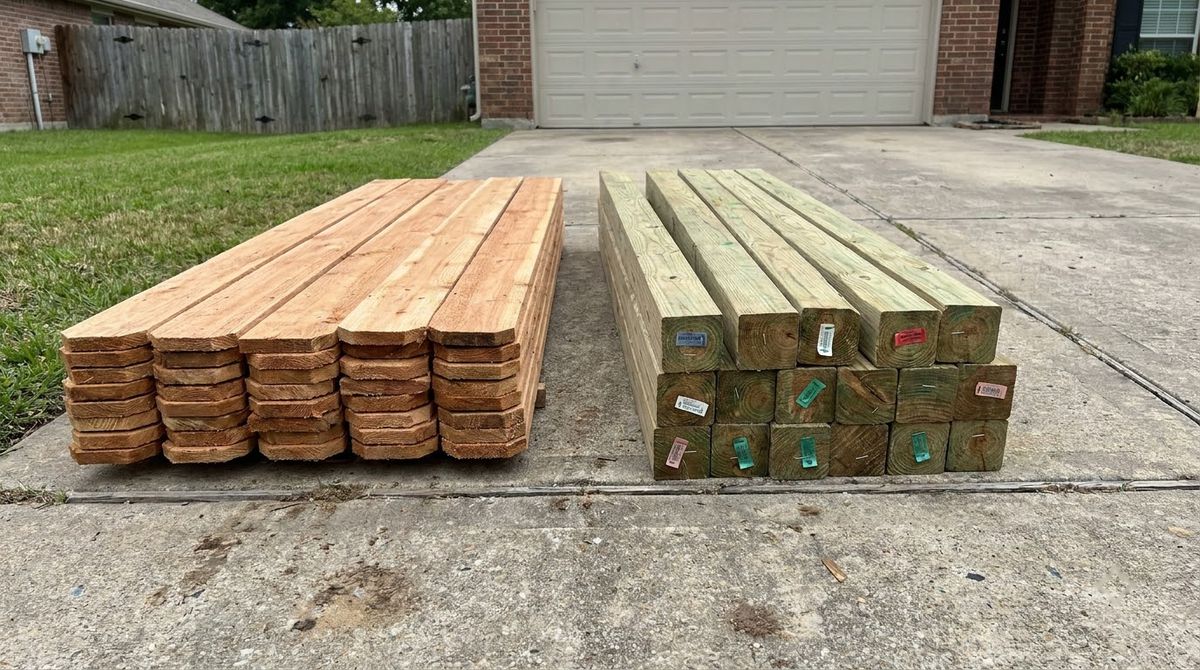
The cedar vs pressure-treated pine vs redwood choice comes down to heartwood. Oregon State University’s Forest Research Laboratory puts it plainly: sapwood is not naturally insect- or decay-resistant, and only the extractives in the heartwood of a few species provide that resistance. Treated posts work the other way round: the report notes that permeable sapwood absorbs preservative readily.
| Lumber | Natural decay resistance | Untreated post in soil (Oregon State test) | Best role in the fence |
|---|---|---|---|
| Western redcedar | Heartwood durable; drops toward the pith and higher in the tree | 22–24 years average (all-heartwood split posts) | Boards and rails; posts only if heartwood |
| Redwood | Heartwood durable | 21 years average (heartwood square posts) | Boards and rails |
| Ponderosa pine, untreated | Low in this test | 6 years average | Do not use untreated |
| Douglas-fir, untreated | Low in this test | 4–7 years average | Do not use untreated in soil |
| Pressure-treated pine | Comes from the preservative | Not applicable — buy Use Category 4A or higher for posts | Posts, rails; pickets at 3B or higher |
Test plot near Corvallis, Oregon; results in drier or hotter climates will differ. Post lives from Morrell, Miller and Schneider (1999), Tables 1 and 6.
A cedar privacy fence is the classic upgrade: durable heartwood boards need no preservative. The weak point is the posts. Cedar sold for fencing may include light-colored sapwood, which has none of the heartwood’s protection. The redwood fence sheet in the sources lists pressure-treated or redwood posts under redwood pickets, and the same pairing works for cedar.
For treated lumber, read the end tag. The American Wood Protection Association (AWPA) chart lists fence posts in ground contact at Use Category 4A or higher and fence pickets at 3B or higher. Above-ground stock in a post hole puts 3B lumber in a 4A job. The same end-tag codes are explained in the guide to treated lumber end tags and safety.
Why most privacy fences are 6 feet tall
Most privacy fences are 6 feet tall because that is where zoning codes, permit rules and stock lumber meet. The model International Residential Code (IRC 2021, Section R105.2) exempts fences not over 7 feet high from a building permit, and many towns cap side and rear yard fences at 6 feet in their zoning code.
- Darien, Illinois: side and rear yard fences up to 6 feet; only 4 feet where your rear yard borders a neighbor’s front yard; front yards limited to landscape fences 3 feet or less. A permit is required to install, alter or replace any fence, and the finished side must face away from your lot.
- Tempe, Arizona (ZDC 4-706): 4 feet maximum in the front yard setback (up to 6 with a use permit); up to 8 feet behind it for single-family homes; any wall over 6 feet needs a building permit. Height is measured from the highest adjacent ground within 20 feet.
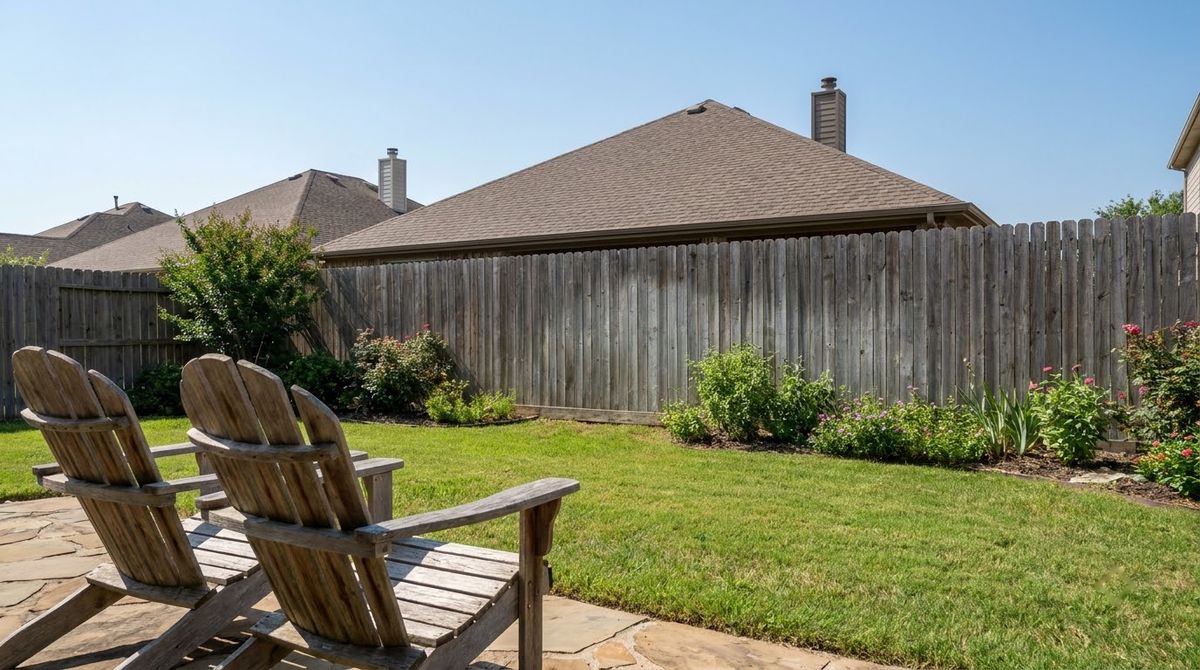
Two lessons from those examples. First, a permit exemption under the building code does not exempt you from zoning: Darien requires a fence permit for any height. Second, “6 feet” is a local number, not a national one; see privacy fence height limits. Check your city or county zoning code and your HOA covenants, and confirm with your local building department before you dig.
Stock lumber fits the same height. A typical 6-foot privacy fence build uses 6-foot pickets on 8-foot or 10-foot 4×4 posts, which leaves about 2 feet of an 8-foot post in the ground. If you want more than 6 feet, plan for longer posts and a permit check first.
Post spacing, depth and rails
Post spacing for a wood privacy fence follows the rails. One redwood fence installation sheet calls for posts no more than 8 feet center to center, so 8-foot rails break on a post, and recommends 6-foot spacing for maximum strength. A lumber dealer’s fence guide gives the same 6–8 foot range.
- Call 811 to locate buried utilities before marking holes.
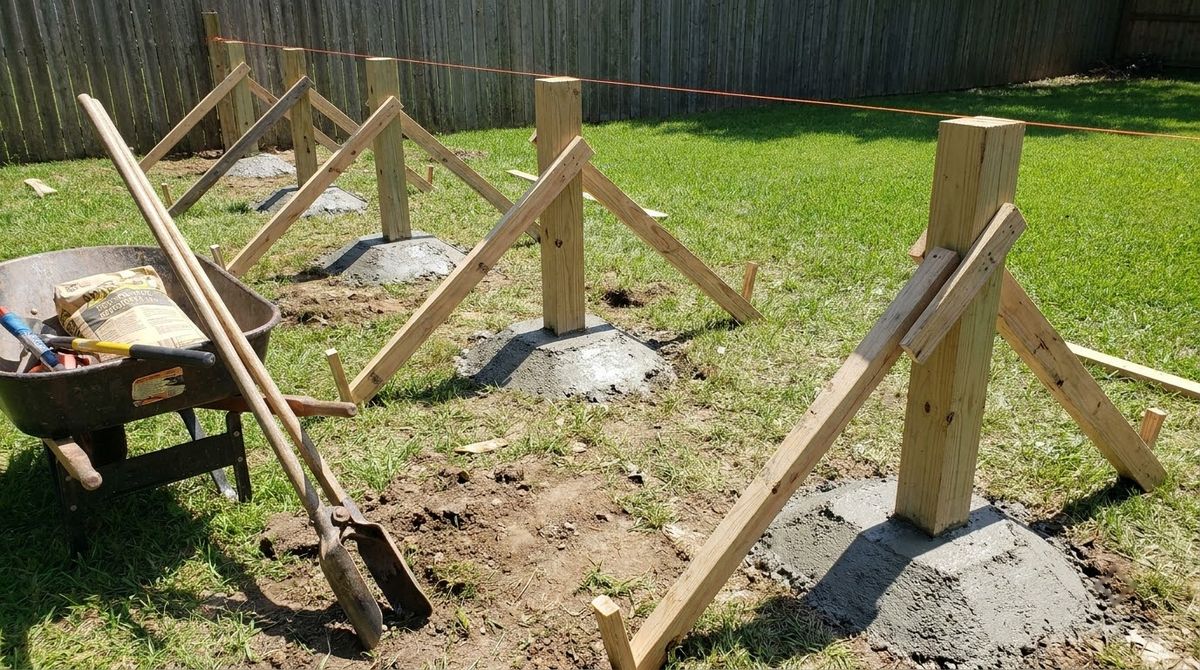
- Stake the ends and corners, run a mason’s line, and mark posts along it.
- Dig at least 2 feet deep, or one-third of the post’s height, and 10–12 inches wide. In frost country, go below the frost line.
- Add about 4 inches of gravel in the bottom for drainage, set the post plumb, and slope the concrete top away from the post.
- Let concrete cure 24–48 hours before hanging rails.
- Use three rails on a 6-foot fence: about 6 inches below the top, about 6 inches above the ground, and one centered. Stagger rail joints so two never land on the same post at the same height.
Board-on-board and horizontal designs are heavier or longer-spanning than stockade, so they are the ones that benefit most from 6-foot spacing. The lumber dealer guide says one-third burial matters most for corner posts and for posts that carry heavy weight or face high wind.
How long a wood privacy fence lasts
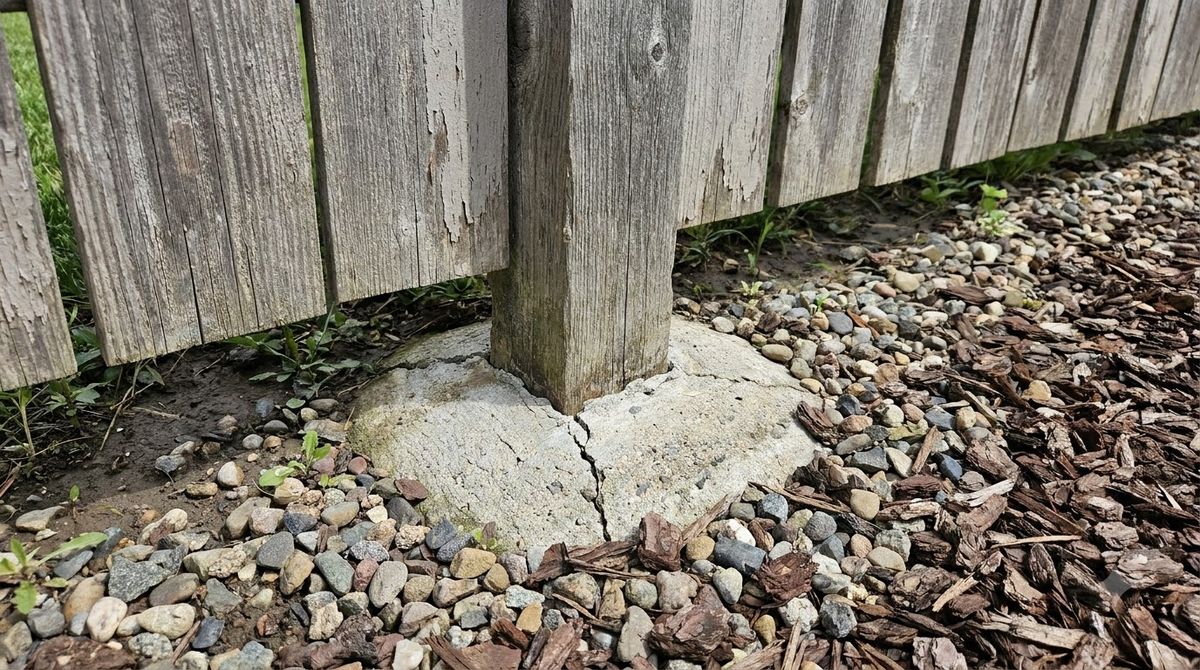
How long a wood privacy fence lasts depends on its posts, because the ground line is where decay starts. The Oregon State report names the zone from just above the soil to some distance below it as the most vulnerable part of a post, since it stays moist and has oxygen. Boards and rails above ground usually outlast the posts.
- Untreated durable heartwood (western redcedar, redwood, Port-Orford-cedar): about 20–24 years average in the test. The report says largely heartwood posts of durable species could average 18 years or longer.
- Untreated non-durable wood or mostly sapwood: 4–7 years average. The report’s advice is to treat these posts with a preservative.
- Pressure-treated posts: the most consistently effective treatment in the test. Two failed series averaged 20 and 26 years; the others were estimated at 42 to 85 years. Several of those preservatives are restricted-use or no longer sold, so treat these numbers as proof of the method, not a promise for today’s lumber.
Your climate shifts every number. The test plot sits in wet western Oregon; a dry site may do better and a humid, termite-heavy one worse. What you control: ground-contact posts, drainage gravel, concrete that sheds water, and boards that stay clear of the soil.
Which wood privacy fence to build: verdict by situation
- You want the most privacy, period: board-on-board on 4A pressure-treated posts at 6-foot spacing.
- You have a long run and a tight budget: stockade in pressure-treated pine. Expect small gaps after the first dry season.
- Your lot is windy, or the neighbor shares the cost: shadowbox. It lets air through and looks finished from both sides.
- Your house is modern and the run is short: a horizontal privacy fence in cedar, with 6-foot post spacing and a gap you choose.
- You want natural wood with no treated boards: a cedar privacy fence with heartwood boards and treated posts.
- The fence must be shorter than you would like: lattice-top for looks, but remember the lattice counts toward height.
- You only need to hide one seating area: skip the property-line fence and use one of these privacy ideas for a patio instead.
Mistakes to avoid: what shortens a wood fence’s life
- Above-ground (3B) lumber used as posts. Check the end tag for 4A or higher.
- Untreated pine or sapwood-heavy cedar in the ground. That is the 4–7 year category.
- Posts spaced past 8 feet, especially under heavy board-on-board or long horizontal boards.
- Concrete mounded flat or cupped at the top, so water pools against the post.
- Boards touching soil or mulch, which wicks moisture into the end grain.
- Building before checking zoning, then tearing out a fence that is too tall or faces the wrong way.
Frequently asked questions
What is the best wood for a privacy fence?
For boards, heartwood western redcedar or redwood gives natural decay resistance without chemicals. For posts, pressure-treated pine stamped for ground contact (AWPA Use Category 4A or higher) is the safer choice, because cedar sold for fencing may include sapwood, which has no natural protection. Many durable fences combine cedar boards with treated posts.
How long does a wood privacy fence last?
It lasts as long as its posts. In Oregon State University’s in-ground test, untreated western redcedar posts averaged 22 to 24 years and redwood 21, while non-durable or sapwood posts averaged 4 to 7 years. Pressure treatment was the most consistently effective way to extend post life.
What is the most private wood fence style?
Board-on-board is the most private. Its second layer of boards overlaps the gaps in the first, so the view stays blocked even after the wood shrinks. Stockade starts solid but opens thin gaps as boards dry, and shadowbox looks solid only when viewed straight on.
How far apart should posts be for a 6-foot privacy fence?
No more than 8 feet center to center, so standard 8-foot rails end on a post. Spacing of 6 feet is recommended for maximum strength, especially for heavy board-on-board or horizontal boards. Dig each hole at least 2 feet deep, or one-third of the post’s height, and below the frost line.
Do I need a permit for a 6-foot wood privacy fence?
Often, yes. The model IRC exempts fences up to 7 feet from a building permit, but zoning rules are separate. Darien, Illinois, for example, requires a permit for any fence and caps rear yards at 6 feet. Check your local zoning code, HOA rules and building department before you dig.
Sources
- Oregon State University, Forest Research Laboratory, Service Life of Treated and Untreated Fence Posts: 1996 Post Farm Report (Research Contribution 26, 1999).
- American Wood Protection Association, Select the Right Preserved Wood for Your Project (2021).
- International Code Council, 2021 International Residential Code, Section R105.2 Work exempt from permit (2021).
- City of Darien, Illinois, Residential Fence Information (checked October 2026).
- City of Tempe, Arizona, General Fence and Wall Height Standards (ZDC 4-706) (checked October 2026).
- Redwood fence installation sheet, Step-by-Step Instructions: Building a 6-Foot Redwood Privacy Fence (product PDF, checked October 2026).