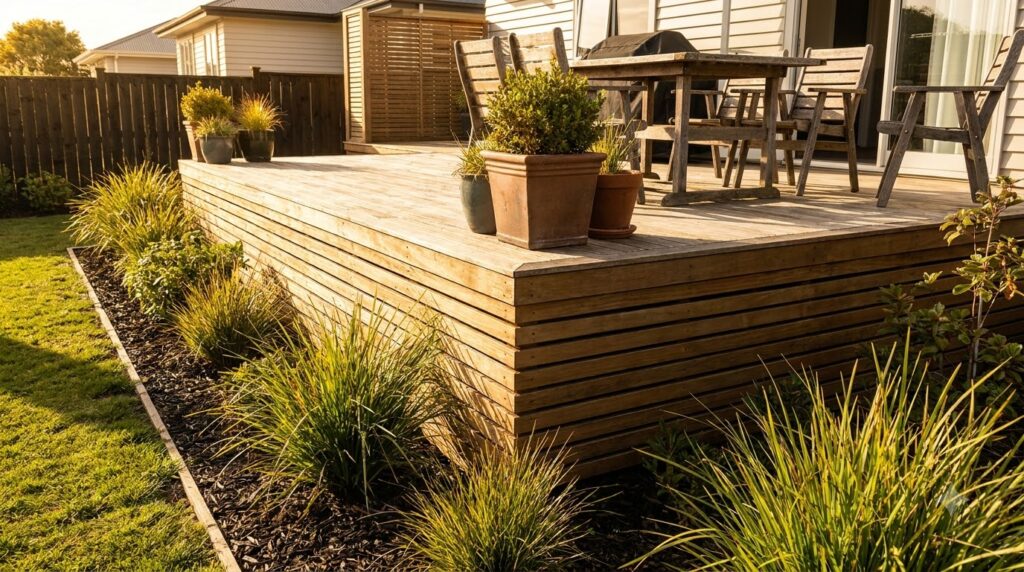
The best deck skirting ideas keep air moving under the deck and keep wood off the soil: Trex’s installation guide says all decks need air circulation to stay dry, and University of Kentucky extension advises keeping wood at least six inches above ground. Skirting hides framing, blocks animals and finishes a raised deck, but a solid, unventilated skirt traps moisture against the joists.
Below: 12 skirting options from cheap lattice to stone veneer, plus the airflow, access and animal-proofing details that decide whether skirting helps or hurts.
Key takeaways
- Airflow is the whole ballgame — lattice, spaced slats, or solid panels with deliberate vent gaps.
- Build in an access door. Shutoffs, cleanouts and stored things all live under there eventually.
- Quarter-inch hardware cloth buried at least 6 inches is what stops digging animals, per UC IPM; skirting alone does not.
- Keep the bottom edge off the dirt and pull soil and mulch back from it; gravel holds moisture in the soil much as mulch does.
- Low decks may not need skirting at all — planting often looks better and costs less.
Ventilation first: why sealed skirting kills decks
The space under a deck is damp by nature: rain gets through the boards, ground moisture rises, and shade keeps it cool. Moving air carries that moisture away. Wrap the perimeter in solid panels with no gaps and the air stops moving — so the moisture stays, sitting against the joists, beams and ledger. Rot starts where nobody looks.
Practical targets when planning any of the ideas below:
- Keep openings continuous around the perimeter, not just on one side — air needs a route in and out.
- Keep wood off the soil. University of Kentucky extension advises keeping wood at least six inches above ground and cutting the bottom off wood latticework that touches soil; close any gap below with hardware cloth, not more wood.
- Solid materials need designed vents: louvered panels, vent grilles, or gaps between boards. Trex’s own advice for better airflow is to leave openings under the decking or widen board gaps to 3/8 inch.
- Do not backfill soil or mulch against the skirt; it bridges moisture into the wood, and Kentucky extension notes termites are drawn to mulch mainly for the moisture it holds.
- Grade the ground to drain away from the deck before closing anything in. The American Wood Council’s DCA 6 deck construction guide also requires any lumber in contact with the ground to be treated for ground contact.
Budget-friendly deck skirting ideas (1–4)
1. Lattice panels. The classic and the cheapest: pre-made treated or vinyl panels drop into a simple frame in an afternoon. Ventilates by default; paint it the trim color and it disappears.
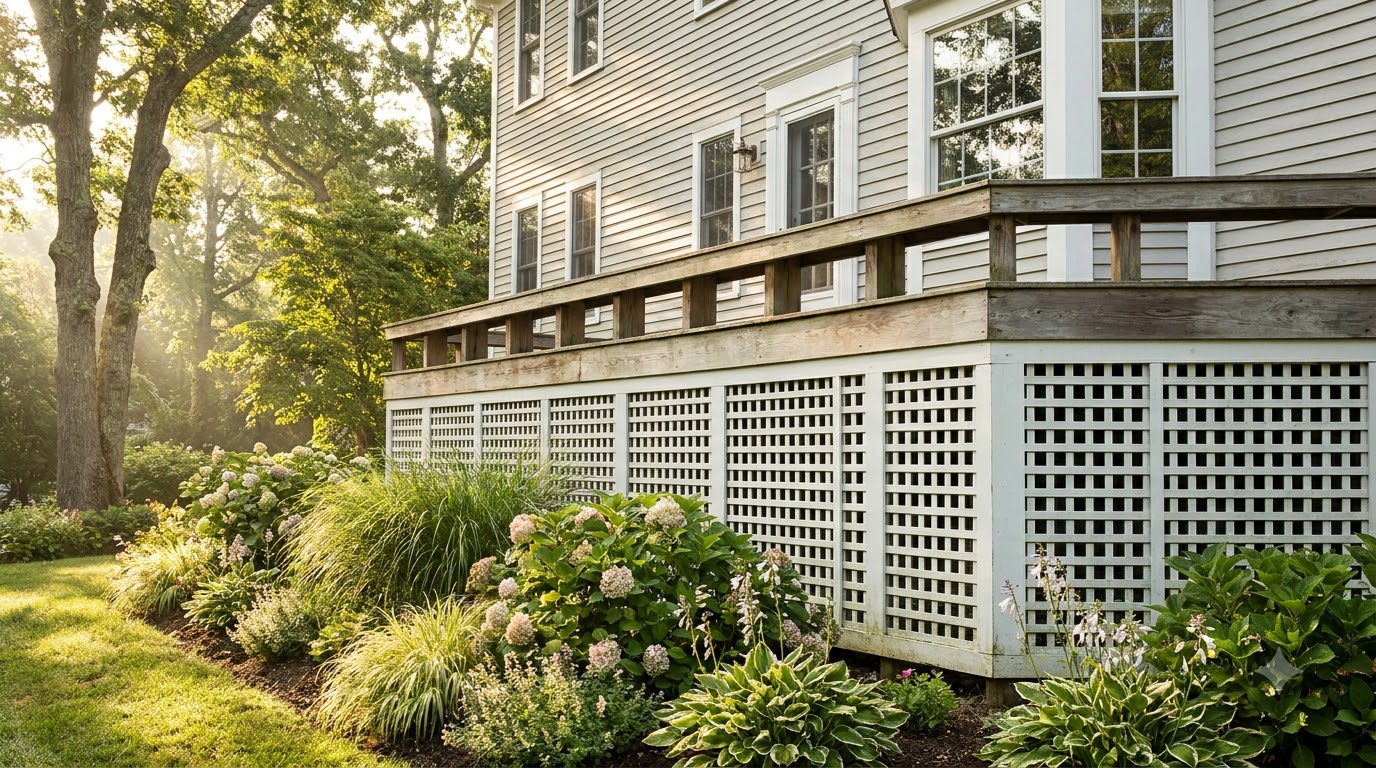
2. Spaced vertical boards. Deck boards run vertically with a consistent gap; they cost a little more than lattice and look far more modern. Finish them along with the deck so the colors match, following the steps for how to stain a deck.
3. Horizontal slats. The current favorite: wide boards laid horizontally with even reveals. Reads as designed cladding rather than a screen, and the gaps do the venting.
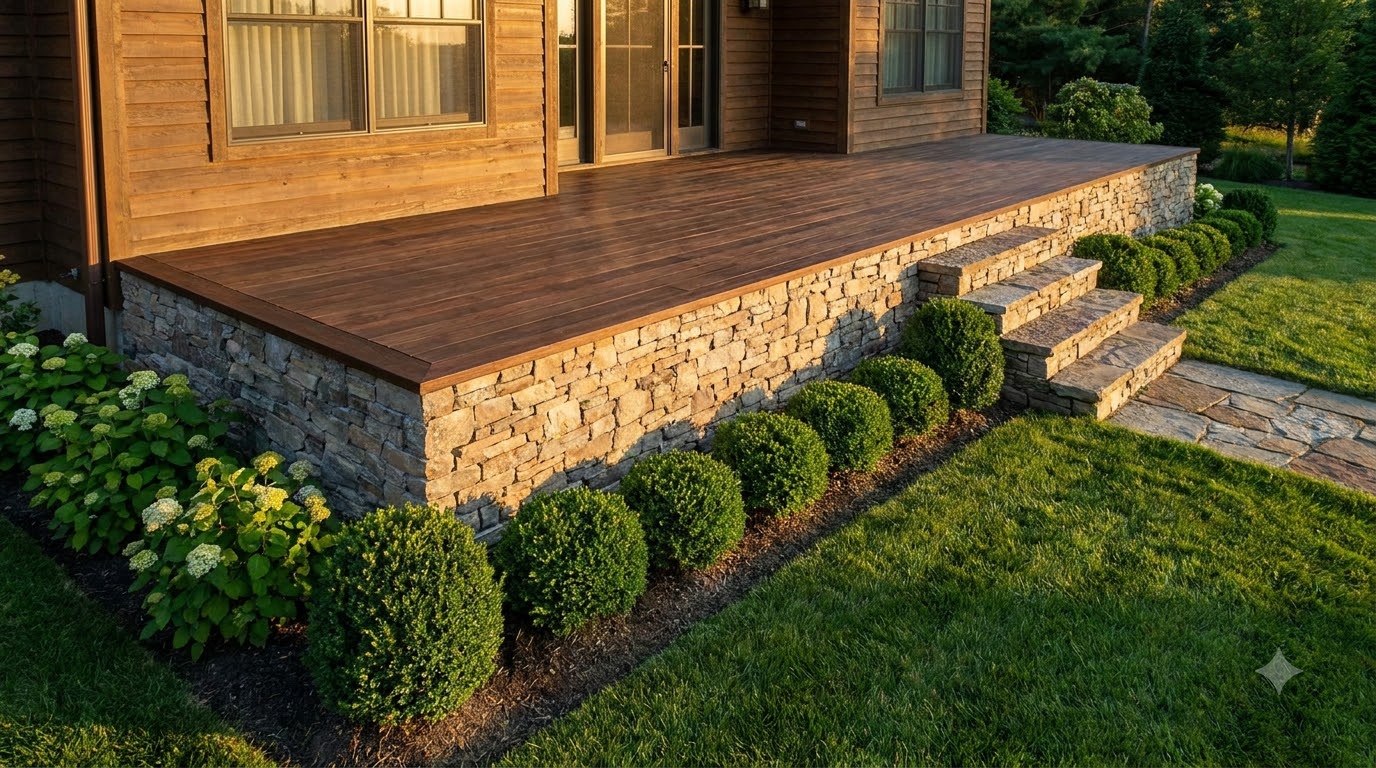
4. Corrugated metal panels. Framed sheets of galvanized or corten-look metal — farmhouse-industrial, extremely durable, cheap per square foot. Vent above and below.
Upscale skirting (5–8)
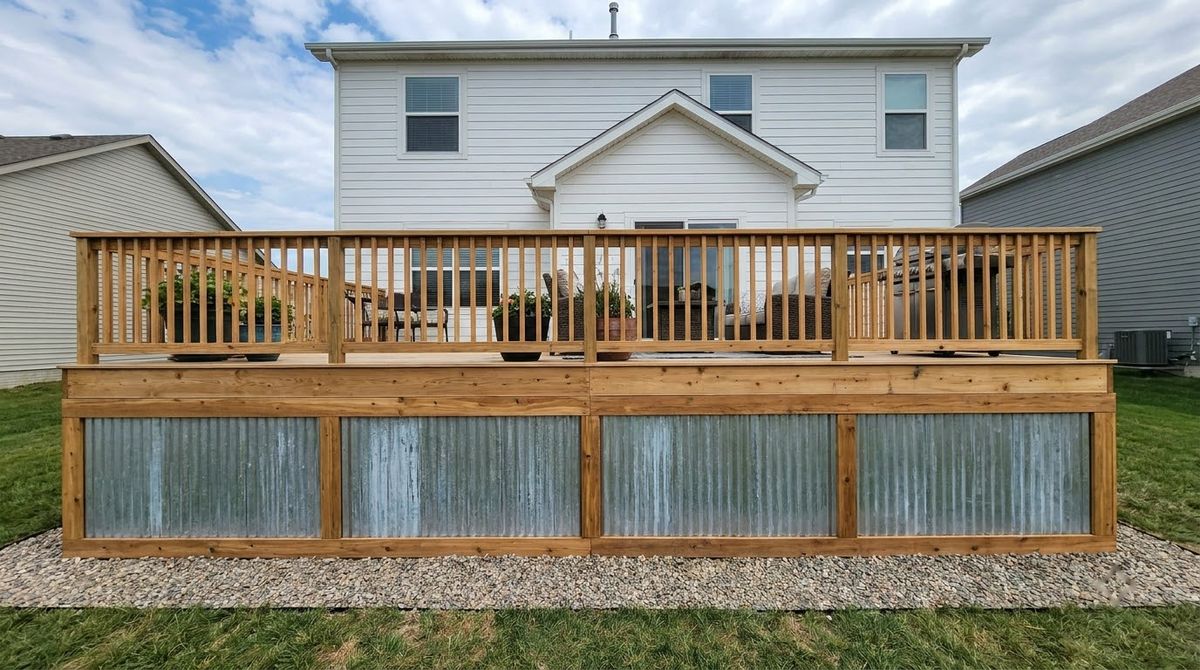
5. Stone or brick veneer. Makes a raised deck read as a solid extension of the house. The most expensive option here, and the one that most needs deliberate vents built in.
6. Composite panels matched to the decking. Color-matched, rot-proof, no repainting: the tidy answer when the deck surface is composite. Carry the same color up into your choice of deck railing styles and the whole deck reads as one piece.
7. Board-and-batten. Vertical boards with battens over the seams; a traditional facade detail that suits cottage and farmhouse homes.
8. Framed trellis with climbers. A structural trellis skirt planted with climbing greenery — excellent airflow, and it improves every season.
Clever and practical (9–12)
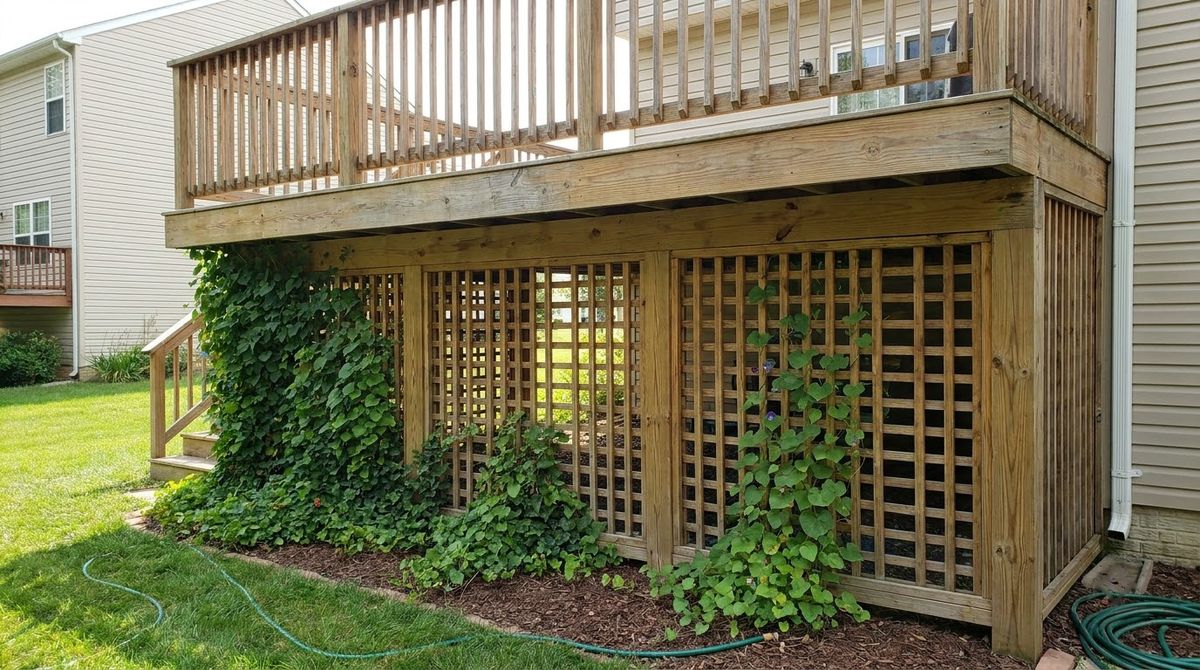
9. Skirting with a hidden access door. A hinged or removable panel keyed to the slat pattern, invisible until you need it. Do this whichever style you choose.
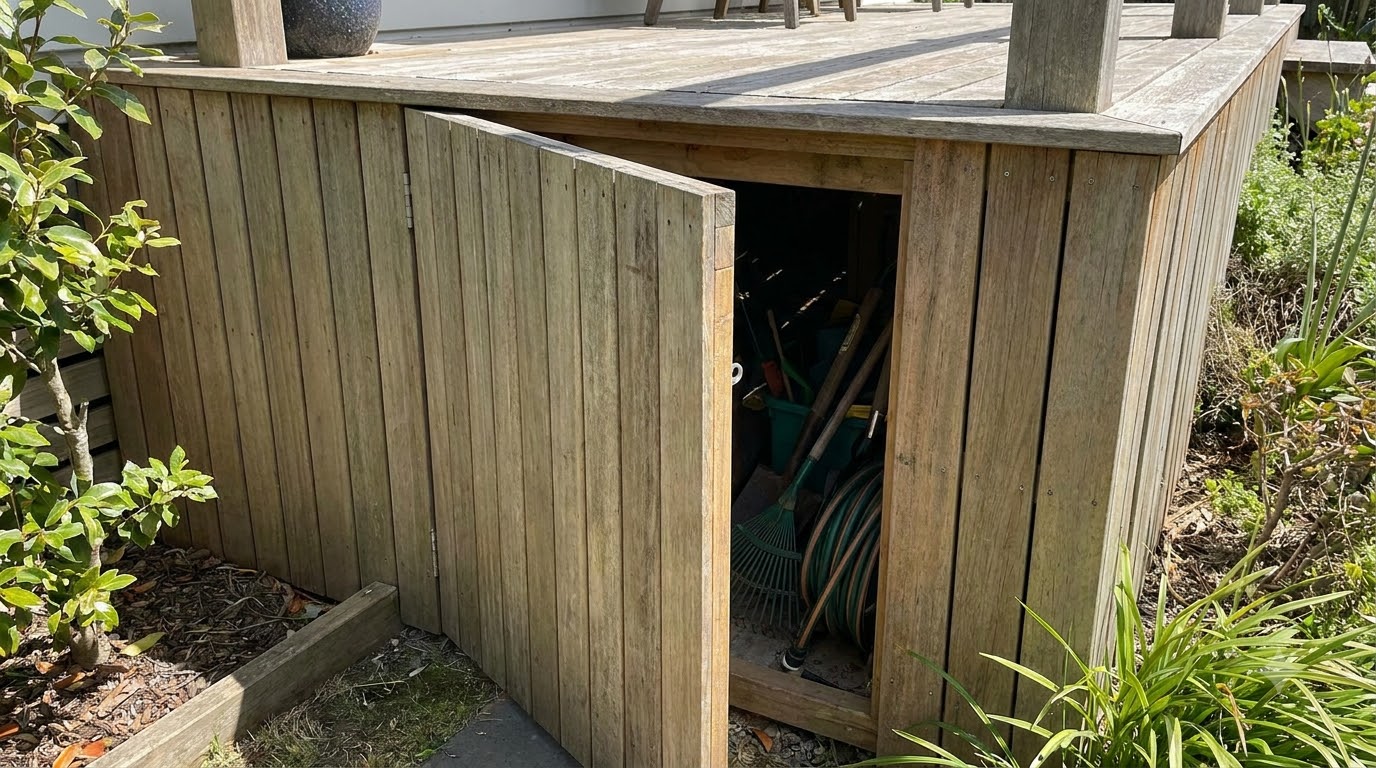
10. Built-in under-deck storage. Frame the space inside for bins and garden tools, with the access door sized to what you actually store. Keep everything off the ground on pavers.
11. Living skirt. Ornamental grasses, ferns and low shrubs planted along the base: the cheapest option of all on a low deck, and the only one that gets better with time. Keep the planting off the framing itself; Kentucky extension warns against dense plantings touching the house.

12. Lit skirting. A recessed strip or spaced downlights washing the skirt at night turns a functional panel into a design feature, the same layering logic as these deck lighting ideas. Trex’s guide says to plan the power supply, timer and dimmer so they stay accessible for service, so put them behind the access door.
Materials compared
| Material | Cost | Ventilates | Near soil | Best for |
|---|---|---|---|---|
| Vinyl lattice | $ | Yes, by design | Does not rot; keep the bottom edge clear | Cheapest fast fix |
| Treated wood slats | $ | Yes, via gaps | Must be ground-contact rated treated wood where it touches soil; termites can still enter cut ends | Modern look on a budget |
| Composite panels | $$$ | Needs planned gaps | Check the maker’s ground-contact rules | Matching composite decks |
| Metal panels | $$ | Needs planned gaps | Does not rot | Industrial and farmhouse styles |
| Stone veneer | $$$$ | Needs built-in vents | Does not rot | High raised decks, formal homes |
| Planting | $ | Completely | n/a | Low decks near grade |
Measuring and fitting
- Measure at several points. Ground rarely runs level — the gap between deck frame and grade usually varies by inches along one side.
- Scribe the bottom edge to follow the ground rather than cutting one straight line and leaving wedge-shaped gaps.
- Build a sub-frame of treated battens on the outside of the deck framing; panels attach to that instead of to the joists directly.
- Keep panels removable — screws rather than nails, so a section can come off without demolition.
- Keep the bottom edge clear of soil and mulch so it dries after rain. A gravel strip is not a free pass: Kentucky extension notes crushed stone holds moisture in the soil beneath much as mulch does.
Keeping animals out
Skunks, groundhogs and cats do not care how nice the lattice looks; they dig under it. UC IPM’s skunk guide says to close openings under decks with 1/4-inch mesh hardware cloth, which also keeps out rats and house mice, and to bury the wire at least 6 inches where there is soil so skunks cannot dig under.
Fasten it behind the skirting at build time; retrofitting means removing everything you just installed. If an animal already lives there, make sure it has left first: UC IPM suggests a thin flour patch at the entrance, checked for tracks soon after dark.
Mistakes worth avoiding
- Sealing the perimeter solid. It traps the moisture that rots joists, beams and ledgers.
- No access panel. Sooner or later something under there needs reaching — usually urgently.
- Untreated wood at ground level. DCA 6 requires ground-contact treated lumber wherever wood touches soil.
- Mulch piled against the skirt — it holds water right where you least want it.
- Skirting a deck with a drainage problem. Fix the grading first; skirting hides the puddle but not the rot.
Frequently asked questions
Does a deck need skirting?
No. Skirting is cosmetic and practical rather than structural. It hides framing and clutter, discourages animals from nesting underneath, and finishes the look. A low deck close to grade often looks better with planting instead, and any wood skirt you do add should stay clear of the soil.
Should deck skirting have ventilation gaps?
Yes. Sealing the underside of a deck traps moisture against the framing, which is exactly how joists rot. Use lattice, spaced slats, or solid panels with deliberate vent gaps so air keeps moving. Trex’s installation guide says all decks need air circulation to stay dry.
What is the cheapest deck skirting?
Pre-made lattice panels in treated wood or vinyl, up in an afternoon. Spaced vertical or horizontal boards cost a little more and look considerably more modern for the same effort. Paint or stain either one to match the deck trim so the skirt recedes.
How do you keep animals from getting under a deck?
Back the skirting with 1/4-inch mesh hardware cloth and, where there is soil, bury it at least 6 inches so animals cannot dig under, as UC IPM advises for skunks. Make sure any animal living there has left before you close the last opening. Skirting alone rarely stops a determined digger.
Can you store things under a deck?
Yes, if you build in an access door and keep drainage in mind. The space stays damp unless it drains well, so keep items off the ground on pavers or shelving. Size the access door to the largest thing you plan to store.
What material lasts longest for deck skirting?
Vinyl, composite, metal and stone do not rot, so they outlast untreated wood next to damp ground. Treated wood works if it is rated for ground contact where it touches soil, though Kentucky extension notes termites can still enter through cracks and cut ends. Whatever the material, keep the bottom edge clear of soil and mulch.
Sources
- Trex, Decking Installation Guide (2024 edition). Checked October 15, 2026.
- University of Kentucky Entomology (M. F. Potter), ENTFACT-605: Protecting Your Home Against Termites (revised March 2026). Checked October 15, 2026.
- University of California IPM (R. A. Baldwin), Pest Notes: Skunks, Publication 74118 (updated April 2015). Checked October 15, 2026.
- American Wood Council, DCA 6: Prescriptive Residential Wood Deck Construction Guide (2015 IRC edition). Checked October 15, 2026.