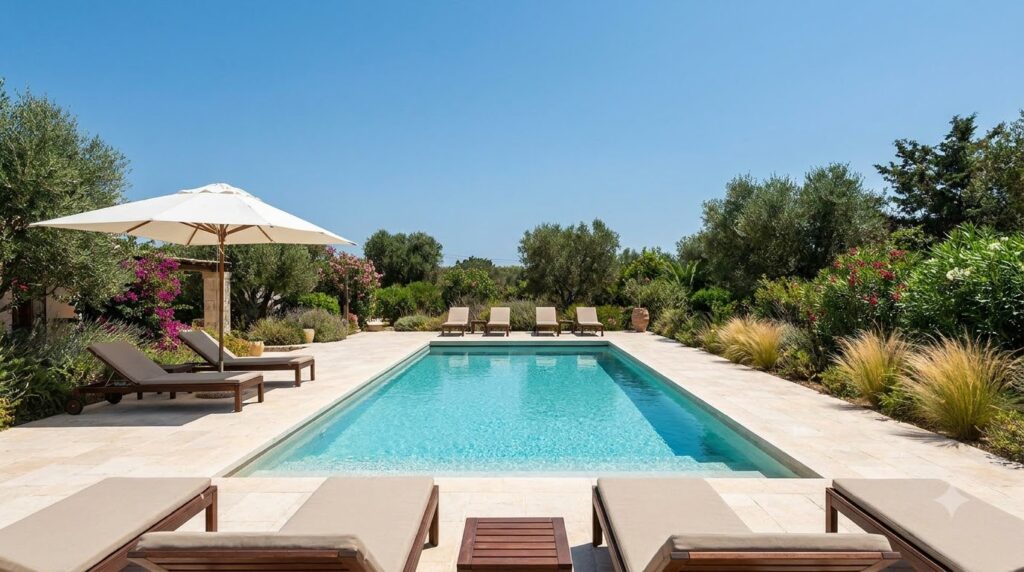
Pool deck ideas are decided barefoot: choose a light-colored, textured surface, slope it away from the pool at 1/4 inch per foot or a little more, and keep a walkway at least 4 ft wide clear around the water. Color matters because solar reflectance is the main driver of how hot paving gets in sun, and the EPA puts ordinary concrete and asphalt at just 5 to 40 percent reflectance.
Get the material right, then zone the space — wet edge, lounging, dining, shade — and the rest is decoration.
Key takeaways
- Light colors stay cooler: solar reflectance sets a paving surface’s peak temperature, so pale travertine, limestone or light pavers beat dark stone and dark composite.
- Texture beats polish. Broom finish, salt finish or natural stone texture; never polished around water.
- Slope away from the pool — Utah’s public-pool rule asks for 1/4 to 3/8 inch per foot to a deck drain, a good benchmark for a backyard.
- Keep 4 ft clear all round: the same rule wants a 5 ft deck with at least 4 ft unobstructed; add your lounger’s length where chairs go.
- Barrier rules shape the layout — CPSC guidelines call for a barrier at least 48 in high, so settle fence and gate positions before designing zones.
Heat, grip, drainage: the three tests
Heat. The EPA calls solar reflectance the main determinant of a paving material’s maximum surface temperature; in one of its examples, a white stripe on a brick wall ran about 5–10°F cooler than the darker surface around it. Concrete also darkens as foot traffic dirties it.
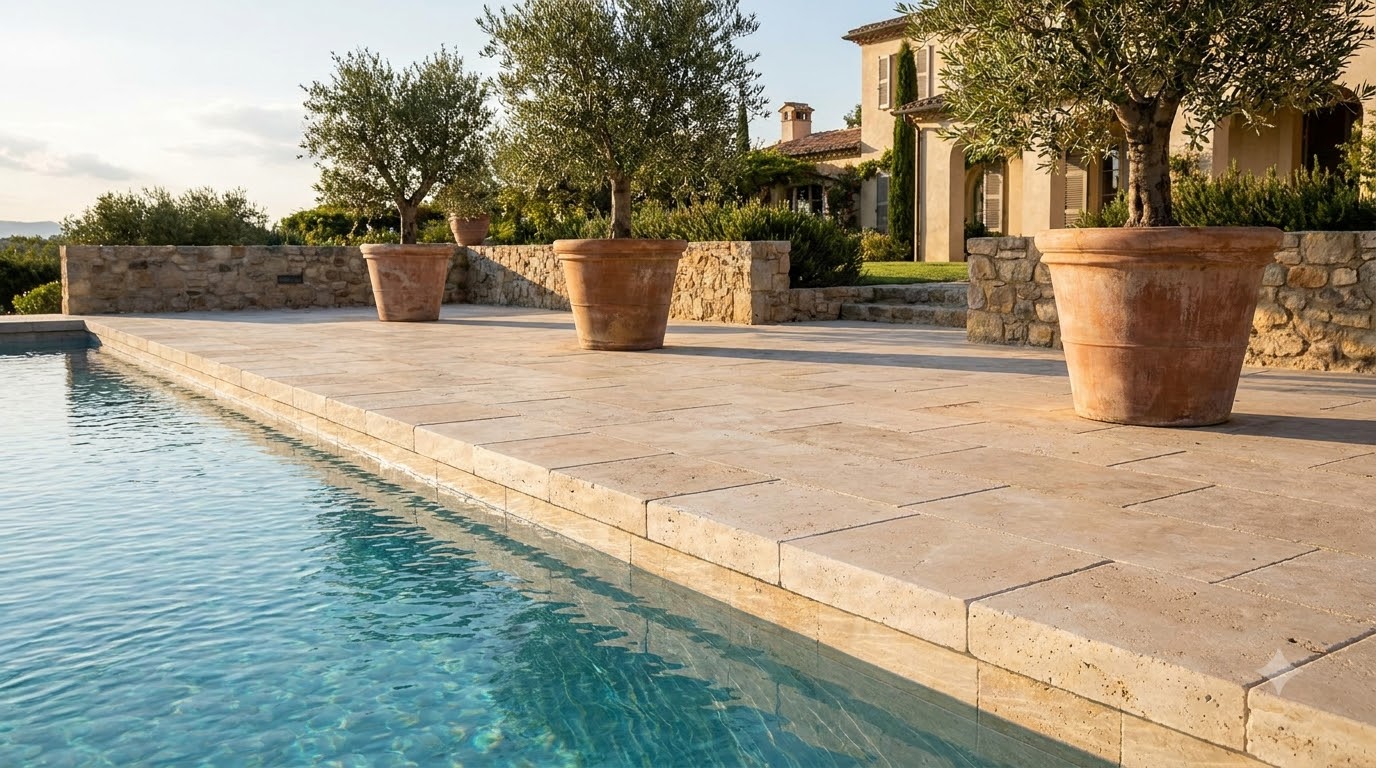
That is why pale travertine is the traditional pool-deck answer, while dark composite, dark pavers and dark-tinted concrete can become unwalkable on a hot afternoon.
Grip. Wet feet plus a smooth surface is the most common pool injury setup. Choose texture at the material stage rather than trying to fix it later with coatings, and if you seal, use a sealer with a non-slip additive.
Drainage. Water must run away from the pool, carrying grit, sunscreen and lawn chemicals with it. Utah’s public-pool rule gives a usable number: decks slope away from the pool to a drain at 1/4 to 3/8 inch per foot, built so standing water cannot return to the pool.
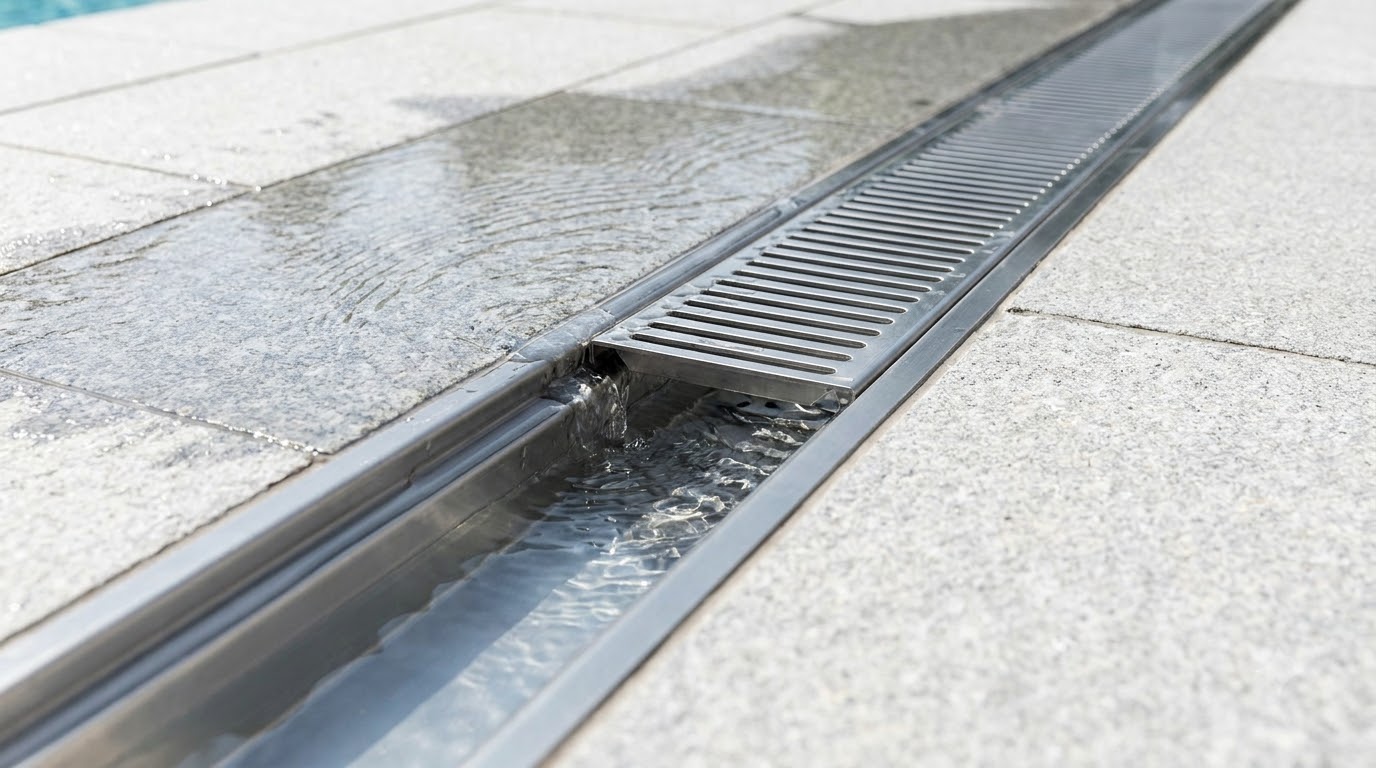
Add a linear channel drain where the deck meets a wall or where the ground cannot absorb runoff.
Materials compared
| Material | Heat underfoot | Grip when wet | Cost | Notes |
|---|---|---|---|---|
| Travertine | Cool when pale | Good when tumbled or textured | $$$ | The classic pool surround; porous, needs occasional sealing |
| Pale limestone / sandstone | Cool | Good | $$$ | Elegant, softer stone — check freeze-thaw rating |
| Concrete pavers (light) | Moderate | Good | $$ | Best value; individual units are repairable |
| Broom-finish concrete | Moderate to hot | Good | $ | Cheapest per square foot; cracks are hard to hide |
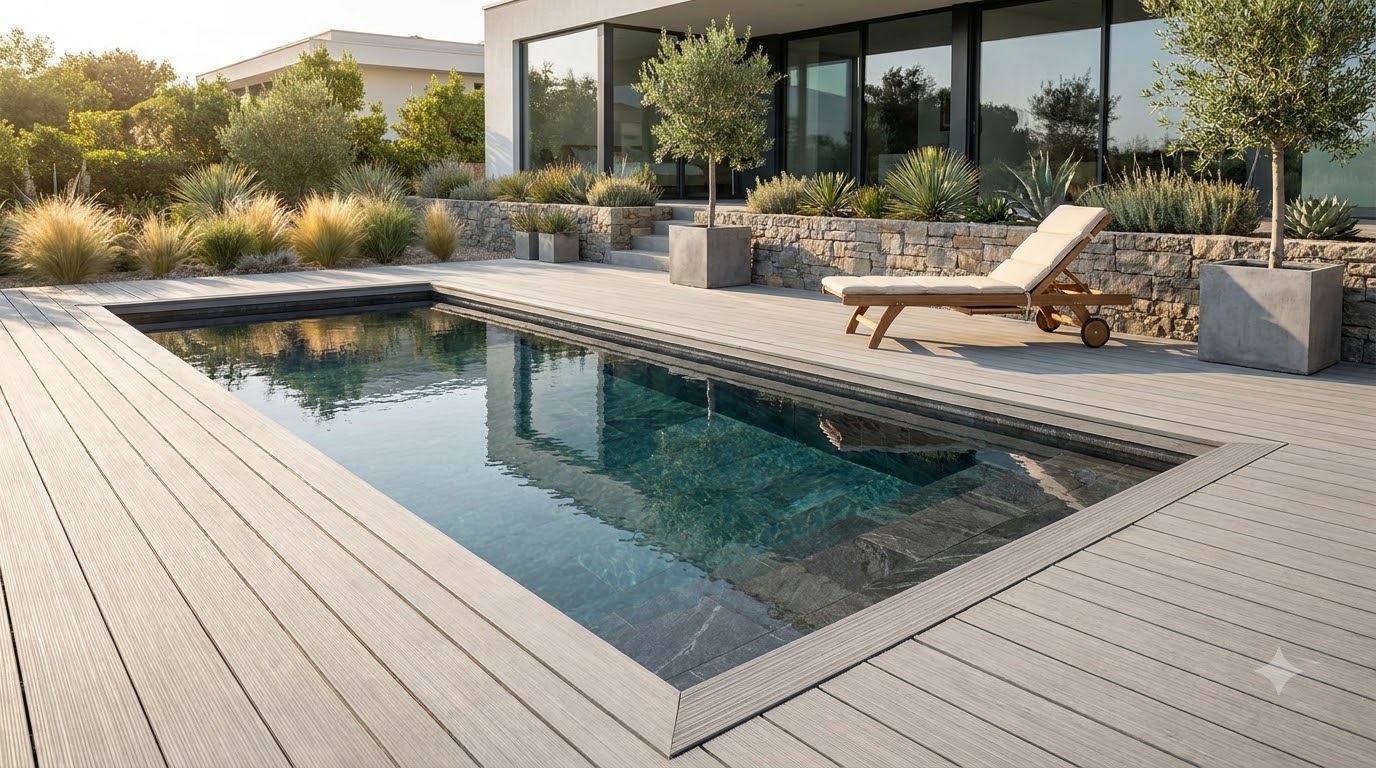
| Composite decking | Warm to hot (color-dependent) | Good if grooved | $$$ | Comfortable, splinter-free; go light-colored |
| Timber decking | Varies with color and finish | Good if textured | $$ | Needs upkeep near chlorine; use stainless fasteners |
| Porcelain pavers | Moderate | Depends on finish | $$$ | Buy an outdoor-rated textured finish, not indoor tile |
Zoning the space
A pool deck that works has four distinct zones, even when the whole thing is one material:
- Wet edge — the walkway right around the coping. Keep it clear: nothing to trip on, no furniture legs.
- Lounging — the sunny side, wide enough for chairs plus circulation behind them.
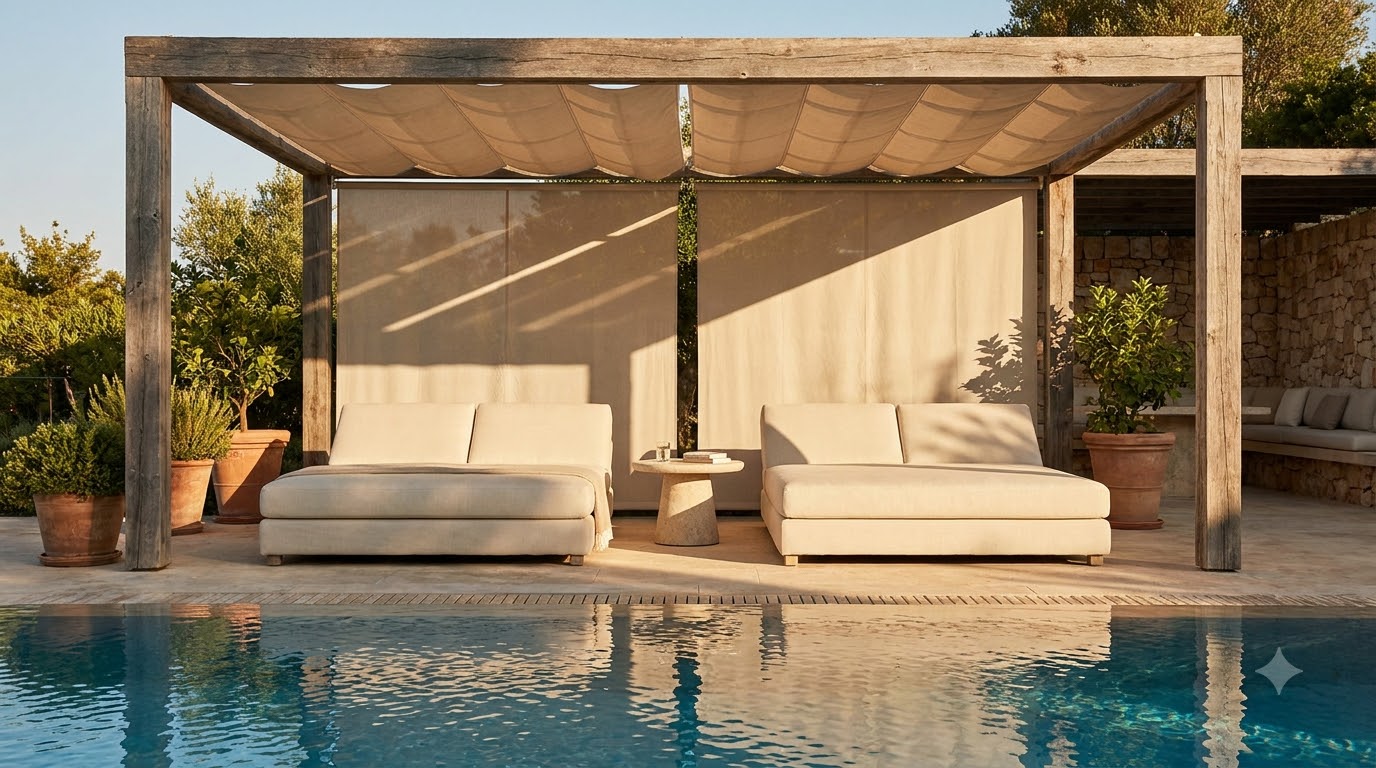
- Dining and shade — set back from splash range, ideally under a pergola or sail.
- Service — towels, storage, and access to pump and filter, screened but reachable.
Zones matter more than square footage: a modest deck with clear zones feels generous, while a huge slab with furniture scattered across it feels like a parking lot with a pool in it.
Pool deck ideas worth stealing
- Contrasting coping. A different stone right at the pool edge frames the water and marks the boundary underfoot.
- Bands and borders. A soldier course of pavers around the perimeter turns a plain field into a designed floor.
- Planting pockets. Gaps in the paving planted with grasses soften the hardscape and cut glare.
- A raised timber lounge platform beside stone paving — two materials, two zones, one design.
- Built-in seating along one edge; more seats, no furniture to store.
- Low warm lighting at the deck edge and steps — the same approach as deck lighting, aimed down and never into swimmers’ eyes.
Safety and code
Residential pools in most US jurisdictions require a barrier with self-closing, self-latching gates. The CPSC Safety Barrier Guidelines for Residential Pools call for a barrier top at least 48 inches above grade (some localities require 60), gates that open out from the pool, and a latch release at least 3 inches below the top on the pool side when it sits under 54 inches.
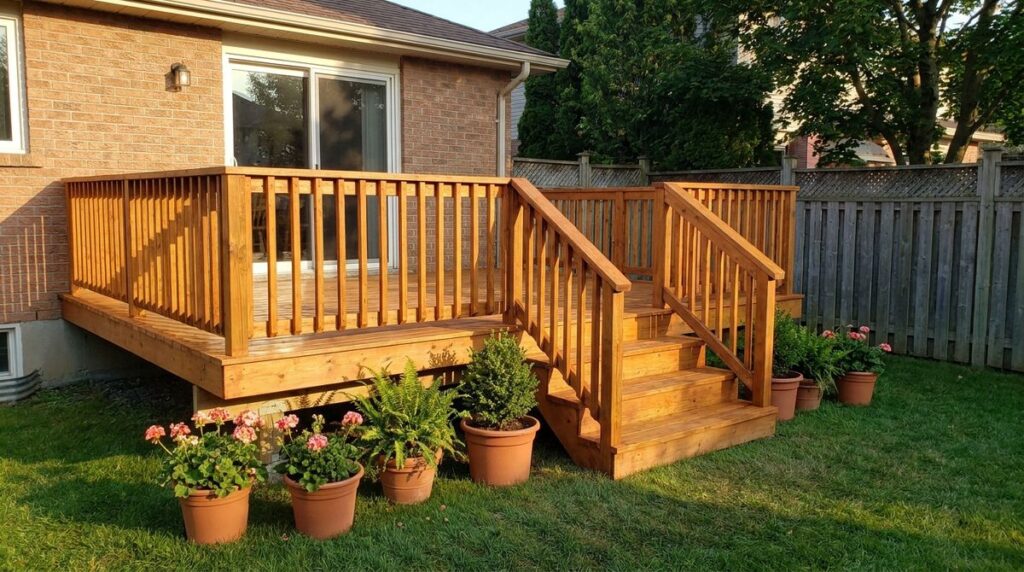
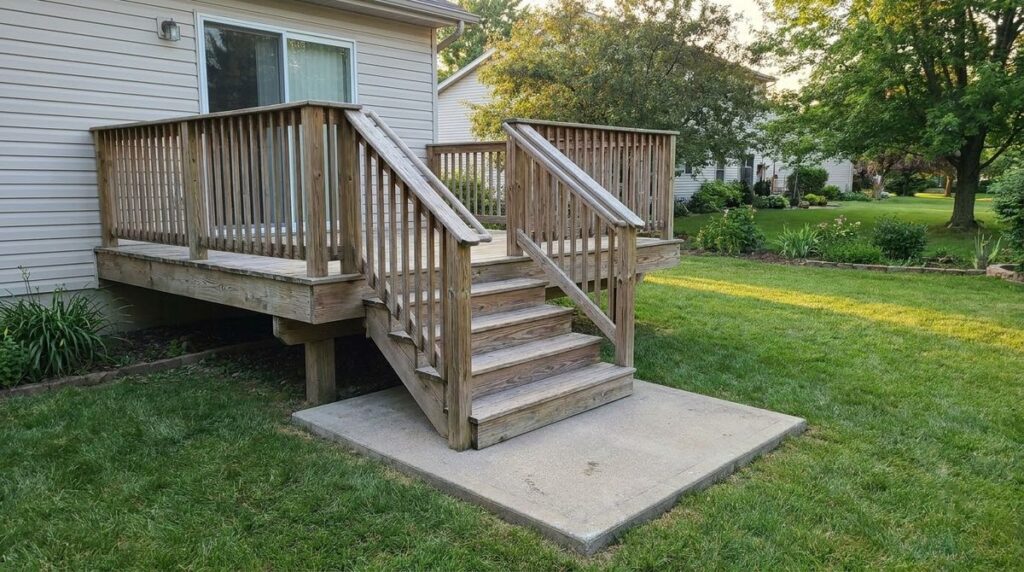
Two more habits matter: keep the wet-edge walkway free of obstacles, and choose texture over coatings, since a film of sunscreen makes smooth sealed surfaces slick. If the deck is raised, guard requirements apply on top of the pool barrier — see these deck railing rules and ideas, and for decks built beside a pool wall, the above ground pool deck ideas.
Maintenance by material
- Natural stone: rinse regularly, reseal periodically, and treat sunscreen stains promptly.
- Concrete and pavers: occasional wash; re-sand paver joints as they thin out — the base and joint-sand steps are in these paver patio ideas.
- Composite: wash to prevent film buildup; grooves need brushing, not pressure blasting.
- Timber: refinish on schedule, and check fasteners in the splash zone annually.
- All surfaces: store pool chemicals off the deck and rinse any spill promptly.
Frequently asked questions
What is the coolest material for a pool deck?
Light-colored ones. The EPA identifies solar reflectance as the main factor in how hot a paving surface gets, and conventional concrete and asphalt reflect only 5 to 40 percent of sunlight. Pale travertine, limestone and light concrete pavers are the usual picks; dark stone, dark composite and dark-toned concrete get painfully hot in summer sun.
What is the best non-slip pool deck surface?
Textured surfaces with open pores or a broom finish: tumbled travertine, brushed or salt-finish concrete, and textured pavers. Utah’s public-pool rule simply requires non-slip deck surfaces, a sensible bar for a backyard too. Avoid polished stone and smooth sealed concrete around water; if you seal, use a sealer with a non-slip additive.
How wide should a pool deck be?
Public-pool rules give a useful benchmark: Utah’s requires a continuous deck at least five feet wide, with four feet kept clear around the whole pool. Backyard pools are not bound by it, but four clear feet is a sensible minimum; where loungers go, add the chair’s length plus walking room behind it.
Which way should a pool deck slope?
Away from the pool, always, so splash-out, rain and hose water carry dirt and chemicals off the deck rather than back into the water. Utah’s public-pool rule sets 1/4 to 3/8 inch per foot toward a deck drain, a workable target for a backyard deck; add drains where the ground cannot take the runoff.
Can you use wood decking around a pool?
Yes, and it is comfortable underfoot, but it needs more upkeep near chlorinated water. Use ground-contact treated lumber wherever framing touches soil, rot-resistant or composite surface boards, and corrosion-resistant fasteners: the American Wood Council’s DCA 6 deck guide requires hot-dipped galvanized, stainless, silicon bronze or copper fasteners with treated wood.
Do pool decks need a fence or barrier?
In most US jurisdictions, yes: a barrier with self-closing, self-latching gates. CPSC guidelines call for a barrier at least 48 inches high, openings that will not pass a 4-inch sphere, and gates that open out from the pool. Rules are local, so check before finalizing the layout, since the barrier shapes where everything else goes.
Sources
- U.S. Consumer Product Safety Commission, Safety Barrier Guidelines for Residential Pools (Publication 362). Checked October 16, 2026.
- U.S. Environmental Protection Agency, Reducing Urban Heat Islands: Compendium of Strategies, Cool Pavements (draft chapter). Checked October 16, 2026.
- Utah Department of Health rule via Cornell LII, Utah Admin. Code R392-302-15, Decks and Walkways (public pools). Checked October 16, 2026.
- American Wood Council, DCA 6: Prescriptive Residential Wood Deck Construction Guide (2015 IRC edition). Checked October 16, 2026.