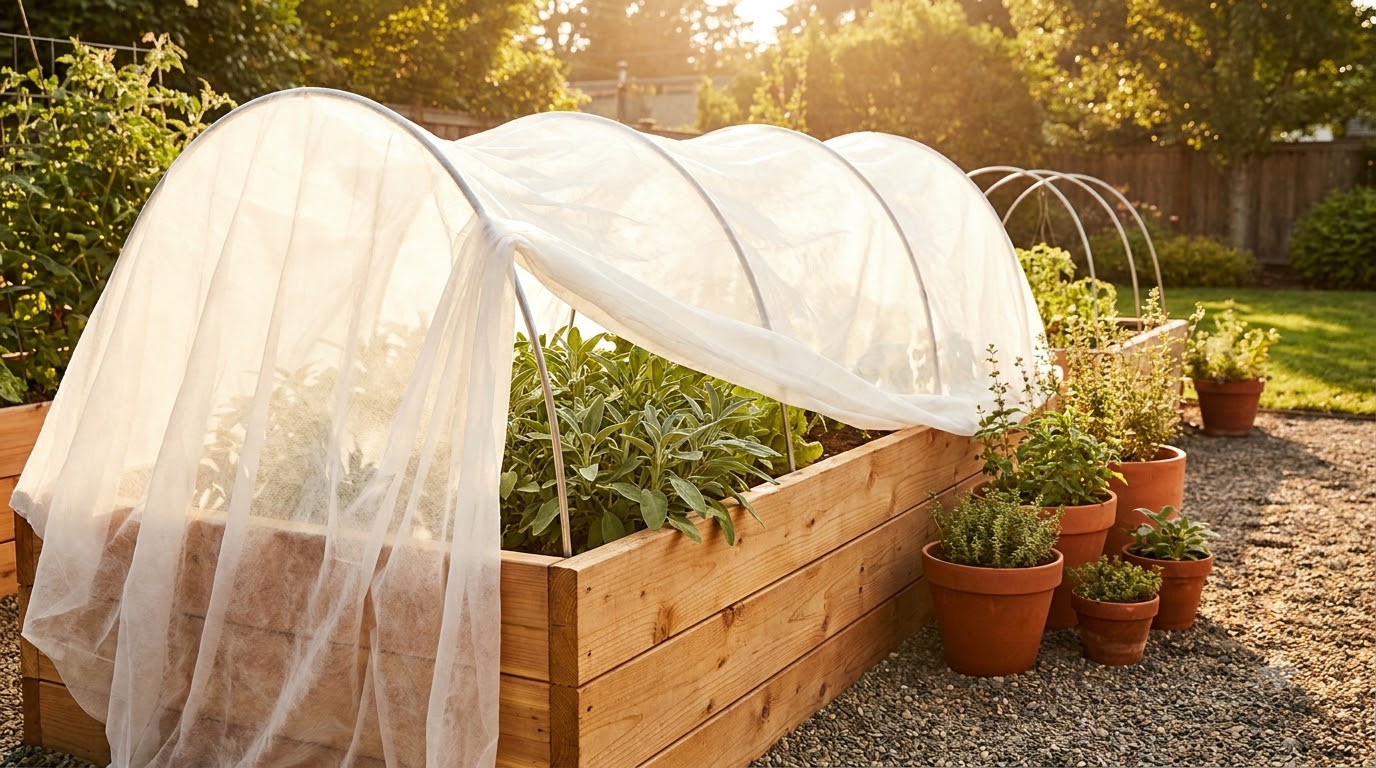
The right way to cover a raised garden bed depends on what you are protecting it from. Frost calls for a floating row cover, insects for fine mesh netting, summer heat for 30–50% shade cloth, digging animals for hardware cloth, and winter for a thick mulch or a tarp. The good news: every one of those covers mounts on the same cheap hoop frame, so you build once and swap fabrics with the seasons.
Key takeaways
- Match the cover to the threat. One hoop frame carries them all — frost cloth, insect netting, shade cloth, plastic.
- Row covers buy you a few degrees — exactly the margin that decides the first and last frosts of the season.
- Insect netting must come off at flowering for squash, cucumbers, and melons — bees can’t pollinate through it. Greens and cabbage-family crops can stay netted all season.
- Shade cloth for vegetables is 30–50%. Denser cloth is patio equipment, not plant protection.
- Hardware cloth is the one cover that goes under the bed — it only works if it is installed before the soil goes in.
How to cover a raised garden bed: match the cover to the threat
| Threat | The right cover | When it goes on |
|---|---|---|
| Late spring / early fall frost | Floating row cover (frost cloth) | By evening, any night frost is forecast |
| Cabbage moths, beetles, vine borers | Fine insect netting | Transplant day, edges sealed |
| Heat waves and harsh afternoon sun | Shade cloth, 30–50% | When heat stress shows, off when it breaks |
| Birds, squirrels, cats | Bird netting or a mesh cage | From seeding until plants are established |
| Gophers and voles from below | Hardware cloth across the bottom | Before the bed is filled |
| Winter | Leaf mulch, black tarp, or clear plastic | After the last harvest |
Frost cloth and row covers
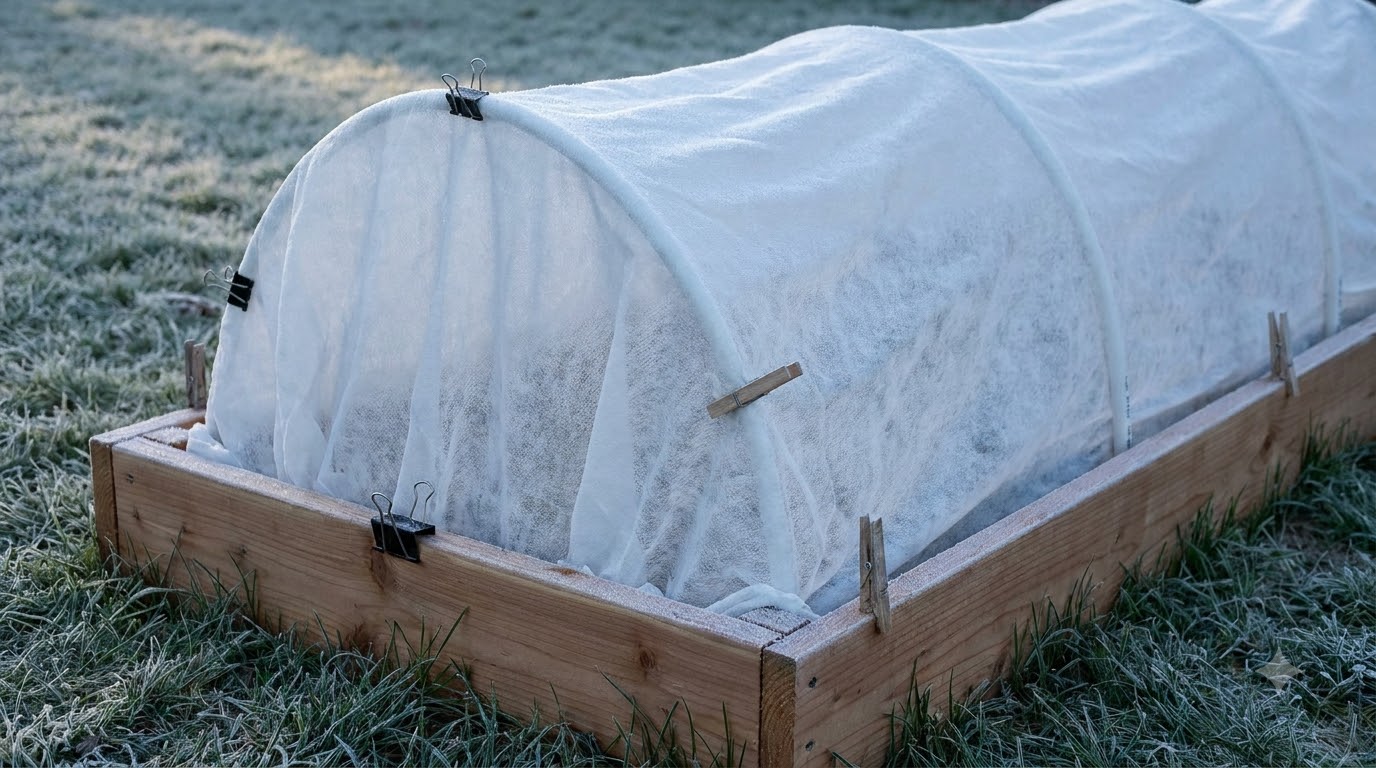
A floating row cover is spun garden fabric light enough to rest on plants without crushing them. It lets most light and all rain through while trapping a blanket of warmer air — a few degrees of protection, which is precisely the margin between losing the tomatoes on an April night and not.
For a single cold night you can drape it straight over the plants and weigh the edges with bricks or clip them to the frame. For longer stretches, put it on hoops so the fabric never sits on foliage. Two habits make it work better: water the bed in the afternoon before a frost night — moist soil stores more daytime heat than dry soil — and take heavyweight covers off during warm days, because the heavier the fabric, the more light it steals. Check the rated protection on the label; lightweight versions are made to stay on for weeks, heavy ones for cold nights only.
Insect netting
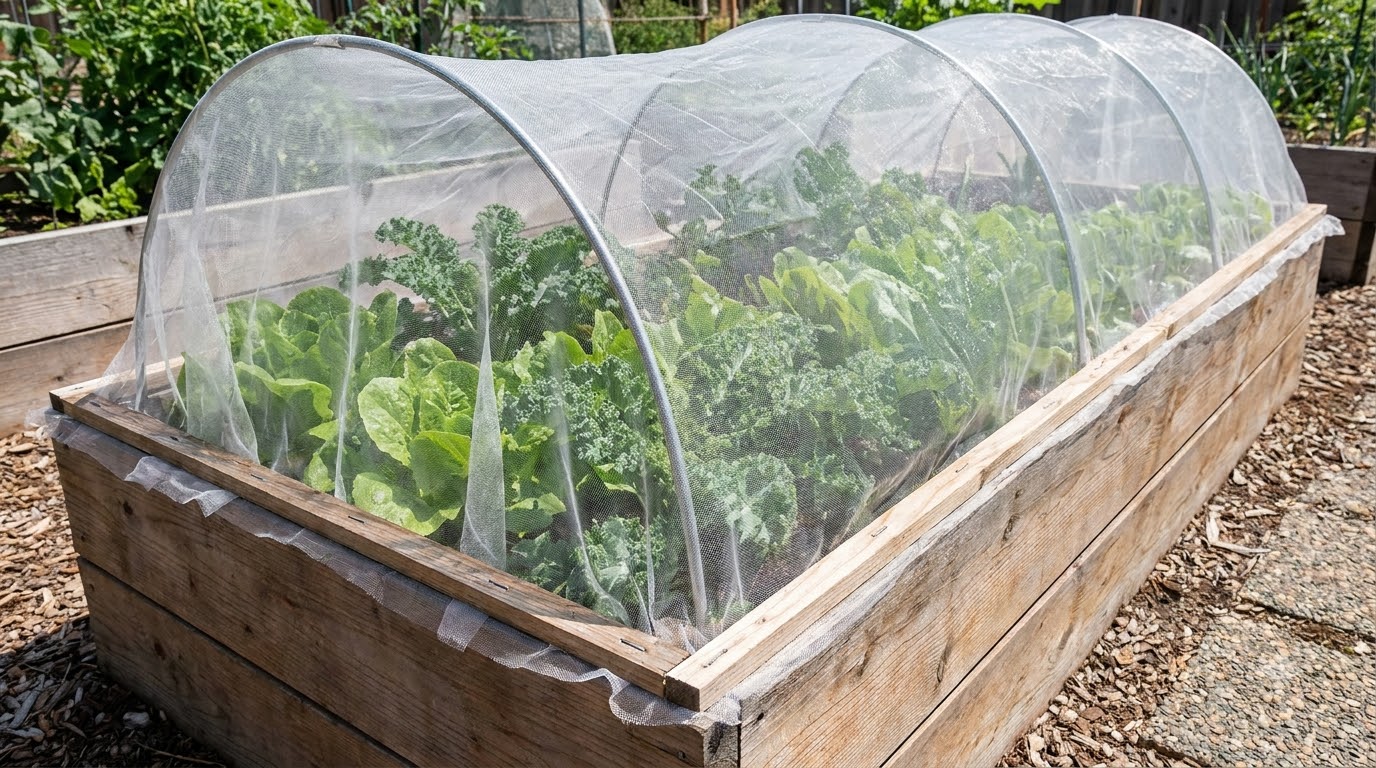
Fine mesh netting is the no-spray answer to cabbage moths, flea beetles, leaf miners, and squash vine borer: if the adult insect never reaches the plant, there are no eggs and no caterpillars. It only works as a sealed system — netting on from transplant day, edges tucked against the frame or clipped, no gaps at the soil line. A moth will find a loose corner.
The one big caveat: mesh keeps bees out too. Leafy greens, roots, and the cabbage family don’t care — net them all season. But squash, cucumbers, and melons need insect pollination, so the netting comes off once they flower (or you hand-pollinate under it). And rotate your beds: vine borers overwinter in the soil, so netting the bed that grew squash last year can trap the emerging moths inside with your plants.
Shade cloth for heat
When lettuce bolts, tomato blossoms drop, and afternoon leaves look wilted despite moist soil, the bed needs shade, not more water. For vegetables, use 30–50% shade cloth — enough to take the edge off without starving the plants (the 70–90% cloth sold for patios is too dark for food crops).
Mount it above the canopy with an air gap, not draped on the plants, and take it down when the heat wave breaks. Beds sitting on patios and driveways earn shade cloth fastest of all — Minnesota Extension notes that pavement radiates real heat into a raised bed, which is one of the reasons hard-surface beds need extra depth in the first place.
Hardware cloth: the cover that goes underneath
If your problem tunnels — gophers, voles, moles — no fabric on top will help. The fix is galvanized hardware cloth (wire mesh) stapled across the bottom of the frame so nothing digs up into the root zone. The catch: it has to happen before the soil goes in, which is why it belongs on the same checklist as filling the bed. For rabbits and cats, a simple mesh cage or bird netting over the hoops handles the surface attack.
The cheap hoop frame every cover mounts on
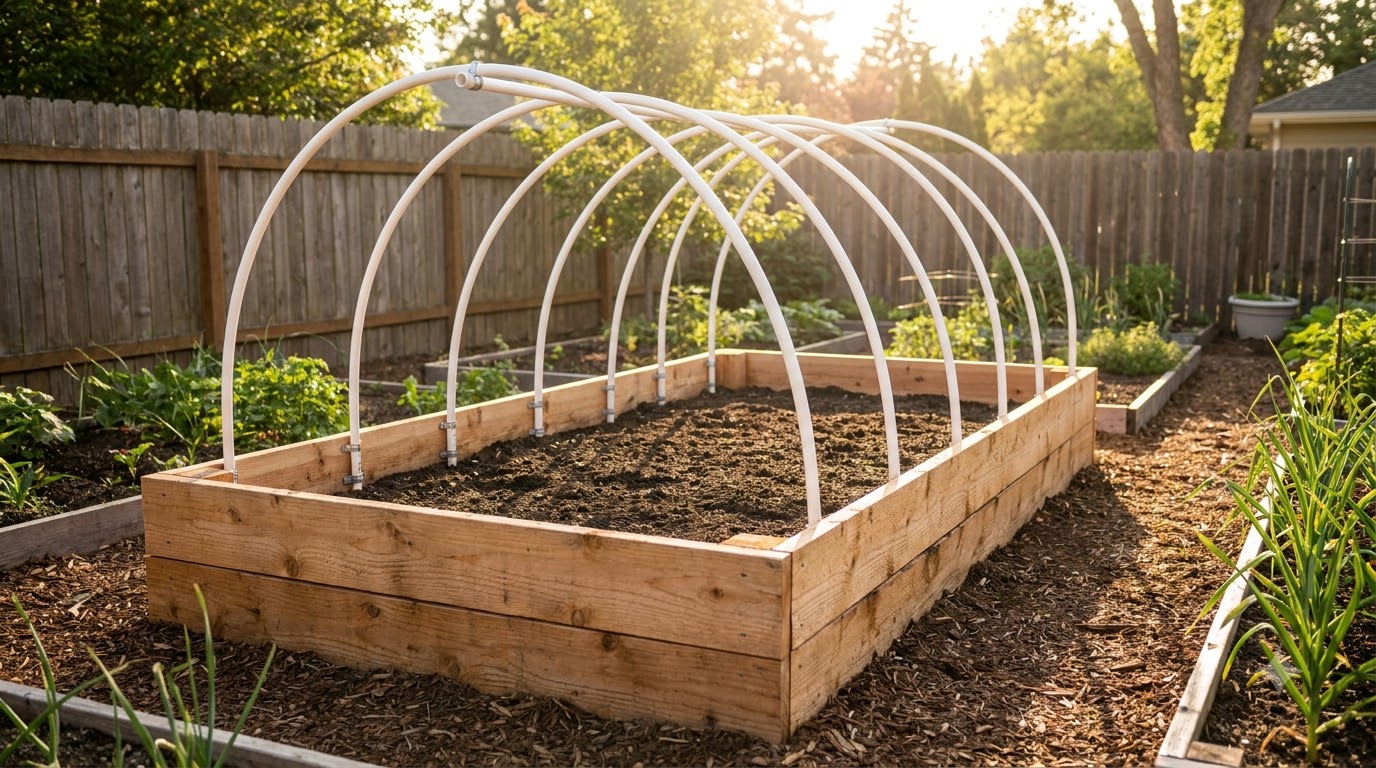
Half-inch PVC pipe or metal electrical conduit (EMT), arched over the bed — that is the whole frame. Two easy ways to mount it:
- Rebar stakes: drive short stakes into the soil just inside each wall and slide the pipe ends over them.
- Pipe straps: screw metal straps to the inside of the frame walls and slot the pipes in. Cleaner, and it works on beds sitting on concrete.
A 10-foot length arched across a 4-foot-wide bed leaves roughly three feet of headroom — enough for most crops all season. Set a hoop every 3–4 feet, zip-tie one straight pipe along the ridge so fabric doesn’t sag between hoops, and hold covers on with binder clips or clothespins. If you are still building the bed itself, size the walls to standard lumber widths and check which wood is actually safe before you cut.
A cover calendar for the year
Most beds cycle through three or four covers a season. Here is the rhythm at a glance:
| Season | What’s on the bed | Why |
|---|---|---|
| Early spring | Row cover on hoops | Start seedlings weeks earlier; shrug off the last frosts |
| Transplant time | Insect netting, edges sealed | Beat the first egg-laying flights of moths and beetles |
| Flowering (fruiting crops) | Netting off — or opened daily | Bees do their job |
| Peak summer | Shade cloth during heat waves | Stop bolting and blossom drop |
| Early fall | Row cover back on | Stretch the season past the first frosts |
| Winter | Leaf mulch, tarp, or clear plastic | Protect the soil; keep hardy greens going |
No-budget covers that work tonight
Frost warning and no row cover in the shed? Raid the house — all of these hold a few degrees for a night:
- Old bed sheets and light blankets draped by evening, off by mid-morning. Fabric may touch leaves; keep heavy blankets on stakes so they don’t crush anything.
- Cardboard boxes and buckets upturned over individual plants — the original cloche. Weigh them down.
- Milk jugs with the bottom cut off over seedlings, caps off for venting at sunrise.
- A patio umbrella opened over the bed blocks frost the same way a tree canopy does — frost forms worst under open sky.
- Window screens leaned over greens make emergency shade in a heat wave, too.
The improvised versions cost you a morning of putting things away. The hoop frame exists so you stop doing this every marginal night.
Covering the bed for winter
Bare soil over winter loses structure to rain and grows a spring weed crop. Three options, by effort:
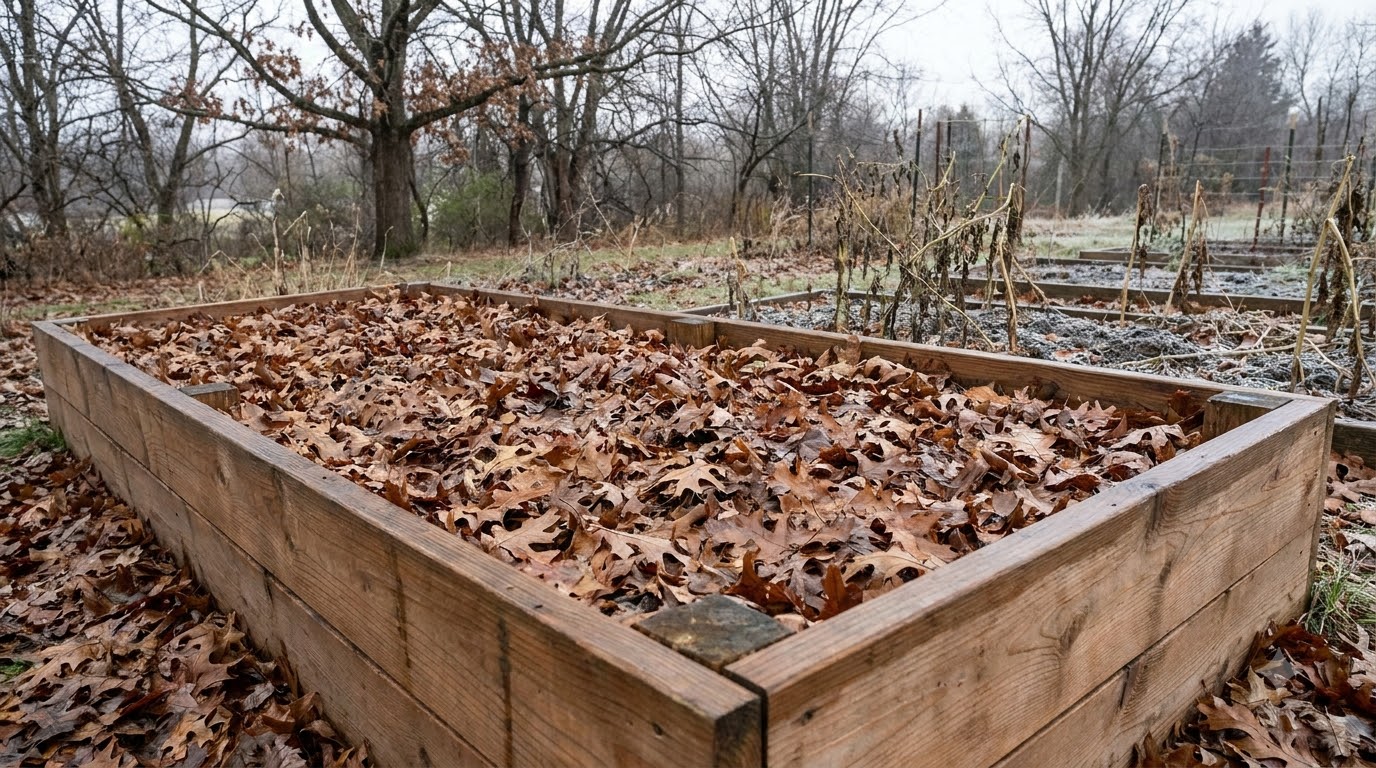
- Leaf mulch (easiest): chop spent plants at the soil line, leave the roots, and blanket the bed with several inches of autumn leaves. By spring most of it has fed the bed — it doubles as the annual top-up a settling bed wants anyway.
- Black tarp: starves winter weeds of light. Pull it off in spring and plant into clean soil.
- Clear plastic on the hoops (most rewarding): your frame becomes a cold frame. Spinach, kale, and mache keep going far into winter — just vent it on sunny days, because a sealed cold frame cooks in mild sun.
Mistakes that undo the cover
- Plastic touching leaves on a frost night. Plastic conducts cold straight through — every leaf it touches burns. Fabric can touch; plastic needs an air gap.
- Leaving heavy frost cloth on through a warm week. Trapped heat and humidity invite disease and the plants stretch for light. Uncover when the forecast clears.
- Netting with a gap at the soil line. A sealed net is a wall; a loose one is a decoration.
- Forgetting the pollinators. Netted squash that never sets fruit isn’t a pest problem — it’s a bee problem.
- Draping shade cloth directly on the canopy. It traps heat against the leaves — the opposite of the goal. Give it an air gap on the hoops.
New to raised beds? Start with the complete raised garden bed guide — size, wood, soil, and cost in one place.
Frequently asked questions
At what temperature should I cover my raised bed?
Cover by evening whenever frost is in the forecast — and remember frost can form on plants even when the forecast low sits a few degrees above freezing, because beds lose heat to the open sky on clear, still nights. For a hard freeze, use a heavier cover or double up.
Can I use old bed sheets to cover plants from frost?
Yes, for a night or two. Drape them by evening, take them off in the morning. Avoid plastic directly on leaves — it conducts the cold straight through. Purpose-made row cover is lighter and can stay on for weeks.
Do covered raised beds still need watering?
Yes. Row cover and insect netting let rain through; plastic and tarps do not. Check the soil either way — and note that moist soil actually protects plants on frost nights, because it holds more heat than dry soil.
Should I cover raised beds for winter?
Yes — anything beats bare soil. A thick blanket of leaves is the cheapest option, a black tarp gives you a weed-free spring, and clear plastic over hoops works like a cold frame that keeps hardy greens alive into winter.
Will insect netting stop squash vine borer?
Yes — if it goes on at transplant time, the edges are sealed, and you rotate where squash grows. Borers overwinter in the soil, so netting the bed that grew squash last year can trap emerging moths inside the net with your plants.
Does shade cloth reduce how often I water?
Somewhat — less direct sun means less evaporation and less heat stress. But shade cloth also blocks some rain, so keep checking the soil, especially in beds on pavement, which run hotter than in-ground gardens.
Sources
- University of Minnesota Extension — Raised bed gardens (heat load on beds over pavement)