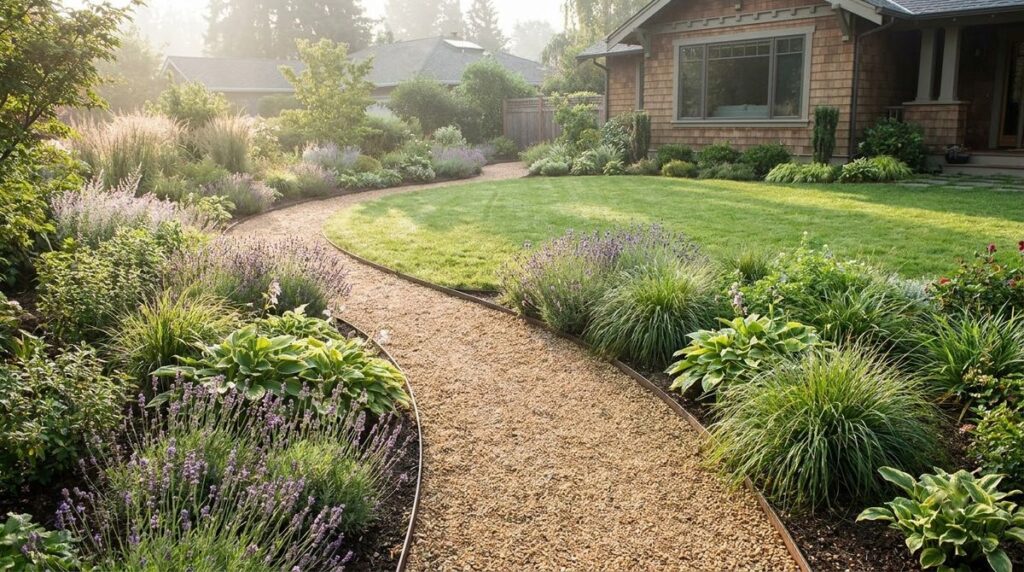
A gravel garden path is a trench about 4 inches deep, 30 to 36 inches wide for one person or 48 inches for two side by side, with roughly 2 1/2 inches of compacted crushed stone under the gravel and edging staked every 4 feet. Tilt or crown the surface about 1/4 inch per foot of width so rain runs off instead of down the path.
Key takeaways
- Width follows traffic. This Old House puts main paths at 48 inches or more for two people walking together and secondary paths at 30 to 36 inches.
- The base does the work, not the gravel. A compacted layer of crushed stone and stone dust keeps a path from rutting; the top gravel is only the wearing surface.
- Water has to leave sideways. A cross slope of about 1/4 inch per foot, or a slight crown, stops rain from running down the length of the path and carrying gravel with it.
- Past about 1 in 20, add steps. Loose gravel on a steeper run washes and slides; short flights with matching risers hold the grade.
- Stake edging tighter on curves. One plastic edging maker calls for a stake every 4 feet on straight runs and every 2 feet on curves.
Here are the tools and materials a gravel path takes, with what to choose for each.
| Item | What to choose | Notes |
|---|---|---|
| Base | Crushed stone pack (crushed stone with stone dust) | About 2 1/2 in, dampened and tamped hard |
| Top gravel | Pea gravel for a soft look, small crushed stone for a firmer walk | Sizes compared in the gravel patio guide linked below |
| Edging | Galvanized steel, aluminum, plastic, brick or stone | Steel bends to curves; plastic needs stakes every 2 ft on bends |
| Separation fabric | Landscape fabric over the base | Keeps soil out of the gravel; it does not stop weeds seeding on top |
| Layout | Garden hose or rope, line-marking paint, a 2×3 spreader template | The template keeps both edges the same distance apart |
| Tools | Square spade, steel rake, 6- or 8-in hand tamper, tape measure, hammer, wood tapping block, utility knife, loppers | Wheelbarrow and tarp for spoil |
How wide to make a gravel garden path
The width of a gravel garden path should match how many people walk it at once and what you push down it. This Old House sets primary paths, the ones from a door to the garden, at least 48 inches wide so two people can walk side by side, and secondary paths at 30 to 36 inches.
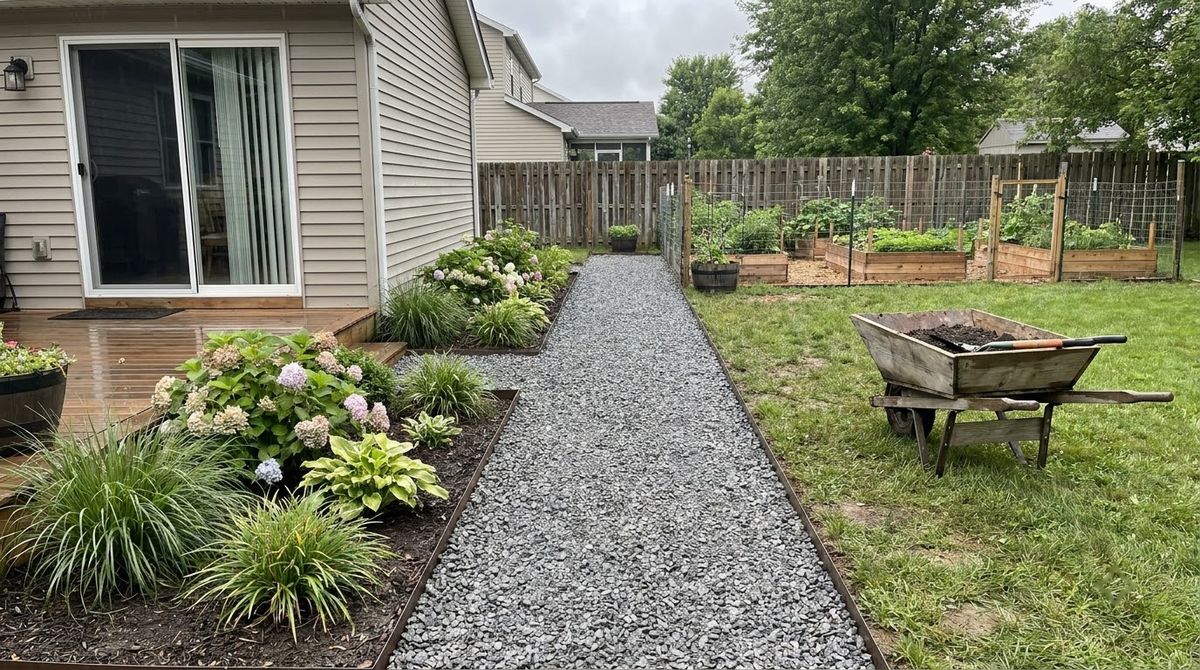
- One person, occasional use: 30 to 36 inches. Narrower than that and plants spill over and close it.
- Two people side by side: 48 inches or more.
- Mower or garden cart: about 3 to 4 feet, per the same guide; a small tractor needs 5 feet or more.
- Wheelchair or stroller: go wider. The federal ADA Standards, which govern public sites rather than private yards, set 36 inches as the minimum clear width of a walking surface and a 60-by-60-inch passing space at least every 200 feet when the route is narrower than 60 inches.
Curves cost a little width. Lay the line with a hose, then walk it pushing a wheelbarrow before you dig; tight bends feel narrower than they measure.
How deep to dig and what goes under the gravel
How deep to dig for a gravel path depends on the soil, but most garden paths start at about 4 inches. In the This Old House build, the crew digs 4 inches, tamps the soil, adds about 2 1/2 inches of crushed stone pack, then fills with gravel to about 1/2 inch below the top of the edging.
Other This Old House pages give a wider range. Landscape contractor Roger Cook digs out 4 to 6 inches of topsoil and fills with 4 to 6 inches of pea gravel, and the site’s path-planning guide puts the crushed-stone base at 4 to 8 inches depending on soil and climate. Go deeper on soft, wet or frost-prone ground.
- Dense clay that drains: the guide says the compacted ground itself may serve as the base.
- Most soils: a compacted stone-pack layer under the gravel.
- Heavy clay that holds water: a deeper base, with perforated pipe in the gravel to carry water out.
Gravel size and stabilizer grids are the same choices as for a patio; the DIY gravel patio guide compares pea gravel and crushed stone by foot traffic and explains when a grid is worth it.
How much gravel to order
Cubic yards = path area in square feet × depth in inches ÷ 324. A 3-by-40-foot path is 120 square feet. At 2 1/2 inches of base that is about 0.93 cubic yard; the 1 1/2 inches of top gravel left on a 4-inch dig is about 0.56 cubic yard. Order a little extra for low spots and settling.
Drainage: crown or cross slope the path
Drainage on a gravel path means getting water across it, not along it. This Old House recommends sloping a path away from the house or driveway at 1/4 inch per foot of path width, so a 4-foot path drops about 1 inch from one edge to the other. That is roughly the same 2 percent the ADA Standards cap cross slope at (1:48).
- Flat ground: crown the base slightly so the center sits higher than both edges. The USDA Forest Service trail notebook says elevated tread should be slightly crowned to drain better.
- Path across a hillside: tilt the whole tread toward the downhill side. The Forest Service calls an outslope of about 5 percent a must to move water across a trail, and says it should be barely detectable to the eye.
- Low spots: keep the trench bottom an even depth; dips collect water and wash out gravel.
Shape the slope in the base, not the gravel. Loose top stone will not hold a crown on its own, and raking it into one only lasts until the next rain.
Paths on a slope: grade, steps and washouts
A gravel path on a slope works until water starts running down it. The Forest Service notebook describes the problem: water runs down the tread, gathering volume and soil as it goes. Loose gravel goes with it, piling at the bottom and leaving fabric bare at the top.
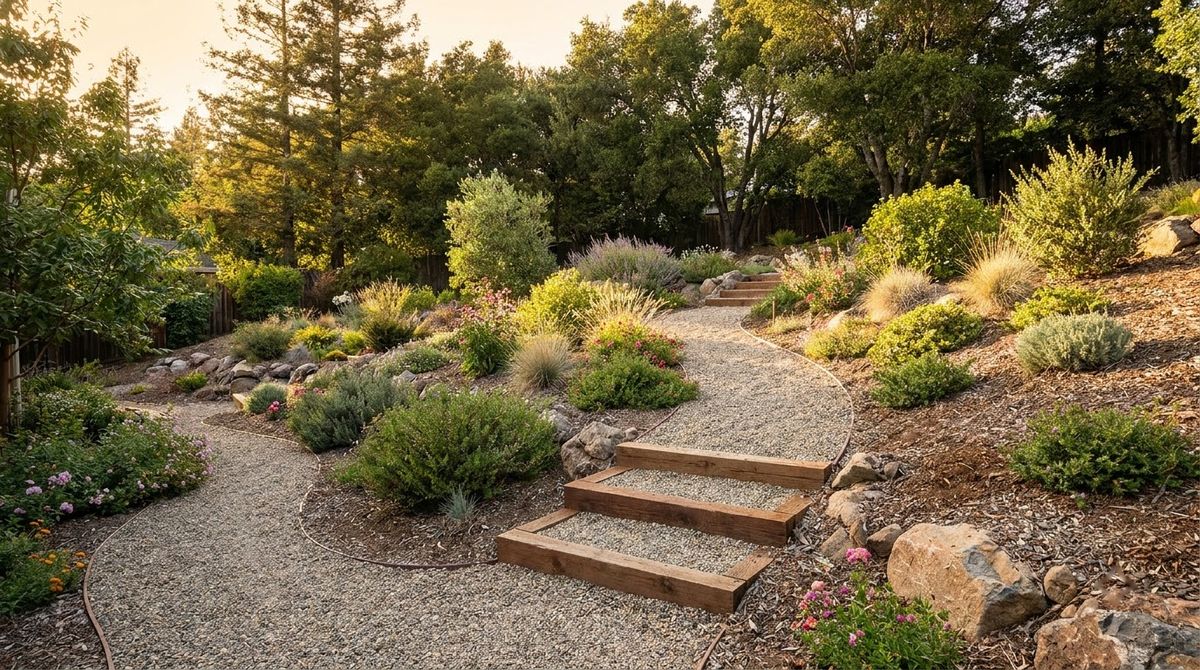
- Gentle grade (up to about 1:20, or 5 percent): a plain gravel path is fine. The ADA Standards treat anything steeper than 1:20 as a ramp, a useful line for where walking starts to feel like climbing.
- Steeper runs: break the slope with steps and keep the gravel on the level treads between them.
- Path across the slope instead of down it: a switchback or a curve that follows the contour keeps the grade low and needs fewer steps.
- Steep and long: a stabilizer grid holds gravel in place, or the hill may need a low wall to hold a level path.
For steps, Texas A&M AgriLife’s landscape guide gives three rules: riser plus tread should equal 21 inches, risers should not exceed 7 inches, and the riser and tread must stay the same through the whole flight. A 6-inch riser with a 15-inch tread fits. Use at least two steps; a single step is easy to miss.
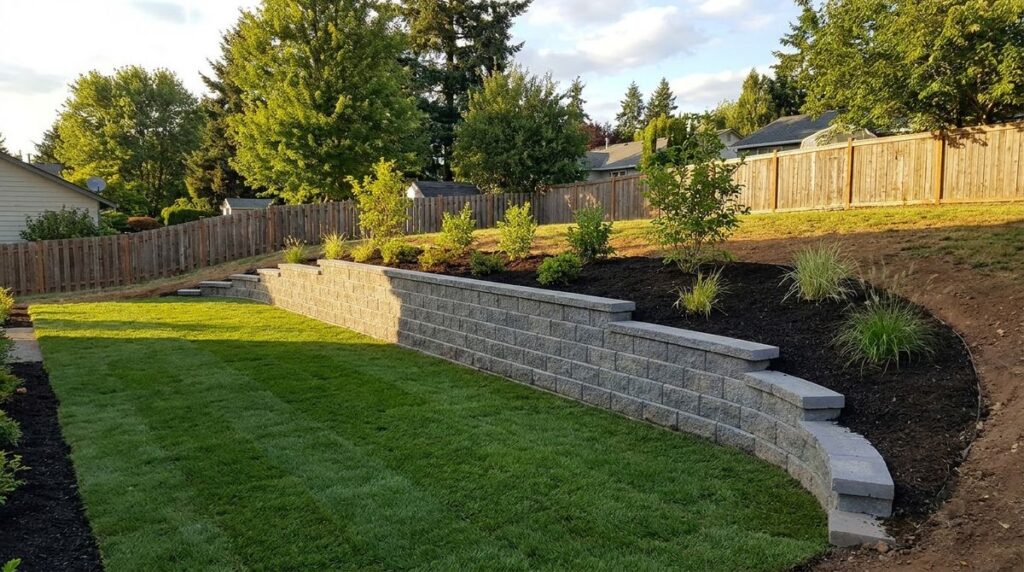
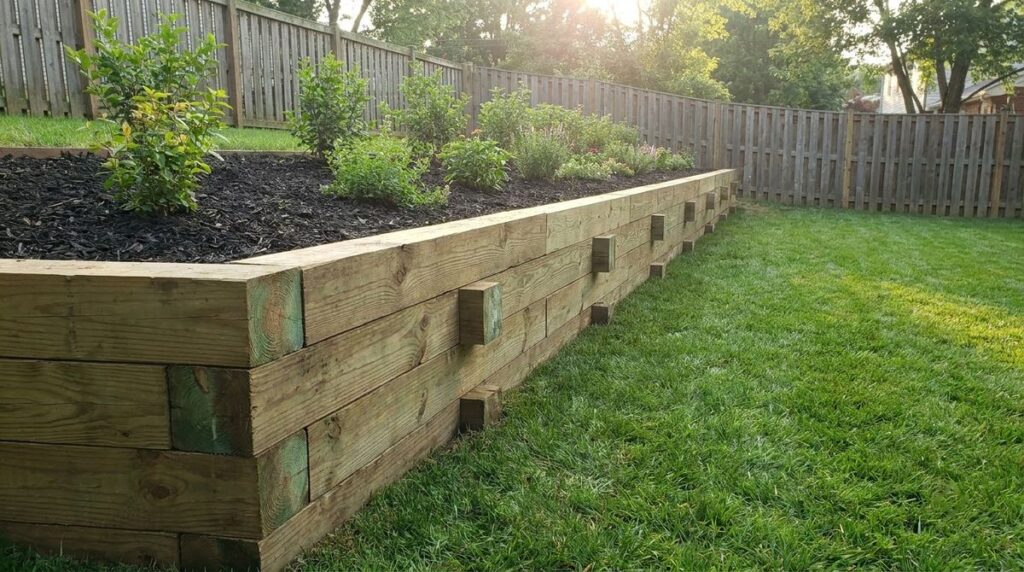
Where the slope is too steep for steps alone, a short retaining wall can hold a level terrace for the path. See retaining wall ideas by material and height for wall styles, the guide to building a retaining wall on a slope for the stepped base, and retaining wall cost per square foot before you commit to one.
Edging that holds on long runs and curves
Garden path edging keeps gravel on the path and grass off it, and on a long run the job is keeping both lines straight and parallel. This Old House uses a scrap of 2×3 with two grooves cut 3 feet apart as a spreader; slide it over both strips of edging and the width cannot drift.
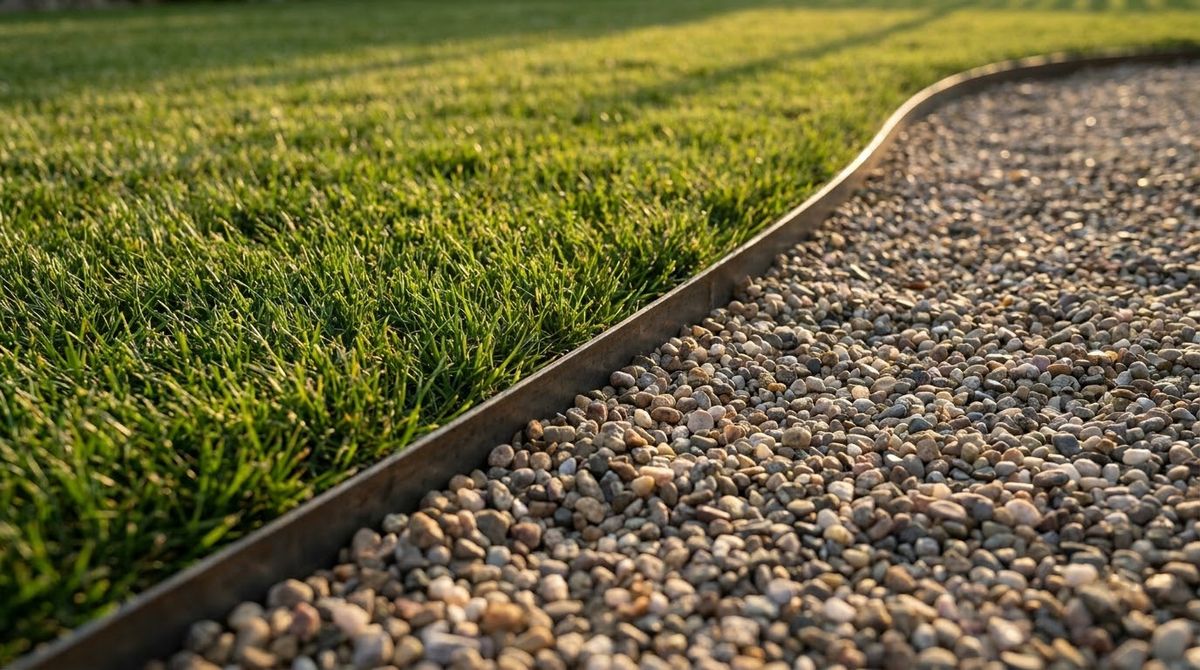
- Steel: flexible for curves and durable. Tap it in with a hammer against a wood block; striking the steel directly can damage the zinc coating and lead to rust.
- Plastic: Avon Plastics’ Terrace Board guide calls for stakes every 4 feet, every 2 feet on curves, and a minimum 3-inch overlap on each side of the stake where two pieces join.
- Brick, stone or wood: heavier and more formal; set them in the same trench and backfill tight behind them.
Long plastic runs wave if the trench is uneven or the edging is cold. The same guide says to lay it in the sun for at least 30 minutes with a weight on each end, and to keep the trench depth consistent, at least 1 1/2 inches. Backfill behind any edging once it is set, and keep the gravel about 1/2 inch below its top.
Stepping stones in gravel
Stepping stones in gravel give a firm footing on a loose surface and cut the amount of gravel you buy. For stepping-stone paths, Roger Cook recommends slabs at least 18 by 24 inches, spaced 4 to 6 inches apart to suit a comfortable stride. Walk the line at your normal pace and mark where your feet land before you set anything.
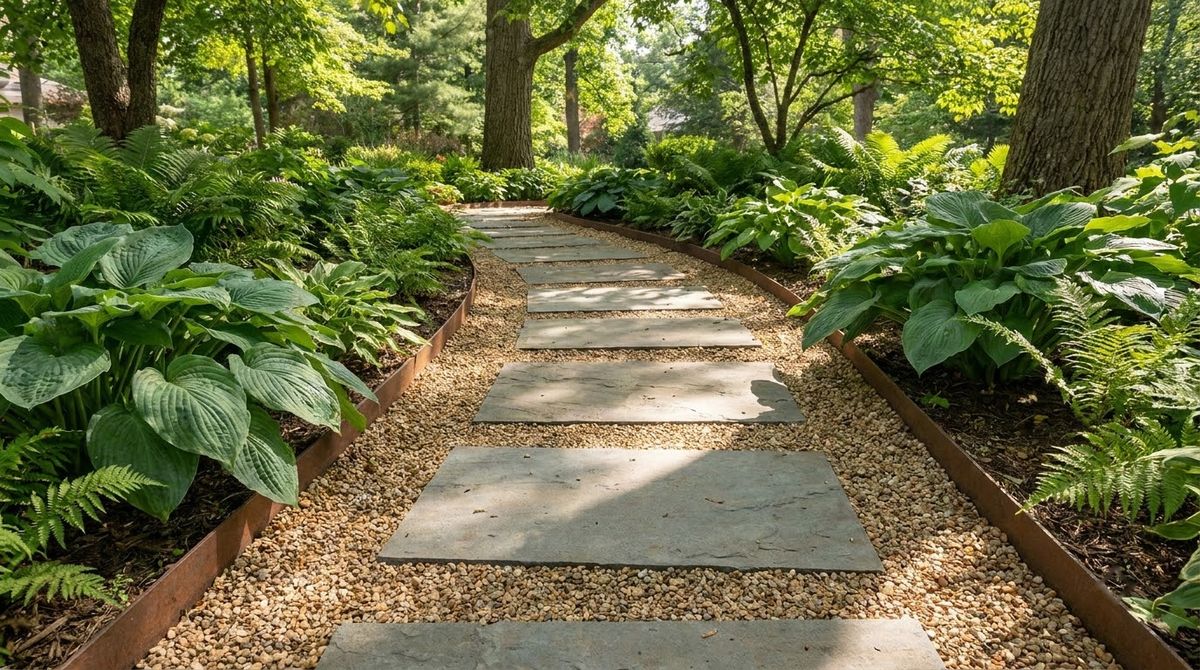
Set each stone so it cannot rock, following This Old House’s method for stones in a pea gravel surface:
- Lay the stones out and mark around each one with paint, then lift them.
- Dig each hole twice as deep as the stone is thick and compact the soil.
- Add about an inch of compacted crushed stone, then about an inch of wet stone dust.
- Seat the stone with a mallet and pack stone dust into any gaps around the edge.
How to build a gravel garden path, step by step
Building a gravel garden path takes a few days of digging, tamping and raking. These steps follow the This Old House build, with the width, slope and edging choices above.
Step 1: Mark the line and call 811
Lay out both edges with a hose or rope, or spray line-marking paint. Contact 811 a few business days before you dig; the before-you-dig service is free and applies to small jobs too.
Step 2: Dig the trench
Remove soil to about 4 inches with a square spade, keeping the sides straight and the depth even. Check it with a tape as you go, cut roots with loppers, and pile spoil on a tarp.
Step 3: Shape and tamp the soil
Rake the bottom smooth, set the cross slope or crown now, then compact the soil with a hand tamper. Roger Cook compacts the soil before any base goes in to prevent settling later.
Step 4: Add and compact the base
Spread about 2 1/2 inches of crushed stone pack and rake it level. Dampen it with a hose, then pound it with a 6- or 8-inch hand tamper until the surface is smooth and hard.
Step 5: Lay the fabric
Roll landscape fabric over the base. On curves, make relief cuts along both edges, overlapping the fabric at the cuts on the inside of the bend and letting it open on the outside. Pin it taut so it does not bunch.
Step 6: Install the edging
Join lengths per the maker’s instructions and set them along both sides of the trench on top of the fabric. Slide the spreader template over both strips and tap them in through the fabric, keeping them plumb.
Step 7: Backfill behind the edging
Fill soil back against the outside of the edging and firm it, so the edging cannot lean outward when the gravel goes in.
Step 8: Set the stepping stones and steps
Build any steps and seat any stepping stones now, before the top gravel hides the base.
Step 9: Spread the gravel
Fill with gravel to about 1/2 inch below the top of the edging and rake it even, with no fabric showing. Rake the surface smooth and top it up as it settles.
Common mistakes on a gravel garden path
Most gravel garden path problems start below the surface, before any gravel arrives.
- Skipping the base. Gravel straight on soil ruts and mixes with dirt; the compacted stone pack keeps it firm.
- A dead-flat path. Without cross slope or crown, puddles sit in the middle and wash gravel out.
- Running straight down a hill. Water follows the path; add steps or curve the line across the slope.
- Filling to the top of the edging. Gravel kicks onto the lawn; stop about 1/2 inch below.
- Too few stakes on curves. Plastic edging pops up at bends; stake every 2 feet there.
- Expecting fabric to stop weeds. Colorado State University Extension notes that woven fabrics eventually clog and that weeds germinate on top and root into or through them. Fabric keeps soil out of the gravel; pull weeds while they are small.
- A path too narrow for the mower. If equipment uses it, plan 3 to 4 feet.
Safety, and when not to use gravel
Gravel is a poor fit in some places, and the build itself has a few hazards to plan around.
- Wheelchairs, walkers and strollers. The ADA Standards require walking surfaces that are stable, firm and slip resistant; loose gravel moves underfoot and under wheels. Choose pavers or concrete for that route.
- The main entry walk. Gravel tracks indoors on shoes and is hard to clear of snow.
- Steep grades. Above about 5 percent, plan steps, a grid or a wall rather than loose stone alone.
- Utilities. Call 811 before you dig, every time.
- Eyes and backs. Wear safety glasses when cutting and staking edging, as edging makers advise, and lift bags and stones with your legs.
Frequently asked questions
How deep should a gravel garden path be?
Most gravel garden paths start at about 4 inches deep. This Old House digs 4 inches, adds about 2 1/2 inches of compacted crushed stone pack, then fills with gravel to about 1/2 inch below the edging. Its planning guide puts the base at 4 to 8 inches on soft, wet or frost-prone soil, so dig deeper there.
How wide should a garden path be for two people?
At least 48 inches. This Old House sets primary paths at 48 inches or more so two people can walk side by side, and secondary paths at 30 to 36 inches. If a mower or garden cart uses the path, plan about 3 to 4 feet; a small tractor needs 5 feet or more.
Do you need edging for a gravel path?
Yes. Loose gravel spreads into the lawn and beds without a border to hold it. Steel bends to curves and lasts; plastic is cheaper but needs stakes every 4 feet and every 2 feet on curves, per one maker’s guide. Keep the gravel about 1/2 inch below the edging top so it stays on the path.
How do you keep a gravel path from washing away on a slope?
Get water off the path sideways and keep the grade low. Tilt the tread about 1/4 inch per foot of width, or about 5 percent on a hillside path, and add steps where the slope passes about 1 in 20. A path that curves across the slope erodes less than one running straight down it.
Should you put landscape fabric under a gravel path?
It helps as a separator. Fabric over the compacted base keeps soil from mixing into the gravel, which keeps the path draining and firm. It is not reliable weed control: Colorado State University Extension notes that weeds germinate on top of woven fabric and root through it, so plan on pulling seedlings while they are small.
Sources
- This Old House, How To Lay a Budget-Friendly Gravel Path (updated April 2026).
- This Old House, Here’s How to Build a Perfect Path (updated May 2026).
- U.S. Access Board, 2010 ADA Standards for Accessible Design, Sections 302 and 403 (checked October 2026).
- USDA Forest Service via FHWA, Trail Construction and Maintenance Notebook: Trail Foundation (2007 edition, page updated 2018).
- Texas A&M AgriLife Extension, Earth-Kind Landscaping: Landscape Construction (checked October 2026).
- Colorado State University Extension, Mulching, GardenNotes #245 (reviewed 2023).