The main types of edging are metal (steel or aluminum), brick or pavers, natural stone, plastic, wood, poured concrete curbing and a plain spade-cut edge, and their materials run from about $0.50 to over $20 per linear foot. Plastic is the cheapest, metal lasts longest according to University of Illinois Extension, and poured concrete curbing is the only option most homeowners hire out.
Pick by job, not by looks alone: what the border has to hold back (lawn, mulch or gravel), whether it curves, and whether your ground freezes. The table below compares all seven types of edging side by side.
Key takeaways
- Metal edging lasts longest. Illinois Extension ranks steel and aluminum as the longest-lasting edging; steel is the pick where a border takes side pressure, such as along a driveway.
- Plastic is cheapest but moves. Its materials start around $0.50 per foot, and Illinois Extension calls it the hardest edging to keep stable in the ground.
- Stone has to be big enough to stop grass: at least 3 inches thick and 4 inches wide.
- Wood in soil is ground contact. Buy treated lumber rated AWPA Use Category 4A or higher; untreated non-durable wood averaged 4–7 years in Oregon State’s in-ground test.
- Labor adds $1.50–$10 per linear foot on top of materials, per two 2025–2026 cost surveys.
| Type of edging | Best for | Curves | DIY difficulty | Materials per linear ft (2025–2026) |
|---|---|---|---|---|
| Steel | Driveways, gravel, long straight runs | Gentle bends | Moderate to hard | $1.70–$11 (all metal) |
| Aluminum | Beds and paths with curves | Good | Moderate | Included in metal range |
| Brick or pavers | Mowing strips, formal beds | Good (short units) | Moderate | $2–$6.50 |
| Natural stone | Cottage and natural gardens | Good | Moderate, heavy | $2.50–$21.50 |
| Plastic | Low budgets, tight curves, mulch beds | Very good | Easy to lay, hard to keep in | $0.50–$3.50 |
| Wood | Straight borders, raised mulch beds | Poor | Easy | $2.50–$8 |
| Poured concrete curbing | Permanent lawn borders | Very good | Pro machine job | $3–$8 (stamped to $9) |
| Spade-cut edge | Lawn next to beds, zero budget | Any shape | Easy, recut yearly | $0 (tools only) |
Material-only ranges span LawnStarter (updated December 2025) and LawnLove (updated October 2026); labor is extra. Ranges are national and vary by city.
Metal edging: steel vs aluminum
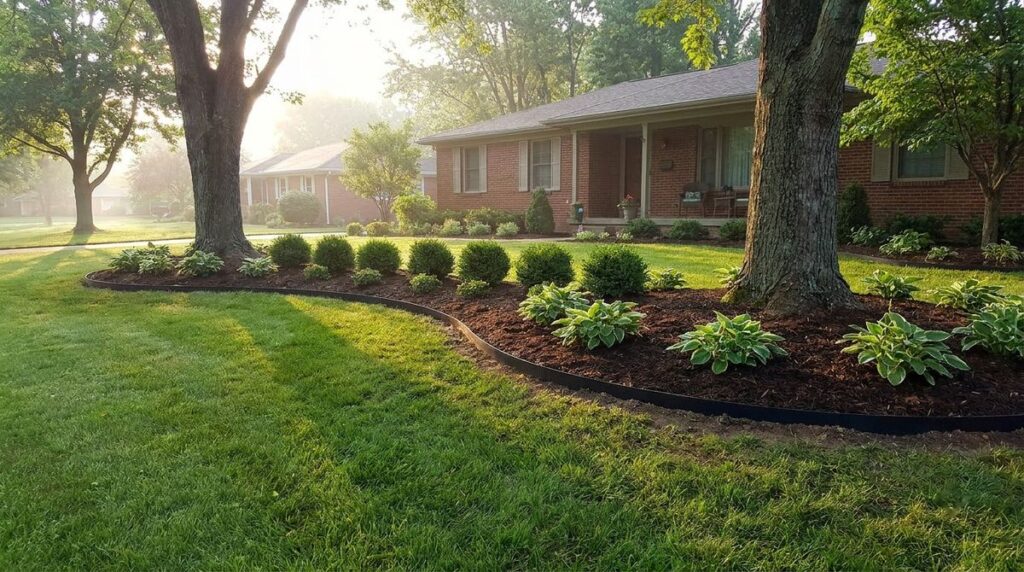
Metal edging, steel or aluminum, is the longest-lasting type of edging, according to University of Illinois Extension. It sits as a thin strip with only the top showing, so it gives the crispest line between lawn and bed or path. The two metals behave differently in the ground and in your hands.
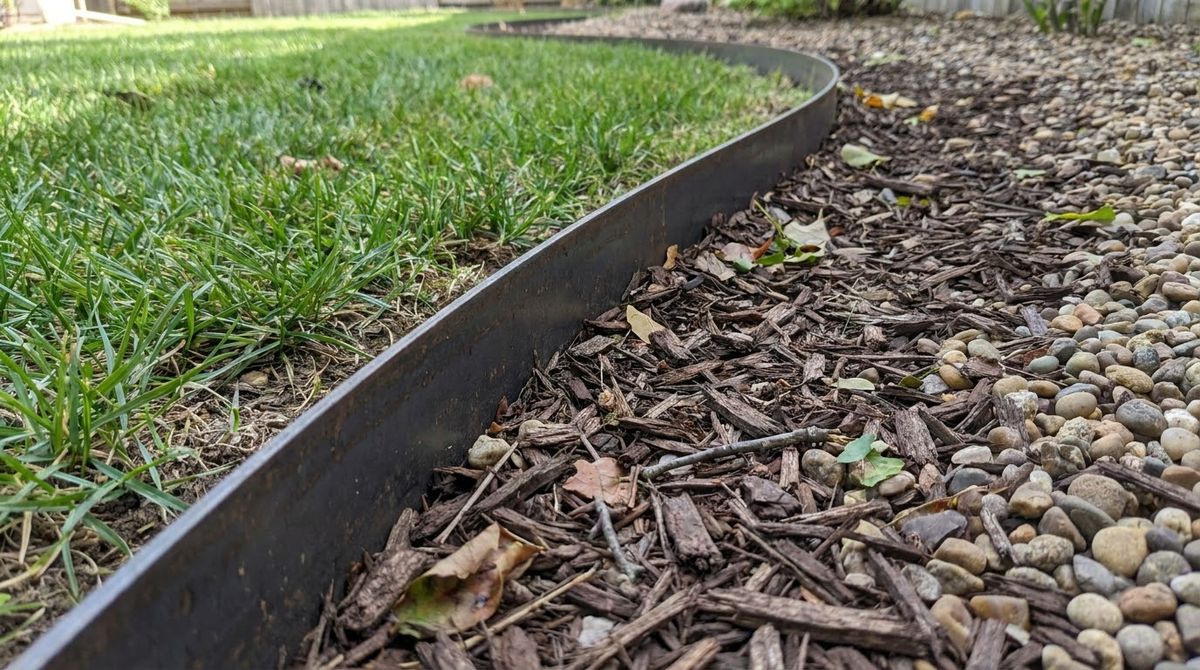
- Steel is the strongest choice where a border takes side pressure. Illinois Extension names driveway work as its best use, and warns that steel is relatively expensive, difficult to install properly and can heave in winter.
- Aluminum is easier to cut and bend. The same Extension page notes its silver color can look unnatural in many landscapes, so look for a dark coated finish if the edge will show.
- Frost heave: Illinois Extension says most heaving can be stopped with grooved or lip-style edging, steel anchoring stakes and proper installation.
Metal is the default for gravel. Its thin profile holds loose stone without a wide band showing. How deep to set it and how to backfill it are covered in the step-by-step gravel garden path build, so they are not repeated here.
Brick, paver and stone edging
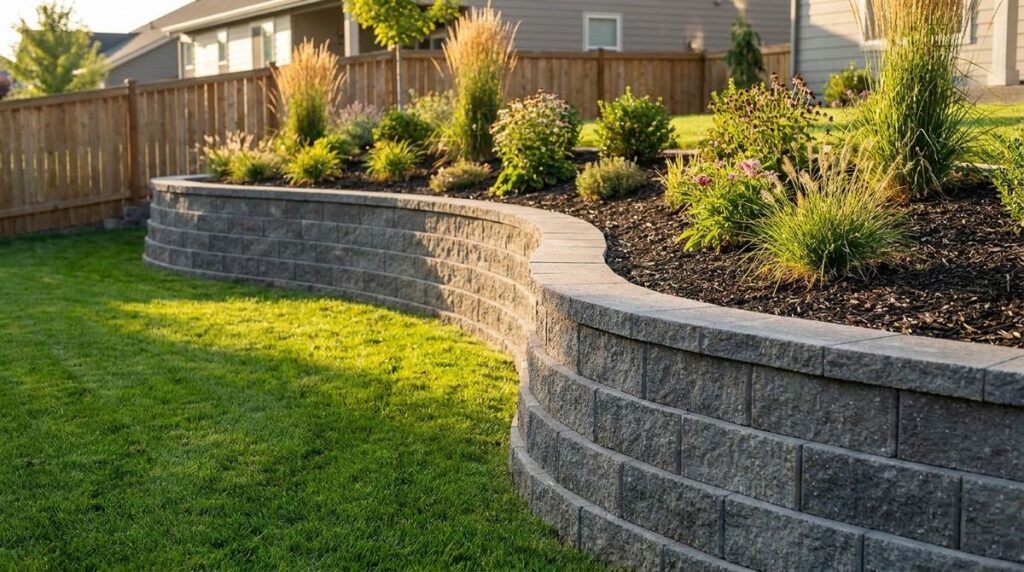
Brick, paver and stone edging gives a wider, visible border that doubles as a mowing strip when set flush with the lawn. Illinois Extension’s rules are short: use well-fired brick or pavers so they are waterproof, and use stone at least 3 inches thick and 4 inches wide, or grass grows through the gaps.
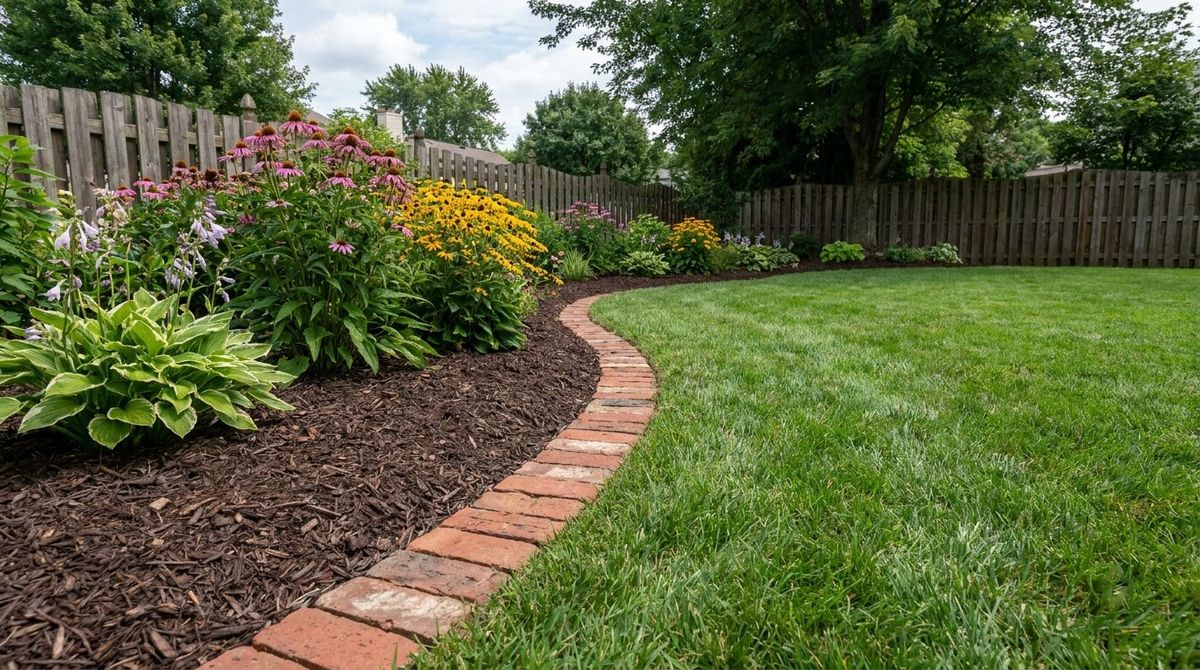
- Base: the same Extension page recommends a sand or concrete base with reinforcing rods for added durability and strength.
- Lock it in: on This Old House, Roger Cook sets brick or cobblestone on edge in a shallow trench and puts concrete behind it, so the border does not move.
- Lifespan: LawnStarter puts brick edging at 10–20 years with proper care (December 2025).
Stone costs vary more than any other material: $2.50–$21.50 per foot for materials across the two surveys, and granite alone $15.50–$24.50 per foot in LawnLove’s table. Fieldstone you collect costs labor only. If a stone border starts holding back more than a few inches of soil, it is a short wall; price it with the retaining wall cost per square foot breakdown instead.
Plastic edging: cheap, but hard to keep in the ground
Plastic edging is the most common edging homeowners use because it is inexpensive and easy to lay, Illinois Extension says, but it also has poor durability and an artificial look. The Extension page calls it probably the hardest material to install for a lasting, stable edge.
Freeze-thaw is the usual reason it fails. This Old House’s Roger Cook calls plastic his least favorite edging and says a freeze-thaw cycle can push it out of the ground, so it often has to be reinstalled. If you use plastic anyway:
- Pick a round-top profile. Illinois Extension says round tops do not sink as easily as flat types.
- Stabilize flat strips by nailing a 1 x 1 inch strip of treated wood along the bottom with galvanized nails.
- Keep it to mulch beds and tight curves, where its flexibility helps and the load is light.
Wood edging: timbers and treated boards
Wood edging, from landscape timbers to treated 2x4s, stays in place well and makes a good mowing edge, per Illinois Extension. Rebar and toe-nailed corners add reinforcement. It suits straight runs and raised mulch beds; it does not bend, so curves become a series of short angled pieces.
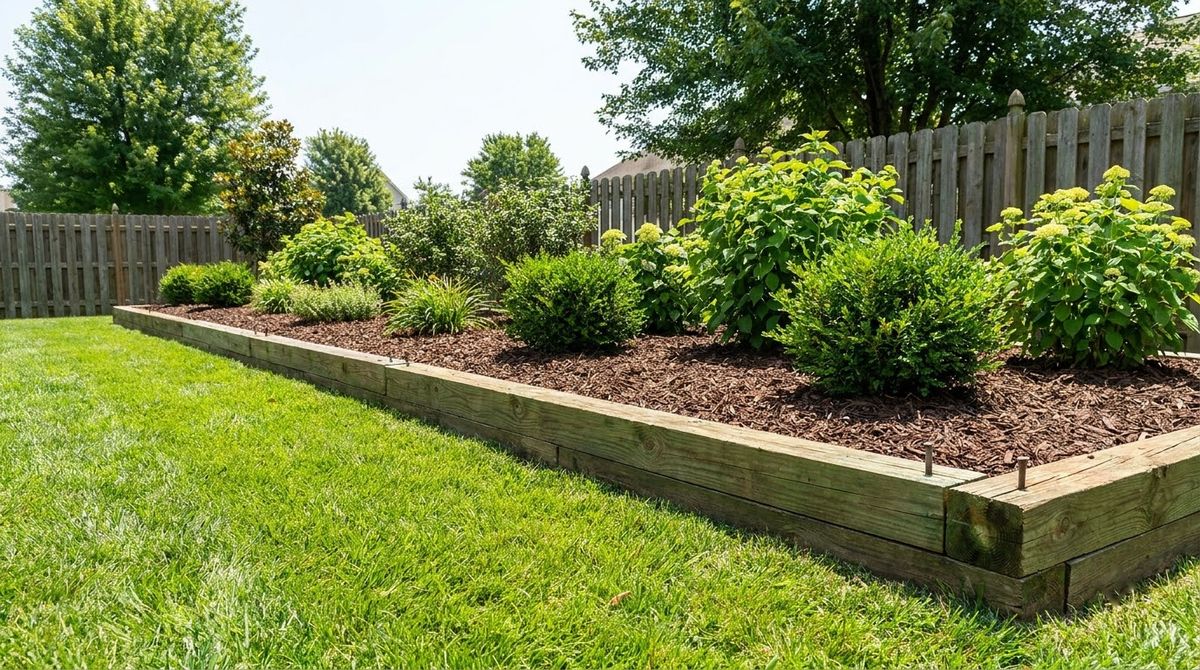
Wood buried in soil rots from the ground line first. The closest published numbers come from Oregon State University’s fence-post test: posts of non-durable species or mostly sapwood averaged 4–7 years untreated, while largely heartwood posts of durable species could average 18 years or longer.
- Buy ground-contact lumber. The AWPA chart lists landscape walls and planter boxes in ground contact at Use Category 4A or higher; edging boards in soil face the same exposure. The end tag shows the category.
- Skip old railroad ties. Illinois Extension warns that their coatings can be toxic to plants.
- Edging a vegetable bed? The same treated-lumber questions are answered in the guide to treated wood for raised beds.
Poured concrete curbing
Poured concrete curbing is a continuous concrete border extruded in place by a curbing machine, so it follows any curve with no joints to open. Illinois Extension notes this machine-poured edging resists cracking thanks to polyolefin fibers in the mix. Because the machine does the shaping, it is the one type of edging most homeowners hire out.
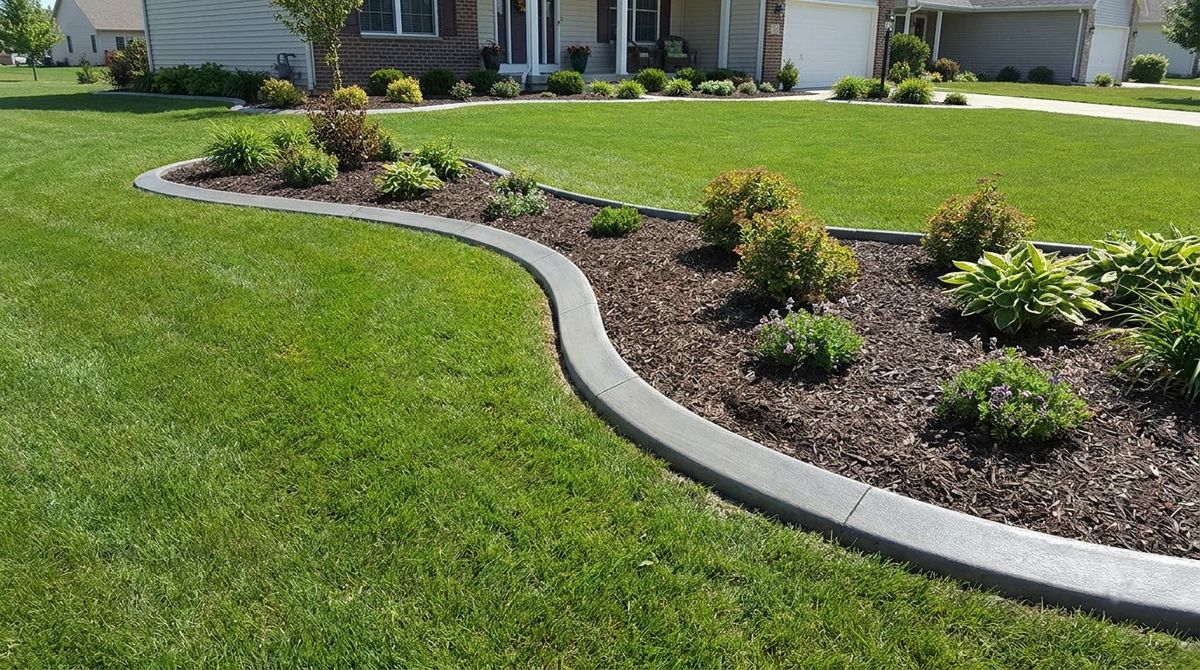
- Cost: poured curbing runs $3–$8 per foot and stamped $3–$9 in LawnLove’s table (October 2026); precast concrete edging is $2–$5.50 across both surveys.
- Lifespan: LawnStarter gives concrete edging 10–30 years (December 2025). LawnLove says sealing every year or two helps it last longer.
- Trade-off: it is permanent. Moving a bed line later means breaking concrete.
What each type of edging costs per foot
What edging costs per foot depends more on labor than on materials for most types. Both surveys put labor at $1.50–$10 per linear foot, and LawnStarter’s installed average is $3.50–$8.80 per foot, or $630–$1,584 for a typical 180-foot job.
| Material | LawnStarter (Dec 2025) | LawnLove (Oct 2026) |
|---|---|---|
| Plastic | $1–$3.50 | $0.50–$3.25 |
| Metal / steel | $5–$11 (metal) | $1.70–$4.70 (steel) |
| Brick | $2.50–$6.50 | $2–$4 |
| Stone | $3–$21.50 | $2.50–$10 |
| Wood | $2.50–$7 | $2.90–$8 |
| Concrete, poured | $3–$8 | $3–$8 |
| Concrete, precast | $3–$5.50 | $2–$3.50 |
Per linear foot, materials only, labor excluded. The two surveys disagree most on metal, so price the exact product, gauge and finish you plan to buy.
Which types of edging fit which job: verdict by situation
- Gravel path or patio: steel or aluminum, set just above the finished stone. Install details are in the DIY gravel patio build and the gravel path guide above.
- Border along a driveway or anything that gets driven over: steel, which Illinois Extension singles out for side strength.
- Lawn beside beds and you hate trimming: a flush brick or paver mowing strip, set in concrete.
- Long curving lawn borders and a budget for a pro: poured concrete curbing.
- Straight vegetable or mulch beds: ground-contact (4A) treated timbers or boards.
- Mild climate, tight curves, lowest cost: round-top plastic, staked well.
- Zero budget: a spade-cut edge 4 inches deep and wide, which Illinois Extension says can easily contain bluegrass; recut it once or twice a year.
Mistakes to avoid when choosing edging
- Choosing plastic for gravel or cold climates. It is the type most likely to heave out of the ground.
- Using stone that is too small. Under 3 inches thick and 4 inches wide, grass grows through.
- Burying above-ground (3B) lumber. Check the end tag for 4A or higher.
- Setting a border higher than the mower deck. A raised edge forces string trimming along every foot of it.
- Pricing materials only. Labor can add $1.50–$10 per foot.
- Making edging do a wall’s job. A border holding back a slope needs a footing and drainage, not edging stakes.
Frequently asked questions
What is the longest-lasting type of edging?
Metal edging, steel or aluminum, is the longest lasting, according to University of Illinois Extension. Steel is the stronger of the two and suits driveways and other high-pressure borders. Among masonry options, LawnStarter gives concrete edging 10 to 30 years and brick 10 to 20 years with proper care, based on its December 2025 cost guide.
What is the cheapest landscape edging?
A spade-cut edge costs nothing but your time; it needs recutting once or twice a year. Of the materials, plastic is cheapest at roughly $0.50 to $3.50 per linear foot in 2025 and 2026 cost surveys, before labor. It is also the least durable, so expect to reset sections after freeze-thaw cycles.
Is metal or plastic edging better?
Metal is better for durability and for holding gravel or pressure from a driveway; Illinois Extension calls it the longest-lasting edging. Plastic is cheaper and bends into tight curves but has poor durability, and freeze-thaw can push it out of the ground. Choose plastic only for light-duty mulch beds in mild climates.
What edging is best for a lawn?
For a lawn, a flush brick or paver mowing strip or poured concrete curbing works best, because the mower wheel can run along it and you trim less. Steel edging gives a thinner line at lower cost. Whatever you pick, stone should be at least 3 inches thick and 4 inches wide to stop grass.
Can you use wood for landscape edging?
Yes. Landscape timbers and treated 2x4s stay in place well and make a clean mowing edge, per Illinois Extension. Because they sit in soil, buy lumber rated AWPA Use Category 4A or higher for ground contact. Untreated non-durable wood averaged only 4 to 7 years in Oregon State’s in-ground post test.
Sources
- University of Illinois Extension, Bed Edges (Rhonda Ferree, May 2015).
- Oregon State University, Forest Research Laboratory, Service Life of Treated and Untreated Fence Posts: 1996 Post Farm Report (1999).
- American Wood Protection Association, Select the Right Preserved Wood for Your Project (2021).
- This Old House, Ask Roger: Using Landscape Edging (updated June 2026).
- LawnStarter, How Much Does Landscape Edging Cost? (updated December 2025).
- LawnLove, How Much Does Landscape Curbing Cost? (updated October 2026).